
How to Choose Butterfly Valves for Global Sourcing in 2026?

Time:2026-10-21 Author:Amelia
0%

Choosing Butterfly Valves for global sourcing in 2026 requires more than comparing prices on supplier websites. The correct choice must match the pipeline medium, pressure range, temperature, flow pattern, and installation environment. A valve used for chilled water may fail quickly in abrasive slurry. Small specification errors can create expensive delays.

Experienced sourcing teams usually begin with application data and a clear technical specification. They check wafer, lug, and flanged designs against the piping system. They also review seat materials, disc alloys, shaft construction, and actuator torque. For example, an outdoor valve near a coastal plant may need stronger corrosion protection and suitable sealing materials. Food, water, chemical, and energy projects may require different documentation and testing.

Supplier evaluation matters just as much as product selection. Reliable manufacturers should provide material certificates, pressure-test reports, dimensional drawings, and traceable inspection records. Factory audits can reveal practical details that brochures hide, including machining consistency, coating quality, and final assembly controls. Independent inspection may be worthwhile for large or critical orders. It adds cost, but one failed shipment costs more.

Global purchasing also involves packaging, lead times, spare parts, communication, and after-sales support. Incoterms and payment conditions should be reviewed carefully with qualified commercial advisers. Standards are not interchangeable by assumption. Confirm the required certifications for the destination market before production begins.

No sourcing plan is perfect. Technical teams can overlook unusual operating cycles or future maintenance needs. This guide examines those risks and explains how to compare Butterfly Valves with greater confidence, evidence, and practical judgment in 2026.
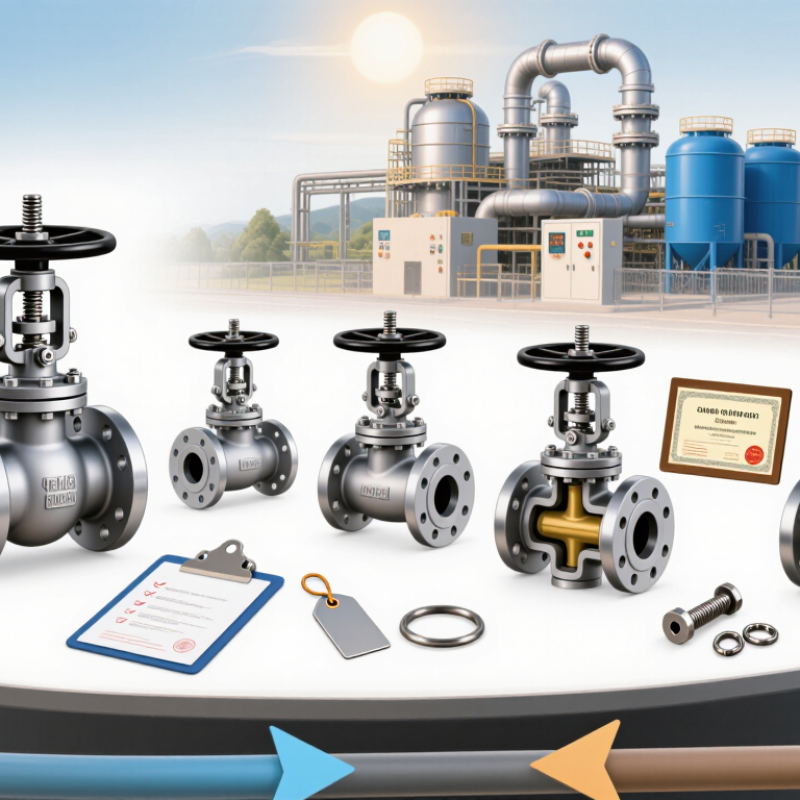
How to Choose Butterfly Valves for Global Sourcing in 2026?

Define Service Conditions: DN, PN 6–40, ANSI Class 150–300, and Temperature

How to Choose Butterfly Valves for Global Sourcing in 2026?

Define service conditions before comparing quotations. DN identifies the nominal flow size, but it does not confirm the actual bore. Check pipe inside diameter, flange dimensions, and required flow capacity. PN 6–40 indicates nominal pressure classes in bar at reference conditions. It is not a universal working pressure at every temperature.

ANSI Class 150–300 follows a different rating system. Do not treat Class 150 as a direct substitute for PN16. Compare pressure-temperature tables for the valve body, disc, seat, and shaft. Steam, hot water, chemicals, and abrasive slurries can change the selection sharply. A seat suitable for ambient water may fail quickly in hot service. Temperature matters.

Ask for pressure test records, material certificates, dimensional drawings, and applicable design standards. Confirm flange drilling for every destination market. Actuator torque also needs careful review, especially with large DN sizes or sticky media. I have seen purchasing teams select the right pressure class but underestimate operating torque. That mistake delays installation.

Leave room for doubt. Real systems rarely match ideal catalog conditions. Consider pressure spikes, frequent cycling, cold starts, and uncertain temperature data. A conservative margin may increase cost, yet an oversized valve can create control problems. Recheck the duty point with an engineer before approving production. Supplier documents should support every critical number.

How to Choose Butterfly Valves for Global Sourcing in 2026?

Define service conditions: Confirm nominal diameter (DN), pressure designation (PN 6–40 or ANSI Class 150–300), operating temperature, fluid type, and material compatibility before selecting a butterfly valve.

The chart compares metric PN designations with approximate ambient-pressure references for ANSI Class ratings. ANSI Class values are material- and temperature-dependent and should not be treated as direct equivalents to PN ratings.

Select Wafer, Lug, or Flanged Bodies Under API 609 and ISO 5752

For global sourcing in 2026, body style should follow installation access, pressure class, and maintenance plans, not price alone. API 609 defines important design and performance requirements for butterfly valves. ISO 5752 specifies face-to-face dimensions for applicable valve arrangements. Confirm the current editions and project specifications. Standards are not interchangeable. A useful sourcing sheet records media, temperature, pressure, line size, flange drilling, actuation, testing, and documentation requirements.

Wafer bodies fit between pipe flanges and usually reduce weight, space, and freight cost. They suit compact installations, but correct flange alignment is essential. Lug bodies use threaded lugs and may allow one-sided pipe removal. However, dead-end service requires explicit approval for the valve design and pressure rating. Small detail. Flanged bodies add weight and material cost, yet they provide rigid bolted connections and can simplify removal in accessible pipework. Their drilling pattern must match the mating flange exactly.

During technical review, compare the valve’s real face-to-face length with the required ISO 5752 series. Do not assume every API 609 valve matches every ISO dimension. Check seat compatibility, shaft retention, leakage test results, corrosion allowance, certificates, and traceability. In field sourcing, missing dimensional data causes more delay than expected. I have seen a low-cost selection fail during installation because the lug pattern was misunderstood. That mistake is preventable, although supplier drawings still deserve careful review.

How to Choose Butterfly Valves for Global Sourcing in 2026? - Select Wafer, Lug, or Flanged Bodies Under API 609 and ISO 5752
Selection Dimension Wafer Body Lug Body Flanged Body Global Sourcing Check
Primary Connection Sandwiched between two pipe flanges; the valve body normally does not provide a dedicated flange connection. Installed between flanges with threaded or through lug holes; each side can generally be disconnected independently. Integral flanges connect directly to mating pipe flanges using bolting. Confirm the valve body style, pipe flange standard, nominal size, and pressure class before requesting quotations.
Typical Installation Use Use wafer for space and weight savings; use lug for maintenance flexibility; use flanged for connection rigidity and easier alignment control.
API 609 Relevance API 609 covers wafer-style butterfly valve configurations when the valve design and pressure-temperature rating meet the applicable category requirements. API 609 covers lug-style configurations; the lug-hole design and bolting arrangement must match the specified piping system. API 609 covers flanged-end butterfly valve configurations, subject to the selected pressure class and end dimensions. Specify API 609 category, pressure class, seat design, material requirements, inspection, and testing requirements in the purchase specification.
ISO 5752 Relevance Face-to-face dimensions can be selected from the applicable ISO 5752 basic series when offered by the valve design. Face-to-face dimensions can be selected from the applicable ISO 5752 basic series; lug holes do not replace face-to-face requirements. Face-to-face dimensions may be specified using an applicable ISO 5752 series, while flange dimensions come from the designated flange standard. ISO 5752 controls face-to-face and center-to-face dimensional series; it does not by itself define pressure rating or flange drilling.
Space Requirement Usually the shortest and lightest option for the same nominal size and rating. Usually slightly heavier than wafer because of the lug structure and additional bolting material. Usually the longest and heaviest option because the body includes two integral flanges. Compare overall length, valve mass, actuator envelope, lifting points, and available clearance around the pipeline.
Pipeline Removal The pipeline commonly needs to be spread or separated to remove the valve from between the flanges. For critical maintenance locations, confirm whether the valve is intended for dead-end service and whether a downstream blind flange is required.
Dead-End Service Do not assume suitability. A wafer valve may require both mating flanges or a manufacturer-specific limitation. Request the allowable dead-end pressure, direction of pressure, temperature, and installation orientation in writing.
Flange Compatibility Requires correctly aligned mating flanges; the body may be designed for multiple flange drilling standards depending on the model. Requires matching lug-hole pattern, bolt diameter, bolt length, and flange alignment. Requires exact matching of valve flange standard, facing, drilling, outside diameter, and bolt circle. Identify ASME B16.5, ASME B16.47, EN 1092-1, or another applicable flange standard; do not specify “Class 150” or “PN16” alone.
Common Pressure Designations Common project specifications include ASME Class 150 and PN10 or PN16, depending on the piping system. Common project specifications include ASME Class 150 and PN10 or PN16, depending on the piping system. Common project specifications include ASME Class 150, Class 300, PN10, PN16, and PN25, subject to the valve design. Pressure designations are not automatically interchangeable. Confirm pressure-temperature ratings and flange compatibility separately.
Face-to-Face Selection Often selected where short-pattern installation is a priority, subject to the required ISO 5752 series. Available in short and longer face-to-face patterns depending on size, pressure class, and design. Typically selected with a longer body pattern when rigid flanged connections or equipment interfaces are required. State the exact face-to-face dimension or ISO 5752 series; “API 609 compliant” alone does not identify the installed length.
Actuator and Maintenance Compact actuator packages are often practical; allow clearance for disc rotation and actuator removal. Allow clearance for lug bolts, actuator removal, and access to both isolation points. Heavier assemblies may require lifting support; allow clearance for flange bolts and actuator servicing. Specify manual, pneumatic, electric, or hydraulic actuation, fail position, mounting interface, duty cycle, and required accessories.
Best Fit for 2026 Sourcing Choose by lifecycle cost rather than purchase price alone: include installation labor, spare parts, inspection, transport weight, and maintenance access.
Minimum RFQ Data Nominal size, pressure class, wafer body, API 609 category, ISO 5752 face-to-face series, flange standard, seat, disc, stem, and body materials. Nominal size, pressure class, lug body, lug-hole type, API 609 category, ISO 5752 face-to-face series, flange standard, seat, disc, stem, and body materials. Nominal size, pressure class, flange standard, facing, drilling, API 609 category, ISO 5752 face-to-face series, seat, disc, stem, and body materials. Also include fluid, minimum and maximum temperature, pressure direction, flow velocity, shutoff class, test standard, documentation, and country-specific certification needs.
Important Standard Note API 609 addresses butterfly valve design and application requirements, while ISO 5752 primarily provides standardized face-to-face and center-to-face dimensions. Always verify the latest contract edition, the valve manufacturer’s certified drawings, pressure-temperature limits, and the applicable piping and flange standards before purchase.
Data basis: common international procurement practices for butterfly valves. Final selection must be confirmed against the project piping class, applicable edition of API 609, ISO 5752 dimensional series, flange standard, pressure-temperature rating, and certified manufacturer drawings.

Specify Materials Using ASTM Grades, EN 10204 3.1, and ISO 15156

For global butterfly-valve sourcing in 2026, material specification should begin with the service environment, not the supplier’s catalogue. ASTM grades identify chemistry and mechanical requirements clearly. Common choices include ASTM A216 WCB for carbon-steel bodies and ASTM A351 CF8M for stainless components. Duplex applications may require ASTM A995 Grade 4A. Confirm the body, disc, stem, and seat materials separately. They often differ.

Request an EN 10204 3.1 inspection certificate for every pressure-retaining heat. It should show the heat number, chemical analysis, tensile results, yield strength, elongation, and impact data when required. Match those details with permanent markings on the valve. A certificate can look complete but still hide a mismatch. World Steel Association reported 1.89 billion tonnes of crude steel production in 2023. That scale makes traceability essential, not decorative.

For sour-service duties, specify ISO 15156 requirements directly. The standard addresses cracking risks caused by hydrogen sulfide, including sulfide stress cracking and hydrogen-induced cracking. Verify material condition, hardness limits, heat treatment, and environmental boundaries. Do not accept “NACE compliant” without the applicable ISO 15156 part and qualification basis. The NACE IMPACT study estimated global corrosion costs near US$2.5 trillion annually, or about 3.4% of global GDP. Even so, paperwork alone cannot prove field suitability. Review pressure, temperature, chloride level, H2S partial pressure, and valve cycling together. Procurement teams sometimes over-specify alloy content and under-specify documentation. That is an expensive lesson.

Validate Performance with ISO 5208 Leakage Rates and API 598 Tests

How to Choose Butterfly Valves for Global Sourcing in 2026?

Leakage validation should begin with ISO 5208, not a supplier’s sales sheet. ISO 5208:2015 classifies closure performance from Rate A to Rate F. Rate A requires no visually detectable leakage during the specified test. Higher rates permit defined leakage quantities. The selected rate must match the service risk, medium, pressure, and temperature.

API 598 adds a practical factory testing framework. It covers shell tests, closure tests, and backseat tests where applicable. For resilient-seated butterfly valves, buyers should request documented zero-visible-leakage results under the agreed conditions. Ask for test pressure, test medium, holding time, valve size, and calibrated equipment details. A certificate without these fields is weak evidence.

The numbers matter.

A global sourcing team should compare each valve against one purchase specification. Include face-to-face dimensions, pressure class, seat material, operating torque, and ISO 5208 leakage rate. Request production test records, not only a template certificate. Independent witnessing can reduce uncertainty for critical orders, especially when inspection access is limited.

One overlooked issue is test-medium mismatch. Water testing may not represent dry gas, corrosive fluid, or vacuum service. API 598 acceptance can confirm manufacturing quality, but it cannot replace application engineering. I would also challenge inconsistent records: identical leakage values across many sizes may indicate copied paperwork. That may be an unfair assumption, but it deserves investigation.

Sources: ISO 5208:2015 and API 598, 11th Edition.

Control Sourcing Through ISO 9001 Audits, Incoterms 2020, and Spares

Global butterfly valve sourcing in 2026 requires more than comparing unit prices. I ask suppliers for ISO 9001 certificates, audit scope, and recent corrective-action records. A certificate alone is not enough. During factory reviews, inspect incoming material logs, calibration labels, pressure-test benches, and final inspection photos. Match valve tags with heat numbers and test reports. This small traceability check can expose weak process control before shipment. I have learned that tidy paperwork may hide inconsistent production, so sample verification still matters.

Incoterms 2020 should appear in the purchase contract and shipping instructions. Define who arranges freight, insurance, export clearance, and import handling. Confirm the named place precisely, such as the seller’s loading dock or destination terminal. Risk can transfer before the valves reach your warehouse. That detail changes claims, costs, and delivery decisions. Ask for packing specifications too. A wooden case, capped flanges, moisture barriers, and shock indicators may prevent damage during long transit. Packaging is often an afterthought.

Spares need equal control. Order seats, stem seals, bearings, bolts, and compatible actuator interfaces with the original valves. Store a small contingency quantity for critical lines. Label each kit by valve size, material, and drawing revision. Some teams overstock cheap seals and understock special components. I have made that mistake in planning. Review failure history every six months, not only when an outage begins. Require dimensional checks and material certificates for replacement parts. Keep approved alternatives documented, because emergency substitutions can create fit or chemical-compatibility problems.

FAQS

Why should valve material selection begin with the service environment?

Pressure, temperature, chloride level, and gas exposure affect material suitability. A catalogue match may still fail in real service. Context matters.

Which material grades are commonly considered for butterfly valves?

Carbon-steel bodies may use ASTM A216 WCB. Stainless components may use ASTM A351 CF8M. Duplex service may require ASTM A995 Grade 4A.

Should all valve components use the same material?

No. The body, disc, stem, and seat often require different materials. Confirm each component separately. One grade rarely fits everything.

What should an EN 10204 3.1 certificate contain?

It should include the heat number, chemical analysis, tensile results, yield strength, and elongation. Impact data may be required. Check every pressure-retaining heat.

How can buyers verify material traceability?

Match certificate details with permanent valve markings and heat numbers. Compare tags, reports, and inspection records. Paperwork can look complete.

What must be specified for sour-service applications?

Specify the applicable ISO 15156 requirements directly. Verify hardness, heat treatment, material condition, and environmental limits. Do not accept vague compliance claims.

What factory checks help control supplier quality?

Review incoming material logs, calibration labels, pressure-test benches, and final inspection photographs. Check several samples, not only documents. I learned this late.

How should shipping responsibilities be controlled?

State the selected Incoterm and named place in the contract. Define freight, insurance, export clearance, and import handling. Risk may transfer early.

What packaging details can reduce transit damage?

Request wooden cases, capped flanges, moisture barriers, and shock indicators. These details help during long transport. Packaging is often forgotten.

Which spare parts should be ordered with the valves?

Consider seats, stem seals, bearings, bolts, and compatible actuator interfaces. Label each kit by size, material, and drawing revision. Keep critical spares.

Conclusion

Choosing Butterfly Valves for global sourcing in 2026 requires a clear, structured evaluation of operating conditions and supply requirements. Begin by defining the service parameters, including nominal diameter (DN), pressure ratings from PN 6 to PN 40 or ANSI Class 150 to 300, and the expected temperature range. Select wafer, lug, or flanged body designs according to installation needs while confirming alignment with API 609 and ISO 5752. Material specifications should reference suitable ASTM grades, supported by EN 10204 3.1 inspection certificates and ISO 15156 requirements where applicable.

Before approval, validate pressure performance and sealing through ISO 5208 leakage classifications and API 598 testing. Reliable sourcing also depends on supplier quality systems, including ISO 9001 audits, documented inspections, traceability, and consistent production controls. Finally, clarify Incoterms 2020, packaging, delivery responsibilities, technical documentation, and spare-parts availability to reduce project risk and support long-term maintenance.

Amelia

Amelia

Amelia is a seasoned marketing professional with a wealth of expertise in our company’s core offerings. With an unwavering passion for driving growth and innovation, she plays a pivotal role in shaping our marketing strategies and enhancing brand visibility. A key aspect of her responsibilities......