Featured Industrial Strainers & Valves Catalog
High-precision flanged & threaded pipeline strainers engineered to DIN, ANSI, BS, and JIS international standards.
1. Technical Architecture & Fluid Dynamics of Y Type Strainers
An authoritative deep dive into hydrodynamic particle separation, open area ratios, dynamic pressure drop drop-off calculations, and mesh geometry optimization.
Mechanical Filtration Principles
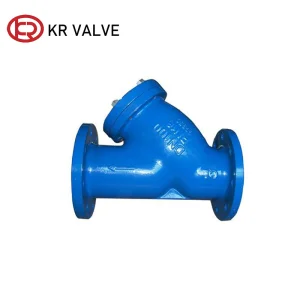
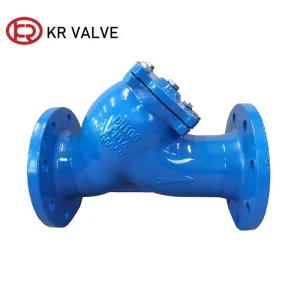
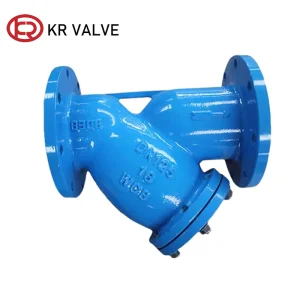
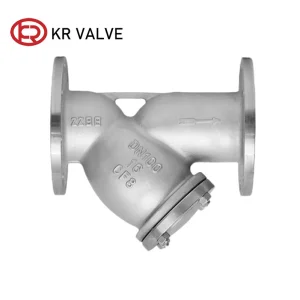
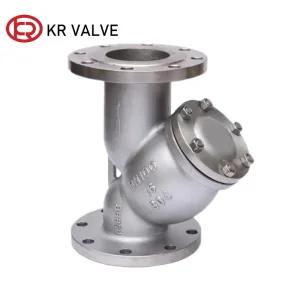
Y Type Strainers serve as indispensable mechanical safeguards in pressurized fluid networks. Designed with a standard 45-degree branch angle, the body directs media through a removable cylindrical mesh element. As liquid or gas flows through the interior screen chamber, solid particulates, scale, rust, and foreign debris are entrapped while clean fluid exits downstream. This simple yet highly effective mechanical barrier protects sensitive components—including control valves, steam traps, meters, and high-pressure pumps—from catastrophic erosion and clogging.
Hydrodynamic Pressure Drop (ΔP)
Flow efficiency in industrial strainers is governed by the net open area ratio (OAR). Premium Y-strainers engineered by qualified factories maintain a minimum OAR of 3:1 to 4:1 relative to nominal pipe cross-sectional area. Maintaining a high OAR minimizes hydraulic resistance and lowers system energy consumption. The flow coefficient ($C_v$) must be dynamically monitored; as particulate matter accumulates on the stainless steel mesh, pressure drop across the strainer increases exponentially, signaling maintenance intervals before pump cavitation occurs.
Blow-Off & Self-Cleaning System
Equipped with threaded blow-off caps or integrated ball blowdown valves, modern Y-type strainers allow quick flushing of collected debris without interrupting main pipeline pressure. The blow-off port located at the lowest focal point of the Y-branch screen cap facilitates easy purging, substantially reducing downtime during scheduled plant turnaround and operational maintenance cycles.
Information Gain Insight: The longevity of downstream control valves is increased by up to 340% when paired with a correctly sized Y Strainer maintaining an Open Area Ratio (OAR) greater than 3.5:1. Dual-layer mesh screens (perforated backing base + micro-mesh sleeve) prevent mesh implosion under extreme pressure differentials.
Strainer Fluid Mechanics & Purge Protocol
Unfiltered Entry
High-velocity media enters the Y-body chamber containing suspended solids.
Laminar Separation
Fluid passes through SS304/SS316 woven mesh; particulate is trapped in the basket pocket.
Laminar Clean Flow
Particle-free fluid flows out downstream with minimal friction loss and zero cavitation risk.
Blowdown Purge
Blow-off valve opens, flushing entrapped solids using pipeline pressure without disassembly.
2. Metallurgy Specifications & Material Selection Matrix
Selecting the appropriate body casting and filter mesh metallurgy ensures long-term operational integrity across diverse chemical, thermal, and mechanical conditions.
| Material Standard | Grade Equivalent | Pressure Ratings | Temperature Range | Filter Screen Material | Target Applications |
|---|---|---|---|---|---|
| Cast Iron | GG25 / EN-GJL-250 | PN10, PN16, Class 125 | -10°C to 120°C | SS304 Woven / Perforated | HVAC, Chilled Water, Potable Water Lines |
| Ductile Iron | GGG40 / EN-GJS-400-15 | PN16, PN25, Class 150 | -20°C to 200°C | SS304 / SS316 Dual Layer | Municipal Water Distribution, Sewage, Fire Protection |
| Carbon Steel | WCB / ASTM A216 | Class 150, 300, 600, PN40 | -29°C to 425°C | SS316 Heavy Duty Mesh | High-Pressure Steam, Refineries, Oil & Gas Pipelines |
| Stainless Steel | CF8 (SS304) / CF8M (SS316) | Class 150 - 300, PN16 - PN40 | -196°C to 550°C | SS316L / Monel / Hastelloy | Corrosive Chemicals, Food & Beverage, Desalination |
| Bronze / Brass | C83600 / HPb59-1 | PN16 - PN25, 200 WOG | -20°C to 150°C | SS304 / Brass Screen | Marine Saltwater, Commercial Plumbing, Compact Lines |
Mesh Sizing vs. Micron Rating Conversion Guide
Detailed filtration selection table for procurement engineers specifying screen tolerances:
| Mesh Count (Per Inch) | Inches Opening | Micron Rating (μm) | Filtration Efficiency | Typical Fluid Application |
|---|---|---|---|---|
| 20 Mesh | 0.034" | 860 μm | Coarse Debris Protection | Raw River Water, Cooling Tower Feed |
| 40 Mesh | 0.015" | 380 μm | Medium Particulate Filter | General HVAC Water, Pump Suction Lines |
| 80 Mesh | 0.007" | 180 μm | Fine Particle Protection | Steam Traps, Boiler Feedwater Systems |
| 100 Mesh | 0.0055" | 140 μm | Ultra-Fine Filtration | Fuel Oil Lines, Precision Control Valves |
| 200 Mesh | 0.0029" | 74 μm | Micro-Filter Element | Chemical Processing, Solvents, Hydraulic Oils |
3. China Manufacturing Ecosystem & Supply Chain Advantage
Why Tier-1 EPC contractors and global valve distributors source Y Strainers from our advanced Tianjin valve production hub.
Tianjin Industrial Cluster Synergy
Located in the heart of China’s valve manufacturing hub, our production ecosystem leverages decades of specialized foundry technology, precision CNC machining, and automated epoxy powder coating lines. This geographic concentration reduces sub-tier supply chain lead times by up to 45%, providing unmatched scalability from prototype design to full container load shipments.
Optimized TCO & Economies of Scale
Direct factory integration eliminates intermediary markup, delivering maximum Total Cost of Ownership (TCO) savings. By managing pattern design, shell mold casting, shot blasting, machining, assembly, and pressure testing under one unified ISO 9001 quality framework, our factory maintains rigorous cost competitiveness without compromising structural integrity or material purity.
Rigorous Foundry Control & Testing
Every casting heat is verified via optical emission spectrometers to guarantee exact chemical compositions (carbon, chromium, nickel, molybdenum content). 100% of finished Y strainers undergo hydrostatic shell testing (1.5x PN rating) and seal leakage checks per API 598 and EN 12266-1 standards prior to sea-freight packaging.
4. Global Industry Applications & Field Scenarios
From municipal drinking water networks to extreme temperature steam mains, discover how our Y Strainers perform across vital industrial infrastructures worldwide.
Municipal Water & Desalination
In potable water distribution and seawater reverse osmosis (SWRO) facilities, ductile iron GGG40 strainers coated with WRAS/FDA-approved electrostatic epoxy resin prevent pipeline rust scales from damaging expensive pressure booster pumps and flow metering instruments.
HVAC & District Heating
In large-scale commercial building management systems and district heating networks, cast iron GG25 and ductile iron Y strainers remove suspended particulate matter, preventing bio-fouling and heat exchanger thermal transfer degradation.
Oil, Gas & Petrochemical
Heavy-duty ASTM A216 WCB cast steel and CF8M stainless steel strainers operate reliably in high-pressure hydrocarbon transmission lines, withstand thermal shock, and filter out welding slag and pipe scale before fluid reaches steam traps or control valves.
Global Compliance & Localized Technical Support
Our factory supports OEM/ODM procurement across Europe, North America, the Middle East, and Southeast Asia. All products comply with international regulatory frameworks including CE-PED 2014/68/EU, ISO 9001:2015, WRAS, EAC (TR CU 010/032), and API 598. We provide comprehensive mill test certificates (EN 10204 3.1), custom flange drilling (ANSI B16.5, EN 1092-2, BS4504, JIS B2220), and bilingual engineering documentation for seamless local project sign-off.
5. Next-Generation Innovations & Smart Filtration Trends
How modern Smart IoT sensors, self-cleaning automated actuators, and sustainable metallurgy are transforming pipeline protection.
IoT Differential Pressure Monitoring
Integration of smart wireless differential pressure ($\Delta P$) transmitters onto strainer blow-off ports enables real-time monitoring of filter cake buildup. Maintenance personnel receive automated alerts when threshold pressure limits are reached, moving plants from scheduled maintenance to predictive asset optimization.
Automated Solenoid Flush Actuation
Modern industrial plants are retrofitting manual blow-off caps with motorized electric or pneumatic ball valves tied to programmable logic controllers (PLCs). Timed or pressure-triggered auto-flushing purges accumulated debris without requiring manual technician intervention.
Super Alloy & Eco Coatings
With aggressive marine environments and green hydrogen transport becoming standard, strainers are increasingly specified with Super Duplex (2205/2507) mesh screens, zero-VOC fusion-bonded epoxy linings, and nickel-plated interiors to combat crevice corrosion and micro-pitting.
6. Engineering FAQ: Y Type Strainer Procurement & Selection
Expert technical answers to common questions asked by EPC project engineers, procurement officers, and plant operators.
Mesh selection depends on the downstream equipment protection threshold and fluid viscosity. For general pump suction in water lines, 20 to 40 mesh (860 to 380 microns) is standard. For control valves, steam traps, and measuring meters, finer 80 to 100 mesh (180 to 140 microns) elements are recommended. Always ensure the calculated pressure drop (ΔP) across a dirty screen does not exceed system limits.
Yes, Y strainers can be installed in either horizontal or vertical down-flow lines. However, in vertical installations, the fluid flow MUST be downward so that entrapped particulates naturally settle into the Y-leg filter pocket. Installing in vertical upward flow lines is not recommended, as trapped debris will fall back down the main pipe when flow stops.
Cast Iron (GG25) is economical and suitable for low-pressure static water systems (PN10/PN16). Ductile Iron (GGG40) contains spheroidal graphite, providing superior tensile strength, impact resistance, and higher ductility. GGG40 strainers can withstand water hammer, mechanical vibration, and pressure ratings up to PN25, making them the preferred choice for municipal water mains and critical infrastructure.
Standard catalog models (DN50 - DN300 in GG25/GGG40) are typically dispatched within 15 to 20 days. Custom engineered orders involving special flange standards (ANSI 300, JIS 20K), custom alloys (WCB, CF8M), or specific epoxy coating thicknesses generally take 30 to 45 days. Rapid air-freight sampling for prototype verification is available upon request.
Initial inspection should take place 24 hours after commissioning a new pipeline to purge construction debris (welding slag, tape, pipe scale). Subsequent maintenance depends on differential pressure measurements. When the pressure differential across the strainer reaches 0.5 to 0.8 bar (7 to 11 PSI) above the clean initial baseline, the screen must be flushed or manually cleaned.
Explore Complete Flow Control Solutions
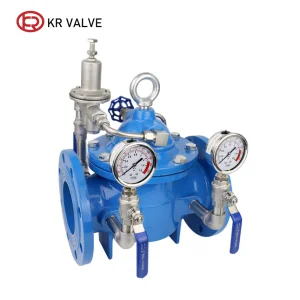
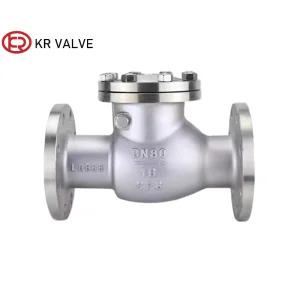
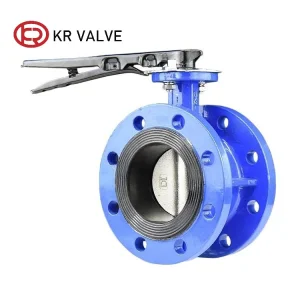
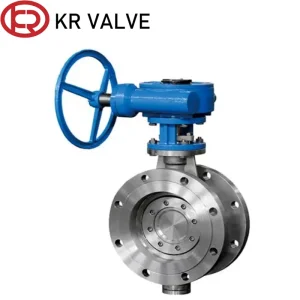
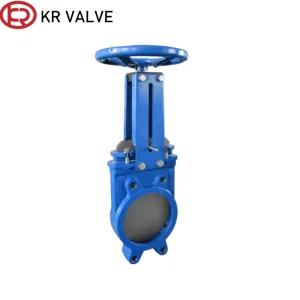
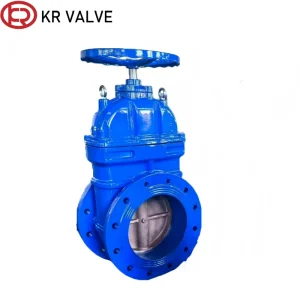
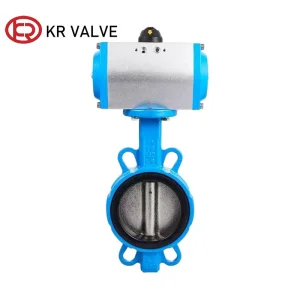
Pair your Y-type strainers with our high-performance non-return, butterfly, gate, and pressure relief control valves.