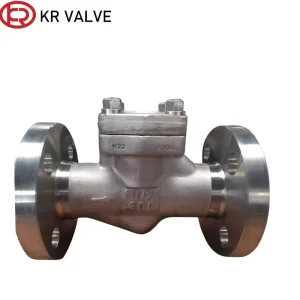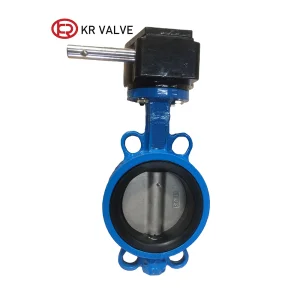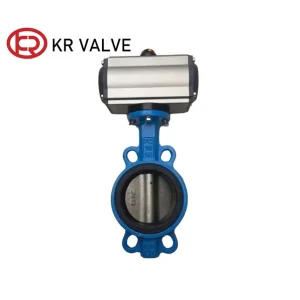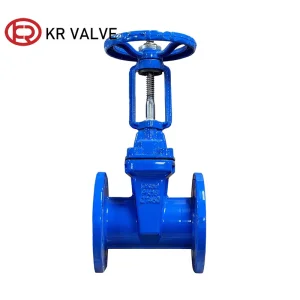
Featured Ball Type Check Valves & Industrial Valves
Explore our precision-engineered non-return valve solutions manufactured to international standards (DIN, BS, ANSI, PN16/PN25).
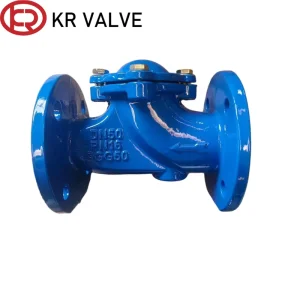
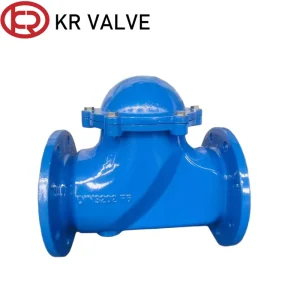
Ball Type Check Valve Mechanics & Hydrodynamic Fluid Dynamics
Understanding the self-cleaning, non-clogging mechanism of rubber-coated spherical closures in severe wastewater and industrial slurry pipelines.
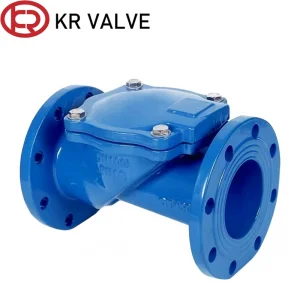
A Ball Type Check Valve (frequently designated as a non-return ball valve or HQ41X series in international standards) represents one of the most mechanically elegant and hydrodynamically efficient solutions for backflow prevention in fluid handling infrastructure. Unlike traditional swing check valves that rely on mechanical hinges, pins, and disc arms—which are inherently vulnerable to ragging, solids accumulation, and mechanical fatigue—a ball check valve utilizes an elastomer-encapsulated internal sphere moving vertically within an expanded guide channel.
When forward fluid pressure exceeds the cracking pressure threshold (typically ranging between 0.01 bar and 0.03 bar), the fluid forces the rubberized ball out of the seating surface and pushes it completely out of the flow path into a side cavity. This unique geometry establishes a 100% full-bore flow path, minimizing fluid drag and lowering head loss ($K$-factor) to near-zero levels compared to alternative valve topologies.
Full-Bore Hydrodynamics
The ball moves into a recessed off-line chamber during operation, leaving an unobstructed passage. This reduces pressure drop, prevents stringy debris accumulation, and permits inline mechanical cleaning (pigging).
Constant Rotation Sealing
Because the ball rotates freely in three dimensions with each cycle, wear is distributed uniformly over the entire surface area of the NBR/EPDM shell, extending seat seal longevity up to 300% over flat-disc seals.
Transient Surge & Water Hammer Protection
The elastomeric matrix of the ball absorbs kinetic impact energy upon back-pressure seating. Gravity and reverse flow velocity seat the ball silently without generating catastrophic pressure spikes.
Global Industry Trends & Engineering Sourcing Demands
Macroeconomic analysis of modern fluid transport projects, municipal upgrades, and global supply chain priorities.
Urbanization & Wastewater Infrastructure Expansion
Modern wastewater networks are experiencing unprecedented loads due to global urbanization. Traditional swing valves frequently suffer from ragging—the entangling of fibrous materials around valve hinges—requiring costly manual maintenance shutdowns. Procurement managers across Europe, North America, and Southeast Asia are increasingly standardizing on DIN F6/F7 and BS EN 1092 ball check valves to ensure operational continuity in unmanned pumping lift stations.
ESG Compliance & Energy Efficiency Directives
Energy consumption in municipal pumping accounts for up to 30% of utility operating expenses. High friction losses across restrictive valves directly inflate carbon footprints and electricity overhead. Ball check valves, with their streamlined internal geometry and minimal head loss coefficient ($K \le 0.6$), allow EPC contractors to downsize pump motor horsepower ratings, directly supporting Scope 2 carbon reduction goals.
China Industry 4.0: Supply Chain Resilience & Smart Factory Capabilities
How advanced metallurgy, precision CNC machining, and automated rubber vulcanization establish scalable global supply advantages.
As a leading Ball Type Check Valve Manufacturer and Supplier based in China’s industrial manufacturing hubs, our production ecosystem leverages full vertical integration. From foundry melting to automated electrostatic epoxy coating, China’s Industry 4.0 transformation has fundamentally redefined the quality-to-cost ratio for international buyers.
Automated Ductile Iron Casting
Using spectrographic analysis and automated green-sand molding lines, we ensure GGG40 / GGG50 ductile iron bodies achieve high tensile strength ($\ge 400 \text{ MPa}$) and elongation ($\ge 15\%$), eliminating internal porosity risks under high pressure spikes.
Precision Spherical Vulcanization
The hollow steel core inside our sealing ball is precision machined before undergoing high-pressure transfer molding with NBR or EPDM rubber. This guarantees uniform wall thickness, optimal shore hardness (70 ± 5 Shore A), and perfect sphericity.
Rigorous ISO 5208 / EN 12266 QA
Every single manufactured valve undergoes 100% shell hydrostatic testing at 1.5× nominal pressure ($PN \times 1.5$) and seat tightness testing at 1.1× nominal pressure before export clearance.
Industrial Non-Return Valve Comparison Matrix
Technical comparison for piping designers, consulting engineers, and procurement specialists evaluating check valve options for municipal and industrial pipelines.
| Valve Type | Flow Path & Geometry | Clogging Resistance | Head Loss ($K$-Factor) | Sealing Medium | Primary Application Field |
|---|---|---|---|---|---|
| Ball Check Valve (HQ41X) | Full-bore, unobstructed cavity | Superior (Self-Cleaning) | Low ($K \approx 0.5 - 0.8$) | NBR / EPDM Encapsulated Steel Ball | Sewage, Slurry, Heavy Wastewater, Viscous Fluids |
| Swing Check Valve | Hinged flap in main waterway | Moderate to Low (High Ragging Risk) | Moderate ($K \approx 1.5 - 2.5$) | Metal-to-Metal or EPDM Soft Seat | Clean Water Supply, Low-Solids Lines, Irrigation |
| Dual Plate Wafer Check Valve | Split dual plates with center spring | Poor (High Debris Catch Hazard) | High ($K \approx 2.5 - 4.0$) | NBR / EPDM / Viton Inlaid Seats | Compact HVAC Systems, Marine Clean Water |
| Lift / Piston Check Valve | Vertical piston with 90-degree turn | Unsuitable for Solids | Very High ($K \approx 5.0 - 7.0$) | Stellite Hardened Alloy / Stainless Steel | High-Pressure Steam, Clean Boiler Feedwater |
Elastomeric Ball Coating Material Engineering Guide
Nitrile Rubber (NBR) Encapsulation
Best suited for raw sewage, oily municipal wastewater, hydrocarbon-bearing fluids, and general drainage. Operating temperature envelope: $-10^\circ\text{C}$ to $+80^\circ\text{C}$. Excellent resistance to petroleum, fats, and mechanical abrasion.
Ethylene Propylene (EPDM) Encapsulation
Ideal for municipal potable water treatment, weak acidic/alkaline process solutions, HVAC chilled water, and ozone-treated lines. Operating temperature envelope: $-20^\circ\text{C}$ to $+120^\circ\text{C}$. Outstanding UV and weathering stability.
Localized Application Scenarios & Industrial Integration
Real-world deployment dynamics across key infrastructure sectors globally.
Municipal Sewage & Wastewater Treatment
In municipal pumping stations, wastewater contains plastic bags, textiles, grit, and fibrous sludges. Ball check valves installed on pump discharge lines prevent reverse flow when pumps cycle off. The rolling action of the ball strips away accumulated debris, eliminating valve seizures and eliminating maintenance callouts.
Mining Slurry & Tailings Transport
Mining processing plants convey abrasive mineral slurries containing fine particulate solids. Traditional metal seats erode rapidly in these conditions. Our heavy-duty NBR-encapsulated ball check valves absorb the micro-impacts of abrasive particles without scoring the seal face, ensuring extended operating cycles.
Industrial Process & Food Processing Plants
For industrial liquid handling, including starch slurries, paper pulp suspensions, and washdown systems, our stainless steel (CF8/CF8M) ball check valves offer superior resistance to chemical attack while providing gentle, low-shear closure dynamics.
High-Rise HVAC Chilled Water & Stormwater Pumping
Vertical installation on booster pump systems ensures quick, silent seating when pumps deactivate. The elastomeric cushion prevents reverse flow slam noise from propagating through commercial building piping structures.
Total Cost of Ownership (TCO) & Maintenance Engineering
Evaluating long-term economic advantages, inline repairability, and preventative maintenance strategies.
CAPEX vs. OPEX Financial Impact
While initial acquisition costs (CAPEX) for high-grade ductile iron ball check valves are comparable to standard swing valves, operating expenditure (OPEX) savings over a 10-year lifespan are substantial:
- Reduced Energy Draw: Lower flow friction saves up to 4-7% in annual pump motor energy usage.
- Zero Unplanned Downtime: Self-cleaning geometry eliminates ragging-induced emergency unblocking labor.
- Low-Cost Spare Parts: Replacing a worn rubber ball takes minutes without needing total valve body replacement.
Inline Top-Entry Maintenance Protocol
Our ball check valves feature a top-entry bonnet design. Maintenance teams can inspect or service the valve without removing the main valve body from the pipeline:
- Isolate line section and relieve internal pressure.
- Unbolt the top cover bonnet flange bolts.
- Lift out the internal sphere for visual seat inspection.
- Clean the internal cavity and re-bolt with a new bonnet O-ring gasket.
Frequently Asked Questions (FAQ)
Direct technical answers to questions asked by piping engineers, B2B procurement managers, and plant operators.
Complementary Valves & Flow Control Solutions
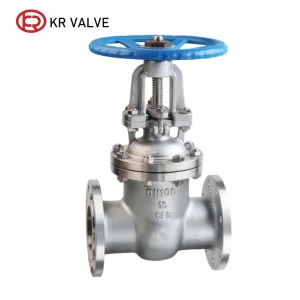
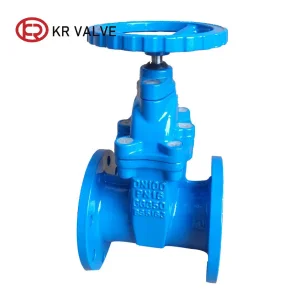
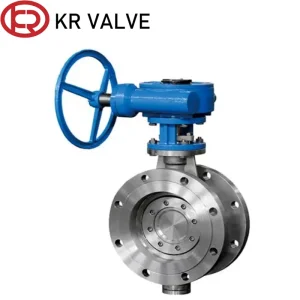
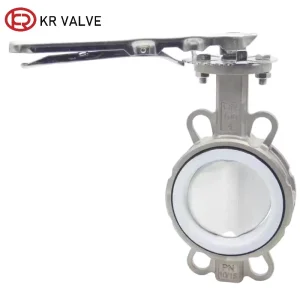
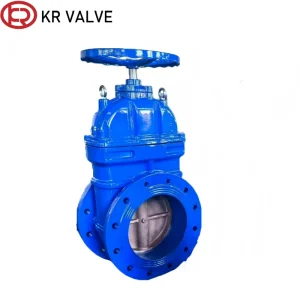
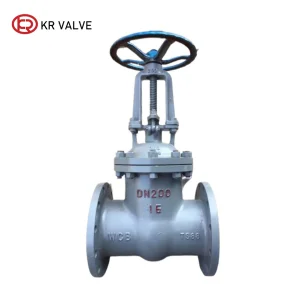
Browse our full series of check valves, gate valves, butterfly valves, and high-pressure industrial line equipment.