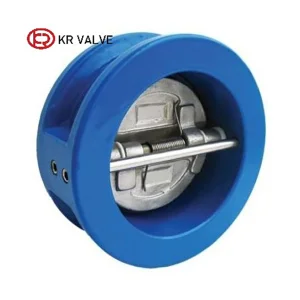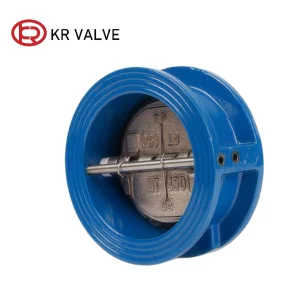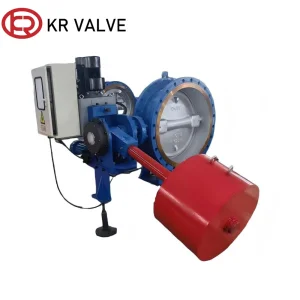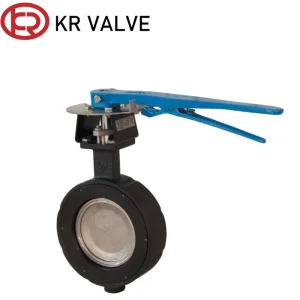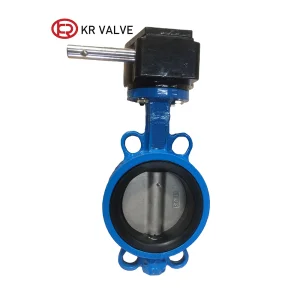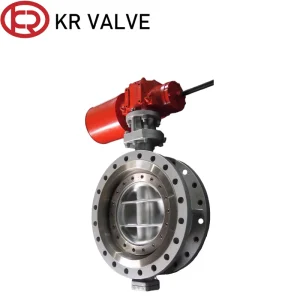
Featured Industrial Valve Showcase (Part 1)
High-precision valve direct-from-factory solutions engineered for municipal water networks, industrial fluids, and severe isolation service.
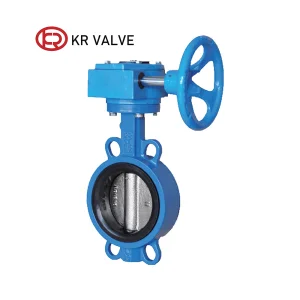
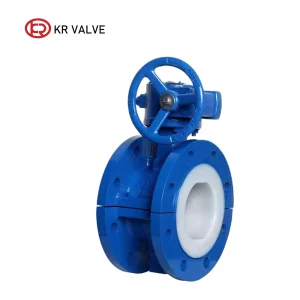
1. Executive Summary & Global Commercial State of Gate Valve Manufacturing
An authoritative engineering breakdown of global demand dynamics, material evolution, and supply chain strategies in the modern industrial valve sector.
Municipal Infrastructure
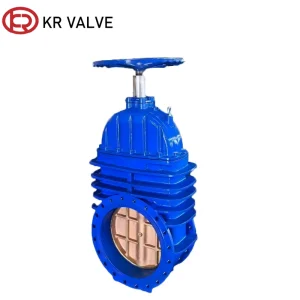
Potable water transmission mains demand zero-leakage bi-directional isolation. Resilient seated gate valves (BS 5163 / DIN 3352 F4) featuring EPDM-encapsulated wedges eliminate organic growth traps and prevent localized tuberculation within urban distribution lines.
Heavy Process & Refining
High-pressure steam lines and refining manifolds utilize Outside Screw and Yoke (OS&Y) metal-seated cast steel (WCB/WC6/CF8M) gate valves to maintain packing tightness under extreme thermal cycles up to 425°C, ensuring compliance with fugitive emissions mandates.
Slurry & Solids Handling
For mining tailings, wastewater sludge, and paper pulp processing, traditional wedge gate valves suffer from bottom pocket clogging. Stainless steel knife gate valves with bevel-machined edges slice through suspended solids to establish reliable metal-to-metal shutoff.
2. Sourcing Strategic Economics: China Factory Efficiency & Tianjin Cluster Ecosystem
Why international EPC contractors and premier valve OEMs partner with Tianjin manufacturing hubs to achieve unrivaled scale, quality consistency, and cost-to-performance optimization.
Full-Chain Metallurgical Control
From modern electric induction furnaces to automated resin-bonded sand molding lines, Chinese valve factories exercise absolute control over raw chemical compositions. Spheroidal graphite nodularity in Ductile Iron (GGG40 / GGG50) consistently exceeds 90%, providing structural tensile strength up to 450 MPa.
Multi-Axis Precision Machining
Computerized numerical control (CNC) horizontal machining centers execute flange facing, stem slot cutting, and body seating pocket profiling in single-clamp setups. This minimizes dimensional tolerance variance to within ±0.02mm, ensuring low operating torque and flawless seat alignment.
Rapid Delivery & Custom OEM Scaling
By coupling standardized component inventories (epoxy-coated wedge cores, stainless stems, gearboxes) with integrated maritime port logistics in Tianjin, standard order lead times drop from 12 weeks down to 15-25 days, backed by comprehensive EN 10204 3.1 material trace certificates.
3. Technical Deep-Dive: Engineering Selection & Standards Comparison Matrix
Understanding key structural variations—Non-Rising Stem (NRS) vs Outside Screw & Yoke (OS&Y), Resilient Seated vs Metal Seated—to ensure long-term mechanical reliability.
| Valve Type | Design Standards | Body Materials | Seat / Wedge Material | Pressure Class | Optimal Application |
|---|---|---|---|---|---|
| Resilient Seat Gate Valve (NRS) | DIN 3352 F4/F5BS 5163 | Ductile Iron (GGG40 / GGG50) | EPDM / NBR Fully Vulcanized Rubber Wedge | PN10 / PN16 / PN25 (150LB) | Underground Potable Water Mains, Municipal Sewage, HVAC Lines |
| Metal Seated Gate Valve (OS&Y) | API 600BS 5150 | Cast Iron / WCB / Stainless Steel | Bronze / SS304 / Stellite Facing Hard Seal | PN16 - PN100 (150LB - 600LB) | High Temp Steam, Hydrocarbons, Boiler Feedwater, Refining |
| Knife Gate Valve | MSS SP-81 | Ductile Iron / CF8 (SS304) / CF8M | SS316 Stainless Blade with PTFE / Metal Seat | PN6 / PN10 (150LB) | Mining Slurry, Paper Pulp, Ash Handling, Viscous Fluid Processing |
| Bronze Seat Hard Seal Gate Valve | DIN 3352ANSI B16.34 | Cast Iron GG25 / Ductile Iron GGG40 | Bronze Trim Ring (CuZn39Pb2 / Cast Bronze) | PN10 / PN16 | Industrial Water Lines, Irrigation, Raw River Water Intake |
Non-Rising Stem (NRS) Mechanics
In NRS configurations, the stem thread engages directly inside the internal wedge core. As the handwheel turns, the stem rotates without vertical movement, keeping the overall valve profile compact. This design is optimal for buried underground service boxes, limited headroom plant rooms, and subsea valve chambers.
Outside Screw & Yoke (OS&Y) Mechanics
OS&Y gate valves feature external stem threading situated outside the fluid conduit. When operated, the stem rises vertically with the wedge. This prevents corrosive process line fluid from contacting stem threads and provides plant operators with an immediate visual indication of open/closed status.
4. Field Application Engineering: Tailored Solutions Across Harsh Operating Environments
Deploying optimized gate valve configurations to mitigate cavitation, galvanic corrosion, scale accumulation, and pressure surge damages in real-world scenarios.
Coastal Seawater & Desalination
High salinity environments trigger severe pitting corrosion in standard cast iron. Our seawater-grade gate valves feature duplex stainless steel stems (UNS S31803), fusion-bonded epoxy internal coatings (>300µm thickness), and aluminum-bronze hard seats to deliver over 25 years of continuous service.
District HVAC & High-Rise Fire Protection
HVAC chilled water loops and high-pressure UL/FM fire protection networks require minimal pressure drops during emergency full-bore flow. Resilient seated flanged gate valves provide frictionless straight-through flow paths, eliminating head loss penalties.
Petrochemical & Gas Transmission
For refined oil product and natural gas isolation, fire-safe compliance (API 607) combined with self-relieving body cavity bleed ports prevents hazardous over-pressurization caused by ambient solar expansion of trapped liquid within the bonnet chamber.
5. Industry Micro-Trends: Smart Valves, Eco-Coatings & Zero-Fugitive Emissions
How modern industrial gate valve manufacturing is integrating digital intelligence and environmentally certified material science to meet global ESG goals.
IoT-Enabled Torque Monitoring
Integrating intelligent electric actuators with wireless Modbus / HART sensors enables real-time monitoring of seating torque signatures. Predictive maintenance algorithms detect subtle wedge drag anomalies before mechanical binding causes catastrophic pipeline shutdowns.
WRAS / NSF-61 Non-Toxic Epoxy
Drinking water safety standards mandate non-leaching coatings. Electrostatically applied non-toxic thermosetting Fusion Bonded Epoxy (FBE) powder coatings provide smooth internal hydraulic surfaces (Hazens-Williams C-factor >140) while preventing bacterial colonization.
ISO 15848-1 Low-Fugitive Glands
To combat volatile organic compound (VOC) emissions in chemical process plants, modern bonnet glands incorporate graphite packing rings reinforced with live-loaded Belleville spring washers, achieving ISO 15848-1 Class CC tightness certifications.
6. International Buyer’s Quality Audit & Procurement Verification Protocol
A step-by-step Quality Assurance (QA) inspection checklist for procurement officers auditing gate valve suppliers and verifying factory compliance.
Phase 1: Raw Material & Foundry Verification
- Spectrographic Metallurgical Analysis: Verify chemical balance (C, Si, Mn, P, S, Mg) of iron/steel heats.
- Tensile & Elongation Testing: Confirm minimum elongation specs (>10% for Ductile Iron GGG40).
- Ultrasonic Wall Thickness Measurement: Verify compliance with EN 1092-2 and ASME B16.34 casting thickness thresholds.
Phase 2: Hydrostatic & Functional Factory Testing
- Shell Test (1.5x PN Rating): Verify zero porosity leakage through body/bonnet casting under elevated pressure.
- Bi-Directional Seat Test (1.1x PN Rating): Confirm high-pressure rate A tightness (bubble-tight for resilient seats).
- Low-Pressure Air Seat Test (0.6 MPa): Detect microscopic seal seat gaps prior to factory packaging.
7. Frequently Asked Questions (FAQ) for Gate Valve Specification & Sourcing
Direct answers from our engineering technical team regarding installation, standard compliance, and operational troubleshooting.
Complete Flow Control Solutions & Valve Series (Part 2)
Complementary non-return, filtration, and automated flow isolation valve products manufactured to international project specifications.