
Industrial Concentric Flange Butterfly Valves & Accessories
Explore our premier lineup of concentric double-flanged, lined, and gear-operated butterfly valves, manufactured to ISO, DIN, ANSI, and BS global standards.
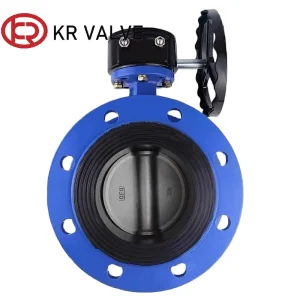
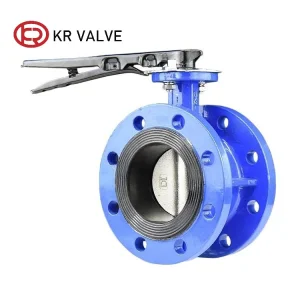
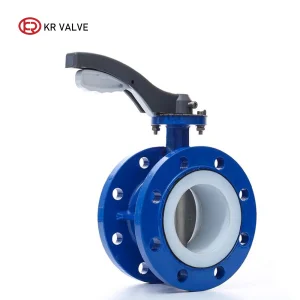
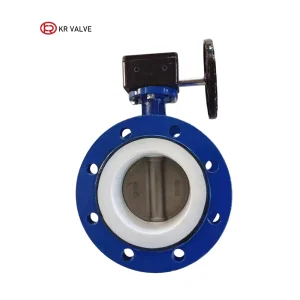
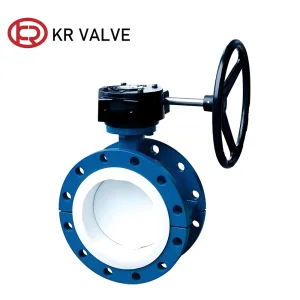
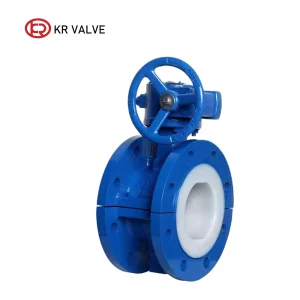
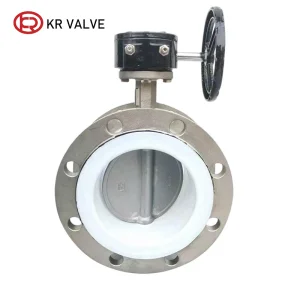
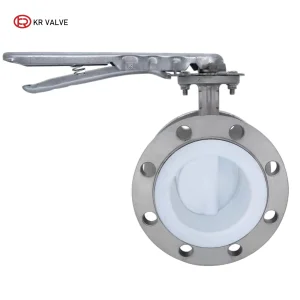
Engineering Fundamentals of Concentric Flange Butterfly Valves
As a leading Concentric Flange Butterfly Valve Supplier & Factory, KR Valve (Tianjin) Co., Ltd. delivers high-performance flow control mechanisms engineered for demanding municipal, chemical, power generation, and marine applications worldwide.
The concentric (zero-offset) butterfly valve represents one of the most efficient, cost-effective isolation and throttling solutions in modern fluid dynamics. In a concentric configuration, the valve stem axis is located precisely on the centerline of the valve disc and the symmetrical bore of the valve body. Sealing is accomplished through an interference fit between the disc's polished outer periphery and a resilient elastomer or fluoropolymer seat lining.
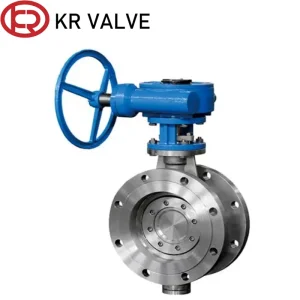
Unlike wafer or lug design variants, the double-flanged body design provides superior structural rigidity and stress isolation. Featuring integral pipeline connection flanges conforming to EN 1092-2, ANSI B16.10, ISO 5752, and BS4504 standards, double-flanged concentric butterfly valves absorb line stress, thermal contraction, and mechanical pipe vibration without transferring load to the elastomeric seat lining—ensuring bi-directional zero-leakage tight shut-off even during extreme hydraulic pressure fluctuations.
Global Market Dynamics & Macro Industrial Trends
The global industrial valve market is experiencing a profound technological transition, driven by water scarcity, aggressive municipal infrastructure upgrades, and stringent environmental zero-discharge regulations.
Recent macro-market research indicates that the global butterfly valve sector is expanding at a Compound Annual Growth Rate (CAGR) of 5.8%, projected to surpass $12.4 Billion by 2030. Within this market segment, double-flanged concentric butterfly valves account for a major share of municipal water utility capital expenditure (CAPEX) due to their robust lifespan and low total cost of ownership (TCO).
Middle East Desalination Mega-Projects
Seawater Reverse Osmosis (SWRO) facilities in GCC countries demand full-lined PTFE and Duplex Stainless Steel concentric flanged valves capable of resisting high-salinity corrosion and abrasive particulate slurry.
North American Municipal Retrofits
Aging water distribution networks across North America are undergoing extensive modernization. Low-lead compliant (NSF/ANSI 61 & 372) ductile iron resilient-seated flanged valves are replacing obsolete gate valves for automated flow zoning.
Asia-Pacific Industrial Expansion
Rapid urbanization and chemical processing plant growth across China, Vietnam, and India require split-body WCB and CF8M PTFE-lined concentric valves engineered to contain aggressive acids and high-temperature solvents.
Material Science & Seat Lining Engineering Matrix
Choosing the precise combination of body metallurgy, disc surfacing, and elastomeric or fluoropolymer liner is critical to ensuring valve longevity and operational integrity.
As a trusted factory direct supplier, KR Valve utilizes advanced casting techniques—including lost-wax investment casting for stainless steel bodies and precision resin-bonded sand casting for ductile iron (GGG40/GGG50)—guaranteeing zero porosity, high tensile strength, and exact dimensional tolerances.
| Component | Material Options | Technical Properties | Recommended Applications |
|---|---|---|---|
| Valve Body | Ductile Iron (GGG40 / GGG50) Cast Carbon Steel (WCB A216) Stainless Steel (CF8 / CF8M) |
High mechanical strength, thermal shock resistance up to 400 bar rupture threshold. Epoxy powder coated (≥250µm thickness). | Potable water lines, HVAC systems, oil & gas transmission, industrial process piping. |
| Resilient Seat Liner | EPDM (Drinking Water Approved) NBR (Nitrile) FKM (Viton) |
Superior memory recovery, bubble-tight seal. Operating temp: -20°C to +130°C depending on compound formulation. | Municipal water (WRAS/NSF certified), wastewater, oily media, compressed gas. |
| Fluoropolymer Liner | Virgin PTFE RPTFE (Glass-filled) PFA Lined (Molded) |
Near-zero friction coefficient, absolute chemical inertness across pH 0 to 14. Operating temp: -30°C to +200°C. | Concentrated acids, aggressive solvents, pharmaceutical processing, high-purity chemical loops. |
| Valve Disc | Ductile Iron + Nylon Coated 316L Stainless Steel Aluminum Bronze (C95800) |
Mirror-polished disc edge (Ra ≤ 0.4µm) reduces seat friction and operational torque by up to 35%. | Seawater, brackish water, chemical slurries, high-velocity cooling loops. |
| Valve Stem / Shaft | SS420 (17-4PH) SS316 Stainless Steel Monel K500 |
One-piece continuous shaft design with anti-blowout retaining structure conforming to API 609 safety specs. | High-cycle automatic actuation, high differential pressure operating conditions. |
Actuation Engineering & IoT Smart Valve Integration
Modern fluid management systems require seamless integration between field mechanical valves and centralized SCADA control networks.
KR Valve manufactures concentric flange butterfly valves featuring universal ISO 5211 direct-mounting top flanges. This standardization enables effortless field mounting of manual hand levers, self-locking worm gearboxes, pneumatic rack-and-pinion actuators, and intelligent electric actuators without requiring custom mounting brackets or drive adaptors.
Manual Gearbox Automation
Enclosed self-locking worm gearboxes with IP67/IP68 submersible ratings. Integrated mechanical stroke limit switches provide tactile position indication for manual isolation points.
Pneumatic Spring-Return Control
Single-acting spring return and double-acting pneumatic positioners with NAMUR solenoid interfaces. Engineered for ultra-fast fail-safe emergency shutdown (ESD) systems within 1.5 seconds.
Intelligent IoT Electric Actuation
Modulating electric positioners featuring 4-20mA feedback, HART, Modbus, and Profibus protocols. Real-time stem torque diagnostic monitoring alerts operators to seat wear prior to failure.
Macro Industry Solutions & Field Performance Case Studies
Discover how our specialized concentric flange butterfly valves resolve complex fluid handling challenges across diverse global environments.
Challenge: Large-diameter municipal trunk lines suffer from high pressure drops, galvanic corrosion, and seal degradation caused by high ambient temperatures and residual chlorination.
KR Valve Solution: We deployed DN1200 Double Flange Concentric Butterfly Valves featuring GGG50 ductile iron bodies, fusion-bonded epoxy coating (300µm), WRAS-approved EPDM vulcanized liners, and 316L polished discs. The double-flanged design simplified installation between pipeline flanges and eliminated seat deflection, delivering zero maintenance over 8+ years of continuous service.
Challenge: Conveying concentrated sulfuric acid and organic solvents caused rapid destruction of conventional rubber-lined butterfly valves, creating severe safety risks and frequent unplanned downtime.
KR Valve Solution: Engineering custom Split-Body Full PTFE Lined Flange Butterfly Valves (WCB/CF8 body). The virgin PTFE liner completely encapsulates the body bore and stem passages, isolating all metallic components from fluid contact. The split-body construction allows easy liner replacement on-site, cutting maintenance expenditure by 65%.
Complete Flow Control Equipment & Related Valve Range
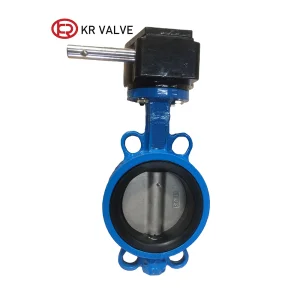
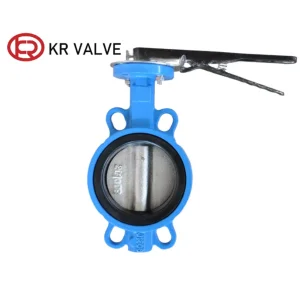
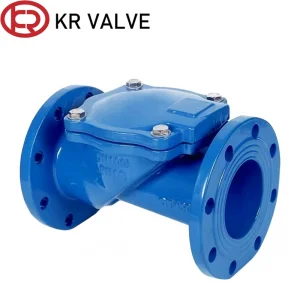
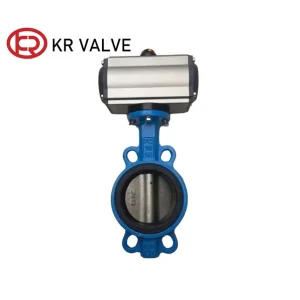
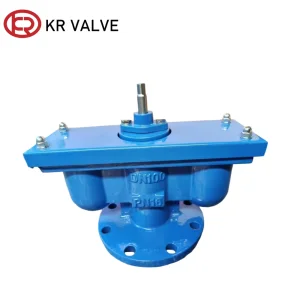
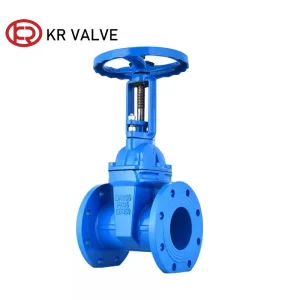
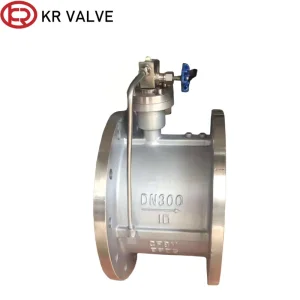
Explore our full operational catalog including wafer butterfly valves, non-return check valves, gate valves, and automated control devices.
Hydraulic Sizing Calculations & Torque Physics
Proper valve sizing requires evaluating flow velocity, head loss, and hydrodynamic torque coefficients to prevent cavitation and ensure actuator sizing precision.
When selecting a concentric flange butterfly valve, the valve capacity index ($C_v$ in US units or $K_v$ in metric units) dictates fluid volume pass-through at a 1 bar pressure differential. The fundamental relationship is expressed as:
Where Q = Volumetric flow rate (m³/h), K_v = Flow coefficient, ΔP = Pressure drop across valve (bar), and G = Specific gravity of fluid (Water = 1.0).
Operating torque ($T_{total}$) is the critical metric for specifying gear operators and actuators. Total torque consists of three primary components:
- Seating / Unseating Torque ($T_s$): Torque required to overcome friction between disc edge and resilient/PTFE seat lining under static pressure.
- Dynamic Hydrodynamic Torque ($T_h$): Torque generated by fluid velocity forces acting asymmetric upon disc profile at partial opening angles (typically peaking at 60°-70° disc inclination).
- Stem Bearing Friction Torque ($T_b$): Mechanical friction inside shaft bushings and stem packing gland seals under line pressure loading.
Failure Mode Analysis & Preventive Maintenance Protocol
Ensuring operational longevity demands rigorous quality controls during manufacturing and proactive maintenance during plant operational cycles.
| Failure Mode | Root Cause Analysis | Factory Prevention Strategy | On-Site Maintenance Protocol |
|---|---|---|---|
| Stem Packing Leakage | Thermal cycling, high frequency actuation, or axial stem alignment play causing gland seal wear. | Dual O-ring stem design with anti-blowout retaining ring and self-lubricating PTFE thrust bearings. | Inspect gland flange bolting torque annually; replace external shaft O-rings without dismantling valve. |
| Seat Tearing / Abrasion | Entrained particulate debris, operation beyond temperature limits, or dry running without lubrication. | Precision mirror polishing of disc perimeter (Ra ≤ 0.4µm) and vulcanized seat bonding to body shell. | Flush pipeline prior to commissioning; install upstream Y-type strainers in high-grit fluid media. |
| High Operational Torque | Seat swelling from chemical incompatibility or sediment build-up in disc shaft journal bearings. | Rigorous compound verification (EPDM/NBR/PTFE) and chemical compatibility lab testing for client fluid profiles. | Conduct bi-annual full-stroke exercise cycling; inspect gear operator grease lubrication level. |
| Flange Sealing Blowout | Inconsistent flange bolt torque or misalignment between mating pipe flanges during installation. | Integral molded-in flange face o-ring profile on double-flange seats, eliminating separate flange gaskets. | Utilize calibrated torque wrenches and cross-pattern bolt tightening sequence during installation. |
Frequently Asked Questions (Engineering & Procurement FAQ)
Get authoritative, expert answers to key technical questions regarding concentric flange butterfly valve design, selection, installation, and international compliance.
Request Technical Specifications & Factory Quote
Partner with China's leading concentric flange butterfly valve manufacturer. Our engineering team responds within 24 hours with CAD drawings, technical data sheets, and competitive factory pricing.