
How to Choose the Right One Way Valve for Your Needs?

Time:2026-11-25 Author:Liam
0%

Choosing a One Way Valve is not just about matching a pipe size or selecting the lowest-priced component. The right choice depends on what flows through the line, how the system operates, and what happens when flow stops. A valve used with clean water may behave differently with air, oil, or a fluid containing fine particles. Pressure, temperature, flow rate, and installation direction all matter. A clear flow-direction marking, for instance, can help prevent a simple but costly installation error. Small details can cause trouble. An unsuitable cracking pressure may restrict flow, while a poor seal can allow unwanted backflow. Those issues may appear only during startup, shutdown, or changing demand.

This guide explains how to compare valve types, body and seal materials, connection styles, and operating limits. It also considers response time, maintenance access, and the space available around the pipe. Start with the system’s actual conditions, not a general product description. Check manufacturer data and verify that stated pressure and temperature ratings match the intended service. A specification sheet is useful, but it cannot replace careful review of the complete installation. No single design fits every application. And a familiar choice is not automatically the safest one. Some uncertainty remains. When details are unclear, confirm them with the valve supplier or a qualified engineer before installation.
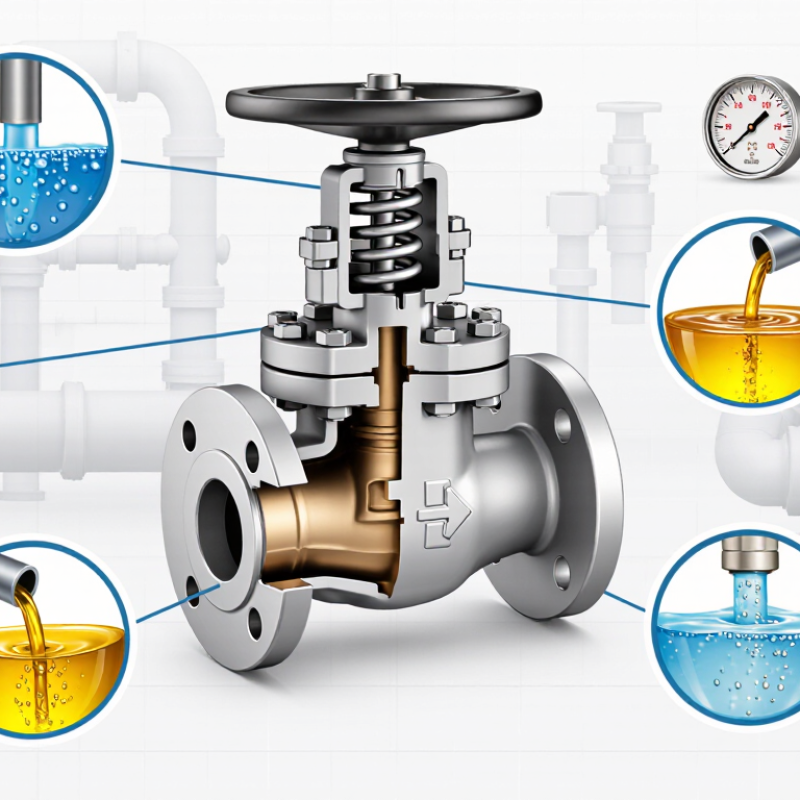
How to Choose the Right One Way Valve for Your Needs?

Understanding How One-Way Valves Control Flow

A one-way valve, often called a check valve, allows fluid to move in one direction and closes when flow reverses. A spring, hinged disc, or internal ball responds to pressure differences. When forward pressure is sufficient, the valve opens; when pressure falls, it seats against reverse flow. Direction matters. A valve that closes too slowly may allow a brief backflow surge, while one with excessive resistance can restrict normal flow.

Choose a valve by matching its material, connection size, pressure rating, and opening pressure to the system. Also consider the fluid: clean water, air, and viscous liquids can behave differently inside the same valve design. The U.S. Department of Energy’s Improving Pumping System Performance: A Sourcebook for Industry reports that pumping systems account for nearly 20% of global electricity demand. That figure makes pressure loss worth checking in pump applications; a poorly matched valve can add resistance, though the actual effect depends on the whole system.

Tips: Check the arrow on the valve body before installation, then compare the manufacturer’s pressure-drop data with your expected flow rate. Leave enough access for inspection. It is easy to overlook orientation. If the valve chatters, closes noisily, or fails to stop reverse flow, review sizing, installation position, and operating pressure rather than assuming the valve is defective.

Identifying Your System’s Pressure and Flow Requirements

How to Choose the Right One-Way Valve for Your Needs?
Identifying Your System’s Pressure and Flow Requirements

Pressure and flow data are the starting point for selecting a one-way valve. Record normal and peak inlet pressure, outlet pressure, flow rate, and fluid temperature. Check the valve’s maximum working pressure and cracking pressure—the minimum pressure needed to open it. Then confirm its flow capacity at your expected operating conditions. A valve that fits the pipe may still restrict flow or open too late.

The U.S. Department of Energy’s Improving Pumping System Performance guide reports that pumping systems can use 25–50% of the energy in some industrial facilities. That makes unnecessary pressure loss worth checking. Compare the valve’s pressure-drop data at your actual flow rate, not just its nominal size. Account for thicker fluids, pulsing pumps, and sudden shutdowns, too. In practice, early estimates can be off; a measured pressure reading may change the choice.

Tips: Check pressure at the valve inlet and outlet during operation. Confirm the fluid and temperature are compatible with the valve materials. Don’t size by pipe diameter alone. A short test under real conditions can reveal chatter, slow opening, or excess pressure drop.

How to Choose the Right One Way Valve for Your Needs?

Identifying Your System’s Pressure and Flow Requirements

These representative application values illustrate how pressure and flow needs can differ; they are not valve ratings or universal design limits. Choose a one-way valve rated above your system’s maximum pressure, and verify its flow capacity and pressure drop at your required flow using the manufacturer’s specifications.

Comparing Valve Types, Materials, and Configurations

How to Choose the Right One Way Valve for Your Needs?
Comparing Valve Types, Materials, and Configurations

Choosing a one-way valve starts with the fluid, flow rate, and available pressure. A spring-loaded check valve can close quickly and suit compact lines, but its spring adds resistance. Swing checks often allow freer flow in larger pipes, though installation orientation matters. Ball checks use a moving ball to block reverse flow and can work well with some viscous fluids. Small details matter.

Material choice should match the fluid and operating temperature. Stainless steel may suit many demanding water or process applications, while plastics can be useful where corrosion resistance and low weight matter. Elastomer seals also vary: a seal that works with water may swell or stiffen in another fluid. Confirm compatibility with technical data, not appearance alone. I would still verify the exact fluid mixture and temperature range; those details are easy to overlook.

Configuration affects maintenance and fit. Threaded ends are common on smaller lines, while flanged connections can simplify removal in larger systems. Inline models need less installation space; wafer-style designs fit between flanges but require compatible piping. Check cracking pressure, flow direction markings, and service access before ordering. There is no universal winner, and a tidy comparison chart can miss a cramped installation or an unexpected pressure drop.

Selecting the Right Valve Size and Connection

Choosing the right one-way valve starts with the actual flow, not just the pipe diameter. Check the required flow rate, operating pressure, fluid type, and acceptable pressure drop. A valve that is too small may restrict flow and create noise; an oversized valve may not open reliably at low flow. Small details matter. Note the fluid’s viscosity and whether it carries particles, since both can affect movement inside the valve.

Compare the valve’s connection size and type with the existing pipe or equipment. Measure the thread or outer diameter rather than estimating by sight. Then confirm whether the connection is threaded, flanged, or designed for a specific tube fitting. Check the pressure and temperature ratings against the system’s real operating conditions, including brief pressure spikes. Close enough is not always close enough. A fitting that appears to match can still leak if its thread form or sealing method differs.

Installation direction and available space also affect the choice. Check the flow arrow and the manufacturer’s guidance for horizontal or vertical mounting; some designs respond differently depending on orientation. Leave room for tools and future inspection. One imperfect but useful step is to compare the valve drawing with the actual installation before ordering. Measurements taken in a crowded cabinet can be wrong, so verify them twice.

Evaluating Installation, Maintenance, and Service Life

A one-way valve should match the actual fluid, pressure, temperature, and flow rate—not just the pipe size. Check the body arrow against the intended flow before installation. Leave enough room to remove the valve cover or cartridge without dismantling nearby equipment. Poor alignment can strain the body and affect sealing. Keep service access clear. Small details matter.

Maintenance should follow operating conditions and cycle frequency. The U.S. Department of Energy’s Improving Compressed Air System Performance: A Sourcebook for Industry estimates that leaks can waste 20–30% of compressor output in poorly maintained systems. This figure concerns the whole compressed-air system, not one valve, but it shows why routine leak checks matter. Inspect for reverse leakage, debris, corrosion, and unusual chatter. Record pressure readings and inspection dates. Service life varies with media, temperature, and cycling; there is no reliable universal replacement interval. A valve on a clean, steady-flow line may last far longer than one exposed to frequent starts and contamination. Keep a simple maintenance log. It may reveal wear patterns, though records alone cannot explain every failure.

How to Choose the Right One Way Valve for Your Needs? - Evaluating Installation, Maintenance, and Service Life

Valve type Typical installation considerations Flow and pressure considerations Maintenance considerations Service-life considerations Common applications
Swing check valve Install in the direction shown by the flow arrow. Many models are intended for horizontal lines; vertical installation is generally suitable only when flow is upward and the specific design permits it. Usually offers relatively low flow resistance when fully open. May slam or cause water hammer if flow reverses rapidly or the valve closes slowly. Inspect the hinge, disc, seat, and internal clearances for wear, deposits, or damage. Access for inspection may require removing the cover or valve from the line. Life depends on cycling frequency, flow conditions, fluid cleanliness, materials, and water hammer. There is no dependable fixed service-life figure; replace or repair when leakage, wear, or unreliable closure is found. Water, wastewater, and general liquid piping where space is available and flow is relatively steady.
Lift check valve Typically installed with the flow passing beneath a guided disc or piston. Many designs require horizontal installation; confirm orientation and permitted position for the selected model. Provides guided closure, but the flow path can create more pressure loss than a full-bore swing design. Requires sufficient pressure to lift the closing element. Check the guide, disc or piston, spring if fitted, and seat for sticking, wear, or contamination. Small clearances can be affected by particles. Wear is influenced by operating cycles, pressure changes, fluid cleanliness, and material compatibility. Monitor for sticking, leakage, or excessive pressure drop rather than relying on a set number of years. Steam, gas, and liquid services where guided movement and a compact valve arrangement are suitable.
Spring-loaded inline check valve Often compact and suitable for installation in horizontal or vertical lines, subject to the valve’s design. Follow the flow arrow and the manufacturer’s orientation requirements. The spring helps the valve close promptly and can reduce reverse flow, but the cracking pressure and spring force add resistance. Select a model suited to available operating pressure. Inspect the spring, sealing element, and seat for fatigue, corrosion, deposits, or damage. Verify that the valve opens at the required pressure and closes reliably. Repeated cycling, pressure surges, corrosion, and temperature can affect spring and seal condition. Service life varies by duty and materials; periodic functional checks are useful in critical service. Compact process lines, pump discharge lines, and systems where faster closure is needed.
Dual-plate check valve Usually wafer-style and fitted between compatible pipe flanges. Confirm face-to-face dimensions, flange compatibility, flow direction, and any required straight-pipe or orientation guidance. Its short face-to-face length and two-part disc make it compact. Pressure loss and closure behavior depend on the design, size, and flow conditions. Inspect plates, hinge pins, springs, and seats for wear or deposits. Ensure sufficient clearance for the plates to open and close without obstruction. Spring and hinge wear can increase with frequent cycling or pulsating flow. Evaluate actual condition and leakage; no universal replacement interval applies. Space-limited water, HVAC, and process piping where a wafer pattern is compatible with the system.
Ball check valve Install in the marked flow direction. Some designs can operate in more than one orientation, but orientation and minimum flow requirements vary by model. A ball moves away from the seat during forward flow and returns to block reverse flow. The ball’s movement and seat design affect pressure loss and closing performance. Check the ball and seat for wear, swelling, deposits, or damage. In dirty services, confirm that solids will not prevent the ball from seating or moving freely. Service life depends strongly on solids, abrasiveness, chemical compatibility, and cycling. Inspect for leakage and restricted movement; replace worn balls or seats where the design allows. Some wastewater, slurry, and drainage services, when the valve materials and passage are suitable for the fluid.

Selection note: Check the fluid, pressure, temperature, flow rate, allowable pressure drop, installation orientation, and risk of water hammer before choosing a valve. Service life cannot be predicted from valve type alone; follow the product documentation and base maintenance or replacement on operating conditions and inspection findings.

FAQS

What does a one-way valve do?

It lets fluid move in one direction and closes when flow reverses. A spring, hinged disc, or ball may control the movement. Direction matters.

How can I check the correct installation direction?

Look for the flow arrow on the valve body and compare it with the system’s flow direction. It is easy to overlook this small mark.

How do I choose the right valve size?

Start with the required flow rate, operating pressure, fluid type, and acceptable pressure drop. Pipe diameter alone is not enough. Measure the connection, too.

What can happen if a valve is too small or too large?

A small valve may restrict flow and create noise. An oversized valve may not open reliably when flow is low. Neither fit is ideal.

Which connection details should I verify?

Check whether the fitting is threaded, flanged, or made for a specific tube connection. Measure the thread or outer diameter instead of guessing by sight.

Why should pressure and temperature ratings match actual conditions?

The system may experience brief pressure spikes as well as normal operating conditions. Compare the ratings with both, and check the fluid’s temperature range.

Can valve orientation affect how it works?

Yes. Some designs behave differently when mounted horizontally or vertically. Check the installation guidance and leave room for tools and inspection.

What should I check if the valve chatters or makes noise?

Review its size, position, and operating pressure. Also check whether it stops reverse flow. A noisy valve is not automatically defective.

Why does pressure drop matter in a pumping system?

Extra resistance can make a pump work harder, though the effect depends on the whole system. Pumping systems use nearly 20% of global electricity demand, according to a cited energy source. It is worth checking.

Conclusion

Choosing the right One Way Valve starts with understanding how it prevents reverse flow while allowing fluid or gas to move in the intended direction. First, assess your system’s operating pressure, expected flow rate, and the type of media being handled. These requirements help narrow down suitable valve designs and prevent problems such as excessive pressure loss, leakage, or premature wear.

Next, compare valve types, materials, and configurations based on operating conditions and compatibility. Select a size and connection that match the pipeline and installation space, while ensuring the valve can perform reliably at the required flow rate. Also consider how accessible the valve will be for inspection, cleaning, or replacement. A well-matched design can simplify maintenance and support a longer service life, making it a dependable choice for your specific system.

Liam

Liam

Liam is a dedicated marketing professional with a profound expertise in the industry, where he excels at highlighting the unique advantages of our core products. With a keen understanding of market trends and consumer needs, Liam frequently updates our company’s professional blog, providing......