
China Top 10 Checkmate Valve Manufacturers?

Time:2026-10-10 Author:Liam
0%

China’s Checkmate Valve market has expanded with stronger machining capacity, broader export experience, and more specialized industrial designs. This guide examines ten manufacturers that deserve careful attention from international buyers.

The ranking considers product range, pressure performance, material control, testing procedures, certifications, lead times, and after-sales support. Checkmate Valve suppliers may serve water treatment, chemical processing, fire protection, mining, and general industrial systems. Each application creates different demands. A compact valve may look efficient, yet unsuitable sealing materials can fail under heat, corrosion, or repeated cycling.

R. W. Greene, a respected valve-engineering author, offered a practical principle: “Select the valve for the service, not merely the pipe size.” That advice remains highly relevant when comparing Chinese manufacturers. A dependable supplier should explain body materials, seat construction, pressure ratings, inspection routines, and installation limits. Factory photographs help, but documented test results matter more.

The list is not absolute. Ranking suppliers across China can be difficult because public information changes, English documentation may be incomplete, and some factories rely heavily on trading companies. That weakness deserves attention. Buyers should verify certificates, audit production records, request samples, and confirm spare-parts support before placing large orders.

Look beyond the catalog. Ask sharper questions. This review aims to identify capable manufacturers while recognizing the practical gaps that can influence real-world valve performance.
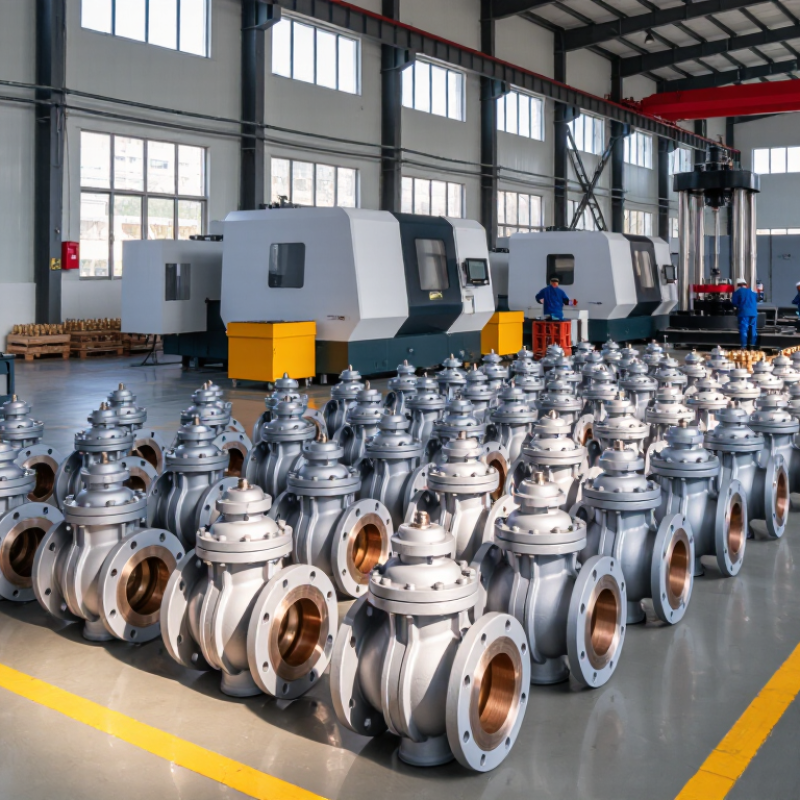
China Top 10 Checkmate Valve Manufacturers?

What Is a Checkmate Valve and How Does It Work?

A checkmate valve is commonly used to describe a one-way check valve. It allows fluid to move forward and blocks reverse flow. In water, oil, air, and process piping, this simple action protects pumps and connected equipment. The valve does not need a handwheel or electric actuator. Pressure and flow operate it automatically.

Inside the body, a disc, ball, or piston responds to pressure changes. Forward pressure lifts the closing element from its seat. The passage opens, and the medium continues through the pipeline. When flow slows or reverses, the element returns to its seat. A spring may assist closure. Gravity can also help, depending on the installation position.

The closing speed matters. A slow valve may allow backflow and water hammer. A fast-closing design can create a sharp pressure shock. During field inspections, technicians should check the arrow on the body, flange alignment, and the expected flow direction. Dirt on the seat is a common cause of leakage. It is easy to overlook.

Material selection requires practical judgment. Stainless steel may suit corrosive fluids, while ductile iron can fit many water systems. Temperature, pressure, fluid cleanliness, and maintenance access must be reviewed together. There is no universal best valve. In real projects, a technically suitable model can still fail because the pipe layout was misunderstood. Drawing checks and operating records remain essential.

How to Evaluate China’s Checkmate Valve Manufacturers

How to Evaluate China’s Checkmate Valve Manufacturers

A reliable evaluation begins with the valve’s actual service conditions. Confirm pressure class, temperature range, media, connection type, and installation direction. A manufacturer should explain how its design prevents reverse flow, water hammer, and premature disc wear. Vague answers deserve caution.

Review more than a catalog. Request material certificates, dimensional drawings, pressure-test records, and heat-number traceability. Check whether the factory follows recognized standards, such as API, ASME, EN, or applicable customer specifications. Independent inspection can verify body material, coating thickness, hydrostatic testing, and seat leakage. Small details matter.

Visit the production site when possible. Observe machining, welding controls, cleaning, assembly, and final testing. A clean workshop helps, but it proves little alone. Ask to see rejected parts and corrective-action records. No supplier passes every audit perfectly. That is normal. What matters is whether problems are documented and corrected.

Compare sample valves under realistic conditions, not only attractive photographs. Test opening pressure, leakage, corrosion resistance, and repeated cycling. Confirm spare-part availability, inspection documents, packaging quality, and communication after the purchase order. A low quotation may hide thinner sections, weaker springs, or limited testing. My own evaluation would remain cautious when a supplier promises everything but provides no measurable evidence.

Profiles of China’s Top 10 Checkmate Valve Manufacturers

Profiles of China’s Top 10 Check Valve Manufacturers

China’s check valve sector serves water treatment, energy, chemicals, mining, and process engineering. Fortune Business Insights valued the global industrial valves market at about USD 76.97 billion in 2023. Its forecast also indicates steady expansion through 2032. This growth increases demand for dependable backflow protection, not just low purchase prices.

The following ten profiles represent leading Chinese manufacturing capabilities. Profile one focuses on stainless-steel wafer valves for compact pipelines. Profile two specializes in forged high-pressure valves for oil and gas projects. Profile three supplies resilient-seated valves for municipal water systems. Profile four develops silent check valves for pump stations. Profile five produces dual-plate designs with reduced installation space. Profile six serves chemical plants with corrosion-resistant alloys. Profile seven emphasizes large-diameter cast valves for cooling systems. Profile eight supports mining projects with abrasion-resistant internal parts. Profile nine offers API- and ISO-tested valves for export markets. Profile ten combines CNC machining, pressure testing, and customized actuation support.

Testing quality separates these groups. ISO 5208 pressure testing, API 598 procedures, and material traceability remain practical purchasing checks.

A 2024 MarketsandMarkets outlook places the broader valve market on a continuing growth path, supported by infrastructure investment and industrial automation.

Yet factory claims deserve verification. Certificates can be outdated, and sample testing may not reflect mass production. I would request inspection records, cycle-test results, coating details, and spare-part lead times before approval.

The ranking is useful, but not flawless. Real performance begins after installation.

Product, Quality, Certification, and Export Capability Comparison

Comparing China’s top 10 check valve manufacturers requires more than price and catalog range. Product reviews should examine swing, lift, wafer, and dual-plate designs, with attention to flow direction, cracking pressure, pressure loss, and maintenance access. Materials such as WCB, stainless steel, duplex steel, and titanium should match the service medium. According to Global Market Insights’ Industrial Valves Market Report 2024, the global industrial valves market exceeded USD 75 billion in 2023, with continued growth expected through 2032. This demand increases competition, but it does not guarantee consistent quality.

Quality evidence should include hydrostatic and seat-leakage test records, material traceability, dimensional inspection, and batch-based sampling. ISO 9001 supports process control, while API 6D, ASME B16.34, EN 10204, and applicable PED requirements offer stronger technical benchmarks. A factory audit should verify calibration records, welding procedures, coating thickness, and final inspection areas. Small details matter. A clean test bench is reassuring, but documented results matter more.

Export capability also separates serious suppliers from ordinary producers. UN Comtrade trade data consistently places China among the major exporters of HS 8481 valves, yet export volume alone cannot prove reliability. Buyers should check multilingual technical files, certificates, spare-part availability, wooden-case treatment, and destination-specific compliance. I would avoid ranking suppliers from brochures alone. One weakness remains: public reports rarely reveal failure rates after installation. Independent inspection and reference checks are still necessary.

How to Choose the Right Chinese Checkmate Valve Manufacturer

Choosing among China’s top 10 check valve manufacturers requires more than comparing prices. Check the valve’s pressure class, media compatibility, body material, and flow direction. Fortune Business Insights estimated the global industrial valves market at about USD 78 billion in 2024, with continued growth toward 2032. That growth attracts capable factories and inconsistent suppliers.

Ask for recent test records, material certificates, pressure-test procedures, and traceability documents. For water systems, stainless steel, ductile iron, and forged steel offer different corrosion and pressure benefits. Confirm whether testing follows relevant ISO, API, or ASME requirements. A factory audit should review machining accuracy, spring quality, sealing surfaces, and final inspection. I have seen attractive samples perform well, while later batches showed poor disc alignment. One sample is not enough.

Tips: Request three production samples. Test cracking pressure, reverse leakage, and noise. Compare reports with the actual valve serial number. Ask for a video of assembly and hydrostatic testing. Also inspect packaging; damaged flange faces can create installation problems. Do not accept vague claims such as “international standard.” Require the exact standard and edition. Some buyers focus too heavily on unit cost. That is understandable, but a cheaper valve may create maintenance costs, downtime, or early replacement. Supplier selection is rarely perfect, so document assumptions and review them before signing.

China Top 10 Check Valve Manufacturers? - How to Choose the Right Chinese Check Valve Manufacturer

A brand-neutral comparison framework based on verifiable technical, quality, compliance, and service criteria. The table does not rank or identify individual companies; buyers should request current evidence for every criterion.

No. Evaluation Dimension Recommended Benchmark Evidence to Request Why It Matters Priority Weight
1 Applicable Product Standards Products designed and tested to relevant standards such as API 594, API 6D, ASME B16.34, EN 12334, ISO 5208, or EN 12266, according to the application. Current datasheets, design calculations, standard-selection matrix, and third-party test reports where applicable. Confirms that the valve design, dimensions, pressure rating, and testing method match the intended service. High 15%
2 Valve Type and Application Fit Correct selection among swing check, dual-plate wafer, lift check, piston check, or non-slam axial-flow designs. Application selection guide, approved drawings, flow-direction information, and examples for liquid, gas, steam, or multiphase service. Different check-valve designs have different closing characteristics, installation requirements, and pressure-loss behavior. High 12%
3 Pressure, Temperature, and Size Range Available sizes, pressure classes, and temperature limits must be stated for each body and trim material; common ASME classes include 150, 300, 600, 900, and higher where applicable. Pressure-temperature rating tables, dimensional drawings, wall-thickness data, and a quotation-specific technical offer. Nominal pressure class alone does not establish the allowable working pressure at every temperature or material combination. High 12%
4 Material and Corrosion Resistance Material options should be traceable to recognized specifications, such as ASTM A216 WCB for cast carbon steel, ASTM A351 CF8M for cast stainless steel, or equivalent approved materials. Material certificates, heat numbers, chemical analysis, mechanical-test results, corrosion allowance, and trim-material details. Body, disc, seat, shaft, spring, and fastener materials directly affect service life and media compatibility. High 12%
5 Leakage and Pressure Testing Hydrostatic shell testing and seat leakage testing performed according to the specified standard, with acceptance criteria clearly stated. Sample pressure-test records, calibrated gauge certificates, test procedures, inspection and test plans, and final test reports. Reliable testing reduces the risk of external leakage, reverse-flow leakage, and premature field failure. High 12%
6 Quality Management and Traceability A documented quality system aligned with ISO 9001 or an equivalent recognized quality-management framework. Valid certificate, quality manual, nonconformance procedure, inspection records, calibration records, and heat-number traceability process. Traceability makes it possible to connect the finished valve with its raw materials, inspections, tests, and production records. High 10%
7 Manufacturing and Inspection Capability Controlled casting or forging supply chain, CNC machining, assembly control, dimensional inspection, and suitable non-destructive examination when required. Factory audit report, process flow chart, equipment list, inspection-plan samples, NDE procedures, and subcontractor-control records. Manufacturing control affects dimensional accuracy, disc alignment, sealing performance, and repeatability between batches. High 10%
8 Anti-Slam and Hydraulic Performance For pumps and fast-closing systems, the design should address reverse velocity, water hammer, closing time, pressure drop, and minimum stable flow. Flow-coefficient data, pressure-loss curves, closing-characteristic data, water-hammer calculations, or witnessed performance-test results. A check valve can pass a static pressure test yet still cause damaging surge, vibration, or excessive operating cost in a dynamic system. High 10%
9 Documentation and Export Compliance Quotation and production documentation should match the destination market, project specification, customs requirements, and applicable material or environmental rules. General arrangement drawing, bill of materials, installation instructions, certificates, packing list, country-of-origin documents, and required declarations. Complete documentation supports approval, installation, maintenance, customs clearance, and future replacement. Medium 5%
10 After-Sales Service and Total Cost Evaluation should include response time, spare-parts availability, warranty terms, packaging quality, delivery reliability, and lifecycle cost—not only purchase price. Written warranty, spare-parts list, service procedure, delivery-performance history, packaging specification, and clearly itemized quotation. Lower purchase cost may be offset by short service life, unavailable parts, installation delays, or difficult claims handling. Medium 2%

Buyer note: Confirm the final valve selection against actual medium, flow rate, pressure, temperature, installation orientation, pipe size, allowable pressure drop, applicable code, and project inspection requirements. Standards and certificates should be verified as current and relevant to the specific quoted product.

FAQS

What is a check valve?

It is a one-way valve that allows fluid forward and blocks reverse flow. Pressure operates it automatically. No handwheel is required.

How does a check valve open and close?

Forward pressure lifts a disc, ball, or piston from its seat. When flow weakens, the element returns and seals the passage.

Why does closing speed matter?

Slow closure may permit backflow and water hammer. Very fast closure can create a sharp pressure shock. Balance matters.

What should technicians check during installation?

Confirm the body arrow matches the flow direction. Check flange alignment, pipe support, and installation position. Dirt on the seat can cause leakage.

How should valve materials be selected?

Review fluid type, temperature, pressure, cleanliness, and maintenance access together. Stainless steel may suit corrosive fluids. Ductile iron may fit many water systems.

What documents should a manufacturer provide?

Request material certificates, dimensional drawings, pressure-test records, and traceability details. Missing evidence deserves caution.

How can buyers compare sample valves fairly?

Test opening pressure, leakage, corrosion resistance, and repeated cycling. Use realistic operating conditions, not only polished photographs.

Does a clean factory prove reliable quality?

Not by itself. Observe machining, welding, cleaning, assembly, and final testing. Ask about rejected parts and corrective actions.

What export details should buyers verify?

Check technical files, spare parts, packaging, inspection documents, and destination requirements. Export volume alone proves little.

What common mistake should buyers avoid?

Do not choose only by price or catalog range. A cheaper valve may contain weaker springs or thinner sections. I would remain cautious.

Conclusion

This guide explains what a Checkmate Valve is and how it operates to control one-way fluid flow, prevent backflow, and support safer, more efficient piping systems. It introduces key valve structures, operating principles, material options, pressure ratings, and common application requirements. Readers will also learn how to evaluate Chinese manufacturers by reviewing production capabilities, engineering experience, quality management, testing procedures, certifications, delivery performance, and after-sales support.

The article presents a practical framework for comparing ten leading manufacturers without focusing on brand promotion. It examines product range, customization capacity, quality consistency, certification coverage, export readiness, and communication efficiency. A final comparison helps buyers understand which factors matter most for different industries and operating conditions. By considering media compatibility, temperature and pressure requirements, installation environment, budget, lead time, and long-term service needs, purchasers can select a reliable Chinese Checkmate Valve manufacturer and reduce technical, quality, and supply-chain risks.

Liam

Liam

Liam is a dedicated marketing professional with a profound expertise in the industry, where he excels at highlighting the unique advantages of our core products. With a keen understanding of market trends and consumer needs, Liam frequently updates our company’s professional blog, providing......