China’s valve industry includes manufacturers serving municipal water systems, irrigation networks, drainage projects, and industrial facilities. This guide introduces ten Sluice Valve manufacturers in China and offers a practical starting point for comparing their capabilities. The companies may differ in product range, factory scale, export experience, and technical support. No single supplier is right for every project.
A useful comparison goes beyond catalog photographs. Check valve dimensions, body and gate materials, pressure ratings, operating methods, and available inspection records. Ask whether the manufacturer can provide drawings, material certificates, test reports, and clear delivery estimates. For example, a project team may need a large-diameter valve with a specific coating and handwheel arrangement. These details can expose gaps that a brief product listing will not show. Small things matter.
Manufacturer information can change, and published claims deserve verification. This overview should not be treated as an independently certified ranking or an endorsement of every company listed. Confirm current product specifications directly, review relevant project references, and clarify warranty terms before making a decision. Even careful research has limits; online information may be incomplete or outdated. That is worth remembering.
The following sections focus on what each manufacturer appears to offer and which questions buyers can ask during evaluation. Use them to narrow the field, then compare quotations and technical documents side by side. A dependable choice rests on evidence, fit, and communication—not a name alone.
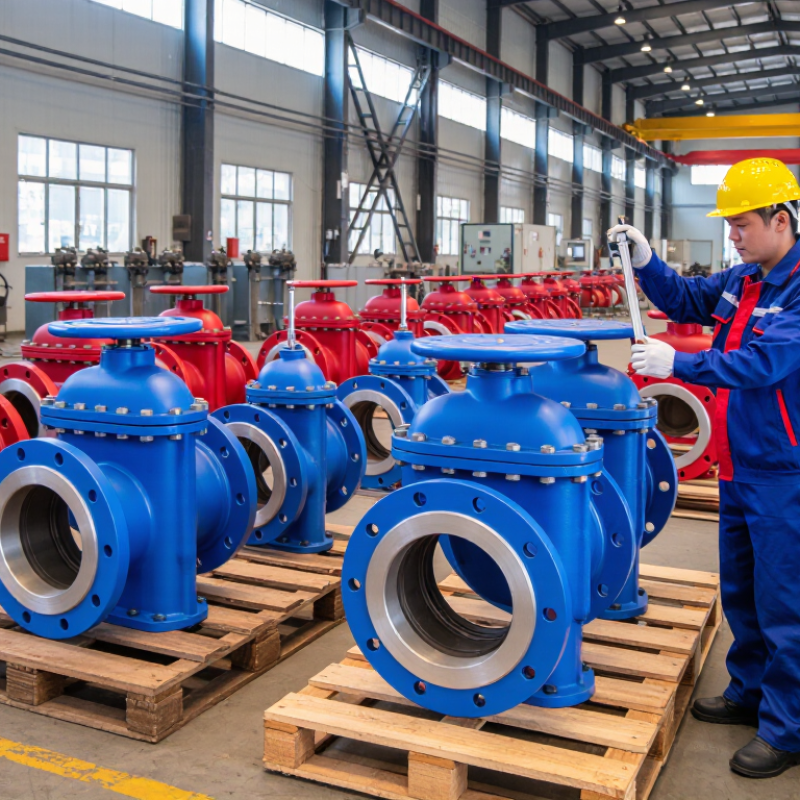
Sluice Valves: Design, Function, and Common Applications
A sluice valve controls flow with a flat or wedge-shaped gate that moves vertically across the passage. Turning the handwheel raises or lowers the gate through a stem. When fully open, the gate clears most of the flow path, helping limit pressure loss. It is designed mainly for isolation, not for regulating flow. Partly opening one for extended periods can cause vibration and wear around the gate and seats.
Construction varies with service conditions. A rising stem shows the gate’s position clearly, but it needs overhead clearance. A non-rising stem suits confined spaces, though operators may find position harder to judge. Wedge gates can seal firmly against seats, while parallel designs use different seating arrangements. Small details matter. Stem seals, body materials, and end connections should match the fluid, pressure, temperature, and installation environment. Terms and configurations can vary between suppliers, so specifications deserve careful checking.
These valves commonly serve water distribution, wastewater networks, irrigation lines, and some industrial piping systems. In a buried water main, for example, operators may close a valve to isolate one section during repairs. Sediment can collect near the gate, and debris may prevent a complete seal. That is a practical limitation, not just a design note. Periodic inspection and suitable operating procedures help reveal problems before they disrupt service.
China’s Sluice Valve Manufacturing Industry
China’s Sluice Valve Manufacturing Industry
China’s sluice valve manufacturing industry sits within a broad industrial valve market. Grand View Research estimated the global industrial valves market at USD 78.6 billion in 2023, with projected growth of 4.8% annually from 2024 to 2030. That figure covers many valve types, not sluice valves alone. It signals market demand, but cannot measure China’s sluice valve output directly.
China’s manufacturing base gives the sector substantial production capacity. The National Bureau of Statistics reported that manufacturing value added grew 5.0% in 2023. For sluice valves, performance depends on practical details: casting consistency, gate alignment, sealing surfaces, and pressure testing. A rough casting can mean extra machining; a poorly seated gate may leak during service. Small checks matter. Buyers should compare material certificates, test records, and stated operating conditions rather than relying on catalog dimensions alone. Yet factory capacity does not guarantee uniform quality. Public market reports rarely separate sluice valves from other industrial valves, leaving a real data gap. That deserves attention.
China Top 10 Sluice Valve Manufacturers - China’s Sluice Valve Manufacturing Industry
Industry overview: the following table compares ten technical and market dimensions relevant to sluice (gate) valve manufacturing. It is an industry reference, not a ranked list of companies.
| No. |
Industry Dimension |
Typical Products or Data |
Relevant Reference |
Common Application |
| 1 |
Product types |
Wedge gate valves, parallel-slide gate valves, and resilient-seated gate valves |
Product design and applicable valve standards |
Water networks, industrial piping, and process systems |
| 2 |
Body materials |
Common choices include ductile iron, cast iron, carbon steel, and stainless steel |
Material grades are selected for pressure, temperature, and fluid compatibility |
Water, utility, and industrial services |
| 3 |
Chinese product standards |
Standards cover flanged iron gate valves and steel gate valves with flanged or welding ends |
GB/T 12232; GB/T 12234 |
Domestic projects specifying Chinese national standards |
| 4 |
International design standards |
Steel gate valve design requirements are available under widely used international specifications |
API 600; API 602 |
Oil, gas, petrochemical, and general industrial service |
| 5 |
Pipeline valve specifications |
Pipeline specifications include requirements for gate valves used in pipeline systems |
API 6D |
Pipeline isolation and transmission service |
| 6 |
Pressure testing |
Inspection commonly includes shell and seat tests; test conditions depend on the applicable specification |
GB/T 13927 |
Factory inspection and project acceptance |
| 7 |
End connections |
Common configurations include flanged ends, butt-welding ends, and threaded ends on suitable designs |
Connection type and dimensions are specified by the project standard |
New installations and replacement piping |
| 8 |
Face-to-face dimensions |
Installation length is selected to match the valve design and specified dimensional series |
EN 558 |
Interchangeability and piping layout |
| 9 |
Actuation options |
Manual handwheel or gear operation; electric or other powered actuation can be specified |
Actuator selection depends on valve torque and operating requirements |
Remote, automated, or frequent operation |
| 10 |
Waterworks applications |
Resilient-seated gate valves are used in water supply systems; potable-water suitability must be confirmed for the specified materials and approvals |
AWWA C509 |
Water distribution and municipal infrastructure |
How to Evaluate Sluice Valve Manufacturers
China Top 10 Sluice Valve Manufacturers
How to Evaluate Sluice Valve Manufacturers
Choosing a sluice valve manufacturer takes more than comparing size, price, and delivery dates. Start with the working conditions: fluid type, pressure, temperature, and how often the valve will operate. Details matter. Ask whether the body, gate, stem, and sealing surfaces suit those conditions. For water systems, corrosion protection and reliable shut-off deserve close attention.
Request material certificates, dimensional drawings, and pressure-test records for the specific valve model. Check that records match the product being quoted, not just a similar model. Ask how the manufacturer controls casting quality, machining tolerances, and final assembly. A useful factory review may include seeing test equipment, inspection procedures, and traceability labels. Ask for evidence. One clean report is helpful, but it cannot show every production batch.
Compare sample valves where possible. Check the handwheel movement, stem finish, coating coverage, and how evenly the gate meets its seat. A low quote can look convincing. It may omit testing, documentation, or suitable corrosion protection, so confirm what the price includes. I would not treat a polished brochure as proof of quality; that is an easy mistake to make. Clear answers about warranty terms, spare parts, and technical support also matter, especially when a valve will be difficult to access after installation.
Profiles of Ten Sluice Valve Manufacturers in China
Profiles of Ten Sluice Valve Manufacturers in China
This overview presents ten capability profiles, not a verified ranking of named companies. It covers a municipal-water specialist, a large-diameter fabricator, and a producer focused on resilient-seated valves. Other profiles represent metal-seated designs for demanding temperatures, cast-iron bodies, and ductile-iron construction. A corrosion-resistant materials specialist and an actuator-integrating manufacturer add different engineering strengths. The final profiles reflect export-oriented production and repair-focused service. These are useful comparison categories, not claims about specific factories.
Grand View Research valued the global industrial valves market at USD 78.9 billion in 2023, reflecting broad demand across water, energy, and process industries. That figure covers industrial valves generally, not sluice valves alone. When assessing Chinese suppliers, buyers should request pressure-test records, material certificates, coating specifications, and dimensional drawings. Ask how each factory handles seat leakage and replacement parts, too. Details matter. A polished catalog is not proof of consistent production; sample inspection and clear acceptance criteria remain essential. Some profiles may overlap, and that is worth acknowledging: manufacturers often serve several applications rather than one neat category.
Comparing Products, Certifications, and Global Reach
Comparing China’s top ten sluice valve manufacturers means looking beyond catalog photos. Check whether each supplier offers the gate style, opening method, materials, and dimensions your project actually needs. A channel valve may face grit, standing water, and repeated operation; ask how its seat and stem are designed for those conditions. Request drawings, pressure ratings, material records, and test reports for the specific model, not just a general company brochure. Details matter. Certifications can support confidence, but verify their issuer, validity, and product scope. A certificate for one facility or product family may not cover every valve being quoted.
Global reach is more than a list of export markets. Compare stated production capacity with delivery schedules, packaging plans, spare-part availability, and technical support across time zones. Ask for relevant project references and clarify who handles inspection, documentation, and installation questions. Not always. A large export history does not guarantee a smooth fit for a particular site, and a polished datasheet can leave practical gaps. One useful check is to compare the proposed valve dimensions and operating loads against the project drawings, then ask the supplier to explain any mismatch in writing. That exchange can reveal how clearly the team communicates before an order is placed.
China Top 10 Sluice Valve Manufacturers — Comparing Products, Certifications, and Global Reach
API 600 pressure-class reference for steel gate valves. This standards-based chart does not rank manufacturers or represent company certifications or export reach.
API 600 pressure-class designations range from Class 150 to Class 2500. Class numbers are not pressure values in psi; allowable pressure depends on valve material and operating temperature. Manufacturer-level certification and global-reach comparisons require verified company data.
Conclusion
This article introduces the design and operation of the Sluice Valve, explaining how its structure controls the flow of water and other compatible fluids. It also outlines common applications in water supply, wastewater treatment, irrigation, and industrial systems, where reliable isolation and straightforward maintenance are important. Readers will gain an overview of China’s sluice valve manufacturing industry and the factors that shape its range of products and production capabilities.
The article also presents a practical framework for evaluating manufacturers, including product specifications, material quality, manufacturing standards, certifications, customer support, and international reach. Profiles of ten manufacturers provide a basis for comparing their offerings without relying on a single selection criterion. By considering product performance, documentation, and service capabilities together, buyers can better identify options suited to their project requirements and operating conditions.