
Selecting the right Ball Valve is rarely a simple matter of comparing prices or body materials. Global buyers face different pressures: corrosive chemicals, high-pressure gas, abrasive slurry, freezing temperatures, and limited maintenance access. A valve that performs well on a clean water line may fail quickly in a refinery or food-processing system.
Peter Smith, co-author of Valve Selection Handbook, offers a practical principle: “Select the valve for the service, not the catalogue photograph.” This idea guides our review of the top 10 Ball Valve types for international purchasers. The comparison considers floating and trunnion-mounted designs, full-port and reduced-port models, one-piece, two-piece, and three-piece construction, plus threaded, flanged, and welded connections.
Small details matter.
A three-piece valve may simplify cleaning because its body can be removed without disturbing the pipeline. A trunnion-mounted design may reduce operating torque on larger, higher-pressure lines. Stainless steel can resist many fluids, but it is not a universal answer. Seal material, temperature range, pressure class, actuation method, and certification requirements still need careful checking.
There is no permanent winner.
That is the uncomfortable part. Product names can sound similar, while internal designs differ considerably. Some buyers also focus too heavily on initial cost and overlook replacement downtime, spare parts, or actuator compatibility. This guide therefore treats ranking as a starting point, not a final decision. The strongest choice depends on the process, installation conditions, and evidence supplied by a dependable manufacturer.
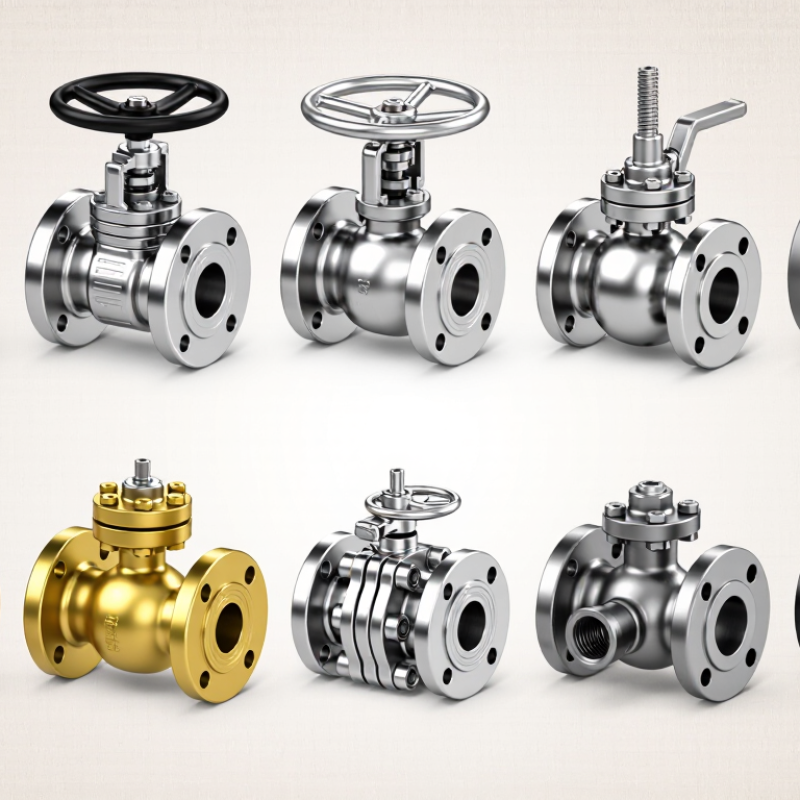
A ball valve uses a quarter-turn motion to control flow. Its main parts include a drilled ball, body, stem, seats, and an actuator. When the bore aligns with the pipeline, fluid passes through. A 90-degree turn blocks the passage. This simple principle explains the ten common types: floating, trunnion-mounted, top-entry, side-entry, full-port, reduced-port, two-way, three-way, soft-seated, and metal-seated valves. Floating designs rely on line pressure to press the ball against the downstream seat. Trunnion designs use fixed supports and suit larger, higher-pressure systems.
The valve body contains pressure, while the seats create the shutoff seal. Soft seats usually provide tighter closure with clean fluids, but high temperatures can damage them. Metal seats tolerate heat and abrasive particles, although leakage control becomes more demanding.
ASME B16.34 covers pressure-temperature ratings and materials. API 6D addresses pipeline valve design and testing. MarketsandMarkets’ 2023 valves report valued the global valves market at about USD 70.9 billion in 2022, showing the scale of this equipment sector. The number is useful, but it does not replace application engineering.
Tips: Check pressure, temperature, media, flow direction, and actuator torque together. Confirm face-to-face dimensions before ordering. A full-port valve may reduce pressure loss, but it can cost more and require more installation space. Do not assume “stainless steel” solves corrosion. Fluid chemistry matters. In field inspections, operators should verify travel stops, stem condition, seat leakage, and cycle performance. One overlooked point: a valve may pass a workshop test yet behave poorly after contamination, vibration, or thermal cycling.
In valve selection work, the ball’s support and flow path matter more than appearance. A floating ball valve uses line pressure to press the ball against one seat. It is compact. Trunnion-mounted designs add upper and lower stem support. They suit larger diameters and higher operating forces. Full-port valves reduce pressure loss through a bore close to the pipe diameter. Reduced-port versions are lighter, cheaper, and often adequate for utility service.
Top-entry valves allow inspection without removing the body from the pipeline. Side-entry construction is common, but bolt access can become difficult in tight spaces. Three-way and four-way valves redirect media between several lines. Port geometry must match the required flow pattern. Do not assume every multiway valve isolates every outlet.
Metal-seated ball valves tolerate abrasion and higher temperatures better than soft-seated designs. They may leak slightly more when clean, tight shutoff is critical. Soft seats usually seal well, but chemical compatibility and temperature limits need checking. Cryogenic ball valves use extended stems and specialized materials for very cold service. In practice, I check pressure class, media, temperature, cycling, and maintenance access before choosing a type. A small mismatch matters. I have seen a suitable valve fail early because the actuator was undersized.
Top 10 Ball Valve Types for Global Buyers: How to Match Ball Valve Types with Application Requirements
Choosing among floating, trunnion-mounted, three-way, top-entry, cryogenic, and metal-seated ball valves starts with operating conditions. A floating ball valve suits clean, moderate-pressure water or air lines. A trunnion design handles larger diameters and higher pressure with lower operating torque. For abrasive slurry, a metal-seated valve often survives better than a soft-seated model. However, seat selection should reflect temperature, chemicals, and cycling frequency.
Check the details. A full-bore valve reduces pressure loss during pigging or high-flow service. A reduced-bore valve may lower cost and weight. For natural gas and process plants, leakage control requires documented testing. ISO 15848-1 addresses fugitive emissions, while API 6D covers pipeline valve design and testing. Cryogenic service needs extended bonnets and materials tested below ambient temperature. One cold-storage trial taught a practical lesson: a standard stem seal can stiffen before the body shows any problem.
Market context also matters. Grand View Research estimated the global industrial valves market at about USD 78 billion in 2023, with continued growth expected through 2030. This growth does not justify choosing the most expensive valve. It supports careful specification. Review pressure class, media, temperature, end connection, fire-safe requirements, and actuator torque. API 607 fire testing can support safer selection, but certification alone cannot replace site-specific review. Engineers should question catalogue assumptions, especially when solids, pulsation, or frequent shutoff cycles are present.
How to match ball valve types with application requirements
The chart shows a representative upper pressure capability commonly associated with each valve type, expressed in approximate bar at ambient temperature and based on widely used ASME pressure classes. Actual ratings depend on valve size, body and seat materials, temperature, end connections, applicable standards, and manufacturer design. Floating valves are commonly selected for general service, while trunnion-mounted, metal-seated, and double-block-and-bleed designs are better suited to higher-pressure, high-temperature, abrasive, or isolation-critical applications.
Selecting among the top 10 ball valve types starts with standards, materials, and pressure ratings. These details determine safety, service life, and maintenance needs.
For pipelines, API 6D and ASME B16.34 provide useful design references. ISO 5208 helps define acceptable leakage during pressure testing. Actuated valves may also require ISO 5211 mounting dimensions. Standards are not interchangeable. Always verify the edition and project specification.
Carbon steel suits many oil, gas, and water services. Stainless steel handles corrosive fluids more reliably. Duplex stainless steel offers higher strength and improved resistance in chloride environments. PTFE seats work well across many moderate-temperature applications. Metal seats are better for abrasive or high-temperature media, but they can require tighter installation control. I have seen a valve fail early because the seat material matched pressure, but not the fluid chemistry.
Pressure classes range from ASME Class 150 to Class 2500. Metric systems may use PN ratings, such as PN 16, PN 40, or higher. A Class 300 valve is not automatically suitable for every 300 psi service. Temperature can reduce its allowable pressure significantly. Full-bore floating valves reduce flow restriction, while trunnion-mounted designs handle larger sizes and higher loads. Forged bodies often provide consistent strength, although casting may reduce cost. This trade-off deserves review. Confirm pressure-temperature tables, testing records, fire-safe requirements, and corrosion allowances before approving the final valve.
Choosing a reliable ball valve supplier requires more than comparing prices. The right supplier should understand floating, trunnion-mounted, three-way, four-way, top-entry, and side-entry designs. Full-port, reduced-port, cryogenic, and metal-seated valves serve different operating conditions. Ask for pressure ratings, temperature limits, seat materials, and verified test results. A capable supplier explains these differences clearly, without forcing one design onto every project.
Review manufacturing records, material certificates, inspection plans, and valve traceability. Standards such as ISO 5208 and API 6D can support quality checks, but paperwork alone proves little. Request sample reports showing shell tests, seat tests, torque measurements, and leakage results. Examine machining areas and assembly controls when possible. A polished factory tour may still hide inconsistent processes. Independent inspection can expose that gap.
Tips: Compare suppliers using the same technical specification. Check response quality before placing an order. Confirm spare-part availability and service support in your destination market. Ask how rejected valves are handled. A perfect checklist does not guarantee perfect delivery; communication failures and unclear tolerances still cause problems. Leave room for technical review, especially when valves face corrosive media, frequent cycling, or low-temperature service. Also verify packaging details, because damaged stem protection can create trouble before installation.
Its drilled ball turns 90 degrees inside the body. When the bore aligns with the pipe, fluid passes through. A quarter-turn blocks the passage.
Common parts include the body, drilled ball, stem, seats, and actuator. The body contains pressure. The seats create the shutoff seal. The actuator turns the stem and ball.
A floating ball moves slightly and uses line pressure against the downstream seat. A trunnion-mounted ball uses fixed supports. It suits larger sizes, higher pressures, and lower operating torque. Size changes everything.
Soft seats usually seal tightly with clean, moderate-temperature fluids. High temperatures may damage them. Metal seats tolerate heat and abrasive particles better. However, leakage control and installation accuracy become more demanding.
A full-port valve creates less flow restriction and supports certain cleaning operations. It may cost more and require additional space. A reduced-port valve can lower cost and weight. The cheapest option may not fit the process.
Review pressure, temperature, fluid chemistry, flow direction, connection type, and actuator torque. Confirm face-to-face dimensions before purchase. Also check cycling frequency, solids, pulsation, and required leakage limits. One missing detail can cause trouble.
Carbon steel suits many water and general process services. Stainless or duplex materials may better resist corrosive fluids. Pressure ratings can range from Class 150 to Class 2500 or comparable metric ratings. Temperature can reduce allowable pressure significantly.
Check travel stops, stem condition, seat leakage, and cycle performance. Inspect for contamination, vibration damage, and thermal-cycle effects. A workshop test may look acceptable. Field behavior can differ.
This guide introduces the essential principles of Ball Valve design, including its body, closure mechanism, sealing components, and quarter-turn operating method. It explains how common types—such as floating, trunnion-mounted, full-port, reduced-port, three-way, and metal-seated valves—differ in structure, flow control, maintenance needs, and suitable working conditions. By comparing these features, readers can better match valve types with media, temperature, pressure, flow direction, installation space, and operating frequency.
For global buyers, the guide also highlights the importance of selecting appropriate materials, pressure ratings, and recognized manufacturing and testing standards. It emphasizes checking corrosion resistance, connection dimensions, leakage performance, documentation, inspection procedures, and long-term service requirements before placing an order. Finally, it provides a practical framework for evaluating reliable suppliers through technical communication, production capability, quality control, customization support, delivery consistency, and after-sales service, helping buyers make informed and cost-effective purchasing decisions.