
Why Choose a Gate Valve for Industrial Applications?
Choosing the right valve can determine whether an industrial pipeline operates smoothly or struggles under pressure. A Gate Valve remains a trusted choice for reliable isolation in many demanding systems. Its gate moves vertically, creating a nearly straight flow path when fully open. This design helps reduce pressure loss across long pipelines.
Philip L. Skousen, author of Valve Handbook, says, “The gate valve is primarily an isolation valve.” That principle still matters in water treatment plants, refineries, power stations, and process facilities. Operators use gate valves to start or stop flow, not to regulate it continuously. Partial opening can damage the gate and seats through turbulence, vibration, and accelerated wear.
The physical details are practical. A rising stem shows valve position clearly. A wedge gate can provide tight shutoff against changing pressure conditions. Bolted bonnets also support inspection and maintenance, especially where service records matter. Large valves may require gear operators or electric actuators because handwheel torque becomes substantial.
The choice is not automatic. A Gate Valve may operate slowly, occupy considerable space, and perform poorly in frequent throttling service. That limitation is easy to overlook. Engineers should compare pressure class, temperature, fluid composition, pipe size, end connections, and applicable industry standards. Site experience also deserves attention. A valve that works well in clean water may struggle with abrasive slurry.
In the end, the strongest reason to choose a Gate Valve is controlled isolation with low resistance during full-flow operation. It is dependable when matched carefully to the system. Not universal. Still highly effective.
What Is a Gate Valve and How Does It Work?
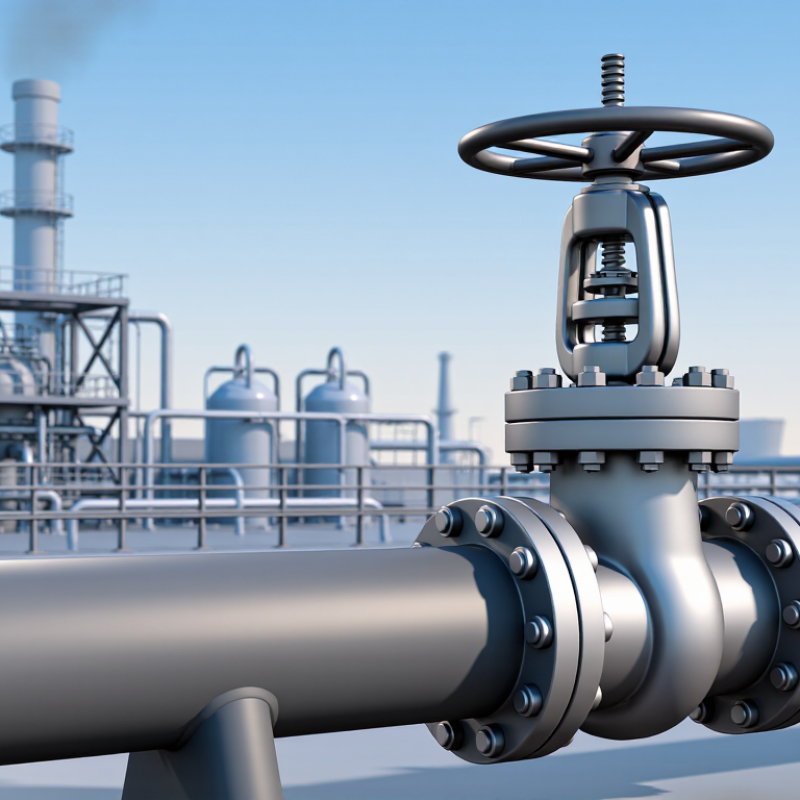
A gate valve controls flow by moving a flat or wedge-shaped gate between two seats. The stem raises or lowers the gate through a handwheel or actuator. When fully open, the gate leaves the flow path almost completely clear. This creates relatively little pressure loss in straight pipelines. It works like a door.
When the valve closes, the gate presses against the seats and blocks the passage. A bonnet protects the stem and internal parts, while the body contains the pressure. Rising-stem designs show valve position clearly. Non-rising stems save space but require closer attention during inspection. In industrial service, engineers select materials according to pressure, temperature, fluid properties, and corrosion risk.
A gate valve is mainly an isolation device, not a precise flow regulator. Partly opening it can cause turbulence, vibration, and seat damage. That limitation is easy to overlook. Field practice also shows that poor pipe alignment or trapped debris can prevent complete closure. Small errors matter. Operators should open valves gradually, verify travel, and check for leakage around the packing and bonnet. Regular inspection helps identify worn seats, damaged stems, or unusual operating torque before they interrupt production. The design is simple, but it is not maintenance-free.
Why Choose a Gate Valve for Industrial Applications? - What Is a Gate Valve and How Does It Work?
| Data Dimension | Typical Gate Valve Data | Industrial Relevance |
|---|---|---|
| Primary Function | On/off isolation of a pipeline | Suitable for starting or stopping flow, but generally not intended for continuous flow regulation. |
| How It Works | A wedge, slab, or parallel gate moves vertically through the valve body when the stem is turned or actuated. | The gate blocks the passage when fully closed and clears the flow path when fully open. |
| Flow Path When Fully Open | Usually broad and nearly straight-through | This design normally produces low resistance and a relatively small pressure drop compared with more restrictive valve types. |
| Flow Control Capability | Limited throttling capability | Partial opening can cause vibration, erosion, noise, and seat damage; a globe or control valve is normally better for regulation. |
| Operation Speed | Usually slower than quarter-turn valves | The longer stem travel helps reduce sudden flow changes and water hammer during manual operation, but it is not ideal where rapid shutoff is required. |
| Common Valve Sizes | Available across a wide range, commonly from about DN15 to DN1200 or larger, depending on the design and standard. | Large-diameter pipeline service is one of the main areas where gate valves are frequently selected. |
| Pressure and Temperature Range | Varies widely by body material, trim, pressure class, end connection, and temperature rating. | Selection must be based on the applicable piping standard and the actual operating pressure, temperature, and fluid conditions. |
| Common Materials | Carbon steel, stainless steel, ductile iron, cast iron, and alloy steels are commonly used. | Material choice depends on corrosion resistance, pressure, temperature, fluid compatibility, and mechanical requirements. |
| Typical Fluids | Water, steam, hydrocarbons, gases, air, and many process fluids | The valve must be matched with the fluid's temperature, pressure, viscosity, corrosiveness, and solids content. |
| Sealing Arrangement | The gate seals against one or two seats; designs may use metal seats or resilient seats. | Seat design affects leakage performance, temperature capability, maintenance needs, and resistance to contaminants. |
| Stem Configuration | Rising-stem or non-rising-stem designs are available. | A rising stem provides visible position indication but needs additional vertical clearance; a non-rising stem is useful where space is limited. |
| Actuation Options | Handwheel, electric actuator, pneumatic actuator, or hydraulic actuator | Actuation is selected according to valve size, required operating torque, accessibility, automation level, and safety requirements. |
| Main Advantages | Low flow resistance when open, reliable isolation, and suitability for large pipelines | These characteristics make gate valves practical for utility, water, energy, and process-isolation duties. |
| Main Limitations | Slow operation, relatively large installation envelope, and poor suitability for throttling | Alternative valve types may be preferable where fast actuation, compact construction, or precise flow control is required. |
| Best-Fit Applications | Mainline isolation, pump isolation, water distribution, transmission pipelines, steam lines, and process piping | A gate valve is a strong choice when the service requires infrequent, full-flow isolation rather than continuous adjustment. |
Note: Actual performance depends on the valve design, applicable standard, pressure class, materials, installation conditions, and operating medium. Always verify the manufacturer's technical documentation and project specifications before selection.
FAQS
Choose it for full-flow isolation. It suits water, steam, slurry, treatment, and pipeline systems. It is not universal.
The gate lifts away from the flow path. This creates a nearly straight passage with less turbulence. That matters on long pipelines.
It can, but it should not. Frequent throttling may damage the gate and seating surfaces. Use a regulating valve instead.
A gate valve usually has lower resistance when fully open. A globe valve offers finer flow adjustment near pumps or heaters. Control needs decide.
A ball valve opens with a quarter turn and shuts quickly. A gate valve usually needs more handwheel movement. Abrasive particles can wear ball valve seats.
Butterfly valves are lighter and need less installation space. Their disc remains inside the flow path. That may increase turbulence and wear.
Inspect the stem, packing, bolts, handwheel, and body. Look for corrosion, leakage, contamination, and misalignment. A stiff handwheel is a warning.
Do not force it. Clean the stem and use compatible lubrication. Then check alignment, debris, and internal damage.
Record operating torque, leakage observations, test pressure, and inspection dates. Planned isolation checks are better than waiting for failure. Records reveal gradual problems.
Conclusion
A Gate Valve is an industrial flow-control device designed to start or stop the movement of liquids, gases, and other compatible media. It operates by raising or lowering a solid gate within the valve body. When fully open, the gate moves out of the flow path, creating minimal resistance and allowing efficient passage. When fully closed, it provides a strong shutoff. Its simple structure, low pressure drop, and suitability for large pipelines make it valuable in systems where reliable isolation is more important than frequent flow adjustment.
Compared with globe, ball, and butterfly valves, a Gate Valve is generally best for fully open or fully closed service rather than throttling. Selection should consider pressure and temperature ratings, material compatibility, pipe size, actuation method, installation conditions, and sealing requirements. Common applications include water treatment, energy systems, chemical processing, mining, and general industrial piping. Regular maintenance involves inspecting seals and connections, removing buildup, checking operating components, and avoiding forced operation when the valve is obstructed.
