
Featured Industrial Valve Series (Part I)
Explore high-performance OEM & ODM concentric, resilient seated, and specialized flow control valve units engineered for international compliance.
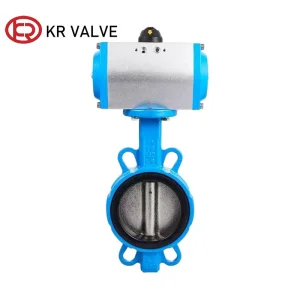
1. Technical Whitepaper: Mechanics of Wafer & Lug Butterfly Valves
A comprehensive analysis of structural geometry, stress distribution, fluid dynamic torque calculations, and sealing mechanisms.
In modern process industries and municipal hydraulics, quarter-turn valves play a fundamental role in isolation and throttling duties. Among these, Lug and Wafer Type Butterfly Valves serve as critical components due to their space-efficiency, lower weight ratio compared to traditional gate or globe valves, and rapid mechanical actuation capability. However, choosing between a wafer connection and a lug connection requires a thorough understanding of mechanical shear stresses, flange bolting dynamics, pipeline dead-end rating limits, and hydrodynamic drag coefficients ($C_v$).
1.1 Structural Geometry & Kinematic Comparison
The core structural distinction between wafer and lug configurations resides in their installation mechanics and load-bearing profiles under thermal expansion or line disassembly:
Wafer style butterfly valves feature a compact face-to-face dimension compliant with ISO 5752 series 20 or API 609 category A. The valve body is positioned between two pipe flanges, with long stud bolts encompassing the entire valve body from flange to flange. This design offers the lightest structural weight and lowest procurement cost. However, it cannot be used in dead-end service, as removing downstream piping releases clamping tension on the valve body, leading to immediate system depressurization.
Lug style butterfly valves incorporate protruding metallic lugs around the perimeter of the body, featuring precision-tapped female threads matching ASME B16.5, EN 1092, or JIS B2220 bolt circles. Independent sets of cap screws fasten the valve from each side. This allows for dead-end service (isolation duty), enabling operators to disconnect and service downstream piping while retaining full upstream line pressure without leakage.
1.2 Hydrodynamic Torque & Flow Coefficient ($C_v$) Optimization
When engineering quarter-turn valves for automated control loops, operating torque consists of four distinct forces: mechanical packing friction ($T_{p}$), seating and unseating friction ($T_{s}$), hydrostatic imbalance torque ($T_{h}$), and dynamic fluid torque ($T_{d}$). Dynamic torque is caused by velocity profiles across the disc geometry when partially open, acting as an airfoil that attempts to shut the disc.
Our OEM manufacturing facility utilizes computational fluid dynamics (CFD) modeling to sculpt disc profiles—such as contoured stainless steel CF8M discs and thin-profile ductile iron discs—reducing turbulence, delaying cavitation onset, and maximizing flow coefficient rates ($C_v$).
2. Advanced Metallurgy, Polymer Science & Sealing Matrix
Material engineering choices directly dictate service life, chemical resistance, working pressure limits, and operational reliability.
Selecting the optimal combination of body materials, disc metallurgy, and elastomeric or fluoropolymer seats is critical when handling abrasive slurries, high-purity potable water, aggressive acids, or high-temperature hydrocarbons.
| Component | Standard Material Grade | Specialized Alloy Options | Operational Temperature & Pressure Limits |
|---|---|---|---|
| Valve Body | Ductile Iron GGG40 / EN-GJS-400-15, Cast Steel WCB (ASTM A216) | CF8 (SS304), CF8M (SS316), Duplex Stainless Steel 2205, Hastelloy C276 | -29°C to 425°C (Material Dependent); PN10, PN16, PN25, Class 150/300 |
| Valve Disc | Nylon-11 Coated Ductile Iron, SS304, SS316 | Aluminium Bronze (C95800), Monel 400, Titanium Gr. 2 | Cavitation resistant, highly polished surface finishes ($\leq 0.4 \mu m$ Ra) |
| Resilient Seat Liner | EPDM (Food Grade / WRAS), NBR (Buna-N), Viton (FKM) | Virgin PTFE, Modified RTFE, PFA Lined, Metal-to-Metal Stellite | EPDM (-20°C to 120°C), NBR (-10°C to 80°C), PTFE (-30°C to 200°C) |
| Stem / Shaft | Martensitic SS416, Austenitic SS316 | 17-4PH (UNS S17400), SS31803 Duplex | High torsional rigidity, anti-blowout stem design per API 609 specs |
2.1 Fluoropolymer Lining Technology (PTFE / PFA Series)
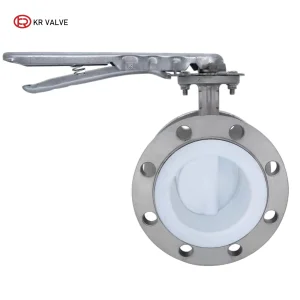
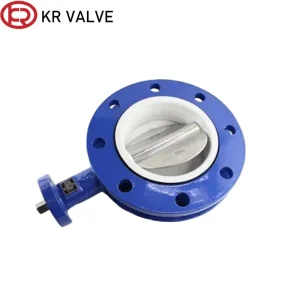
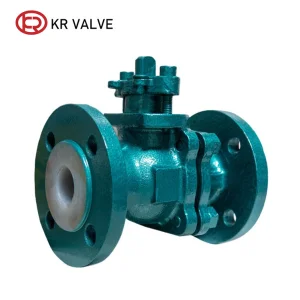
For hyper-corrosive chemical applications—such as concentrated sulfuric acid, chlor-alkali brine, and pharmaceutical processing—our factory specializes in Concentric PTFE/PFA Lined Butterfly Valves (Series D41F). By compression molding high-density virgin PTFE over an elastomeric silicone or EPDM backup cushion, our design achieves zero-permeation stem sealing alongside soft-seated bubble-tight shutoff (ISO 5208 Rate A).
2.2 Triple Eccentric Hard Metal Sealing Mechanics
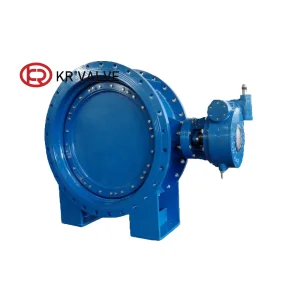
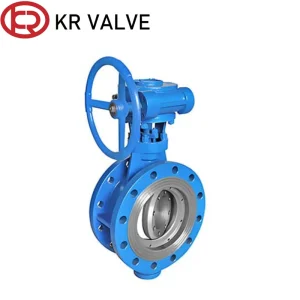
In high-pressure steam, thermal oil, and refining applications where soft elastomers fail, Triple Eccentric (Triple Offset) Butterfly Valves offer superior performance. The three offsets completely eliminate friction between the sealing ring and body seat during travel:
- Offset 1: The shaft centerline is offset behind the seat plane to allow continuous 360-degree seating.
- Offset 2: The shaft centerline is offset laterally from the pipe centerline to facilitate friction-free unseating.
- Offset 3: The cone axis of the seat geometry is inclined relative to the pipe axis, producing a camming action that seals purely via mechanical torque rather than friction.
3. Macro Industry Solutions & Global Commercial Ecosystem
Deploying specialized valve engineering across municipal water networks, desalination skids, HVAC infrastructure, and petrochemical refiners.
Urban distribution requires low head-loss valves with non-toxic, certified liners. Our EPDM resilient seated lug butterfly valves meet WRAS and NSF/ANSI 61 requirements. For reverse osmosis (RO) seawater desalination, we deliver Nickel-Aluminum Bronze (C95800) and Super Duplex 2507 discs engineered to withstand chloride pitting corrosion.
High-rise chilled water lines and district cooling networks demand high-frequency modulation and tight isolation. Our pneumatic and electric motorized wafer butterfly valves feature direct-mount ISO 5211 actuator flanges, eliminating bracket slop and enabling automated balancing across variable primary flow systems.
In refineries and chemical plants, fugitive emissions are strictly regulated under ISO 15848-1 and API 622. Our firesafe certified triple eccentric lug butterfly valves incorporate graphite packing rings, anti-static grounding devices, and metallic spiral wound gaskets to ensure zero atmospheric leakage during fire hazards.
3.1 Supply Chain Advantages of China OEM/ODM Manufacturing
As a specialized manufacturer located in Tianjin—one of China’s largest valve production hubs—our facility integrates the full manufacturing chain. From automated sand casting foundries and precision CNC machining centers to electrostatic epoxy powder coating lines and hydrostatic testing rigs, vertical integration ensures strict quality assurance and competitive total cost of ownership (TCO).
4. Quality Assurance, International Compliance & Test Protocols
Every valve manufactured undergoes 100% factory acceptance testing (FAT) to verify pressure integrity, seat tightness, and mechanical torque specs.
- API 609: Butterfly Valves: Double-Flanged, Lug-Type and Wafer-Type.
- BS EN 593 / ISO 5752: Industrial valves - Metallic butterfly valves for general purpose.
- AWWA C504: Rubber-Seated Butterfly Valves for Water Infrastructure.
- ISO 5211: Part-turn Actuator Attachment Flange Dimensions.
- ASME B16.5 / EN 1092-2: Flange Drilling Dimensions & Tolerances.
- API 598 / ISO 5208: Shell test performed at $1.5\times$ cold working pressure (CWP); seat test performed at $1.1\times$ CWP.
- Zero Leakage Verification: Resilient soft-seated valves tested to ISO 5208 Rate A (no visible drops or bubbles).
- Low-Pressure Air Seat Test: Air bubble testing under water at 0.6 MPa to detect micro-porosity in seating materials.
- Fugitive Emission Testing: Helium mass spectrometer testing to ISO 15848-1 class AH/BH standards.
5. Field Engineering: Localized Application Scenarios
Case studies showcasing real-world performance under harsh climatic and operating conditions.
Scenario A: Middle Eastern Seawater Desalination Plant (High Salinity & Ambient Temperature)
A desalination contractor in the UAE required DN800-DN1200 high-performance butterfly valves to handle raw intake seawater at ambient temperatures reaching 45°C. Standard ductile iron discs suffered from localized pitting. Our factory supplied customized Lug Type Double Eccentric Valves manufactured with GGG40 bodies internally lined with 500-micron vulcanized hard rubber, paired with Super Duplex 2507 discs and 17-4PH stems. Operating over 5 years without failure, these units demonstrate our high-alloy manufacturing expertise.
Scenario B: European Municipal Wastewater Upgrade (Slurry & Fibrous Solids)
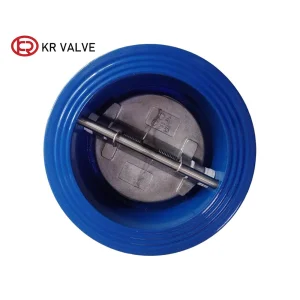
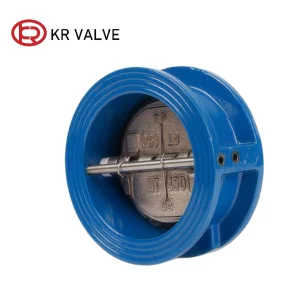
A regional water authority in Germany needed reliable shut-off valves for sludge pumping stations where suspended fibrous materials frequently trapped traditional swing check valves. We supplied Wafer Type Dual Disc Check Valves and Concentric Soft-Sealed Butterfly Valves featuring polished CF8M discs and high-abrasion EPDM seats. The streamlined disc geometry prevented solids accumulation while keeping opening pressure losses below 0.05 bar.
Scenario C: North American District Cooling Network (Rapid Pneumatic Modulation)
For a university campus cooling network in Texas, over 200 motorized wafer butterfly valves were installed for automated thermal management. Equipped with double-acting pneumatic actuators and electro-pneumatic smart positioners (4-20mA signal), these valves achieved modulation accuracy within 0.5% of travel stroke, generating significant seasonal energy savings.
6. Technology Roadmap & Smart Valve Innovation (2026–2035)
Pioneering next-generation valve engineering through digital twin integration, advanced coatings, and IoT diagnostic capabilities.
Integrating micro-piezoelectric vibration sensors and wireless strain gauges into valve stem housings allows continuous tracking of seating torque degradation, packing friction changes, and internal acoustic leakage—enabling predictive maintenance before unexpected shutdowns occur.
Next-generation seat polymers incorporate graphene nanoplatelets into EPDM and NBR matrices. This increases tear strength by over 40%, lowers dynamic friction coefficients, and extends elastomer service life in high-cycle automated throttling applications.
Adapting soft and metal seated butterfly valve trim geometries to ensure zero micro-permeation sealing when handling gaseous hydrogen and carbon capture ($CO_2$) transport networks under high cyclic pressures.
Featured Industrial Valve Series (Part II)
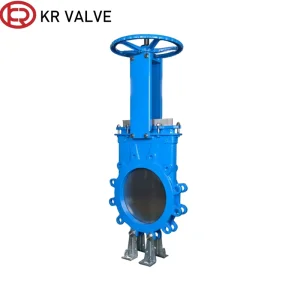
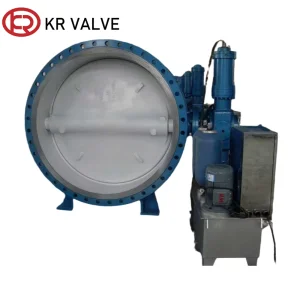
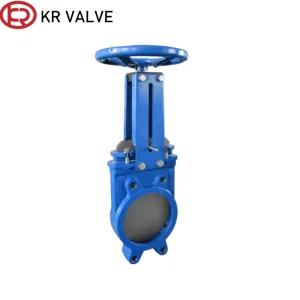
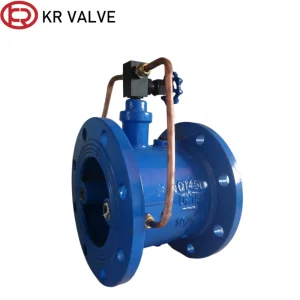
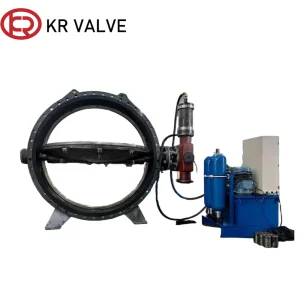
Explore specialized knife gate, hydraulic heavy-hammer, and triple-eccentric hard seal butterfly valves direct from our manufacturing workshops.
7. Technical FAQ & Engineering Reference Guide
Expert insights addressing key selection criteria, mechanical installation, and maintenance considerations for valve buyers.