
Featured Industrial Flow Isolation & Actuation Systems
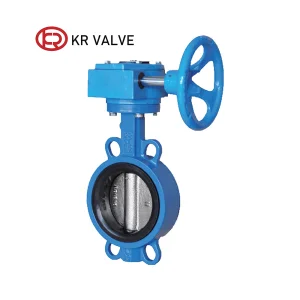
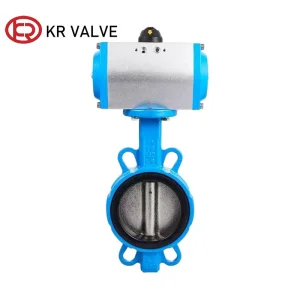
Global Landscape & Architectural Imperatives in Custom Pneumatic Actuation
In the era of modern industrial automation, the demand for high-reliability flow control components has shifted dramatically toward custom-engineered pneumatic butterfly valve actuators. As process facilities across chemical processing, water treatment, power generation, and offshore oil & gas transition toward Industry 4.0 paradigms, mechanical valve actuation is no longer viewed as a commodity hardware choice. Instead, it serves as an integral node in smart distributed control systems (DCS) and safety instrumented systems (SIS).
Pneumatic quarter-turn actuators, primarily operating via rack and pinion or scotch yoke mechanisms, convert compressed air energy into fast, repeatable rotary torque. When paired with quarter-turn butterfly valves—ranging from resilient-seated concentric designs to high-performance double offset and metal-seated triple eccentric configurations—these pneumatic actuators must deliver precise seating torques, withstand severe cycling conditions, and operate continuously under extreme ambient temperatures and corrosive environments.
Standard catalog actuators frequently fail in real-world application due to oversimplified sizing based solely on nominal media pressure. Custom OEM manufacturing addresses critical physical phenomena such as breakaway torque spikes, dynamic hydrodynamic flow torques, thermal seat expansion, and long-term elastomer memory set. By custom-engineering piston stroke dimensions, spring rate constants, and custom mounting brackets, custom pneumatic actuator manufacturers guarantee minimum safety margins ($SF \ge 1.30 \text{ to } 1.50$) without forcing plant engineers into purchasing oversized, power-inefficient actuators.
Technical Architecture: Rack & Pinion vs. Scotch Yoke Kinematics
Understanding the mechanical advantage curves of pneumatic actuators is essential for matching them with butterfly valve torque profiles. Butterfly valves exhibit non-linear torque requirements: breakaway torque at 0° (fully closed) is highest due to seat friction, drops off during intermediate stroke (flow throttling), and rises slightly near 90° (fully open) due to hydrodynamic force vectors.
Dual piston rack and pinion actuators feature twin pistons moving linearly in opposite directions, driving a central drive shaft pinion. This architecture provides a linear (constant) torque output across the entire 90° stroke.
- Ideal Range: Small to medium butterfly valves (DN40 to DN600).
- Key Feature: Compact footprint, symmetrical force distribution, high operational speed (<1 sec actuation).
- Custom Options: Special stroke adjustments (0° to 90° ±5° limits), internal nickel plating, dual-ended travel stop screws.
Scotch yoke actuators utilize a slider-crank mechanism that generates a U-shaped torque curve. The torque output reaches its maximum at the stroke extremes (0° closed and 90° open) where seating/unseating forces peak.
- Ideal Range: Large bore butterfly valves (DN500 to DN3000+) & high-pressure triple offset valves.
- Key Feature: Perfect match for butterfly valve break torque requirements; significant air consumption savings.
- Custom Options: Symmetric vs. Canted yoke geometry, hydraulic manual overrides (MHP), modular cylinder assemblies.
Pneumatic Actuator Selection & Performance Specification Matrix
| Actuator Type | Operating Principle | Torque Range (Nm) | Air Supply Range | Typical Valve Pairing | Recommended Safety Factor |
|---|---|---|---|---|---|
| Double Acting Rack & Pinion | Air to Open / Air to Close | 10 - 12,000 Nm | 2.5 to 8.0 Bar | Concentric Wafer/Lug Butterfly Valves | 1.25 - 1.30 |
| Spring Return (Single Acting) | Air to Open / Spring Fail-Closed | 15 - 8,500 Nm (Spring End) | 3.0 to 7.0 Bar | Emergency Shutdown (ESD) Systems | 1.35 - 1.50 |
| Symmetric Scotch Yoke | Piston-Yoke Kinematics | 500 - 300,000 Nm | 3.0 to 10.0 Bar | Double Offset / High Performance Valves | 1.30 - 1.40 |
| Canted Scotch Yoke | Shifted Peak Break Torque | 1,000 - 250,000 Nm | 4.0 to 8.5 Bar | Triple Offset Metal-Seated Valves (TOV) | 1.25 - 1.35 |
Custom OEM/ODM Manufacturing: Metallurgical & Seal Tailoring
Off-the-shelf actuators often degrade prematurely when subjected to corrosive offshore atmospheres, sub-zero cryogenic environments, or high-vibration power generation facilities. Leading custom pneumatic butterfly valve actuator factories offer fully tailored bill-of-materials (BOM) designed around environmental severity classifications (ISO 12944).
Options include hard anodized extruded aluminum bodies (45µm thickness), PTFE coated exterior shells, electroless nickel plating (ENP), ductile iron GGG40 with epoxy powder coating, and full 316 / 316L stainless steel casting for extreme chemical immersion.
Standard NBR O-rings (-20°C to +80°C) can be substituted with Fluorocarbon (Viton/FKM) for high-temperature applications up to +150°C, or Silicone / Low-Temp NBR formulation for arctic duties operating down to -60°C.
Factory integration of NAMUR solenoid valves (5/2, 3/2 drop-in), ATEX / IECEx explosion-proof limit switch boxes (IP67/IP68), digital smart electro-pneumatic positioners (4-20mA HART, Profibus, Modbus), and emergency declutchable manual gearboxes.
Factory Quality Assurance & Custom Manufacturing Workflow
Mathematical calculation of break, run, and end torques based on actual fluid dynamics.
Multi-axis CNC milling of cylinder bores, pinions, and ISO 5211 mounting interfaces.
Multi-cycle pressure leak, cycle speed, and pneumatic endurance calibration tests.
Laser engraving of serial codes, certificates of compliance, and material heat numbers.
Global Regulatory Standards & Local Compliance Frameworks
Deploying automated pneumatic butterfly valves globally requires adherence to rigorous international standards. Custom actuator manufacturers must maintain accredited quality management systems to meet regional industrial safety mandates across Europe, North America, the Middle East, and Asia-Pacific.
Mechanical & Interface Standardization
- ISO 5211: Standardized top flange dimensions and stem drive square/double-D dimensions, ensuring drop-in compatibility with butterfly valve top-works worldwide.
- NAMUR VDI/VDE 3845: Standard interface configuration for direct mounting of solenoid valves and feedback limit switch boxes onto the actuator body.
- EN 15714-3: European benchmark specifying strength, endurance, and performance requirements for industrial pneumatic quarter-turn actuators.
Hazardous Area & Safety Certifications
- IEC 61508 / SIL 3 Capability: Functional safety certification for spring return emergency shut-off (ESD) systems in high-risk process environments.
- ATEX Directive 2014/34/EU & IECEx: Certified non-electrical equipment safety rating (Group II Category 2GD c T6) for operation in explosive gas and dust atmospheres.
- PED 2014/68/EU & CE Marking: Compliance with Pressure Equipment Directive criteria for pneumatic pressure enclosures.
Localized Application Scenarios & Engineering Field Results
Custom pneumatic butterfly valve actuators are deployed across highly specific regional applications. The following real-world implementation engineering summaries highlight how tailored mechanical specs address regional operational challenges.
Challenge: Extremely high ambient heat (+50°C), saline humidity, and high cycle frequency in high-pressure seawater reverse osmosis (SWRO) isolation lines.
Solution: Custom hard-anodized aluminum rack-and-pinion actuators fitted with internal ENP-coated bores, Viton high-temp seals, and 316SS external fasteners.
Challenge: AWWA C504 compliant butterfly valve automation in exposed outdoor aeration tanks subject to sub-zero winter temperatures.
Solution: Fail-closed spring return actuators with custom low-temp grease formulation (-40°C), integrated air re-breather loops, and IP68 position transmitters.
Challenge: Rapid shut-off requirements (<0.8 seconds) on triple offset metal-seated valves handling volatile organic solvents.
Solution: High-speed Scotch Yoke actuators with custom oversized pneumatic exhaust ports, quick exhaust valves (QEV), and SIL 3 safety loop integration.
Technology Roadmap: Next-Generation Smart Pneumatic Actuation
The future of pneumatic quarter-turn valve automation is defined by the convergence of digital diagnostic technology with low-energy fluid power mechanics. OEM manufacturers are pioneering key innovations that redefine reliability and total cost of ownership (TCO).
Next-gen actuators incorporate embedded wireless vibration, pressure, and acoustic micro-sensors. By performing continuous Partial Stroke Testing (PST), smart positioners detect seal wear, air pressure drop, stem friction spikes, or spring relaxation before catastrophic failure occurs, transmitting real-time diagnostics via HART or WirelessHART protocols to plant asset management platforms.
Compressed air is one of the most expensive utility inputs in industrial manufacturing. Modern custom pneumatic actuators feature optimized internal chamber geometry and variable-displacement spring chambers that reduce compressed air consumption per cycle by up to 22%. Furthermore, environmentally friendly chromium-free passivation and nano-composite coatings replace hazardous legacy surface treatments.
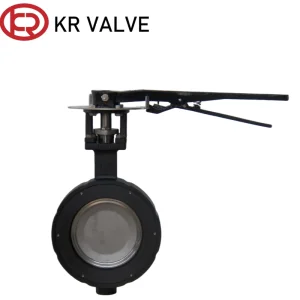
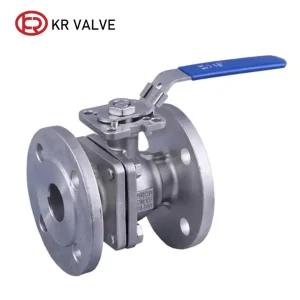
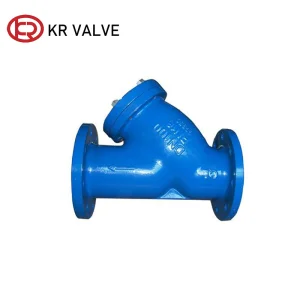
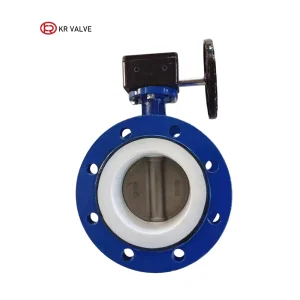
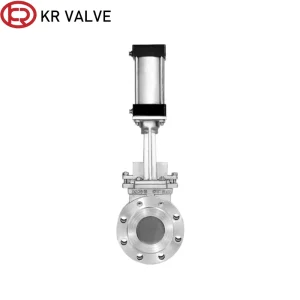
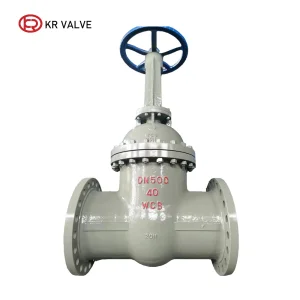
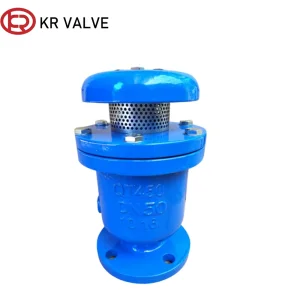
Advanced Valve Assemblies & Accessories
Frequently Asked Questions: Engineering & Procurement Guide
In-depth technical answers addressing core intent inquiries from process engineers, project buyers, and system integrators regarding pneumatic butterfly valve actuator selection and customization.
Partner with a Premier Custom Pneumatic Actuator Manufacturer
Empower your flow control systems with factory-direct custom torque engineering, SIL 3 safety compliance, and direct-fit ISO 5211 pneumatic butterfly valve actuation.