
Featured Industrial Valve Solutions — Catalog Series 01
Explore our high-performance non-return, butterfly, gate, and hydraulic control valve series engineered to DIN, ANSI, BS, and AWWA standards for global municipal and industrial buyers.
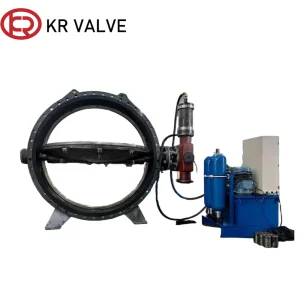
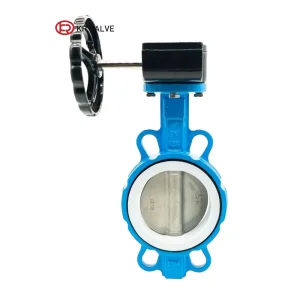
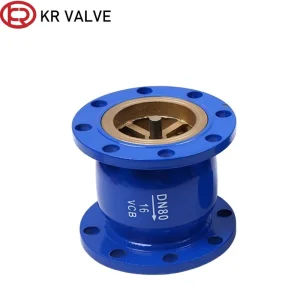
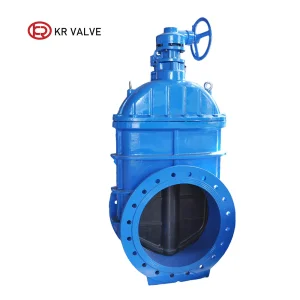

Global Procurement Landscape & Macro-Industrial Demand for Swing Check Valves
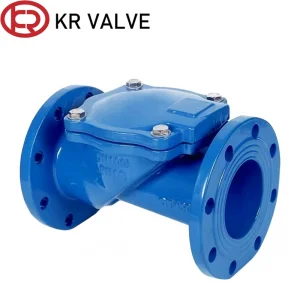
In modern fluid infrastructure, reverse flow prevention is critical for protecting upstream rotating equipment—such as multi-stage centrifugal pumps, positive displacement compressors, and hydraulic turbines. As a global lead custom swing check manufacturer, our factory specializes in high-integrity non-return valves tailored to withstand extreme fluid velocities, severe pressure surges, and aggressive chemical environments.
Recent macro-industrial trends indicate a surging demand for non-return valves with specialized metallurgical compositions, extended seat lifespans, and integrated water hammer dampening mechanisms. Industrial buyers across North America, Europe, the Middle East, and Asia-Pacific require custom-engineered swing check valves that comply strictly with international standard frameworks including API 6D, ASME B16.34, DIN EN 12334, and BS 5153.
Desalination & Water Treatment
Seawater Reverse Osmosis (SWRO) plants demand high-alloy swing check valves constructed from Super Duplex Stainless Steel (UNS S32750/2507) and Nickel Aluminum Bronze (C95800) to resist severe pitting, crevice corrosion, and high-pressure fluid cavitation.
Oil, Gas & Petrochemical
Upstream crude oil transport and downstream refining pipelines demand fire-safe swing check valves with NACE MR0175/ISO 15156 sour gas compliance, hardfaced Stellite 6 metal seating, and API 6D full-opening disc designs for easy pigging operations.
Municipal & HVAC Networks
District heating, municipal water transmission, and urban flood drainage networks utilize resilient-seated swing check valves (EPDM/NBR) with hydraulic dampening cylinders and counterweights to eliminate damaging disc slamming and pressure surges.
Engineering Deep Dive: Hydrodynamics, CFD Modeling & Surge Mitigation
The primary failure mode in conventional swing check valves is dynamic disc slamming, which occurs when fluid flow rapidly decelerates before the disc reaches its full closed position. This leads to high-magnitude pressure transients (water hammer), calculated via the Joukowsky Equation: ΔP = ρ · c · Δv. Our advanced manufacturing engineering overcomes this challenge through state-of-the-art CFD (Computational Fluid Dynamics) modeling and custom mechanical dampening design.
CFD-Optimized Disc Geometry & Low Cracking Pressure
Our engineering team utilizes 3D ANSYS Fluent CFD simulations to optimize the curvature of the valve disc and internal body cavity contours. By minimizing turbulent eddy creation around the hinge pin and lower disc radius, we achieve:
- Reduced Pressure Drop (ΔP): Up to 28% lower resistance coefficient (Cv/Kv optimization) compared to standard cast valves.
- Minimum Full-Open Velocity: Ensures complete disc lift at low flow velocities (v < 1.2 m/s), eliminating disc flutter and premature pin wear.
- Self-Cleaning Seating Dynamics: Fluid sweep action cleans debris from seat faces during closure.
Surge Mitigation & Hydraulic Dashpot Systems
For high-pressure pumping stations and long-distance transmission mains, custom swing check valves can be fitted with external counterweights, internal torsion springs, or dual-stage hydraulic dampening cylinders (dashpots):
- Dual-Speed Closing Stroke: Rapid 90% closure to stop reverse flow, followed by slow 10% cushioned closure to prevent pressure spikes.
- Adjustable Counterweights: Allows site engineers to fine-tune disc closing torque based on system pump inertia.
- Torsion Assist Springs: Hastens closure dynamics in vertical piping orientations where gravity assistance is absent.
Metallurgical Specifications & Seat Seating Matrix
| Body Material Grade | Applicable Standards | Seat Seating Option | Temperature Range | Recommended Fluid Media |
|---|---|---|---|---|
| Ductile Iron GGG40 / GGG50 | EN 1563 / EN 12334 | EPDM / NBR / Brass Ring | -10°C to +80°C | Potable Water, Municipal Sewage, HVAC Water |
| Cast Carbon Steel ASTM A216 WCB | API 6D / ASME B16.34 | 13Cr Steel / Stellite 6 Overlay | -29°C to +425°C | Crude Oil, Steam, Feedwater, Hydrocarbons |
| Stainless Steel ASTM A351 CF8M (SS316) | API 6D / EN 10213 | PTFE / Metallic Hardfaced | -196°C to +538°C | Chemicals, Corrosive Acids, Cryogenic Fluids |
| Duplex SS ASTM A890 4A (2205) | NACE MR0175 / API 6D | Stellite Hardfacing / Metal Seat | -40°C to +300°C | Seawater, Desalination Brine, Sour Gas (H2S) |
OEM & Custom Engineering Capabilities in Our Manufacturing Facilities
As an established custom swing check valve factory, our manufacturing footprint encompasses over 30 production lines with advanced foundry casting, precision CNC machining, automated welding overlay, and 100% hydrostatic pressure testing facilities. We provide comprehensive OEM/ODM customization services to match unique project drawings and engineering tenders globally.
Dimensional & Flange Drilling Customization
Custom face-to-face dimensions according to ISO 5752, ANSI B16.10, or retrofitting non-standard length legacy valves. Flange drillings supported include EN 1092-1 PN10/PN16/PN25/PN40, ASME B16.5 Class 150/300/600, and JIS 10K/20K.
Specialized Protective Coatings
Fusion Bonded Epoxy (FBE) coating up to 300 microns (WRAS/NSF-61 approved for drinking water), high-temperature ceramic slurry coatings, polyurethane for underground buried service, and anti-fouling rubber lining for slurry applications.
Non-Destructive Testing (NDT) & Quality QA
Every custom order undergoes rigorous Quality Assurance, including Positive Material Identification (PMI), Radiographic Testing (RT), Ultrasonic Testing (UT), Dye Penetrant (PT), Magnetic Particle Inspection (MT), and ISO 5208 Rate A pressure testing.
Technology Roadmap: Smart Non-Return Valves & Next-Gen Manufacturing
The future of fluid control infrastructure is moving towards intelligent diagnostic monitoring, predictive maintenance, and sustainable high-efficiency materials. Our factory engineering team is actively advancing through a comprehensive 5-year technological roadmap:
01. Smart IoT Disc Sensing
Integration of non-intrusive wireless position sensors, vibration accelerometers, and acoustic emission sensors on the hinge pin. Enables real-time disc position tracking, seat wear detection, and early water-hammer prediction via telemetry.
02. Additive Metal Manufacturing
Deploying 3D selective laser melting (SLM) additive manufacturing for custom internal flow channels, lightened high-strength disc cores, and complex anti-cavitation trim components that cannot be formed via conventional casting.
03. Eco-Friendly Elastomeric Compounds
Development of bio-based low-friction elastomers and PFAS-free seating materials compliant with strict European Union environmental mandates, offering zero microplastic leaching into municipal water networks.
Featured Industrial Valve Solutions — Catalog Series 02
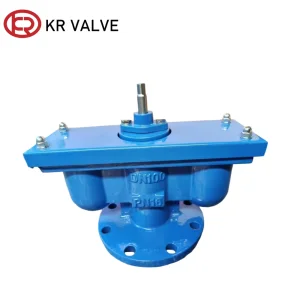
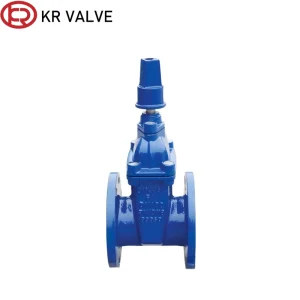
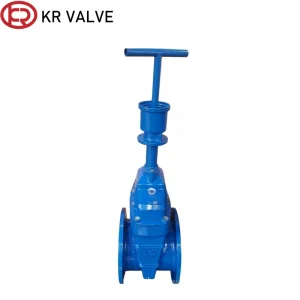
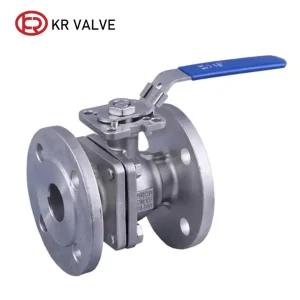
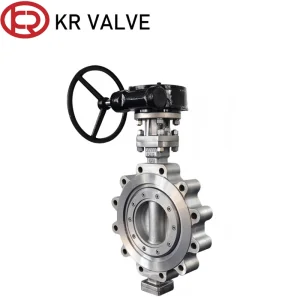
Explore our comprehensive industrial valve lineup including non-return, double eccentric, metal-seated, underground gate, and automatic evacuation valves engineered for global project tenders.
Technical Q&A: Engineering & Procurement Guide for Buyers
In-depth solutions to common technical queries faced by mechanical engineers, EPC contractors, and global valve procurement managers.
Q1: What is the primary operational difference between a Swing Check Valve and a Dual-Plate Wafer Check Valve?
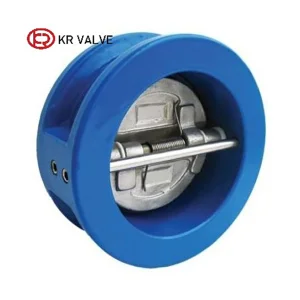
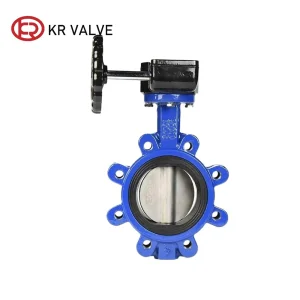
Swing check valves utilize a single full-bore disc swinging on an upper hinge pin, offering an unobstructed flow path with exceptionally low pressure drop (high Cv), making them ideal for media containing suspended solids or slurries. In contrast, Dual-Plate Wafer Check Valves utilize two spring-loaded half-moon plates suspended on a central hinge, offering a compact face-to-face dimension and faster spring-assisted closure, but with slightly higher flow resistance.
Q2: Can custom swing check valves be installed in vertical piping systems?
Yes, provided the flow direction is vertically upward. In vertical upward flow, fluid pressure forces the disc open against gravity. When flow stops, gravity assists the disc in returning to its seat. However, swing check valves must NEVER be installed in vertical downward piping lines, as gravity will prevent the disc from seating correctly, resulting in continuous backflow and severe disc chatter.
Q3: How does your factory prevent valve disc slamming and severe water hammer?
We employ three engineered solutions based on application requirements: (1) Integrating an external counterweight lever arm to adjust disc closing inertia; (2) Installing internal heavy-duty stainless steel torsion springs for rapid pre-slam closure; and (3) Equipping the valve body with a hydraulic dashpot dampening cylinder that controls disc closure velocity during the final 10% of stroke length.
Q4: Which seating material should be specified for high-frequency or abrasive slurry duties?
For severe abrasive slurries, mining tailings, or high-temperature hydro-processing, metal-to-metal seating hardfaced with Cobalt-base Stellite No. 6 (or Nickel-base Colmonoy) welded onto stainless steel body seat rings provides maximum erosion resistance. For clean water or gas duties requiring zero bubble-tight shut-off (ISO 5208 Rate A), resilient EPDM, NBR, or PTFE seats are recommended.
Q5: What factory quality assurance testing is performed prior to export dispatch?
Every valve manufactured in our facility undergoes 100% factory inspection: (1) Shell Hydrostatic Pressure Test at 1.5× PN/Class rating; (2) High & Low Pressure Seat Leakage Test at 1.1× PN/Class rating according to API 598 or ISO 5208; (3) Positive Material Identification (PMI) spectral analysis; (4) FBE Coating Thickness Gauge Inspection; and (5) Dimensional Verification according to ASME/EN standards.
Q6: How do I specify custom flange drilling for legacy replacement projects?
To match legacy pipeline flanges, provide our engineering team with: (1) Nominal Pipe Size (DN/Inches); (2) Flange Pitch Circle Diameter (PCD); (3) Number and diameter of bolt holes; and (4) Flange face type (Raised Face RF, Flat Face FF, or Ring Type Joint RTJ). We precision-machine flanges to match EN 1092-1, ASME B16.5, BS 10, or custom template drawings.