
Featured Corrosion-Resistant & Industrial Valve Catalog (Part I)
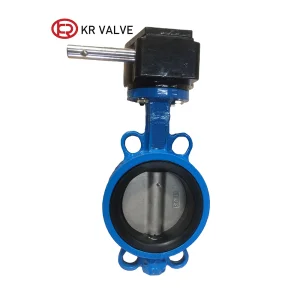
Engineering Paradigm of Full PTFE Lined Butterfly Valves
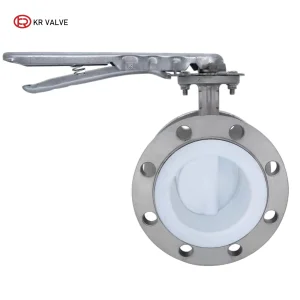
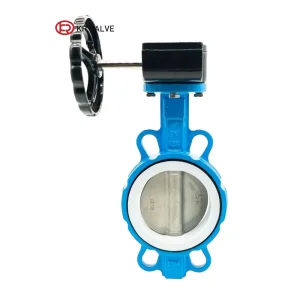
In modern industrial process engineering, transport media containing concentrated hydrofluoric acid, nitric acid, chlor-alkali, organic solvents, and high-purity chemicals present severe challenges to traditional metal alloy valves. The Full PTFE (Polytetrafluoroethylene) Lined Butterfly Valve represents the gold standard in severe-service isolation and throttling. By enveloping all wetted internal components—including the metallic body bore and disc shaft—in high-density, virgin fluoropolymer lining, these valves deliver near-total chemical inertness, zero fluid contamination, and exceptional service life.
Polytetrafluoroethylene (PTFE) vs. Alternative Fluoropolymers Matrix
Selecting the optimal lining polymer requires balancing permeability, mechanical thermal performance, melt processability, and total cost of ownership. The comparative engineering parameters below illustrate why virgin PTFE and modified PTFE (TFM) dominate critical chemical process lines:
| Polymer Property | Virgin PTFE (Teflon™) | Modified PTFE (TFM 1600) | PFA (Perfluoroalkoxy) | FEP (Fluorinated Ethylene) |
|---|---|---|---|---|
| Continuous Temp Range | -30°C to +180°C | -40°C to +200°C | -40°C to +200°C | -30°C to +150°C |
| Permeability Resistance | High | Ultra-High (Low Creep) | Very High (Melt Processed) | Moderate |
| Tensile Strength (MPa) | 25 - 35 | 30 - 40 | 28 - 32 | 20 - 25 |
| Friction Coefficient (μ) | 0.04 - 0.08 (Lowest) | 0.04 - 0.06 | 0.08 - 0.10 | 0.08 - 0.12 |
| Trace Metal Leaching | < 0.1 ppb (Semiconductor Grade) | < 0.05 ppb | < 0.1 ppb | < 1.0 ppb |
| Primary Application | Aggressive Acid/Alkali Lines | High Vacuum & Severe Duty | Complex Injection Molded Discs | Low-Temp Chemical Transfer |
Technical Roadmap & Future Outlook (2025–2030)
As chemical processing environments push toward higher operating pressures, digital intelligence, and decarbonization compliance, OEM valve manufacturing is undergoing a structural paradigm shift.
1. Nano-Reinforced PTFE Compounds
Traditional PTFE suffers from cold-flow deformation (creep) under continuous compressive seat pressure. Future technology integrates nano-silica, carbon nanotubes, and inorganic filler matrices directly into the fluoropolymer resin. This achieves a 40% reduction in cold creep while retaining absolute chemical inertness and low actuation torque.
2. IoT-Enabled Smart Stem Diagnostics
Integrating wireless micro-sensors within the secondary Belleville spring-loaded packing gland enables real-time monitoring of stem torque variations, thermal stress spikes, and fugitive micro-leaks. predictive maintenance algorithms trigger alerts prior to seal breakdown, eliminating catastrophic downtime in hazardous chemical facilities.
3. Zero-Carbon Closed-Loop Recycling
Next-generation OEM factories are introducing green fluoropolymer sintering processes powered by renewable solar microgrids. Furthermore, advanced depolymerization technologies allow end-of-life PTFE linings to be broken down into high-purity TFE monomers, driving circular sustainability in industrial valve supply chains.
Macro Industry Solutions & Process Application Matrix
Custom OEM Full PTFE Butterfly Valves are engineered to solve specific operational pain points across critical process industries:
Ultra-Pure Chemical Delivery
Semiconductor fabrication plants require valves with zero trace metal ion contamination and zero particle shedding. Our PTFE/PFA lined butterfly valves undergo class 100 cleanroom ultrasonic washing, ultrapure water rinsing, and vacuum packaging to serve ultra-pure wet etch process lines.
Concentrated Acid & Chlorine Gas
Handling wet chlorine gas, hydrochloric acid (HCl), and sulfuric acid ($H_2SO_4$) rapidly corrodes metallic alloys (even Hastelloy or Titanium). A seamless 3mm to 5mm PTFE/PFA lining completely isolates the ductile iron or stainless body shell from corrosive medium attack.
Flue Gas Desulfurization Slurry
FGD scrubber systems pump highly abrasive limestone slurries mixed with corrosive sulfur oxides ($SO_x$). The low-friction, anti-stick PTFE disc geometry minimizes slurry particle adhesion, while the resilient elastomeric backing cushion absorbs dynamic hydraulic shock loads.
CIP/SIP Sanitary Systems
Compliant with FDA 21 CFR 177.1550 and USP Class VI standards, our full-line PTFE butterfly valves withstand aggressive Clean-In-Place (CIP) chemical washes and high-temperature Steam-In-Place (SIP) sterilization cycles without degradation or fluid retention pockets.
Deep Technical Insight: Preventing Lining Permeation & Collapse Under Vacuum
In high-temperature vacuum processes (e.g., chemical distillation columns), low-grade PTFE liners can experience vacuum collapse or vapor permeation through the polymer matrix. Our engineering factory utilizes isostatic compression molding paired with mechanical locking grooves along the valve body bore. This anchoring design binds the fluoropolymer layer to the outer cast housing, preventing liner detachment under negative pressure up to full vacuum (-0.1 MPa).
China Factory 4.0: Supply Chain Resilience & Precision OEM Efficiency
Combining world-class metallurgical casting foundries with automated fluoropolymer lining cleanrooms, our OEM China manufacturing base delivers unparalleled cost-efficiency, technical agility, and quality consistency.
Automated Isostatic Molding
Equipped with high-tonnage hydraulic presses and computer-controlled sintering ovens, our fluoropolymer processing guarantees uniform wall thickness, high crystallization density, and absolute elimination of pinhole micro-voids.
100% 35 kV Spark Testing
Quality control is non-negotiable. Every single fully lined PTFE disc and body seat undergoes non-destructive electrostatic spark testing up to 35,000 Volts to guarantee zero dielectric breakdown or microscopic porosity prior to final torque assembly.
Vertically Integrated Lead-Time
From raw ductile iron/WCB body casting to CNC machining, lining, seat vulcanization, hydrostatic testing, and custom OEM labeling—all operations are unified under one ERP system, reducing standard lead times from 12 weeks to under 25 days.
Global Enterprise Procurement & Total Cost of Ownership (TCO)
For global EPC contractors, procurement directors, and plant asset managers, the initial valve purchase price represents less than 15% of the total operating expenditure over a 10-year service lifecycle. Unplanned downtime caused by valve stem seal failure or liner erosion can cost chemical facilities upwards of $100,000 per hour.
| Procurement Evaluation Vector | Standard Market Commodity Valve | Our Heavy-Duty OEM Full PTFE Valve | Enterprise Financial Impact |
|---|---|---|---|
| Resin Purity Grade | Recycled / Regrind PTFE Powder | 100% Virgin Teflon™ / Daikin PTFE | Prevents premature cracking & chemical attack |
| Stem Sealing Architecture | Single O-Ring Elastomer Gland | Live-Loaded Belleville Spring Set (ISO 15848) | Eliminates toxic fugitive emissions leaks |
| Disc Drive Mechanism | Two-Piece Pin Driven Stem | One-Piece Heavy-Duty Splined Shaft | Zero backlash; higher torque transfer capability |
| Lining Wall Consistency | 2.0mm Nominal (Variable Thickness) | 3.5mm to 5.0mm Uniform Isostatic Wall | 3x longer abrasion life & vacuum endurance |
| Mean Time Between Failure (MTBF) | 12 – 18 Months | 60 – 84 Months | Cuts maintenance labor & valve replacement by 75% |
Localization Support & International Standard Verification
Our industrial valve manufacturing protocols adhere strictly to international mechanical engineering, safety, and environmental standards, allowing seamless project integration across Europe, North America, the Middle East, and Asia-Pacific.
Face-to-face dimensions and mechanical design validation for wafer, lug, and double-flanged butterfly valve bodies.
Pressure Equipment Directive certified for safety compliance across European Union industrial installations.
Safety Integrity Level certified for emergency shutdown (ESD) applications in high-hazard chemical loops.
Standardized top flange platform allowing direct mounting of pneumatic, electric, or hydraulic actuators without brackets.
Frequently Asked Questions (Technical FAQ)
Comprehensive engineering insights into selection, installation, torque sizing, and maintenance of Full PTFE Lined Butterfly Valves.
A PTFE-seated valve features a standard metal disc (e.g., SS316 or Ductile Iron) closing against a PTFE seat ring, exposing the metal disc to the fluid. A Full PTFE Lined Butterfly Valve encapsulates both the entire inner body bore AND the complete disc/stem assembly in a thick fluoropolymer lining. No metallic parts contact the process fluid, providing 100% total corrosion protection.
Under negative pressure or full vacuum conditions (-0.1 MPa), thin or unanchored liners can suction away from the metal body wall, causing liner collapse. Our factory utilizes heavy wall thicknesses (3.5mm to 5mm) bonded to machined dovetail anchoring slots in the valve body shell. This ensures stable vacuum resistance up to 180°C operating temperatures.
Because PTFE exhibits slight thermal expansion and cold-flow friction changes, we recommend applying a safety factor of at least 25% to 30% above the published break-torque value when sizing pneumatic or electric actuators. For dry gas or slurry applications, a 35% safety factor is recommended.
Our OEM body castings are multi-drilled to accommodate ASME B16.5 Class 150, EN 1092-1 PN10/PN16, and JIS 10K flange dimensions. The molded PTFE face sealing lips extend over the valve flange faces, acting as built-in gaskets; thus, additional flange gaskets are generally not required during installation.
Due to the precision high-pressure compression molding and vulcanization process required to bond the elastomer backing pad and fluoropolymer lining into the valve shell, field re-lining is not recommended. Replacement of the entire factory-tested body cartridge ensures safety integrity and preserves ISO 15848 emission warranties.
We provide full OEM/ODM branding services including custom body colors (epoxy powder coating), laser-etched stainless steel nameplates, custom face-to-face dimensions, specific stem keyway/double-D machining, customized tagging, and project-specific export wood box packaging.
Featured Corrosion-Resistant & Industrial Valve Catalog (Part II)
Partner with China's Premier OEM Valve Factory
Whether you require standard wafer PTFE butterfly valves or custom engineered high-purity fluoropolymer lined valves for complex chemical projects, our engineering team delivers fast quotations, CAD/3D BIM drawings, and full quality traceability.
Request Custom OEM Quote & Engineering Datasheet