
Industrial Valve Manufacturing Portfolio
Direct OEM manufacturing options engineered to international standards (DIN, ANSI, BS, AWWA) for water treatment, HVAC, and municipal networks.
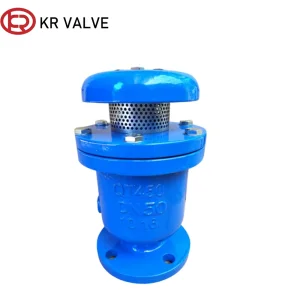
OEM Composite exhaust valve quick exhaust 2-4 inch flange Manufacturer
Explore Technical Specs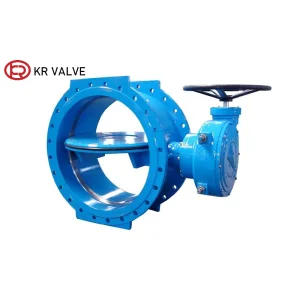
Custom Double Eccentric Butterfly Valves SS304 Sealing - D342X Series
Explore Technical Specs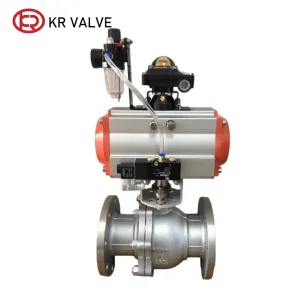
Custom China Pneumatic Ball Valve with Positioner & Limit Switch
Explore Technical Specs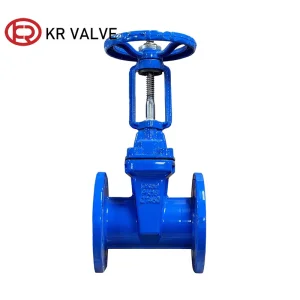
OEM Rising Stem Gate Valve Ductile Iron Body & EPDM Seat
Explore Technical Specs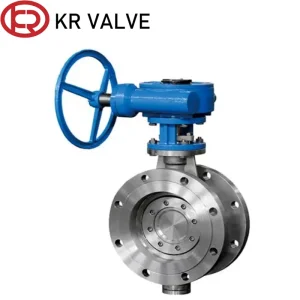
OEM Renewable Metal Seat Butterfly Valve Triple Eccentric Structure
Explore Technical Specs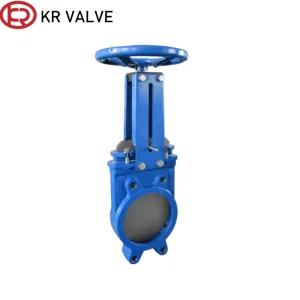
Custom Wafer Knife Gate Valve Ductile Iron Material PN16 Standard
Explore Technical Specs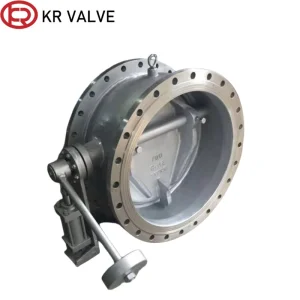
Wholesale SS CF8/CF8M Micro-Resistance Slow Closing Check Valve
Explore Technical Specs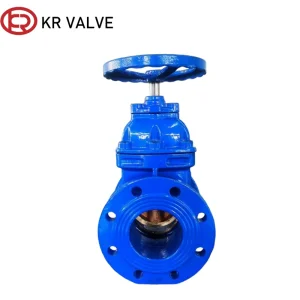
Wholesale GGG40 Bronze Seat Hard Seal Flange Gate Valve Factory
Explore Technical SpecsFluid Mechanics & Architecture of Single Air Release Valves
Understanding air entrapment physics, dynamic buoyancy mechanics, and orifice sizing critical to transient suppression in pressurized liquid pipelines.
Henry's Law & Gas Release
Dissolved air in water pipelines degasses dynamically at local high points, crests, and pressure drop regions according to Henry's Law ($C = k \cdot P$). Without automated single air valves, accumulated air pockets constrict cross-sectional flow area, exponentially increasing friction losses ($h_f = f \cdot \frac{L}{D} \cdot \frac{v^2}{2g}$) and inducing flow instability.
Joukowsky Surge Suppression
Sudden pump trips or rapid valve closures trigger transient pressure waves ($\Delta P = \rho \cdot c \cdot \Delta v$). Single air release valves allow continuous release of small micro-pockets of air under system operating pressure, preventing pocket compression collapse that leads to destructive high-magnitude water hammer peaks.
Dynamic Orifice Mechanics
Featuring a small precision orifice (typically 1.5mm to 3.0mm diameter), single air release valves maintain tight sealing under maximum hydraulic head. When air accumulates inside the valve chamber, the liquid level drops, reducing buoyancy forces ($F_b = \rho_{water} \cdot V_{float} \cdot g$) until the weighted float drops to unseat the seal pin against differential working pressure.
Key Technical Insight: Single Orifice vs. Combination Air Valves
While combination air valves integrate both large and small orifices for bulk intake/exhaust during line charging and draining, OEM Single Air Valves are specialized, cost-optimized, and compact units specifically designed to continually discharge micro-bubbles of accumulated air while the system remains fully pressurized up to PN40 (40 bar).
OEM Material Specs & Structural Configuration
Comprehensive metallurgical, coating, and pressure grade options available across China OEM air valve manufacturing facilities.
| Component Name | Standard OEM Material | High-Corrosion / Marine Grade | Applicable Standards |
|---|---|---|---|
| Valve Body & Bonnet | Ductile Iron (EN-GJS-450-10 / ASTM A536) | Stainless Steel CF8 / CF8M / Super Duplex 2507 | EN 1074-4, AWWA C512, BS EN 1563 |
| Internal Float Buoy | Polypropylene (PP) / Solid EPDM Composite | SS316 Welded Sphere / Polycarbonate | ISO 6509, WRAS Hygienic Guidelines |
| Orifice Seal & Seat Pin | EPDM (WRAS/NSF Approved) / NBR Rubber | Viton (FKM) / Silicone / PTFE | EN 681-1, NSF/ANSI 61 Standard |
| Internal Lever Mechanism | Stainless Steel AISI 304 / Brass CZ132 | Stainless Steel AISI 316 / Duplex SS | DIN EN 10088-3 Metallurgy |
| Protective Coating | Fusion Bonded Epoxy (FBE) - Min 250 µm | Halar (ECTFE) / Rilsan Nylon 11 Coating | AWWA C550, EN 14901 Test Standard |
| Connection End Standard | BSP / NPT Threaded (1/2" - 2") | Flanged EN1092-2 PN10-PN40 / ANSI B16.5 | ISO 7-1, ASME B1.20.1 Threading |
Coating Integrity & Hygiene Standard
Air release valves connected to potable municipal water grids must adhere strictly to international health specifications. Leading OEM single air valve factories apply electrostatically charged Fusion Bonded Epoxy (FBE) resin heated to 200°C. This ensures zero pinholes (tested under 2000V spark testing) and full compliance with WRAS, KWA, and NSF 61 drinking water directives.
Pressure Test Rigorous Validation
Every single air release valve unit undergoes a 2-stage factory acceptance test (FAT) prior to packaging:
1. Low Pressure Tightness Test: Hydrostatic pressure at 0.2 bar to verify soft seat resilience.
2. High Pressure Body Strength Test: Shell testing at 1.5 times the nominal working pressure (e.g., 24 bar for PN16 rating) per BS EN 12266-1 standards.
China Factory 4.0: Supply Chain Resilience & Manufacturing Advantage
How modern Chinese valve manufacturing hubs combine automated foundry tooling, spectral verification, and scalable production to support global OEM clients.
Automated Molding Lines
By utilizing DISAMATIC high-pressure green sand casting lines and resin sand lost-foam molding, Chinese OEM single air valve factories achieve dimensional tolerances conforming to ISO 8062 CT6. This eliminates casting wall porosity and drastically reduces secondary machining requirements.
Vertical Supply Integration
Concentrated industrial clusters in Tianjin and Zhejiang allow raw pig iron sourcing, precision CNC machining, rubber seat vulcanization, and epoxy coating processing within a 50-kilometer radius. This vertical integration cuts production lead times for custom OEM single air valves by 35-40% compared to Western manufacturers.
Spectrometric Quality Assurance
Direct-reading optical emission spectrometers (OES) verify chemical composition (C, Si, Mn, P, S, Cr, Ni percentages) before liquid metal pouring. Ultrasonic flaw detection (UT) and coordinate measuring machines (CMM) ensure every single air valve housing satisfies strict hydraulic structural demands.
OEM Sourcing Cost Optimization Analysis
Global procurement teams leveraging Chinese single air valve OEM contract manufacturing benefit from standard pattern availability (reducing initial tooling investment by up to 70%), low minimum order quantities (MOQs) for branded valve bodies, and direct container shipping logistics from major ports like Tianjin (Xingang) and Ningbo.
Macro Industry Sourcing & Deployment Solutions
Tailored technical setups for municipal, agricultural, industrial, and building service environments.
1. Municipal Water Supply & Transmission Mains
Installed at high points along long-distance raw water transmission conduits. Single air release valves continuously bleed out entrapped air bubbles released due to pressure gradients and elevated temperatures, preserving pump head efficiency and reducing electrical energy consumption by up to 12% across booster pump stations.
2. Agricultural Micro-Irrigation & Drip Networks
Low-pressure drip systems and center-pivot irrigation setups require reliable single air release valves with ultra-low sealing thresholds (< 0.15 bar). OEM plastic or light-duty ductile iron single air valves prevent line air binding and protect delicate emitter nozzles from negative pressure suction contamination.
3. Desalination Plants & Industrial Process Water
In sea water reverse osmosis (SWRO) facilities and chemical fluid handling, standard cast iron fails rapidly. Factories manufacture custom single air release valves featuring Nickel-Aluminum Bronze (NAB), SS316L, or Duplex 2205 bodies with full PTFE trim to resist severe pitting corrosion ($PREN > 40$).
4. High-Rise HVAC & Chilled Water Loops
Closed-circuit heating and cooling networks experience air accumulation from makeup water degassing. Compact threaded brass or stainless steel single air valves mounted on chiller manifolds and boiler outlets automatically release air to prevent cavitation noise, radiator cold spots, and pump impeller erosion.
Single Air Valve Technology Roadmap: 2026+
Next-generation engineering trends transforming passive air valves into intelligent monitoring nodes within smart water distribution grids.
Smart IoT Air Release Monitoring
Integration of wireless micro-pressure sensors and acoustic emissions loggers within the air valve top bonnet. Smart OEM single air valves transmit real-time data via NB-IoT or LoRaWAN, detecting internal seat leakages, air volume release frequency, and localized pressure transient anomalies before pipe rupture occurs.
Anti-Slam & Anti-Surge Orifice Tech
Standard air valves can slam shut violently when incoming water rapidly forces the float up. Advanced 3-stage dynamic floats incorporate secondary spring-loaded anti-slam discs that throttle outgoing air velocity when water approach speed exceeds critical thresholds, dampening dynamic pressure spikes by up to 80%.
Non-Stick Elastomer Polymeric Coatings
Addressing bio-fouling and mineral scaling in untreated water, next-generation single air valve floats utilize fluoropolymer (PTFE-infused) nanopolymer surface treatments. This prevents calcium carbonate scaling and slime adhesion, guaranteeing decades of maintenance-free float mobility.
Global Sourcing Compliance & Verification Framework
Key quality verification checkpoints for EPC contractors, engineering buyers, and international valve distributors when auditing OEM single air valve factories.
International Certification Audit Checklist
Ensure your chosen OEM single air valve manufacturer possesses validated third-party testing credentials:
- ISO 9001:2015: Quality Management System covering foundry to assembly.
- CE PED 2014/68/EU: Pressure Equipment Directive certification for European markets.
- WRAS / NSF 61 / ACS: Potable water toxicological safety approvals.
- AWWA C512: American Water Works Association air valve compliance standard.
Localization & Customization Services
Top Chinese OEM factories offer tailored OEM/ODM support for international clients:
- Custom Nameplates & Branding: Laser-etched stainless plates with buyer logos and serial numbers.
- BIM / CAD Library Supply: Provision of 3D Revit, STEP, and DWG models for project engineering integration.
- Flexible Packaging: Seaworthy fumigated wooden crates with moisture-vapor barrier lining.
- Mill Test Reports (MTR): EN 10204 3.1 certification detailing full chemical and physical test metrics.
Complementary Pipeline Control Valves
Direct factory supply for check valves, gate valves, Y strainers, and control components.
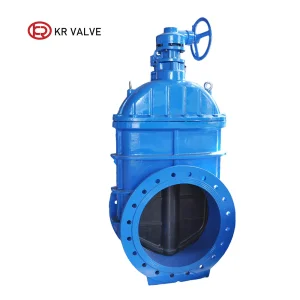
OEM Big Size EPDM Resilient Seat Gate Valve AWWA Standard DN40-DN600
Explore Technical Specs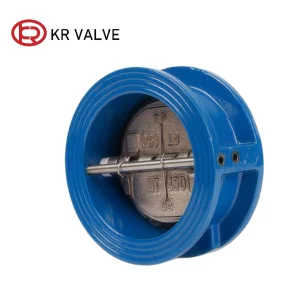
Custom 4 Inch Dual Plate Wafer Lug Check Valve High Quality
Explore Technical Specs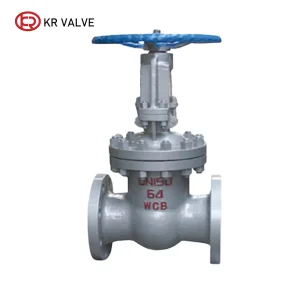
Custom China WCB Gate Valve Metal Seated PN64 Non-Rising Stem Design
Explore Technical Specs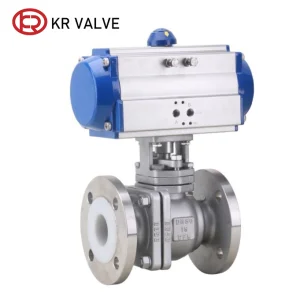
Wholesale Stainless Steel PTFE Lined Ball Valve Single Acting Pneumatic
Explore Technical Specs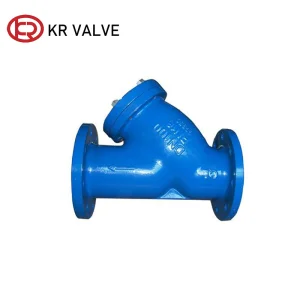
Custom Ductile Iron GGG40 Y-Type Strainer with SS304 Filter Mesh
Explore Technical Specs
Stainless Steel PTFE Lined Ball Valve Single Acting Actuator DN50-DN300
Explore Technical Specs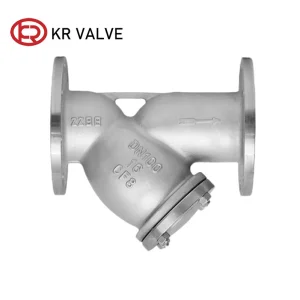
Custom China CF8 Stainless Steel Flanged Y Type Strainer High Performance
Explore Technical Specs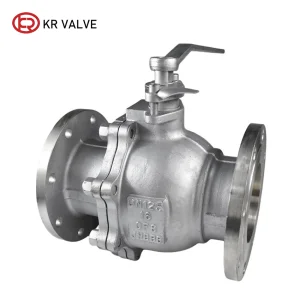
OEM CF8 SS304 Stainless Steel Ball Valve Floating Ball Type Factory
Explore Technical SpecsEngineering & Procurement Technical FAQ
Direct answers to critical questions regarding single air release valve selection, sizing formulas, factory audits, and OEM customization.
$$Q_{air} = C_d \cdot A_{orifice} \cdot P_1 \sqrt{\frac{\gamma}{R \cdot T} \left(\frac{2}{\gamma+1}\right)^{\frac{\gamma+1}{\gamma-1}}}$$
Where $C_d$ is the discharge coefficient (typically ~0.62), $A_{orifice}$ is the small orifice area, and $P_1$ is absolute line pressure. Valve suppliers provide sizing curves matching these parameters to prevent undersizing.