Industrial Isolation & Hydraulic Control Solutions
Direct-from-factory engineered valves compliant with ANSI, DIN, BS, and ISO standards for global municipal, energy, and process pipelines.
Global Industrial Butterfly Valve Manufacturing Dynamics & OEM Ecosystems
In modern industrial fluid dynamics, the global valve market has transitioned from basic mechanical isolation components to highly engineered, smart-actuated quarterly-turn flow control devices. The global market for wholesale butterfly valves is projected to exceed USD 13.8 Billion by 2030, driven by aggressive expansion in desalination plants, municipal wastewater retrofits, LNG gasification terminals, ultra-pure chemical lines, and district heating systems. EPC (Engineering, Procurement, and Construction) contractors, global valve distributors, and municipal procurement directors demand absolute traceability, verifiable metallurgical compliance, low operational torque curves, and zero-leakage sealing guarantees (ISO 5208 Rate A / API 598 tightness).
Selecting the optimal wholesale butterfly valve manufacturer involves rigorous evaluation of kinematic design topologies: Concentric (zero offset), Double Eccentric (high performance), and Triple Eccentric (TOV / hard-sealed). Understanding fluid behavior—such as calculating flow capacity coefficients ($C_v$), maintaining hydrodynamic stability under high pressure differentials ($\Delta P$), and mitigating cavitation indices ($\sigma$)—is critical to preventing premature seat degradation and catastrophic line failures.
Concentric Soft-Seated
Ideal for low-pressure water treatment, HVAC, and municipal networks. Features resilient elastomer liners (EPDM, NBR, Viton) vulcanized or bonded to ductile iron/cast iron bodies, eliminating fluid contact with the valve stem.
Double Eccentric High-Performance
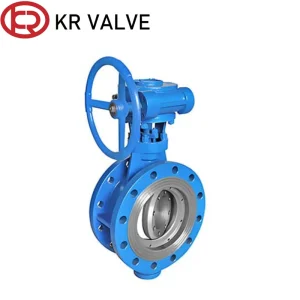
Offset shaft geometry moves the disc away from the seat during rotation, reducing seat wear and operating torque. Designed for power generation, steam lines, and hydrocarbon service with PTFE/RPTFE seating.
Triple Eccentric Metal-Seated
Third offset angled cone geometry creates frictionless wedging action. Hard-faced Stellite seals combined with stainless steel/graphite laminates deliver bi-directional fire-safe shut-off in extreme temperatures (-196°C to +600°C).
China Factory Automation: Modern Foundry Technology & Supply Chain Resilience
Leveraging advanced manufacturing clusters, Tianjin valve production hubs offer global procurement leaders unmatched scaling, cost efficiency, and metallurgical consistency.
The evolution of Chinese valve manufacturing represents a structural shift from manual foundry casting to digitalized, smart factory integration. Industrial hubs—particularly in Tianjin—combine end-to-end supply chains with advanced metallurgical control systems. Modern factories utilize automated resin sand molding lines, medium-frequency induction melting furnaces, and real-time optical emission spectrometers (OES) to ensure raw material heat chemistry strictly meets ASTM A216 WCB, ASTM A351 CF8M, and ASTM A536 Ductile Iron (Grade 65-45-12) specifications.
Precision CNC Machining
Multi-axis CNC turning centers and horizontal machining centers guarantee micro-level tolerances for stem bores, flange face serrations, and ISO 5211 actuator mounting pads.
100% Quality Assurance & NDT
Integrated testing rigs execute non-destructive testing (NDT), including Ultrasonic Testing (UT), Magnetic Particle Inspection (MPI), Radiographic Testing (RT), and 100% shell/seat hydrostatic testing.
Agile OEM & Logistics
Direct access to Tianjin Port enables streamlined freight consolidation, localized packaging to export standards, private-label tagging, and reduced lead times for critical project timelines.
Engineering Roadmap: Future Innovations in Butterfly Valve Technology
Next-generation materials science, predictive IoT diagnostics, and zero-emission fugitive seal designs.
1. IoT Smart Actuation & Predictive Health Monitoring
Industrial automation requires transition from standard mechanical isolation to digitized valve networks. Modern electric and pneumatic smart actuators incorporate micro-processors, vibration sensors, stem torque transducers, and digital positioners communicating via HART, Profibus, or Modbus protocols. By tracking real-time torque profiles, stroke speeds, and seat friction signature anomalies, predictive maintenance algorithms alert plant operators to seat degradation or stem binding before an unscheduled shutdown occurs.
2. Advanced Surface Engineering & Composite Polymers
Severe-service applications demand superior chemical resistance and abrasion protection. Factories are increasingly adopting advanced polymeric coatings and surface treatments:
- Halar® (ECTFE) & Rilsan® PA11 Coatings: Electrostatically applied powder coatings providing thick, non-porous barriers against seawater corrosion, mineral acids, and deionized water.
- Stellite Hard-Facing & HVOF Spraying: High-Velocity Oxygen-Fuel (HVOF) thermal spraying of tungsten carbide or Stellite overlays on disc seating edges to prevent erosion-corrosion in high-velocity slurry lines.
- Peroxide-Cured Synthetic Elastomers: High-purity EPDM and Viton formulations offering extended thermal resilience (-40°C to +150°C), lower compression set, and compliance with drinking water regulations (WRAS, NSF/ANSI 61).
3. Zero-Fugitive Emission Packing & Environmental Compliance
With international regulatory bodies establishing strict methane and VOC emission thresholds (such as EPA Method 21 and ISO 15848-1 Class AH standard), butterfly valve stem seal designs have evolved. Multi-ring live-loaded PTFE and flexible graphite packing configurations with Belleville spring washers dynamically compensate for thermal cycling, maintaining stem tightness over tens of thousands of continuous operational cycles.
Macro-Industry Solutions & Application Engineering
Tailored valve configurations engineered for specialized operating environments and fluid characteristics.
| Industry Sector | Primary Valve Configuration | Material Specifications | Operational Requirements |
|---|---|---|---|
| Seawater Desalination & Marine | Concentric / Double Offset Wafer & Lug | Duplex 2205Super Duplex 2507Ni-Al Bronze | Pitting resistance (PREN > 40), resistance to high-velocity brine erosion, zero galvanic corrosion. |
| Municipal Water & Wastewater | Resilient-Seated Flanged / U-Type Butterfly | Ductile Iron GGG50EPDM SeatSS316 Disc | Low head loss, WRAS/NSF drinking water safety, bi-directional bubble-tight shut-off, high flow capacity ($C_v$). |
| Petrochemical & Gas Pipelines | Triple Eccentric Metal-Seated (TOV) | Cast Steel WCBCF8M / SS316Stellite Facing | Fire-safe certified (API 607 / ISO 10497), zero leakage in hydrocarbon gas service, operational up to Class 600. |
| HVAC & District Cooling | Concentric Wafer Butterfly Valve | Cast Iron GG25EPDMNylon-Coated Disc | Compact face-to-face design, economical installed footprint, direct mounting for modulating motor actuators (ISO 5211). |
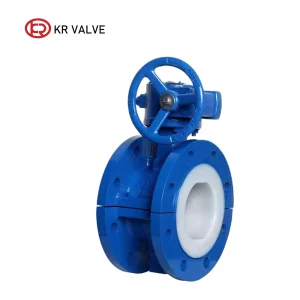
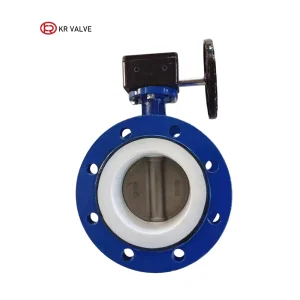
| Chemical & Pharmaceutical Processing | Split-Body Fully PTFE/PFA Lined | WCB BodyPFA Line 3-5mmSS316 Core | Complete chemical isolation, non-stick smooth fluid passage, zero contamination for aggressive acid exposure. |
Global Enterprise Procurement Matrix: Total Cost of Ownership (TCO) Analysis
Evaluating CapEx vs. OpEx parameters to optimize total life-cycle valve performance and procurement strategy.
When enterprise buyers evaluate wholesale butterfly valve manufacturers, focusing exclusively on initial Purchase Order cost (CapEx) often leads to higher long-term expenditure. Unplanned valve replacements, high actuator torque requirements (demanding larger pneumatic packages), line downtime, and fluid leakage drastically escalate the Total Cost of Ownership (TCO). A structured RFP/RFQ engineering matrix must calculate both direct financial metrics and technical compliance performance.
1. Lifecycle Energy Efficiency
Valves with optimized hydrofoil disc profiles deliver higher flow capacity ($C_v$) values. Higher $C_v$ minimizes localized pressure drops ($\Delta P$) across the pipeline, reducing annual pumping electrical costs over 15 to 20 years of continuous operation.
2. Maintenance & Replaceability
Selecting replaceable, field-serviceable seat liners (such as cartridged or snap-in liners) allows maintenance crews to refurbish worn valves on-site without discarding the cast body shell, slashing lifecycle replacement OpEx by up to 65%.
3. Vendor Qualification Audit
Verify factory compliance via rigorous quality control checks: EN 10204 3.1 material test certificates (MTRs), ISO 9001 quality management, Pressure Equipment Directive (PED 2014/68/EU) CE marking, and Fugitive Emission type approvals.
Global Standards Harmonization & Technical Certifications
Ensuring absolute interchangeability and regulatory compliance across international markets.
To operate seamlessly across global jurisdictions, leading Chinese valve factories engineer their product lines in accordance with harmonized international standard frameworks. Understanding flange drilling dimensions, face-to-face standards, and pressure-temperature ratings ensures field compatibility without expensive pipe modification adapters.
| Standard Body | Standard Number | Scope & Technical Definition |
|---|---|---|
| API (American Petroleum Institute) | API 609 (Category A & B) | Covers butterfly valve design, face-to-face dimensions, pressure-temperature ratings, and seat testing for offset and concentric configurations. |
| ISO (International Organization for Standardization) | ISO 5752 / ISO 5211 | ISO 5752 defines face-to-face dimensions for double-flanged and wafer valves. ISO 5211 establishes standardized top-flange dimensions for direct actuator mounting. |
| EN / DIN (European Standards) | EN 593 / DIN EN 558 | European standard for industrial butterfly valves, governing design standards and Series 13/14/20 face-to-face dimensions. |
| AWWA (American Water Works Assoc.) | AWWA C504 / C519 | Strict design standard for rubber-seated butterfly valves in water utility service, specifying minimum shaft diameters and disc thickness safety factors. |
| Quality & Leakage Validation | API 598 / ISO 5208 | Establishes testing durations, allowable leakage rates (Rate A zero-leakage for soft seats, Rate D/E for metal seats), and hydrostatic pressure levels. |
Frequently Asked Questions by Valve Engineers & Buyers
Direct technical answers addressing fluid dynamics, selection mechanics, and manufacturing parameters.
What is the primary operational difference between Wafer, Lug, and Double Flanged butterfly valves?
The primary difference lies in their body mounting style, pressure retention capability, and end-of-line service suitability:
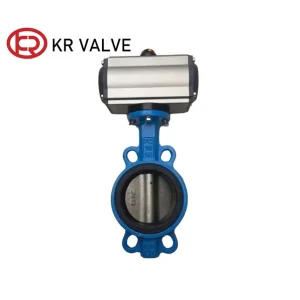
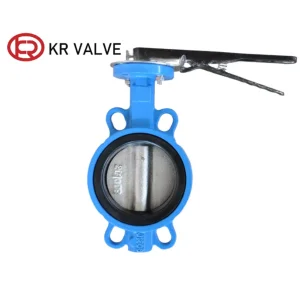
- Wafer Type: Designed to be sandwiched between pipe flanges using long through-bolts spanning the entire valve body. It is compact and lightweight but cannot be used for dead-end service because removing downstream piping releases line pressure.
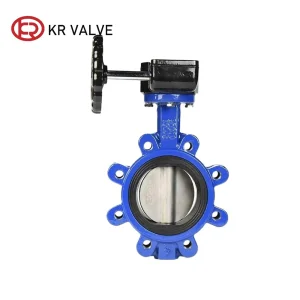
- Lug Type: Features threaded metal lugs surrounding the body match bolt patterns. Pipe bolts thread directly into the valve lugs from both sides, allowing downstream piping to be disconnected while keeping the upstream side pressurized (dead-end service).
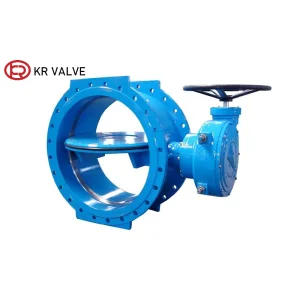
- Double Flanged: Features integral cast flanges on both sides matching ANSI or DIN pipe flanges. Recommended for large-diameter pipelines (DN600+), underground installations, and high-vibration environments where bolted flange integrity is critical.
Why choose a Triple Eccentric Butterfly Valve (TOV) over a Ball Valve or Gate Valve for severe service?
Triple Eccentric Valves (TOVs) combine the full-bore, zero-leakage isolation capability of a gate valve with the compact footprint and fast quarter-turn actuation of a ball valve. Unlike ball valves, TOVs do not have cavities where fluids can become trapped and expand thermally. Furthermore, the triple-offset geometry eliminates seat rubbing during rotation, allowing fire-safe metal-to-metal seating that withstands severe temperatures (-196°C to +600°C) and aggressive fluid media without high torque requirements.
How do you correctly size a butterfly valve to prevent cavitation and choked flow?
Sizing should never be based solely on pipe line size. Engineers must calculate the required flow coefficient ($C_v$) using maximum, normal, and minimum flow rates, inlet pressure ($P_1$), pressure differential ($\Delta P$), fluid specific gravity, and vapor pressure ($P_v$). To avoid cavitation, the operational pressure drop must not exceed the allowable pressure drop ($\Delta P_{max} = F_L^2 (P_1 - r_c P_v)$), where $F_L$ is the liquid pressure recovery factor of the valve. If cavitation is predicted, selecting a valve with anti-cavitation trim or throttling the valve at higher opening percentages (above 30°) is required.
What seat materials should be specified for corrosive chemical lines versus high-temperature steam?
For aggressive acids (sulfuric, hydrochloric, nitric) or ultra-pure fluid lines, specified valves should feature full PTFE or PFA linings over an SS316 disc/stem core. For high-temperature saturated steam up to 200°C, Reinforced PTFE (RPTFE) or carbon-filled PTFE seats are suitable. For superheated steam above 260°C or severe thermal cycling, laminated stainless steel with graphite sheets or solid Stellite hard-faced metal seats are mandatory.
What quality documentation should be requested from a OEM Chinese valve manufacturer before shipment?
A comprehensive quality dossier must include: EN 10204 3.1 Material Test Reports (MTRs) detailing chemical analysis and mechanical tensile/yield testing for shell castings; Hydrostatic Shell & Seat Test Certificates according to API 598 or ISO 5208; NDT test reports (Ultrasonic/Dye Penetrant Inspection); Coating thickness measurement reports (ISO 2808); and Certificate of Origin (CO) stamped by authorized chambers of commerce.
High-Performance Pipeline Components & Actuation Sets
Explore our full engineering line-up of industrial gate, check, strainers, and high-performance eccentric butterfly valves.