
Industrial Flow Control & Short Series Butterfly Valves
Explore our top-tier selection of heavy-duty industrial valves engineered for municipal, chemical, HVAC, and fire protection pipelines. Built strictly to ISO, DIN, ANSI, and BS standards.
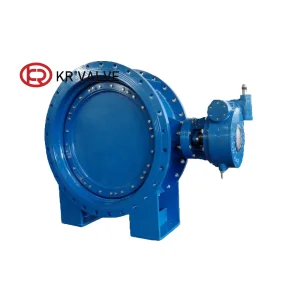
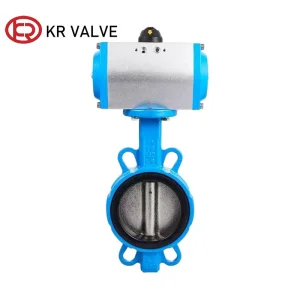
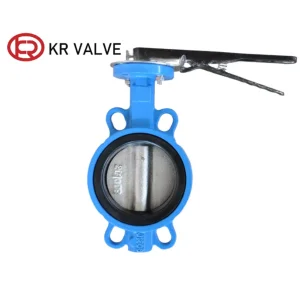
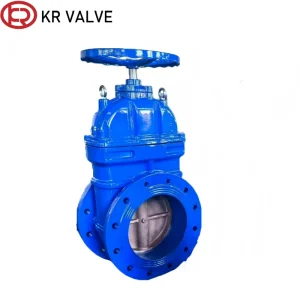
Understanding the Engineering Architecture of "Short Series" Butterfly Valves
In modern fluid dynamics and heavy industrial piping systems, plant space optimization, material weight reduction, and installation efficiency dictate equipment procurement. The Short Series Butterfly Valve (commonly designated under ISO 5752 Series 20, EN 558 Series 20, or API 609 Table 1 Wafer Category A) represents the pinnacle of compact isolation valve design.
Unlike long-pattern gate valves or full-length globe valves, short series butterfly valves feature an abbreviated face-to-face dimension. This reduced envelope permits effortless clamping between pipe flanges (PN10/16, Class 150, JIS 10K) using studs or bolts, dramatically shrinking the overall footprint of skid-mounted water treatment plants, HVAC chillers, and marine ballast piping networks.
Dimensional Envelope Precision
Short series construction minimizes the distance between flanged faces. For instance, a DN100 (4-inch) short series wafer butterfly valve typically has a face-to-face width of just 52 mm. This short face-to-face profile lowers total piping system stress and slashes international freight costs for global B2B procurement managers.
Hydrodynamic Disc Geometry
Engineered using modern 3D Finite Element Analysis (FEA) and Computational Fluid Dynamics (CFD), the streamlined valve disc yields a high flow coefficient ($C_v / K_v$) while suppressing turbulence and cavitation. The polished edge reduces operational torque requirements, enabling smaller pneumatic or electric actuators.
Resilient Elastomer Seating
Equipped with vulcanized or replaceable soft seats (EPDM, NBR, Viton, or split-body PTFE), our short series valves ensure bi-directional bubble-tight shutoff (ISO 5208 Rate A). The resilient sleeve fully isolates the valve body from the medium, avoiding body corrosion and extending field service life.
Technical Specifications & Material Compatibility Guide
Selecting the correct body metallurgy, disc substrate, and seat elastomer is crucial for preventing premature valve failure. Below is a comprehensive engineering comparison chart for global buyers specifying short series butterfly valves across diverse industrial media.
| Component | Material Standard Options | Operating Temperature Range | Compatible Media & Working Applications |
|---|---|---|---|
| Valve Body | Ductile Iron GGG40 / QT450-10, Cast Steel WCB, Stainless Steel CF8 (304), CF8M (316) | -20°C to +400°C (Material Dependent) | Potable water, municipal sewage, sea water, refined petroleum, HVAC chilled water, chemical slurries. |
| Valve Disc | Ductile Iron (Nylon / Epoxy Coated), SS304, SS316, Al-Bronze C95400, Hastelloy C-276 | -30°C to +250°C | High-purity water, aggressive acids, brackish water, RO membrane reject water, abrasive fluids. |
| Elastomer Seat | EPDM (Food Grade / WRAS), NBR (Buna-N), FKM (Viton), PTFE / RTFE Lined | -20°C to +200°C | EPDM (Drinking water, HVAC, mild acids); NBR (Oils, gas); Viton (High temp, hydrocarbon); PTFE (Corrosive chemicals). |
| Valve Stem / Shaft | Stainless Steel 420 (1.4021), SS304, SS316, 17-4PH High Strength Alloy | -40°C to +300°C | Ensures high torsional shear strength, blowout-proof stem retention design under maximum differential pressure. |
| Actuation Interface | ISO 5211 Direct Mounting Top Flange (F05 / F07 / F10 / F12 / F14 / F16) | N/A | Allows direct mounting of pneumatic double-acting, spring return, or electric modulating actuators without brackets. |
Tianjin Manufacturing Hub & Supply Chain Advantage
As a prominent OEM/ODM butterfly valve manufacturer located in the Tianjin industrial valve cluster, our factory integrates raw casting foundries, automated CNC machining centers, electrostatic powder coating lines, and rigorous pressure testing facilities under one roof.
Direct Factory Pricing & High Scalability
By eliminating intermediary brokers, wholesale buyers access direct manufacturer pricing. Our annual production capacity exceeding 500,000 valve units guarantees stable lead times even during global supply chain fluctuations.
Comprehensive Quality Control (100% Inspection)
Every short series butterfly valve undergoes 100% hydrostatic shell testing (1.5x PN rating) and seat seal testing (1.1x PN rating) per API 598 and ISO 5208. Spectrometric metal analysis ensures alloy composition strictly matches project certificates.
Custom Epoxy Powder Coating (RAL 5005/5015)
Bodies receive a non-toxic electrostatic epoxy powder coating (minimum thickness 250 µm). This delivers outstanding salt-spray resistance, chemical inertness, and UV protection suitable for underground burial or coastal environments.
Global Procurement Demands, Regulatory Compliance & Local Support
Procurement directors and EPC contract managers operating in Europe, the Middle East, the Americas, and Southeast Asia demand complete traceability and international compliance. We support project tenders with thorough engineering documentation and global export guarantees.
EN 10204 3.1 Material Test Reports (MTR)
We provide complete EN 10204 3.1 certification covering chemical composition analysis, mechanical tensile strength, elongation, impact testing, and hydro-test pressure charts for every production heat code.
International Certifications (CE, ISO, WRAS)
Our products comply with CE PED 2014/68/EU (Pressure Equipment Directive), ISO 9001:2015 quality management systems, and WRAS hygiene standard for drinking water safety.
Localized Technical Support & Logistics
Dedicated bilingual valve engineers assist with dimension matching, flange standard conversion (ANSI to DIN/BS), custom branding, OEM box packaging, and FOB/CIF/DDP freight arrangements worldwide.
Industry Trends: Smart Actuation & Eco-Resilient Elastomers
The global industrial valve market is undergoing rapid evolution. Key technological trends driving modern short series butterfly valve engineering include:
Smart IoT Actuation Integration
Short series butterfly valves are increasingly retrofitted with smart electric actuators featuring Modbus, Profibus, or HART protocols. Real-time torque monitoring detects seat wear and stem friction before system failure occurs.
Fugitive Emission Sealing (TA-Luft)
Environmental legislation demands zero fugitive emissions from valve stem packings. Modern short series double eccentric valves incorporate PTFE V-ring live-loaded packing glands meeting ISO 15848-1 and TA-Luft standards.
High-Cycle Life Elastomers
Proprietary synthetic rubber compounding enhances tear strength and compression set recovery, allowing soft-seated short series valves to surpass 50,000 continuous open/close cycles under full rated pressure differential.
Localized Application Scenarios & Operational Use Cases
Short series butterfly valves serve as the workhorse of modern fluid handling infrastructure. Below are four key sector deployments where compact face-to-face dimensions provide maximum economic and operational return.
1. Municipal Water Treatment & SWRO Desalination
In seawater reverse osmosis (SWRO) desalination skids, pipe spacing is tightly constrained. Short series wafer butterfly valves with Duplex SS2205 or Super Duplex disc components provide superior resistance to high-chloride brackish water while maintaining a tiny installation footprint.
2. HVAC & District Cooling Plant Rooms
Commercial high-rise buildings utilize short series ductile iron concentric butterfly valves with EPDM seats in chilled water circulation loops. Their low weight reduces structural pipe hanging costs, while ISO 5211 top flanges simplify connection to Building Management Systems (BMS).
3. Chemical & Industrial Processing Lines
For handling aggressive alkalis, solvents, or acids, split-body short series butterfly valves lined with thick virgin PTFE/PFA provide total chemical isolation. The shortened body length prevents fluid stagnation and reduces thermal expansion strain on glass-lined piping.
4. Fire Protection & Utility Systems
Grooved or wafer short series butterfly valves equipped with internal supervisory tamper switches are standard in automatic fire sprinkler mains. Their rapid 90-degree quarter-turn action ensures immediate full-bore flow during emergency fire suppression operations.
Frequently Asked Questions (FAQ) for Engineering & Procurement
Get definitive technical answers regarding short series butterfly valve selection, standards, torque safety margins, and custom factory manufacturing options.
Comprehensive Valve Catalog & Allied Pipeline Components
Review additional industrial valve offerings engineered for water treatment, chemical processing, oil & gas, and hydraulic control systems.
Request Technical CAD Drawings & Factory Wholesale Quote
Need customized ISO 5752 short series butterfly valves, OEM brand labeling, or project tender pricing? Contact our senior engineering team in Tianjin today for instant technical support and competitive factory direct quotations.
Contact Valve Engineers Now