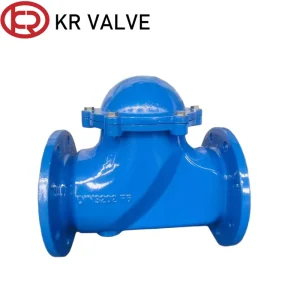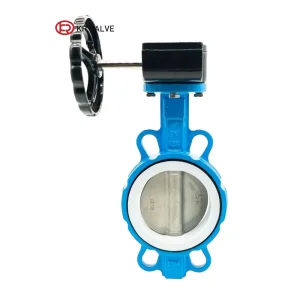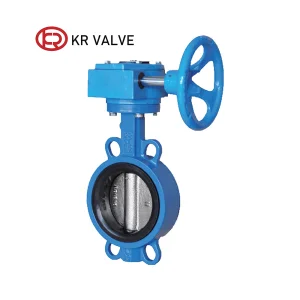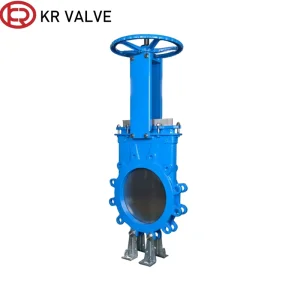
Core Product Portfolio & Custom Manufacturing
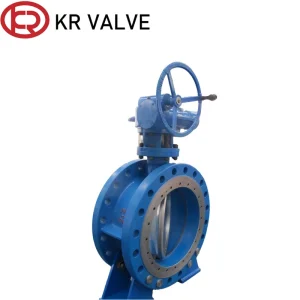
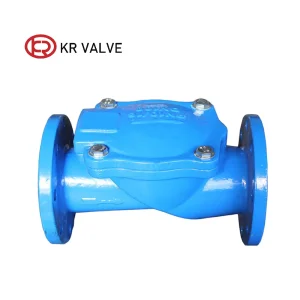
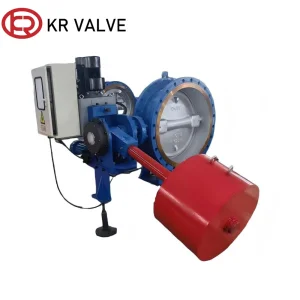
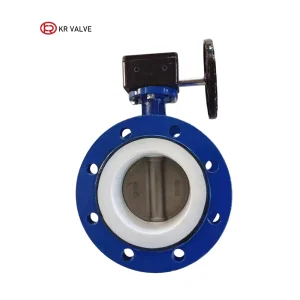
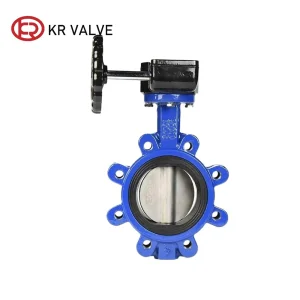
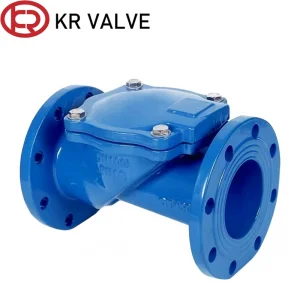
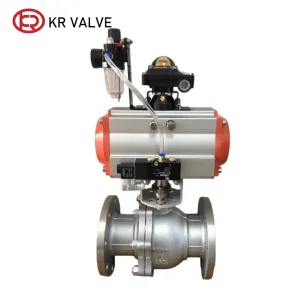
Explore our engineered series of silent non-return valves, butterfly isolation valves, and automatic hydraulic control solutions built to DIN, BS, and ANSI standards.
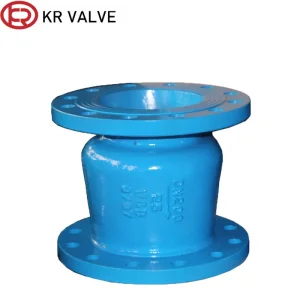
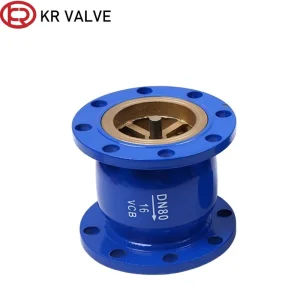
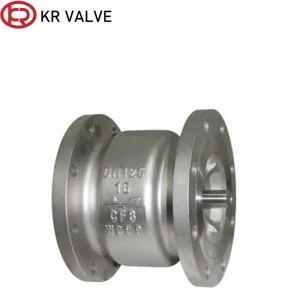
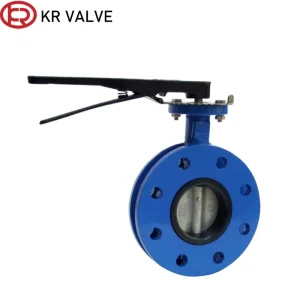
Engineering Fundamentals: Silent Check Valves & Water Hammer Elimination
Eliminating Hydraulic Transients in Pumping Stations and Critical Piping Networks
The Physics of Hydraulic Transients (Water Hammer)
In high-volume fluid transport pipelines, sudden pump shutdown or power interruption causes a rapid drop in fluid momentum. As the forward moving column of water decelerates, gravity and backpressure force fluid reversal toward the pump discharge port. In conventional swing or tilting-disc check valves, the disc remains suspended open by forward velocity and only begins closing after flow reversal has already initiated.
This delayed closure results in catastrophic slam events: the returning fluid column slams the valve disc into its seat at velocities exceeding 3.5 m/s. According to the Joukowsky Equation ($\Delta P = \rho \cdot c \cdot \Delta v$), where $\rho$ is fluid density, $c$ is acoustic wave speed (approx. 1200 m/s in steel pipes), and $\Delta v$ is change in fluid velocity, this instantaneous shock wave creates destructive pressure spikes up to 50 bar above working pressure. This leads to flange deformation, pump housing cracking, instrument destruction, and pipe burst failures.
The Silent Check Valve Advantage
Silent check valves (also designated as axial flow, globe-style non-slam check valves, or spring-loaded check valves) fundamentally solve transient surge by utilizing a stainless steel compression spring calibrated to the mass of the disc assembly. As fluid velocity decays to zero, the pre-loaded spring forces the disc onto the seat prior to flow reversal. Because the valve seals at zero velocity ($\Delta v \approx 0$), water hammer is entirely suppressed.
Comprehensive Hydraulic Comparison Matrix
Understanding the operational trade-offs between legacy check valve designs and modern axial spring silent check valves is essential for specifying engineers and plant procurement officers.
| Engineering Characteristic | Standard Swing Check Valve | Dual-Plate Wafer Check Valve | Industrial Silent Check Valve (Axial) |
|---|---|---|---|
| Closure Trigger Mechanism | Gravity & Gravity Flow Reversal Slam | Torsion Spring & Backflow Pressure | Linear Spring-Assisted Pre-Closure at $v=0$ |
| Shock Wave & Slam Risk | Severe Risk ($\Delta P > 35 \text{ bar}$) | Moderate Risk in Large Diameters | Zero Slam / Negligible Surge Impact |
| Cracking Pressure Range | 0.01 - 0.03 bar (Uncontrolled) | 0.05 - 0.1 bar | 0.1 - 0.25 bar (Calibrated Engineering) |
| Installation Orientation | Horizontal Only (Strict) | Horizontal / Vertical Upward | Universal: Horizontal, Vertical, Angular |
| Seat Wear & Maintenance | High Hinge Pin Friction & Ovaling | Hinge Wear & Elastomer Erosion | Guiding Stem Linear Alignment (20+ Yr Life) |
| Acoustic Decibel Rating | 85 - 110 dB (Impact Slam Noise) | 65 - 80 dB | < 35 dB (Substantially Silent Operation) |
Material Science, Machining Precision & Structural Configurations
Engineered for structural integrity across demanding chemical, municipal, and industrial fluid applications.
Ductile Iron GGG40 / EN-GJS-400-15
Utilized extensively in municipal water supply, district HVAC, and irrigation infrastructure. Nodular graphite morphology delivers high tensile strength (400 MPa min) and superior impact resistance compared to brittle grey cast iron (GG25). Coated internally and externally with fusion-bonded epoxy (FBE) at 250+ microns to prevent tuberculation and bio-fouling.
Cast Carbon Steel ASTM A216 WCB
Engineered for high-pressure industrial steam, boiler feedwater, and petrochemical refining systems (PN25 to PN64, Class 150/300). Exhibits exceptional yield strength and ductility up to 425°C. Fitted with hardened stainless steel stem bushings to withstand thermal cycling and high differential pressure shocks.
Stainless Steel CF8 (304) & CF8M (316)
Specified for reverse osmosis desalination, marine piping, and hygienic chemical processing. High molybdenum content in CF8M provides immunity to pitting corrosion in chloride-rich environments. Precision investment cast with zero porosity for biopharmaceutical and potable water compliance.
Sealing Interface Matrix: Soft Resilient vs. Hard Metal-to-Metal Seats
Resilient Soft Sealing (EPDM / NBR / Viton)
EPDM (-20°C to +120°C): Standard choice for potable water, HVAC chilled water, and municipal networks. Provides zero-leakage bubble-tight shutoff (API 598 Rate A).
NBR (-10°C to +80°C): Oil-resistant elastomer tailored for hydrocarbon fuel lines, compressed air, and wastewater service containing organic grease.
Viton / FKM (-15°C to +200°C): High-temperature chemical resilience against aggressive acids, solvents, and hot oil streams.
Hard Metal Sealing (Bronze / SS304 / SS316 / Stellite)
Bronze to Bronze (ASTM B62): Time-tested seating for general service water mains, offering antimicrobial properties and resistance to scaling.
Stainless Steel Surfacing: Micro-lapped metal-to-metal seating for high-velocity liquid networks, high pressure PN40/PN64, and applications containing minor suspended particulates where soft seals would erode.
China Factory 4.0: Supply Chain Resilience & Quality Engineering
Combining Automated Casting, Multi-Axis CNC Precision, and Strict QA Inspection for Global EPC Sourcing
Automated Production & Metallurgical Integrity
Modern Chinese valve manufacturing facilities have evolved from manual foundry operations to highly digitized Industry 4.0 ecosystems. By leveraging computerized automatic molding lines (DISAMATIC) and spectral analysis directly linked to electric induction furnaces, casting chemistry tolerances are controlled down to 0.01% element concentration.
Precision machining is conducted on multi-axis CNC horizontal machining centers. Disc concentricity, stem linear guide alignment, and body seat tolerances are held within $\pm 0.015 \text{ mm}$. This extreme spatial accuracy eliminates micro-binding during stem translation, ensuring the spring-assisted disc glides with zero friction over millions of operational cycles.
- Spectral Material Analysis: Raw melt chemistry verification prior to pouring.
- Dynamic Balancing: Discs balanced to prevent uneven guide bush wear.
- Ultrasonic Flaw Detection: Non-destructive testing on high-pressure cast bodies.
Hydrostatic & Pneumatic Test Protocols
Every single silent check valve manufactured in our Tianjin production facility undergoes 100% factory pressure testing before export clearance in strict adherence to API 598 and EN 12266-1 standards:
Detailed EN 10204 3.1 Material Test Reports (MTR) and pressure test certificates are supplied with every order consignment.
Global Sourcing & Total Cost of Ownership (TCO) Optimization
A Data-Driven Procurement Framework for International EPC Contractors, OEM Wholesalers, and Plant Engineers
Life-Cycle Cost Reduction
While low-cost swing check valves have a slightly smaller upfront purchase price (CAPEX), their total cost over a 10-year lifespan is 4x higher due to frequent gasket replacements, water hammer pipeline repair, and energy loss caused by turbulent eddy currents. Silent check valves dramatically reduce OPEX through streamlined hydrodynamic flow channels.
Custom OEM & Private Labeling
We empower global distributors and valve stockists with full OEM capabilities. Customize brand name plate stamping, specific face-to-face dimensions (DIN 3202 F4 / EN 558 Series 14), specialized RAL epoxy paint shades, custom flange drilling (ANSI B16.5, BS4504, JIS B2220), and bespoke export packaging.
Consolidated Freight Logistics
Single-source complete pipeline packages. Combine silent check valves with resilient seated gate valves, double offset butterfly valves, Y-strainers, and hydraulic control valves in single sea container shipments from Tianjin Port, drastically lowering customs overhead and port handling costs.
Macro-Industry Solutions & System Integration
Deploying Custom Non-Return Valves Across Critical Global Infrastructure Sectors
1. High-Rise Commercial HVAC & Chilled Water Plants
In high-rise skyscrapers (200m+ elevation), booster pumping systems generate immense static head pressure. Standard check valves create high-decibel shock waves that radiate through structural steel, disturbing occupants. Our silent check valves eliminate acoustic vibration, ensuring silent operation in luxury hotels and office towers.
2. Municipal Water Pumping & Desalination
High-volume municipal intake stations operate multiple high-horsepower pumps running in parallel. Rapid pump cycling requires check valves that operate without mechanical hysteresis. Outfitted with duplex stainless steel trim or EPDM soft seals, our valves withstand harsh raw water and brine environments without bio-fouling.
3. Thermal Power Stations & Boiler Feed Lines
High-pressure steam condensate and feed lines require check valves that can handle rapid thermal expansion and pressure cycling without binding. WCB and CF8M silent check valves with metal-to-metal seats operate reliably at temperatures up to 400°C and pressures up to PN64.
4. Industrial Fire Protection Infrastructure
Fire main booster systems rely on absolute integrity under static stand-by conditions. Certified to international pressure standards, silent check valves prevent pressure loss in dedicated fire mains while guaranteeing zero-slam activation during sudden sprinkler system depressurization.
Technical Roadmap & Next-Generation Valve Innovation
Pioneering Smart Sensing, Computational Fluid Dynamics, and Additive Metallurgy
IoT Smart Condition Monitoring
Integrating wireless piezo-electric transient sensors directly into the valve bonnet to track real-time pressure spikes, vibration spectra, and spring stroke degradation. Predictive analytics alert maintenance teams before seat failure occurs.
CFD-Optimized Low-Drag Profiles
Utilizing 3D Computational Fluid Dynamics (CFD) simulation modeling to optimize internal valve body expansion chambers. Re-engineered internal contours reduce flow coefficient resistance ($K$-factor) by 18%, saving thousands of kilowatt-hours in pump energy annually.
Nanocomposite Ceramic Coatings
Developing advanced ceramic plasma-deposited coatings for internal stems and spring assemblies operating in highly aggressive sea water, acid mine drainage, and slurry handling environments.
Regulatory Compliance, Standards & Quality Engineering
Full Adherence to International Standards for Flange Drilling, Pressure Ratings, and Potable Water Safety
Global Valve Standards Compliance
Our silent check valves are designed, cast, machined, and pressure tested to meet or exceed major global standard specifications, ensuring seamless field drop-in replacement during plant retrofit or new EPC construction:
| Design Element | Governing Standards Specs |
|---|---|
| Design & Manufacture | AP6D, BS 5153, EN 12334, DIN 3352 |
| Face-to-Face Dimensions | DIN 3202-F4, EN 558-1 Series 14/15, ANSI B16.10 |
| Flange Connection Drilling | EN 1092-2 PN10/16/25/40, ANSI B16.1/B16.5, JIS B2220 |
| Pressure & Leakage Testing | API 598, EN 12266-1, ISO 5208 |
| Potable Water Hygiene | WRAS, NSF/ANSI 61, CE-PED 2014/68/EU |
Complete Engineering Quality Assurance Package
To support EPC tender compliance and global customs clearance, every valve export order is backed by comprehensive engineering quality documentation:
- EN 10204 3.1 Material Certificate: Chemical & mechanical trace report.
- Hydrostatic Test Certification: Shell and seat pressure test graphs.
- Coating Thickness Calibration: Magnetic FBE micron verification.
- Third-Party Inspection: SGS, TÜV, or BV inspector site sign-off.
Frequently Asked Questions (FAQ)
Direct Engineering Answers for Sourcing Managers and Mechanical Consultants
Extended Industrial Valve Solutions
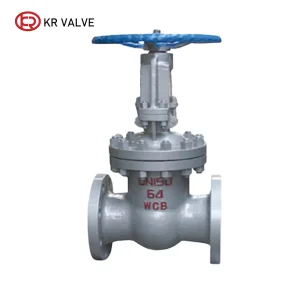
Explore our full range of heavy-duty gate valves, knife gate valves, and multi-eccentric butterfly valves for complex flow isolation.