
Featured Industrial Flow Control Systems
Explore engineered valve solutions directly from tier-1 Chinese manufacturing lines. Fully certified to international standards including ANSI, DIN, BS, and API.
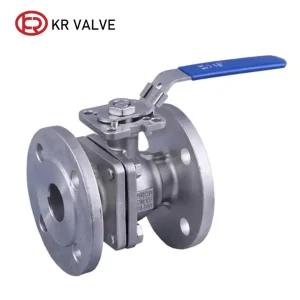
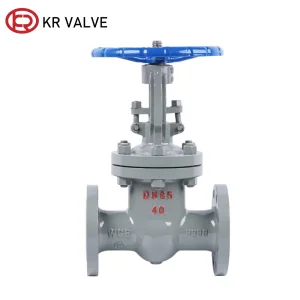
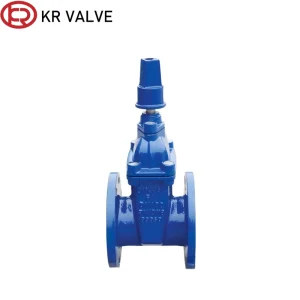
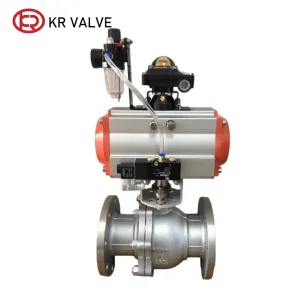
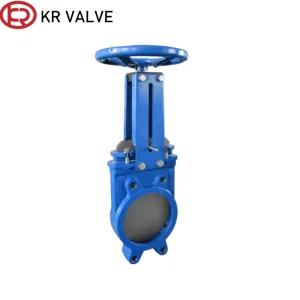
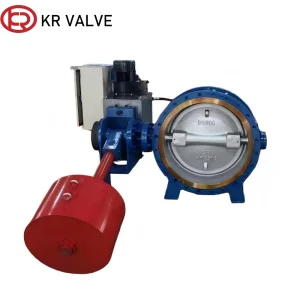
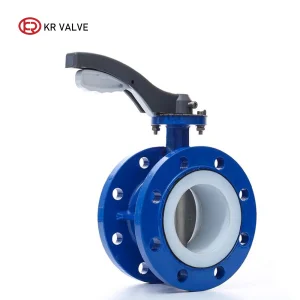
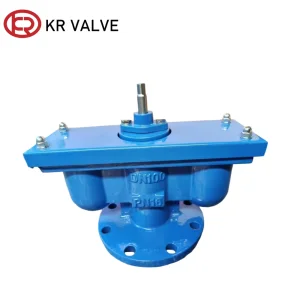
1. Executive Summary & Global Market Landscape of Brass-Seated Gate Valves
In the rapidly evolving domain of municipal water supply, district thermal networks, and heavy industrial fluid conveyance, the choice of isolation valves dictates long-term infrastructure reliability. Custom brass seat gate valves represent a critical nexus of mechanical durability, corrosion mitigation, and operational longevity. Unlike soft-seated resilient gate valves that rely on elastomeric compounds like EPDM or NBR (which degrade under extreme operating temperatures or hydrocarbon exposure), metal-to-metal gate valves incorporating high-tensile brass ring seat interfaces maintain seal integrity under severe thermal cycling and abrasive flow conditions.
The global industrial valve market is projected to reach over USD 95 Billion by 2030, driven by aggressive urban water grid expansions across North America, Europe, the Middle East, and Asia-Pacific. Within this market, brass-seated and bronze-trimmed gate valves command a substantial share of heavy-duty municipal and commercial utility contracts. EPC (Engineering, Procurement, and Construction) professionals and global sourcing directors increasingly look toward specialized manufacturing hubs in China to supply engineered valve solutions that meet rigorous international criteria—such as BS 5163, DIN 3352 F4/F5, AWWA C500, and EN 1171—at competitive total cost of ownership (TCO) benchmarks.
2. Technical Engineering & Metallurgical Superiority
The integrity of a metal-seated gate valve relies heavily on the tribological interaction between the gate wedge ring and the body seat ring. In standard cast iron (GG25) or ductile iron (GGG40 / QT450-10) valve bodies, integrating brass seat rings provides superior anti-galling performance, exceptionally low friction coefficients, and high resistance to particulate erosion compared to un-lined iron seats.
Dezincification Resistant (DZR) Brass Alloys vs. Standard Commercial Brass
A primary point of failure in low-grade brass componentry is Dezincification—a corrosive reaction where zinc is selectively leached from copper-zinc alloys, leaving a porous, mechanically weak copper framework. Advanced valve manufacturers utilize certified Dezincification Resistant Brass alloys (such as CW602N / CZ132 / C36000 with arsenic additions) engineered specifically for aggressive potable water and high-salinity applications.
Precision Seat Ring Integration
Utilizes hydraulic press-fit combined with mechanical rolling or high-precision threaded ring insertion, guaranteeing zero fluid bypass behind the ring seat interface under high differential pressure.
Optimized Wedge Mechanics
Offered in Solid Wedge and Flexible Wedge geometries. Solid wedges provide ultimate mechanical strength for high-velocity fluids, while flexible wedges accommodate micro-deflections without binding.
Stem Integrity & Thrust Washers
Stems engineered from High-Tensile Stainless Steel (SS420/SS316) or Forged Brass (CW617N). Equipped with low-friction brass thrust collar bearings to reduce handwheel torque by up to 35%.
Metallurgical Standard Comparison Table
| Material Component | Standard Material Standard | High-Spec Custom Material | Performance Benefit |
|---|---|---|---|
| Body & Bonnet | Ductile Iron GGG40 / EN-GJS-400-15 | Ductile Iron GGG50 / WCB Cast Steel | High impact strength, handles water hammer surges up to PN25 |
| Body Seat Ring | Standard Cast Brass (CuZn39Pb3) | Dezincification Resistant (DZR) Brass CW602N | Prevents dezincification embrittlement in treated potable water |
| Wedge Seat Ring | Forged Brass CW617N | Aluminum Bronze (C95800) or High-Lead Brass | Superior micro-lapping smoothness; prevents particulate scaling |
| Valve Stem | Stainless Steel 2Cr13 / SS420 | Stainless Steel SS316 / Monel K500 | High torsional strength, eliminates stem thread stripping |
| Coating & Protection | Standard Liquid Epoxy (150 microns) | Fusion-Bonded Epoxy (FBE) > 250 microns (DIN 30677) | WRAS/NSF-61 approved non-toxic barrier against soil corrosion |
3. Strategic Advantages of Chinese Industrial Valve Manufacturing
Global procurement teams facing supply chain bottlenecks and inflating component costs turn to tier-1 Chinese manufacturers to secure high-volume, precision-machined brass-seated gate valves. China’s modern foundry ecosystem has undergone an extensive digital transformation, pairing automated green-sand casting and shell-molding technology with multi-axis CNC machining centers.
Integrated Supply Chain Ecosystem
Major Chinese industrial valve hubs (such as Tianjin and Zhejiang) integrate raw material smelting, brass ring forging, CNC precision face lapping, and automated hydrostatic testing within ultra-dense industrial corridors—cutting production lead-times by up to 40%.
Custom OEM & ODM Engineering
Factories offer extensive OEM customization: customized face-to-face dimensions (DIN 3352 F4 vs. F5, BS5163, ANSI B16.10), custom stem extensions, ISO 5211 top flange mounting for electric/pneumatic actuators, and private label casting logos.
Strict EN 12266-1 Quality Control
Every unit undergoes 100% shell hydrostatic pressure testing at 1.5x PN and double-sided seat pressure testing at 1.1x PN. Metallurgical spectrography checks verify exact chemical composition of brass alloys prior to machining.
4. Field Deployment & Industrial Application Scenarios
Brass seat gate valves excel in severe service environments where soft seats suffer premature degradation due to thermal stress, mechanical abrasion, or chemical contamination. Below are primary global field deployment scenarios:
District Heating & Thermal Water Mains
High-temperature hot water circulation lines operating at temperatures between 90°C and 180°C render standard rubber wedge gate valves obsolete. Brass-to-brass or brass-to-bronze seating provides steady, leak-tight closure during expansion and contraction cycles without thermal vulcanization or sticking.
- Pressure Ratings: PN16, PN25
- Stem Configuration: Non-Rising Stem (NRS) with position indicator
Raw Water Intake & Unfiltered Reservoirs
Raw water containing sand, silt, and mineral debris quickly tears soft EPDM seat linings. The high hardness of forged brass seat rings resists micro-scoring and particle impact, cutting maintenance intervals in municipal filtration plants.
- Standard Compliance: BS 5163 / DIN 3352
- Coating: FBE coating resistant to bio-fouling
Commercial HVAC & Chilled Water Plants
Installed in large-scale chiller loops and cooling tower pump manifolds within high-rise commercial structures. Brass metal seats withstand chemical water treatments (glycol, biocide dosed fluids) without swelling or elastomeric breakdown.
- Actuation: Gear-operated or bare-shaft ISO 5211 pad
- Connection: Flanged BS4504 / ANSI B16.5
5. Strategic Global Sourcing & Quality Audit Architecture
Procuring industrial valves from overseas factories requires a rigorous quality verification workflow. To assist project engineers and vendor management executives, our technical compliance experts have formulated an evaluation matrix:
| Audit Stage | Evaluation Parameter | Technical Criterion & Standard | Verification Method |
|---|---|---|---|
| 1. Metallurgical Audit | Brass Alloy Composition | Strict conformity to DZR CW602N / C36000 chemical composition | Direct-reading Optical Emission Spectrometry (OES) reports |
| 2. Dimensional Verification | Face-to-Face & Flange Drilling | EN 558 series 14/15, ANSI B16.10, ISO 7005-2 | CMM (Coordinate Measuring Machine) & Vernier Caliper check |
| 3. Hydrostatic Testing | Shell & Seat Tightness | EN 12266-1 (Rate A/B), API 598 | 1.5x PN Shell test, 1.1x PN Water Seat test with calibrated gauges |
| 4. Surface Finish | Coating Thickness & Continuity | DIN 30677-2 FBE, minimum 250 µm thickness | Magnetic gauge thickness test & High-Voltage Holiday Leak Detection |
| 5. Operational Torque | Opening / Closing Resistance | Smooth stem travel under max differential pressure | Calibrated torque wrench testing across complete stroke length |
6. Technical Trends & Innovations in Gate Valve Manufacturing
As smart municipal networks and industrial Automation 4.0 standards gain adoption worldwide, traditional manual gate valves are evolving rapidly. Key technology shifts transforming the market include:
IoT-Enabled Smart Position Monitoring
Integration of low-power Bluetooth and LoRaWAN limit switches onto Non-Rising Stem (NRS) gate valves allows municipal utility operators to monitor valve open percentage, flow velocity, and pressure drop remotely in real time.
Lead-Free Eco-Brass Formulations
In compliance with NSF/ANSI 61 and EU Drinking Water Directive 2020/2184, manufacturers are pioneering silicon-bronze and bismuth-modified lead-free brass seat alloys that preserve anti-galling performance while ensuring zero lead leaching.
Ultra-Precision CNC Lapping
Automated robotic lapping cells achieve mirror-like surface roughness ($Ra < 0.2 \mu m$) on brass seat rings, guaranteeing Class A zero-bubble leakage even under micro-differential gas and liquid pressures.
Comprehensive Valve Product Line
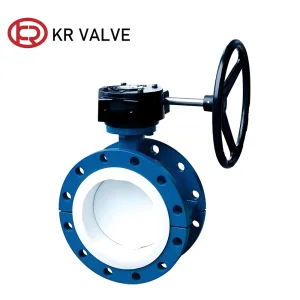
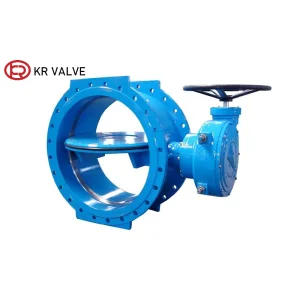
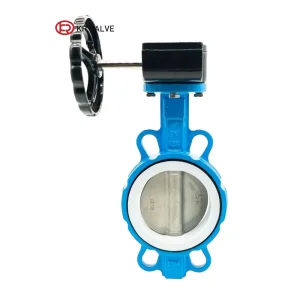
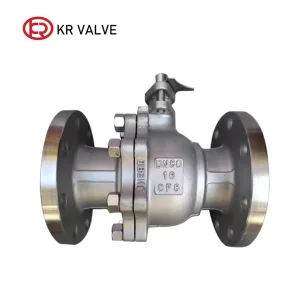
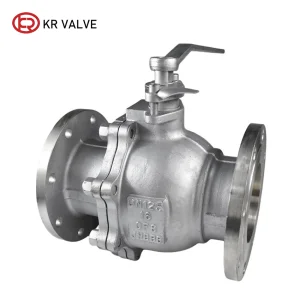
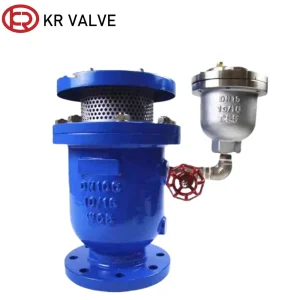
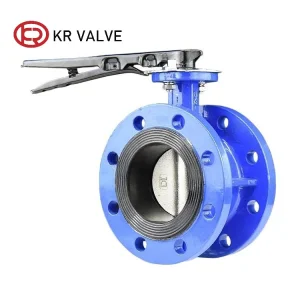
Select from our wide array of butterfly, check, ball, and control valves engineered for utility grids and heavy industry.
7. Enterprise Sourcing & Engineering FAQ
Find detailed technical answers regarding custom brass seat gate valve specification, installation, and procurement.
What are the key technical differences between a brass seat gate valve and a resilient seat (EPDM) gate valve?
Why is Dezincification Resistant (DZR) brass critical for municipal water infrastructure?
What standard face-to-face and flange dimensions can Chinese factories provide for OEM orders?
How do you calculate stem torque and select appropriate gearbox actuators for large bore gate valves?
What non-destructive testing (NDT) and pressure testing certifications are provided prior to shipment?
Can brass seat gate valves be installed in underground buried service lines?
Request Technical Specifications & Factory-Direct Quotations
Partner with an established Chinese industrial valve manufacturer. Our engineering team provides detailed 2D/3D CAD drawings, material datasheets, and competitive volume pricing within 24 hours.