High-Performance Valve Series & Components
Engineering Excellence in Custom Butterfly Valve Body Manufacturing
In modern fluid dynamics and industrial pipeline design, the butterfly valve body serves as the mechanical pressure containment vessel responsible for maintaining structural integrity under intense hydrodynamic shear forces, thermal expansion cycle stresses, and corrosive media exposure. Selecting specialized custom butterfly valve body suppliers & manufacturers is no longer merely a commercial procurement task—it is a critical engineering decision that dictates plant safety, operational uptime, and lifecycle expenditure.
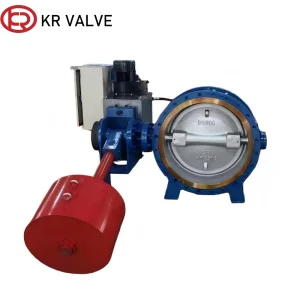
A custom-engineered butterfly valve body provides tailored flow path geometries, optimized wall thicknesses via Finite Element Analysis (FEA), and tailored metallurgy designed to eliminate localized stress concentrations. Whether utilizing concentric resilient seated configurations for municipal water networks or high-performance triple-offset metal-to-metal seating for extreme temperature process lines, the structural performance of the valve body dictates disc seating alignment, shaft seal compression, and zero-leakage tight shutoff efficiency over millions of actuation cycles.
Finite Element Stress Modeling
Computerized FEA simulation calculates localized strain under maximum allowable working pressure (MAWP) and thermal transients, ensuring optimal material distribution without adding unnecessary weight.
Advanced Metallurgical Integrity
Utilizing ductile iron (GGG40/GGG50), carbon steel (WCB/LCC), stainless steel (CF8/CF8M/CF3M), and duplex alloys (2205/2507) to match fluid reactivity and mechanical shock resistance.
Bi-Directional Pressure Tightness
Body neck length, flange face serrations, and internal bore tolerances are machined to precise ISO 5211 actuator mounting standards for dependable torque transfer and zero fugitive emissions.
Strategic Advantages of China Valve Foundry Ecosystems
China has evolved into the global hub for industrial flow control manufacturing. By combining dense raw material supply chains, automated casting lines, ultra-precision multi-axis CNC machining, and rigorous quality inspection protocols, leading OEM factories deliver exceptional value without compromising international engineering compliance.
Vertical Foundry & Machining Integration
China's premier valve clusters (such as Tianjin and Zhejiang manufacturing zones) house fully integrated foundry operations under one roof. From pattern design and silica-sol investment casting or resin sand casting to high-precision horizontal CNC machining centers, complete vertical integration eliminates intermediary transport lead times, mitigates supply chain disruptions, and enforces tight process control from molten metal ladle pouring to final hydrostatic testing.
Precision Tooling & Custom OEM Flexibility
Advanced 3D sand printing and rapid pattern tooling enable Chinese manufacturers to produce complex custom valve body shapes—such as double-flanged eccentric designs, high-pressure U-section bodies, or special alloy linings—in record lead times. OEM buyers gain full customization of face-to-face dimensions (ISO 5752, EN 558, API 609), flange drilling (ANSI B16.5, DIN PN10/PN16/PN25, JIS 10K/16K), and specialized wall thicknesses tailored for extreme hydraulic hammer protection.
Technical Specification Matrix for Custom Valve Bodies
Engineers and procurement teams can select from a wide spectrum of body configurations, pressure ratings, and surface treatments to match their exact project parameter specs:
| Structural Parameter | Design Options & Variants | International Standard Compliance | Primary Industrial Applications |
|---|---|---|---|
| Body Structural Types | Wafer Type, Lug Type, Double Flanged, U-Section, Single/Double/Triple Offset (Eccentric) | API 609, EN 558 Series 13/14/20, ISO 5752, BS 5155 | Water networks, HVAC, Chemical processing, Marine ballast |
| Metallurgical Alloys | Ductile Iron (GGG40/GGG50), Cast Steel (WCB/LCC), Stainless Steel (CF8/CF8M/CF3M), Duplex 2205/2507, Ni-Al Bronze | ASTM A536, ASTM A216, ASTM A351, EN 1563, NACE MR0175 | Desalination, Offshore oil platforms, High-temp steam, Corrosive acid loops |
| Nominal Size Range | DN40 to DN3000 (1.5 Inch to 120 Inch) | ASME B16.10, DIN 3202, JIS B2002 | Micro-piping to mega municipal water transmission mains |
| Pressure Rating Class | PN6, PN10, PN16, PN25, PN40, PN64 / Class 150, Class 300, Class 600 | ASME B16.34, EN 12516, ISO 7005 | High-pressure hydraulic pipelines, District heating, Gas transport |
| Internal & External Coating | Fusion Bonded Epoxy (FBE, 250-300 µm), Halar Lining, Rilsan Nylon 11, Polyurethane, PTFE Lining | AWWA C550, EN 14901, NSF/ANSI 61 (Potable Water) | Drinking water networks, High-salinity seawater, Slurry handling |
Global Industry Trends & Smart Valve Body Innovations
The industrial flow control sector is undergoing a massive transformation driven by digitalization, decarbonization goals, and stringent environmental regulations on fugitive emissions. Custom butterfly valve body engineering is at the forefront of these technological upgrades:
Smart Sensor Ready Architecture
Modern custom valve bodies are increasingly designed with integrated boss taps and threaded sensor ports. These enable non-intrusive mounting of IoT vibration sensors, acoustic leak detectors, pressure transducers, and temperature transmitters for continuous condition monitoring and digital twin maintenance integration.
Low Fugitive Emission Packing Glands
To comply with international clean air standards such as ISO 15848-1 Class AH and TA-Luft, valve body top stuffing boxes are machined with ultra-smooth surface finishes (Ra < 0.4 µm) combined with live-loaded packing systems that prevent VOC and hazardous chemical leakage around the stem.
Cryogenic & High-Temp Metal Seating
With the growth of LNG liquefaction plants and green hydrogen transport, custom bodies are featuring extended bonnet necks to isolate stem packing from cryogenic temperatures (-196°C) while utilizing Stellite-faced triple-eccentric metal seat bodies capable of withstanding temperatures exceeding +600°C.
Macro Industry Solutions & Cross-Sector Deployments
Different industrial sectors place unique operational stresses on butterfly valve bodies. OEM manufacturers supply custom tailored engineering solutions to resolve specific field challenges:
Municipal Water, Desalination & Sewage
Challenge: High salinity, microbiological pitting corrosion, and bio-fouling in seawater intake mains.
Custom Body Solution: Ductile Iron GGG40 bodies coated internally and externally with electrostatically applied WRAS/NSF61 certified Fusion Bonded Epoxy (FBE), or specialized Nickel Aluminum Bronze (C95800) bodies designed to resist cavitation erosion and marine growth in reverse osmosis desalination plants.
Oil & Gas Midstream, Petrochemical & Refining
Challenge: Flammable hydrocarbons, sour gas containing H2S, and high fire safety compliance.
Custom Body Solution: Cast Steel WCB or CF8M triple-offset butterfly valve bodies engineered to API 607 / ISO 10497 Fire Safe Standards. Bodies feature integral metal seats, anti-blowout shaft retention mechanisms, and NACE MR0175 compliant metallurgy for long-term hydrogen sulfide stress corrosion resistance.
HVAC, District Cooling & Commercial Energy
Challenge: Large volumetric flow rates, space-restricted mechanical rooms, and frequent modulation.
Custom Body Solution: Lightweight Wafer and Lug style ductile iron bodies with high-flow Cv disc geometry that minimizes pressure drop, reduces pumping energy costs, and features direct-mount ISO 5211 top flanges for instant connection to electric or pneumatic actuators.
Chemical Processing & Slurry Transport
Challenge: Aggressive acids, chlorine gas, and abrasive particulate slurry.
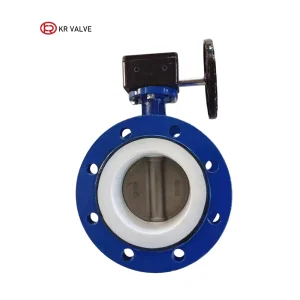
Custom Body Solution: Fully PTFE / PFA lined body cavities where media never touches the metal substrate. Thicker virgin PTFE virgin linings are mechanically locked into the casting body grooves to prevent vacuum collapse under high-temperature vacuum distillation conditions.
Global Procurement & Quality Control Framework
For global EPC contractors and international distributors, ensuring total traceability and zero-defect quality is paramount when selecting custom butterfly valve suppliers. Professional Chinese manufacturers implement comprehensive quality assurance workflows at every stage of production:
Material Certification & 3.1 Traceability
Every casting melt batch undergoes optical emission spectrometer analysis and mechanical tensile/impact testing. Material Test Reports (MTR) according to EN 10204 3.1 are supplied with every shipment, verifying chemical composition and mechanical properties.
Non-Destructive Testing (NDT) Inspection
Critical valve bodies intended for high-pressure or hazardous gas applications undergo Radiographic Testing (RT), Ultrasonic Testing (UT), Magnetic Particle Inspection (MPI), and Liquid Penetrant Testing (PT) to guarantee zero subsurface shrinkage or porosity.
100% Pressure & Hydrostatic Testing
Before paint and packing, 100% of custom bodies undergo shell testing at 1.5x nominal pressure and high/low-pressure seat closure testing in accordance with API 598 or ISO 5208, guaranteeing zero leakage tolerance.
Frequently Asked Questions (Q&A)
Explore in-depth technical responses curated by senior flow control engineers to resolve common design and procurement queries:
What is the structural difference between Wafer, Lug, and Double Flanged butterfly valve bodies?
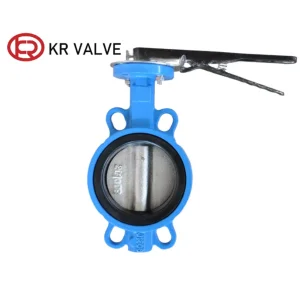
A Wafer body is designed to be clamped between pipe flanges using through-bolts that pass outside the valve body. It is lightweight, compact, and economical but cannot be used for end-of-line service. A Lug body features threaded bolt holes around the entire flange circumference, allowing it to be bolted directly to pipe flanges from either side; this enables dead-end service and downstream pipe maintenance without draining the upstream system. A Double Flanged body features integral flanged ends matching pipeline flange dimensions, offering maximum structural strength, superior alignment in large diameters (DN300+), and ease of installation in civil water pipelines.
When should I specify Ductile Iron (GGG40) versus Cast Carbon Steel (WCB) for a custom valve body?
Ductile Iron (GGG40 / ASTM A536) is the standard choice for municipal water, sewage, HVAC, and low-pressure industrial systems operating below 200°C and PN16/PN25 ratings. It offers excellent tensile strength, shock resistance, and cost efficiency. Cast Carbon Steel (WCB / ASTM A216) should be specified for higher pressure ratings (Class 150/300/600 or PN40+), elevated temperature process lines (up to 425°C), hydrocarbon oil and gas lines, and applications requiring field welding or high thermal shock resistance.
How does body offset (Concentric vs. Double Offset vs. Triple Offset) affect valve performance?
In a Concentric design, the shaft and disc are centered in the body bore, making it ideal for resilient rubber-lined seats (EPDM/NBR) in low-pressure water lines. In a Double Offset (Double Eccentric) body, the shaft is offset from the center of the seat and pipe centerline, lifting the disc off the seat during rotation to reduce friction and seat wear. In a Triple Offset (Triple Eccentric) body, a third angular offset is added to the body seating cone, eliminating friction entirely during actuation and allowing bi-directional bubble-tight shutoff using metal-to-metal seating under high pressures and extreme temperatures.
What casting processes are utilized for custom butterfly valve bodies, and how do they impact quality?
The two primary casting methods are Resin Sand Casting and Silica Sol Investment Casting. Resin sand casting is used for medium to large valve bodies (DN150 to DN3000), offering high dimensional accuracy, uniform wall thickness, and excellent surface finish. Investment casting is employed for smaller stainless steel or special alloy bodies (DN40 to DN300), providing fine detail, near-net-shape tolerances, and superior surface finish that minimizes internal fluid friction and reduces CNC machining allowances.
What custom OEM services can Chinese valve manufacturers provide for brand buyers?
Comprehensive OEM services include customized casting patterns with relief-logo branding on the valve body casting, private-label nameplate riveting, custom coating colors (RAL specification), non-standard face-to-face body lengths, specialized flange bolt drilling patterns (BS, DIN, ANSI, JIS), custom top-flange mounting patterns for client-supplied actuators, and project-specific export seaworthy packaging.