Featured Industrial Valves & Fluid Controls (Part I)
Executive Summary: The Critical Role of Custom DI Exhaust Valves in Pipeline Integrity
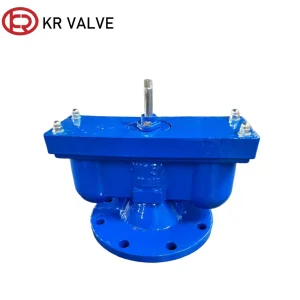
In high-capacity municipal water mains, industrial fluid transport, and desalination conveyance systems, the entrapped air within pressurized liquid pipelines poses an existential threat to hydraulic efficiency and structural longevity. Ductile Iron (DI) Exhaust Valves (commonly designated as Air Release Valves, Air Vent Valves, or Air/Vacuum Relief Valves) serve as automated guardians engineered to eliminate air pockets during line filling, exhaust micro-bubbles under operational pressure, and rapidly admit ambient air during pump shutdown or sudden vacuum events.
Without engineered air management, entrained gas bubbles coalesce at local high points, restricting effective cross-sectional flow area, escalating pumping energy head loss, inducing transient pressure surges (water hammer), and inducing column separation. As a premiere custom DI exhaust valve supplier and factory, our manufacturing facility engineers custom spheroidal graphite iron valves designed to withstand harsh hydraulic transients while ensuring zero-leakage sealing across pressure ranges from PN10 up to PN40.
Standard Compliance Benchmark
- Design & Testing Standards: BS EN 1074-4, AWWA C512, DIN 3202, ISO 7005
- Metallurgy: Ductile Iron EN-GJS-450-10 / EN-GJS-500-7 (GGG40 / GGG50 / ASTM A536 65-45-12)
- Pressure Ratings: PN10, PN16, PN25, PN40, Class 150 / Class 300
- Size Spectrum: DN25 (1") through DN300 (12") Flanged or Threaded
- Coating Protocol: WRAS & GSK certified Fusion Bonded Epoxy (FBE) ≥ 250μm
Metallurgical Advantage: Ductile Iron (EN-GJS-450-10) vs. Conventional Cast Iron (GG25)
The choice of body material is fundamental when managing destructive pressure surges and cyclic fatigue in modern pipelines. Spheroidal graphite in ductile iron transforms brittle iron matrices into ductile structures with high yield strength and crack resistance.
| Mechanical / Physical Property | Grey Cast Iron (GG25 / EN-GJL-250) | Ductile Iron (GGG40 / EN-GJS-450-10) | Custom DI Exhaust Valve Impact |
|---|---|---|---|
| Microstructural Graphite Form | Flake Graphite (Induces stress risers) | Spheroidal / Nodular Graphite | Prevents propagation of internal stress fractures under transient surges |
| Tensile Strength (MPa) | 250 MPa | 450 - 500 MPa | Withstands up to 2x burst pressure during sudden water hammer events |
| Yield Strength (MPa) | No clear yield point | 310 - 350 MPa | Maintains dimensional stability under continuous high static pressure |
| Elongation (%) | 0.3% - 0.8% (Brittle) | 10% - 15% (Ductile) | Absorbs thermal expansion, ground movement, and hydraulic shocks |
| Charpy Impact Resistance (J) | < 3 Joules | 12 - 16 Joules | Resists mechanical shock during transport, installation, and field operation |
Taxonomy & Functional Dynamics of DI Exhaust Valves
Air release and vacuum valves operate under strict aerodynamic and hydrodynamic equilibrium. Our custom manufacturing facility builds three distinct core functional designs tailored to exact system dynamics.
1. Single-Orifice Small Vent Valves
Designed specifically for continuous venting of small entrained air pockets while the pipeline is operating under full system pressure.
- Orifice Diameter: 1.5mm to 6mm micro-orifice.
- Mechanism: Leverage linkage system connected to a high-density float. As air accumulates, the float drops, opening the micro-vent.
- Application: Positioned downstream of pumps and high elevation pipe saddles.
2. Double-Orifice Kinetic Valves
Combines a large kinetic orifice (for mass air evacuation during pipeline filling and rapid air intake during drainage) with a small automatic orifice.
- Dual-Chamber / Single-Body: Houses both high-capacity air discharge and micro-venting floats.
- Aerodynamic Anti-Closure: Engineered internal geometry prevents premature valve closure caused by high-velocity airflow.
- Application: Primary protection for main water supply transmission lines.
3. Triple-Function Anti-Slam Valves
Features an integrated dynamic anti-slam throttling disc designed to dampen extreme transient pressure waves during high-speed water column rejoining.
- Controlled Deceleration: Automatically restricts air discharge rate when liquid column velocity exceeds critical thresholds.
- Surge Suppression: Reduces transient pressure spikes by over 75% compared to standard kinetic valves.
- Application: Critical high-pressure lines vulnerable to column separation.
Hydrodynamic Flow Equilibrium & Aerodynamic Calculations
The sizing of a custom DI exhaust valve relies on matching the sonic air flow rate ($Q_{air}$) during initial filling or column draining. The air volumetric discharge rate is governed by the orifice coefficient of discharge ($C_d$) and the differential pressure across the valve seat:
Our engineering team utilizes Computational Fluid Dynamics (CFD) simulation software to optimize internal body curves, ensuring an exceptionally high $C_d$ (typically > 0.78), minimizing air turbulence, and preventing aerodynamic float choke up to sonic air velocity ($M = 1.0$).
China Foundry Infrastructure & Custom Manufacturing Rigor
China's industrial valve manufacturing sector has evolved into a global epicenter for advanced metallurgy, automated foundry molding, and precision CNC finishing. As a direct DI exhaust valve factory based in China's prime industrial manufacturing corridor, we offer direct technical integration and unmatched cost-to-performance efficiency.
- Resin Sand & Lost Foam Casting: Automated green sand and lost-foam lines guarantee void-free casting bodies with uniform wall thickness and zero internal micro-porosity.
- Spectral Chemical Analysis: Direct-reading optical emission spectrometers verify exact chemical composition (C: 3.5-3.8%, Si: 2.3-2.7%, Mg nodulizing agent > 0.04%) for every single ladle heat.
- Precision CNC Machining: Multi-axis horizontal machining centers ensure valve seat concentricity and flange drilling alignment within ±0.02mm tolerances.
- Advanced FBE Coating Line: Automatic electrostatic fluidized bed coating applies non-toxic, drinking-water compliant Epoxy powder (≥ 250 microns thick) with 100% holiday test verification at 1500V.
Custom OEM / ODM Engineering Capabilities
We tailor every component of your DI exhaust valve according to your exact project parameters and tender requirements:
Global Procurement Dynamics & QA/QC Inspection Framework
International EPC contractors and municipal water boards demand uncompromised reliability. Our manufacturing QA/QC protocol leaves zero room for failure.
Raw Material & Casting Verification
Spectral heat analysis, tensile bar destructive testing, metallographic nodular degree check (> 85% nodularity), and wall thickness ultrasonic measurement.
Hydrostatic & Pneumatic Testing
100% of manufactured units undergo shell pressure testing at 1.5x PN and low/high-pressure seat sealing tests at 0.2 bar and 1.1x PN per BS EN 12266-1.
Certification & Export Logistics
Full documentation provided: EN 10204 Type 3.1 Material Test Certificates, Hydro-test reports, Coating Thickness verification, and tropicalized fumigated plywood crating.
Macro-Industry Solutions & Localized Application Scenarios
Custom DI exhaust valves are deployed across diverse sectors. Our engineering design team tailors internal valve trims to match specific media characteristics and pressure profiles.
1. Municipal Potable Water Transmission Mains
High-elevation pipe ridges accumulate trapped air, creating artificial chokes that reduce water throughput by up to 30%. Our double-orifice DI valves release micro-bubbles automatically during operation, reducing pumping power consumption and maintaining network pressure integrity.
- Media: Treated drinking water (NSF/WRAS non-toxic EPDM seals).
- Key Feature: Ultra-smooth non-stick ABS/SS304 spherical float prevents seat jamming.
2. Desalination & Seawater Intake Pipelines
Highly corrosive saline environments destroy standard valve trims. We manufacture custom DI exhaust valves lined internally with heavy-duty polyolefin/FBE coatings and paired with solid Duplex 2205 stainless steel internal floats and seats.
- Media: High-salinity raw seawater / brine reject.
- Key Feature: Galvanic isolation and high chloride corrosion resistance.
3. Wastewater & Pressurized Sewage Systems
Sewage contains solids, fibers, and corrosive gases ($H_2S$) that clog standard valves. Our custom sewage DI air valves feature an extended conical body design that creates an insulating air gap, keeping the operating liquid level far below the upper sealing mechanism.
- Media: Raw sewage, sludge, untreated effluent.
- Key Feature: Slopes body bottom to prevent solids buildup; NBR oil-resistant seals.
4. Agricultural & Irrigation Distribution Networks
Large-diameter agricultural supply lines experience low operating pressures (0.2 - 2.0 bar) and high risk of vacuum collapse during rapid pump shutdown. Our low-pressure sealing technology ensures air venting down to 0.1 bar without fluid leakage.
- Media: Unfiltered river/reservoir irrigation water.
- Key Feature: Integrated stainless steel anti-bug screening bonnet.
Technological Trends & Next-Generation Valve Innovation
The global valve sector is undergoing a rapid transition toward digital monitoring, surge mitigation analytics, and advanced material engineering. As a forward-thinking custom DI exhaust valve supplier, our R&D roadmap focuses on three technological pillars:
A. Smart IoT Condition Monitoring
Integration of wireless acoustic sensors, pressure transducers, and air venting pulse counters onto the valve bonnet. Pipeline operators receive real-time alerts regarding air discharge frequency, internal scaling, or unexpected leakage.
B. Advanced CFD & Anti-Water-Hammer Dynamics
Using 3D CFD pressure-velocity coupling calculations to engineer multi-stage anti-slam discs that dynamically adjust air outflow resistance based on the approaching water column speed.
C. Eco-Friendly & Long-Life Polymer Seals
Development of ozone-resistant, peroxide-cured EPDM elastomer compounds that resist chloramine degradation in modern municipal water treatment plants, extending valve service life beyond 25 years.
Why Direct Factory Collaboration Wins
Sourcing custom DI exhaust valves directly from our manufacturing plant eliminates intermediary markups and technical miscommunications:
- Direct Engineering Dialogue: Work straight with our valve design team to refine technical submittals.
- Flexible Minimum Order Quantities (MOQ): Support for single custom prototype units to bulk tender volumes.
- Rapid Tooling & Pattern Making: In-house 3D pattern printing shortens custom body sampling to 15 days.
Frequently Asked Questions (FAQ) - DI Exhaust Valves
Comprehensive engineering insights for procurement officers, valve distributors, and hydraulic engineers.
Featured Industrial Valves & Fluid Controls (Part II)