Featured Industrial Flow Control Systems
Premium OEM/ODM Valve Equipment Engineering Portfolio for Global Infrastructure Projects
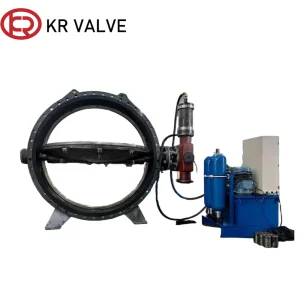
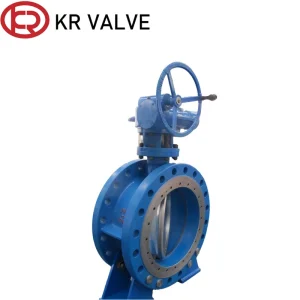
1. Metallurgy & Structural Architecture of Ductile Iron (DI) U-Type Butterfly Valves
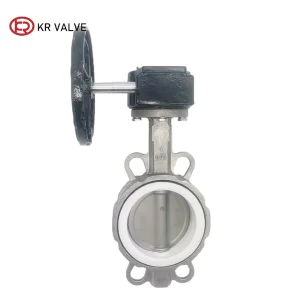
Ductile Iron (DI) U-type butterfly valves represent a cornerstone in modern municipal waterworks, industrial fluid processing, and large-scale HVAC piping systems. Designed with a robust "U" shaped cross-section body, these valves bridge the structural gap between lightweight wafer pattern valves and heavy double-flanged industrial valves. The fundamental material advantage stems from nodular graphite cast iron (grade EN-GJS-400-15 / ASTM A536 65-45-12), where microscopic carbon nodules prevent crack propagation, granting the valve body exceptional tensile strength (≥400 MPa), superior yield strength (≥250 MPa), and significant elongation capabilities (≥15%).
Unlike standard grey cast iron (GG25), which exhibits brittle failure modes under thermal expansion and dynamic piping stress, custom ductile iron U-type butterfly valves absorb severe hydraulic surges, water hammer phenomena, and structural flexure without structural rupture. The full-flange design—featuring drilled flange holes matching ISO 7005-2, EN 1092-2, ANSI B16.5, and JIS B2220—allows the valve to be securely bolted between companion pipe flanges or installed at the terminus of a pipeline for end-of-line (dead-end) service.
Engineering Information Gain: U-Type flanged butterfly valves feature face-to-face dimensions according to ISO 5752 Series 20 / EN 558 Series 20 (BS 5155). This ultra-compact profile minimizes installation footprint while preserving full structural integrity for downstream maintenance isolation.
2. Customization Dynamics & OEM Engineering Matrix
Global procurement directors and piping design engineers require precise elastomeric trim configurations to match specific working media, temperature profiles, and chemical aggressive environments. As specialized custom DI U-type butterfly valve suppliers, customization extends beyond dimensional drilling to include disc metallurgy, seat bonding chemistry, shaft sealing, and surface protection coatings.
Elastomeric Liner Customization
Vulcanized directly to the body or removable cartridge style. Options include WRAS/NSF-61 certified EPDM (-20°C to +120°C), oil-resistant NBR (-10°C to +82°C), High-Temp Viton/FKM, and chemical-grade PTFE bonded liners.
Disc Metallurgy Options
Precision-cast CF8 (SS304), CF8M (SS316) for aggressive chemical resistance, Nickel Aluminium Bronze (C95800) for marine desalination, and Epoxy/Nylon-11 coated Ductile Iron for potable water networks.
Actuation & Control Interfaces
ISO 5211 direct-mount top flange allowing seamless integration of manual lever, heavy-duty worm gearboxes, pneumatic rack-and-pinion actuators, or intelligent electric actuators with HART/Modbus protocol.
Internal fluid flow dynamics are refined using Finite Element Analysis (FEA) and Computational Fluid Dynamics (CFD). The aerodynamic profile of the custom disc minimizes hydrodynamic resistance, significantly improving the valve's flow coefficient ($K_v$ and $C_v$) and decreasing pressure drop across the valve assembly. This directly translates into lower operating pumping energy for plant operators over a 30-year operational lifecycle.
3. Technical Engineering Comparison: U-Type vs Wafer vs Lug Butterfly Valves
Understanding structural nuances between butterfly body types is critical for piping design integrity. The matrix below highlights why U-type flanged butterfly valves are increasingly specified for critical trunk pipelines and municipal header stations.
| Technical Parameter | Custom DI U-Type Flanged | Standard Wafer Pattern | Threaded Lug Pattern |
|---|---|---|---|
| Body Geometry | U-Shaped Flanged Body | Flat Ring Body (No Flanges) | Full Lugged Body with Threaded Taps |
| End-of-Line (Dead-End) Service | Full Rated (Both Directions) | Not Permitted (Pipe drop leads to leak) | Full Rated (Single Direction drop) |
| Pipe Alignment Integrity | Self-Centering with Flange Bolts | Requires Careful Manual Alignment | Aligned via Threaded Lug Bolts |
| Structural Rigidity | High (Resists bending moments) | Moderate (Subject to line stress) | High (Heavy body mass) |
| Face-to-Face Standard | ISO 5752 Tab 5 / EN 558 Series 20 | ISO 5752 Tab 5 / API 609 Cat A | API 609 Cat A / EN 558 Series 20 |
| Weight-to-Strength Ratio | Optimized (Lower than double flange) | Lowest Weight | Heavier than Wafer |
4. Global Industrial Landscape & Macro-Engineering Solutions
The global demand for high-reliability ductile iron U-type butterfly valves is experiencing unprecedented growth, driven by macro trends in urban water infrastructure refurbishment, rapid expansion of seawater reverse osmosis (SWRO) desalination facilities, and large-scale industrial decarbonization projects.
Municipal Water Distribution & Mega-Pumping Stations
In large-diameter municipal water mains (DN600-DN2000), U-type butterfly valves act as primary isolation valves. Electrostatic fusion-bonded epoxy (FBE) coating (minimum 300 microns thickness) provides complete barrier protection against soil corrosion, tuberculation, and stray electrical currents.
Seawater Desalination (SWRO Systems)
Desalination plants present extreme chloride aggression. Custom DI U-type valves configured with Nickel Aluminium Bronze (C95800) discs or Super Duplex SS2507 stems, coupled with vulcanized high-grade EPDM liners, guarantee long-term resistance against pitting and crevice corrosion.
District Heating & HVAC Chilled Water Grids
With precise linear flow characterization across 20% to 70% disc opening angles, U-type valves serve as balancing and isolation control elements in centralized district cooling complexes and high-rise commercial building mechanical rooms.
Regional Compliance & Regulatory Alignment: Leading manufacturers must adhere to international quality frameworks. Custom DI U-type butterfly valves produced for European export strictly comply with the Pressure Equipment Directive (PED 2014/68/EU) and CE marking requirements. Products intended for drinking water applications hold WRAS (UK), ACS (France), DVGW (Germany), and NSF/ANSI 61 & 372 (North America) certifications.
5. Technology Roadmap & Future Outlook: Smart Valves & Sustainability
The valve manufacturing industry is undergoing a digital transformation. Smart U-Type butterfly valves are now being embedded with IIoT (Industrial Internet of Things) sensor arrays to provide real-time operational telemetry to centralized SCADA systems.
Next-Generation Innovations Include:
- Integrated Vibration & Cavitation Sensors: Early warning micro-sensors embedded inside the valve body detect micro-cavitation regimes during throttling operations, preventing premature liner erosion.
- Predictive Seat Wear Analytics: Torque-monitoring microprocessors track seat friction over thousands of cycles, predicting elastomeric wear before catastrophic seal failure occurs.
- Nanocomposite & Bio-Based Polymer Liners: Research into self-lubricating fluoropolymer blends and modified EPDM rubbers reduces stem breakaway torque by up to 25%, allowing smaller, lower-power actuators.
- Carbon Footprint Reduction: Direct-casting optimization reduces raw material weight while increasing structural fatigue resistance, directly cutting embodied carbon in valve production.
6. Technical FAQ: Expert Guidance for Engineers & Procurement Specialists
What is the advantage of a U-type butterfly valve over a standard wafer valve for end-of-line service?
A U-type butterfly valve features full-flange drilling that bolts directly to the pipeline flanges on both sides. This enables downstream piping to be unbolted and removed for maintenance while the valve remains securely pressurized upstream (dead-end isolation), whereas a standard wafer valve relies on clamping pressure between two flanges and cannot be used for dead-end service.
Which ductile iron material grade is recommended for municipal pressure mains?
Ductile Iron grade EN-GJS-400-15 (equivalent to ASTM A536 65-45-12 or GGG40) is the global standard. It offers an excellent balance of tensile strength (≥400 MPa) and impact toughness with 15% minimum elongation, ensuring maximum safety against dynamic pressure surges and water hammer.
How does vulcanized seat lining differ from replaceable seat liners?
Vulcanized seats are thermally bonded directly to the internal ductile iron body during high-temperature molding. This eliminates seat migration, reduces operating torque, prevents liner distortion under vacuum condition, and extends valve service life significantly compared to loose cartridge seats.
What pressure testing standards are applied prior to factory dispatch?
100% of manufactured valves undergo shell hydrostatic testing at 1.5 times the nominal working pressure (e.g., 24 bar for PN16) and bi-directional seat leakage testing at 1.1 times nominal working pressure (17.6 bar for PN16) in compliance with ISO 5208 Rate A (Zero Leakage) and EN 12266-1.
Complete Pipeline Valves & Accessories Catalog
Explore Extended OEM Flow Control Systems & Heavy Industry Valve Lines