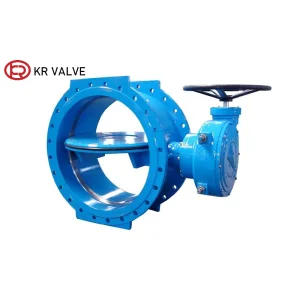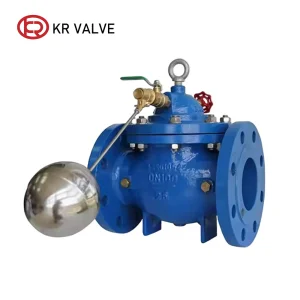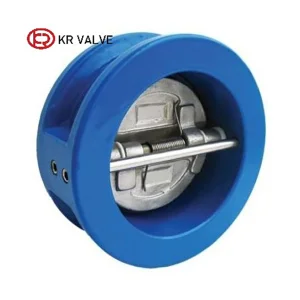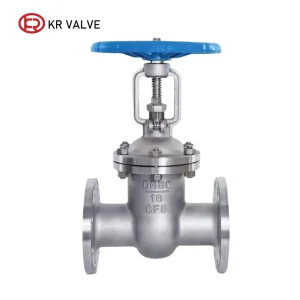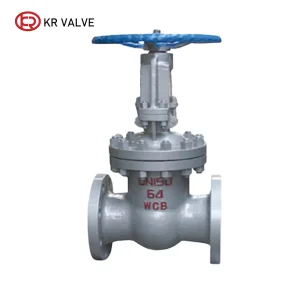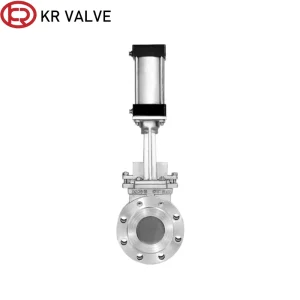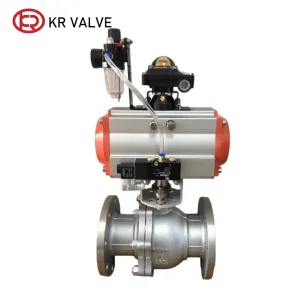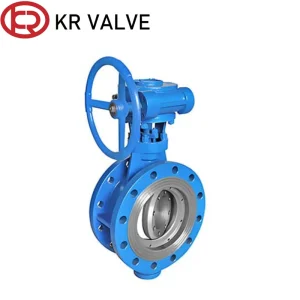
Featured Precision Valve Inventory (Top Lineup)
Explore direct factory engineered valve solutions compliant with DIN, BS, AWWA, and ANSI standards.
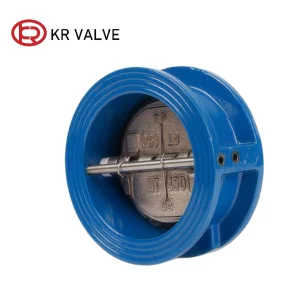
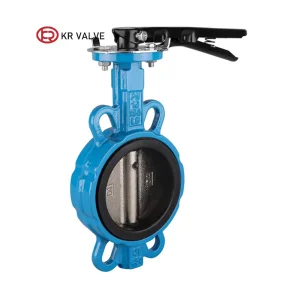
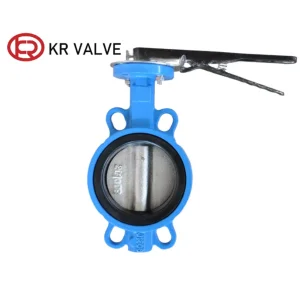
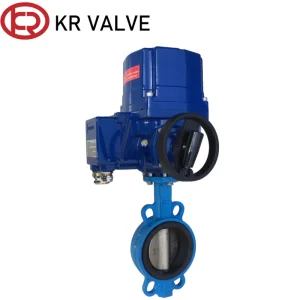
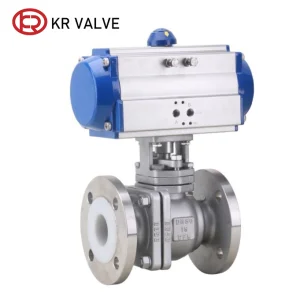
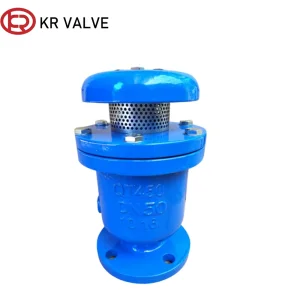
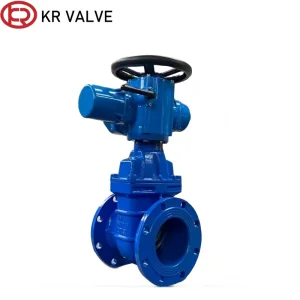
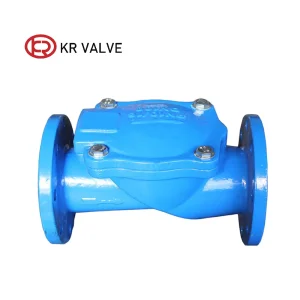
Executive Technical Overview: Surge Mitigation & Eccentric Physics
In municipal water distribution, high-head pumping stations, and industrial cooling loops, sudden power interruptions or pump trips induce transient flow deceleration. According to Joukowsky’s Law ($\Delta P = \rho \cdot c \cdot \Delta v$), instantaneous velocity changes generate severe shockwaves known as water hammer. Standard swing check valves often slam violently during reverse flow, causing catastrophic pipeline rupture, flange distortion, and pump impeller destruction.
The Custom Eccentric Disc Slow Closing Check Valve manufactured by specialized China valve factories solves fluid transient destruction by combining double-eccentric disc geometry with a dynamic two-stage hydraulic dashpot damper. Designed to close 80% rapidly to arrest reverse momentum, and then 20% slowly to dissipate acoustic energy, this heavy-duty valve guarantees non-slam performance across nominal diameters from DN200 up to DN2400.
Information Gain Engineering Insight: Unlike concentric single-shaft check valves where the sealing ring undergoes continuous friction during movement, the double offset shaft design lifts the disc seal completely off the body seat within the first 3 degrees of rotation. This eliminates rubber tearing and reduces operational torque requirements by up to 35%.
Kinematic Anatomy of Eccentric Slow Closing Valves
The superior hydraulic performance of custom eccentric disc slow closing check valves is rooted in two distinct spatial offsets engineered into the valve body casting and disc hub geometry:
Primary Shaft Offset ($e_1$)
The rotation shaft axis is set behind the sealing plane of the valve seat. This structural offset ensures that upon opening, the disc immediately moves away from the rubber/metal seat ring, minimizing localized scrubbing and prolonging elastomer lifespan.
Secondary Centerline Offset ($e_2$)
The shaft center is offset laterally from the pipe axis. This eccentric positioning utilizes hydrodynamic drag forces to naturally assist disc movement, providing a low flow resistance coefficient ($K$-value) and reducing total pumping energy cost.
Two-Stage Hydraulic Damper
An external or internal oil cylinder (dashpot) equipped with micro-adjustable needle regulating valves regulates fluid displacement. Stage 1 closes 80% quickly in 1.5 seconds; Stage 2 closes the remaining 20% over 3 to 15 controllable seconds.
Comparing Non-Return Valve Mechanisms
| Valve Type Architectural Design | Water Hammer Vulnerability | Sealing Friction & Wear | Head Loss ($K$-Factor) | Ideal Application Domain |
|---|---|---|---|---|
| Custom Eccentric Disc Slow Closing Check | Extremely Low (Adjustable Damping) | Zero friction during 95% stroke | Low ($K \approx 1.1 - 1.4$) | High-head water supply, raw sewage, main pump discharge |
| Standard Swing Check Valve | High (Severe slamming risk) | High hinge pin friction | Moderate ($K \approx 1.8 - 2.2$) | Low-pressure horizontal pipelines |
| Dual Plate Wafer Check Valve | Moderate (Spring dependent) | Rubber seat scrub under turbulence | Moderate ($K \approx 1.5 - 2.0$) | Space-constrained plant rooms, HVAC lines |
| Tilting Disc Check Valve | Low to Moderate | Minimal shaft friction | Very Low ($K \approx 0.8 - 1.1$) | Clean gravity mains, low velocity lines |
Metallurgical Architecture & Construction Engineering
Precision manufacturing in China OEM factories strictly adheres to international metallurgical and pressure boundary guidelines. To ensure a minimum design operational life of 30 years in harsh aquatic environments, components are selected based on high tensile strength, cavitation erosion resistance, and bi-directional tightness standards.
Pressure-Containing Shell & Disc Sub-Assemblies
- Valve Body Casting: Ductile Iron EN-GJS-500-7 (GGG50) / ASTM A536 65-45-12 or Cast Carbon Steel ASTM A216 WCB. Provides high shock resistance against kinetic surge spikes.
- Internal Disc Core: Streamlined ductile iron casting clad with welded Stainless Steel 304 or 316 overlay sealing edge, precision ground to micro-inch surface finish.
- Retaining Ring & Fasteners: Stainless Steel 316 / Duplex 2205 high torque hex fasteners, isolated from medium exposure to prevent galvanic corrosion.
Hydraulic Cylinder & Sealing System
- Sealing Geometry: Dovetail EPDM / NBR resilient seal ring mounted on disc body, field replaceable without removing valve from line. Optional metal-to-metal bronze/SS seats.
- Hydraulic Dashpot Cylinder: Heavy-duty bronze or SS304 cylinder barrel, hard-chrome plated piston rod, Viton high-pressure seals, equipped with dual regulating bypass valves.
- Shaft & Bearing Bushings: High-strength Stainless Steel 420/316 shaft supported by self-lubricating PTFE-lined bronze bushings, eliminating maintenance greasing.
Global Engineering Compliance & Testing Protocols
Custom eccentric slow closing check valves produced for global export are tested in strict accordance with the following international manufacturing frameworks:
Strategic Supply Chain Advantages of China Custom Manufacturers
Procuring customized heavy industrial valves from top-tier Chinese manufacturing clusters (such as Tianjin and Zhejiang valve industrial belts) yields strategic procurement benefits for international EPC contractors, utility companies, and valve OEM brands.
Advanced Foundry & CNC Integration
China tier-1 factories utilize automated resin sand casting lines and multi-axis horizontal CNC boring mills up to 4 meters capacity. This guarantees wall thickness accuracy, homogeneous metal grain structure, and zero internal casting porosity.
Custom Engineering & CFD Modeling
In-house R&D engineering teams use Computational Fluid Dynamics (CFD) simulation software to analyze flow lines, turbulence vortex generation, and transient dynamic torque curves prior to pattern making, optimizing valve performance for client project specs.
Comprehensive Quality Assurance
From positive material identification (PMI spectrographic analysis) to 100% ultrasonic non-destructive testing (NDT), shell hydrostatic testing at 1.5x PN rating, and dynamic closure speed calibration, every valve is verified prior to sea-freight packing.
Localized Global Engineering Applications
Custom eccentric disc slow closing check valves are specified across diverse geographical environments, tailored to localized hydraulic pressures, media types, and environmental standards:
Seawater Desalination & High-Temp Lines
Engineered with Nickel-Aluminum Bronze (NAB) trim, Duplex 2205 shafts, and high-temperature Viton hydraulic damper seals to resist hyper-saline corrosion and ambient desert temperatures exceeding 50°C.
Municipal Waterworks & Hydro Power
Compliant with WRAS, NSF 61, and AWWA C508 standards. Features 300-micron non-toxic fusion-bonded epoxy (FBE) internal coatings and micro-switch limit sensors for direct SCADA telemetry integration.
Flood Drainage & Raw Sewage Plants
Designed with anti-clogging disc profiles, internal debris deflectors, and adjustable counterweight levers to operate smoothly even in raw river water containing heavy suspended solids.
Frequently Asked Questions (Engineering Q&A)
Expert answers regarding specification, installation, dampening adjustment, and factory procurement.
How does an eccentric disc slow closing check valve mitigate water hammer compared to standard check valves?
What is the advantage of the double eccentric (double offset) design over concentric disc valves?
Can eccentric disc slow closing check valves be installed in vertical pipelines?
How do users adjust the closing speed of the hydraulic cylinder damper on site?
What customization options should EPC buyers request from Chinese manufacturers?
What routine maintenance is required for long-term reliable operation?
Related Industrial Valve Portfolio (Extended Catalog)
Comprehensive industrial flow control product lines manufactured for global municipal and industrial distribution.