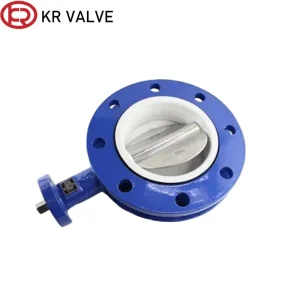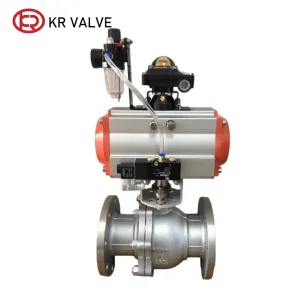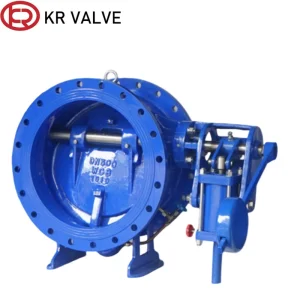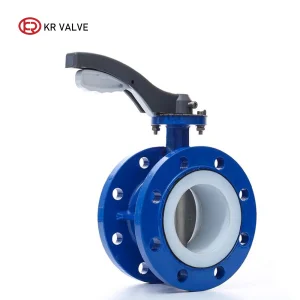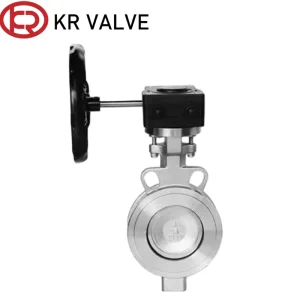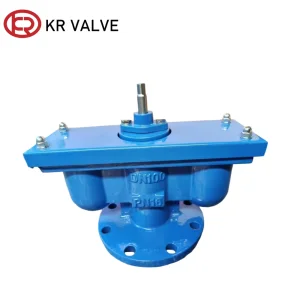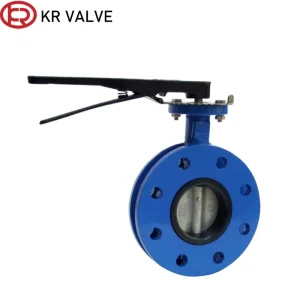
High-Performance Industrial Valve Showcase (Part I)
Explore our certified flow control units engineered for harsh corrosive, abrasive, and high-pressure fluid isolation environments.
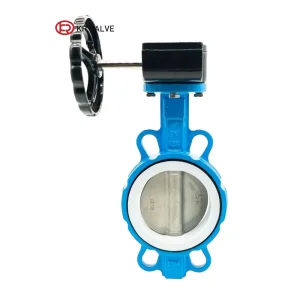
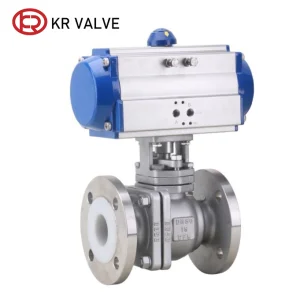
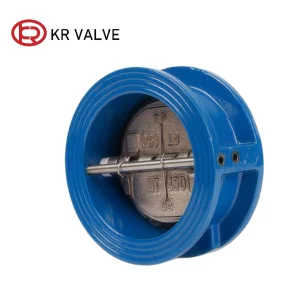
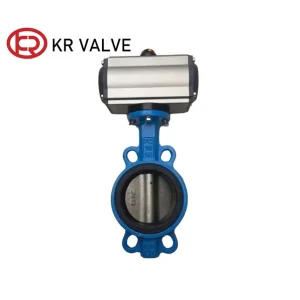
Engineering Precision: Anatomy of Custom Knife Gate Valves
An in-depth analysis of structural mechanics, shear edge geometry, live-loaded sealing, and material tribology for extreme slurry processing conditions.
In heavy industrial processing plants, media containing suspended particulates, high-density fiber pulps, abrasive mineral slurry, or viscous chemical sludges quickly degrade standard globe, ball, or resilient gate valves. Custom Knife Gate Valves (KGVs) are explicitly engineered to overcome these severe-service challenges. Unlike traditional wedge gate valves that suffer from media clogging within bottom bonnet recesses, a knife gate valve utilizes a precision-machined, bevel-edged stainless steel blade that physically shears through solid-laden streams and establishes absolute shut-off against resilient or metal seats.
1. Shear Edge Geometry and Bevel Precision
The core mechanism of a custom knife gate valve is its gate edge geometry. Premier China suppliers engineer gates with a 30° to 45° hand-ground or CNC-milled chamfered bevel. This knife edge exerts intense localized mechanical stress upon closing, cutting through suspended rags, wood pulp fibers, mineral scaling, and heavy solids. Gate surfaces undergo precision fine-grinding and hard-chroming or nitriding to achieve mirror surface finishes (Ra < 0.4 µm), minimizing friction coefficient against the packing gland while resisting micro-scratching from grit particles.
2. Bonnetless vs. Bonneted & Sealing Architectures
Modern customized knife gate valves are categorized into two structural topologies:
- Bonnetless Unidirectional/Bidirectional KGVs: Compact face-to-face dimensions compliant with MSS SP-81. Bonnetless designs feature exposed gate structures, allowing rapid visual stroke verification and lower weight. They rely on perimeter elastomer seats (such as EPDM, NBR, FKM, or Polyurethane) or metal-to-metal seats to maintain tight shut-off.
- Enclosed Bonnet KGVs: Designed for hazardous, toxic, high-temperature, or volatile fluid applications. The enclosed bonnet completely encapsulates the gate stroke region, preventing ambient emissions of fugitive gases or toxic liquids in compliance with ISO 15848-1 standards.
| Valve Component | Standard Material Options | High-Performance / Custom Alloys | Primary Engineering Benefit |
|---|---|---|---|
| Valve Body | Ductile Iron GGG40, WCB (Cast Steel) | CF8 (304), CF8M (316), Duplex 2205, Hastelloy C276 | Rigid structural integrity against pipeline thermal/mechanical stresses. |
| Blade / Gate | SS304, SS316L | 17-4PH, SS904L, Titanium Grade 2, Hard Chrome overlay | Extreme yield strength, deflection resistance under high ΔP, anti-galling. |
| Seat Configuration | PTFE, EPDM, NBR, Viton (FKM) | Replaceable Polyurethane, Stellite 6 Metal-to-Metal | Zero-leakage resilience or ultra-high abrasion resistance (>65 HRC). |
| Packing Gland | PTFE Impregnated Synthetic Fiber | Pure Graphite, Kevlar Reinforced, Live-Loaded Springs | Fugitive emission control and continuous sealing elasticity without re-torquing. |
China's OEM/ODM Industrial Advantage for Knife Valves
How integrated metallurgical clusters, advanced multi-axis CNC machining, and scale economies empower global procurement officers with maximum ROI.
Vertical Metallurgical Integration
China's specialized foundry hubs (in Tianjin, Wenzhou, and Jiangsu) combine sand casting, investment shell molding, and spectroscopic melt analysis under one roof. This proximity drastically reduces raw material sourcing lead times and lowers metallurgical costs by 30-45% compared to Western foundries.
Advanced Automated CNC Manufacturing
Modern Chinese valve factories deploy 5-axis CNC horizontal machining centers and robotized surface polishing cells. Gate face flatness, seat slot tolerances, and bonnet flange alignment are controlled within micron-level thresholds, ensuring 100% component interchangeability.
Rigorous Quality Assurance & Testing
Leading suppliers implement full-cycle quality gates: X-ray radiography for casting integrity, Positive Material Identification (PMI) analyzer validation, magnetic particle inspection, and 100% hydrostatic shell and seat testing per API 598 and MSS SP-81 standards.
Localization, International Certification & Compliance Assurance
Fulfilling the complex documentation, traceability, and localized standard needs of EPC contractors, plant managers, and international engineering firms.
Procuring industrial custom knife gate valves for international projects requires strict adherence to global engineering standards and regulatory frameworks. Tier-1 China manufacturers provide full compliance packages tailored to regional market specifications:
1. International Standard Cross-Compliance
- Design & Face-to-Face Dimensions: Built strictly in accordance with MSS SP-81 (for stainless steel bonnetless knife gate valves), ASME B16.34 (pressure-temperature ratings), and DIN 3202 / EN 558-1 series for European metric installations.
- Flange Drilling Connections: Custom machining capability supporting ANSI/ASME B16.5 Class 150 / 300, EN 1092-1 PN10 / PN16 / PN25, AS 4087 (Australia water standard), and JIS 10K/16K.
- Actuator Interfaces: Standardized top-flange mounting patterns complying with ISO 5211, facilitating seamless drop-in integration of electric, pneumatic, hydraulic, or bevel gear operators globally.
2. Material Traceability & Factory Acceptance Testing (FAT)
To satisfy audit requirements from major energy, mining, and municipal water clients, manufacturers supply full EN 10204 3.1 Inspection Certificates accompanying every batch. Material heat numbers are physically hard-stamped on valve bodies and gates, linking directly to chemical mill analysis and mechanical tensile testing records. Optional EN 10204 3.2 Third-Party Verification (TÜV, SGS, Lloyd’s Register, DNV) can be coordinated for major infrastructure projects.
3. Environmental & Safety Accreditations
Export-ready custom knife valves adhere to the European Pressure Equipment Directive (PED 2014/68/EU - CE Marking), ATEX Directive 2014/34/EU for explosive dust/gas environments (frequently encountered in coal handling and chemical silos), and WRAS / NSF/ANSI 61 certification for drinking water applications.
Emerging Technological Frontiers in Slurry Flow Control
From IoT smart actuation to high-velocity oxygen fuel (HVOF) thermal spray coatings, discover how knife gate valve technology is evolving for Industry 4.0.
IoT-Enabled Smart Actuation
Integration of intelligent pneumatic positioners and electric actuators equipped with HART, Modbus, or PROFIBUS protocols. Real-time stroke monitoring, cycle counting, torque diagnostics, and automated predictive maintenance alerts minimize unscheduled plant downtime.
HVOF Hard-Facing Tribology
High-Velocity Oxygen Fuel (HVOF) coating technologies apply Stellite 6, Tungsten Carbide, or Chrome Carbide layers directly onto the blade shear zone. Achieving hardness values exceeding 68 HRC, these custom treatments withstand extreme slurry velocity and high impact particle erosion.
Push-Through Rubber Sleeve Design
Dual-sleeved elastomer designs feature heavy-duty molded rubber sleeves (EPDM/Natural Rubber) that compress together when the valve is open, forming a continuous smooth bore. Upon closure, the gate pushes between the sleeves, ejecting trapped solids out through the bottom flush port.
Localized Heavy-Duty Application Scenarios
Specific field engineering cases demonstrating how customized knife gate valves solve severe process bottlenecks across global industries.
1. Mining Tailings & Mineral Beneficiation
Operating Environment: High-density iron ore, copper tailings, and gold cyanidation slurry containing sharp abrasive particles at high line velocity.
Custom Valve Solution: Heavy-duty bidirectional push-through elastomer sleeve knife gate valves with tungsten carbide coated SS316 gates and flush ports. Prevents abrasive build-up in bottom chest area and extends valve lifespan by 300%.
2. Pulp & Paper Manufacturing
Operating Environment: High-consistency wood pulp (8-18% fiber content), recycled paper stock, and aggressive black liquor lines.
Custom Valve Solution: V-port or square-ported stainless steel knife gate valves with precision 30° shear edge bevel. Successfully cuts through dense tangled fibers without jamming, ensuring zero stroke hesitation during continuous bleaching cycles.
3. Municipal Wastewater & Sewage Treatment
Operating Environment: Raw sewage, grit chamber sludge, primary digester sludge, and municipal waste slurry containing stringy debris.
Custom Valve Solution: Cast ductile iron (GGG40) body knife gate valves with epoxy powder coating (300 µm thickness) and resilient EPDM perimeter seals. Delivers bubble-tight isolation and long-term corrosion resistance against hydrogen sulfide gases.
Frequently Asked Questions (FAQ)
Comprehensive technical guidance for procurement directors, piping designers, and plant maintenance engineers.
What is the structural difference between Unidirectional and Bidirectional Knife Gate Valves?
A Unidirectional Knife Gate Valve is designed to seal water-tight against fluid pressure coming from one specified flow direction (usually pushing the gate against the seat). Reversing flow direction can cause seal leakage or blade chatter. A Bidirectional Knife Gate Valve features a reinforced gate and dual resilient seat pockets (or push-through rubber sleeves) that enable bubble-tight shut-off regardless of pressure direction. Bidirectional models are preferred in dead-end service, slurry loop lines, and tank isolation applications.
How do custom knife gate valves prevent packing gland leakage in heavy cycle operations?
High-cycle or heavy-slurry service causes wear on traditional packing materials. Custom manufacturers utilize live-loaded packing glands featuring Belleville spring washers that continuously exert active axial pressure onto the packing material (such as PTFE-impregnated Kevlar or pure graphite). This automatic compensation mechanism maintains sealing force despite thermal expansion or packing consolidation, eliminating the need for frequent manual gland nut re-tightening.
Which seat material should be selected for high-temperature chemical slurries?
For chemical media exceeding 180°C (356°F) or containing harsh organic solvents, soft elastomer seats like EPDM or NBR degrade quickly. Optimal custom choices include Virgin or 25% Glass-Filled PTFE (Teflon) for temperatures up to 230°C, Viton (FKM) for oily chemical streams up to 200°C, or Stellite 6 Metal-to-Metal Seats for extreme thermal conditions up to 600°C.
Can knife gate valves handle dry bulk solids and pneumatic conveying systems?
Yes. Custom knife gate valves designed for dry powders, cement, fly ash, or plastic pellets frequently feature a deflector cone or displacement pocket. Special slide gate variations (or square-ported bonnetless KGVs) prevent dry particulates from compacting inside the side guides, ensuring smooth sliding without wedging the blade.
What documentation is supplied by China factories for international ocean shipment clearance?
Tier-1 manufacturers supply full export documentation packages including: Commercial Invoice & Packing List with HS Codes (8481.80), Bill of Lading, Certificate of Origin (Form E, CO, or Form F), EN 10204 3.1 Material Test Reports (MTRs), Hydrostatic Pressure Test Certificates, Painting Inspection Reports, and CE/PED compliance declarations.
High-Performance Industrial Valve Showcase (Part II)
Explore our specialized range of check valves, u-section butterfly valves, air release units, and high-performance triple eccentric series.