
Featured Flow Control Solutions (Part I)
Explore our technical-grade industrial valves engineered for waterworks, petrochemical, and power generation systems.
Engineering White-Paper: Architectural Principles of Custom Rising Gate Valves
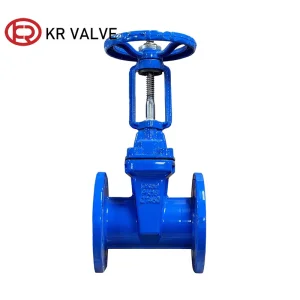
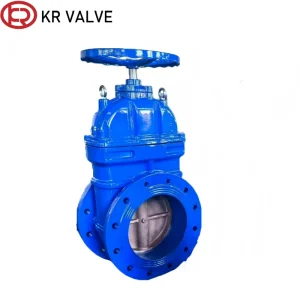
In modern hydraulic and industrial fluid transport infrastructure, the Rising Gate Valve (frequently referred to as an Outside Screw and Yoke / OS&Y Valve) serves as a mission-critical isolation standard. Unlike non-rising stem (NRS) alternatives, rising stem configurations provide an immediate visual indication of open/closed status while isolating the stem threads from line-medium corrosion.
Mechanical Kinematics & OS&Y Design
The core engineering advantage of a custom rising gate valve lies in its external stem thread assembly. When the handwheel or automated actuator is operated, the stem rotates through an external yoke nut, lifting the gate linearly out of the flow path. Because the operating threads are situated entirely outside the valve body envelope:
- Zero Thread Contamination: Medium slurry, particulate matter, or corrosive chemicals never make contact with driving threads.
- Simplified Maintenance & External Lubrication: Maintenance technicians can visually inspect, clean, and re-grease the stem without taking the line offline.
- Instant Position Monitoring: Plant supervisors verify valve status instantly from a distance, satisfying strict safety protocols in fire protection (UL/FM) and chemical processing plants.
Sealing Metallurgy & Elasticity Options
Customization options from top-tier Chinese manufacturing facilities encompass both Resilient Seated (RSGV) and Metal-to-Metal Seated configurations to match specific thermal, chemical, and pressure envelopes.
- Resilient EPDM/NBR Encapsulated Wedges: Feature high-tech elastomer coatings over high-tensile ductile iron (GGG40/GGG50). Yields zero-leakage (Bubble-Tight Class VI) shut-off up to 16/25 Bar for potable water systems.
- Solid / Flexible Metal Wedges (WCB/CF8/CF8M): Utilize precision-ground bronze, brass, SS304, SS316, or Stellite hardfacing rings. Optimized for high-temperature steam, hydrocarbons, and abrasive slurry duties.
China Valve Industry Capability Index
Key metrics demonstrating manufacturing density, metallurgical control, and international export volume from Chinese valve foundries.
Strategic Supply Chain Advantages: Sourcing Gate Valves from China
China’s valve manufacturing hubs—particularly within Tianjin, Wenzhou, and Jiangsu provinces—have evolved from high-volume foundries into fully integrated, digitalized valve production ecosystems. For global EPC buyers, procurement managers, and municipal water authorities, sourcing custom rising gate valves from top China manufacturers unlocks significant competitive advantages:
1. Full-Chain Metallurgical Autonomy
Leading Chinese valve factories operate integrated green-sand and investment casting facilities paired with Spectro-chemical analyzers. This vertical integration guarantees strict control over Nodular Graphite Density in Ductile Iron (GGG40/50 to EN-GJS-400-15) and precise Chrome-Nickel ratios in stainless steel (CF8/CF8M), eliminating batch-to-batch porosity risks.
2. Machining Precision & Automation
Utilizing multi-axis CNC horizontal machining centers, Chinese manufacturers achieve sub-micron tolerances across flange faces, wedge guide channels, and stem sealing seats. Automated electrostatic powder coating lines apply non-toxic Fusion Bonded Epoxy (FBE) to depths ≥ 250-300 microns, complying with NSF 61 and WRAS drinking water requirements.
3. Universal Standard Compliance
China factories maintain extensive pattern libraries for international standards. Whether your project requires DIN 3202 F4/F5 face-to-face lengths, BS5163, AWWA C509/C515, ASME B16.34, or EN 1171 specifications, customization tooling can be executed swiftly without massive re-engineering delays.
Engineering Selection Matrix: Gate Valves vs. Alternative Valves
Compare technical attributes across primary valve families to optimize pipeline efficiency, head loss, and maintenance intervals.
| Valve Type | Flow Path & Resistance | Sealing Capability | Operational Medium | Primary Industrial Use |
|---|---|---|---|---|
| Rising Stem Gate Valve (OS&Y) | Full Bore, Straight-Through (Zero Pressure Drop) | Bidirectional, Resilient EPDM or Metal-to-Metal | Clear Liquids, High-Temp Steam, Slurry | Waterworks Mains, Fire Protection, Refineries |
| Non-Rising Stem Gate Valve (NRS) | Full Bore, Straight-Through (Low Head Loss) | Bidirectional, Soft Seated (EPDM/NBR) | Water, Sewage, Neutral Liquids | Underground Pit Piping, Space-Constrained Vaults |
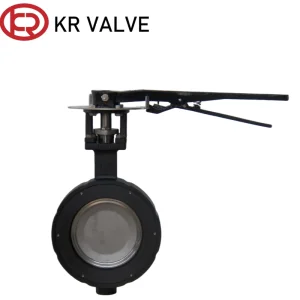
| Triple Offset Butterfly Valve | Throttled Bore, Disk in Flow Stream | Metal-to-Metal Hard Surfacing (SS316/Stellite) | High Temp Gas, Steam, Chemicals | Thermal Power Plants, Isolation & Modulation |
| Knife Gate Valve | Full Bore, Shearing Action Blade | Unidirectional / Bidirectional PTFE or Metal | Viscous Slurry, Pulp, Ash, Mining Waste | Mining, Pulp & Paper, Wastewater Slurry |
Industry Trends & Macro Flow Control Solutions
As smart water networks (Smart Cities), industrial decarbonization, and extreme climate resilience drive infrastructure upgrades globally, custom rising gate valve design is undergoing rapid technological development:
1. IoT Integration & Digital Twin Monitoring
Modern custom rising gate valves are increasingly equipped with non-contact inductive stem sensors and smart position transmitters. In smart municipal networks, these sensors broadcast exact percentage-open metrics to SCADA systems via LoRaWAN or NB-IoT protocols. Early detection of stem binding or packing gland wear prevents catastrophic pipeline surges and water hammer events.
2. Advanced Anti-Corrosion Coatings for Harsh Environments
In response to growing seawater desalination and coastal infrastructure expansion, China factories are applying high-grade ceramic-epoxy coatings, dual-layer polyurethane, and 316L stainless steel clad stems. These advanced surface treatments meet ISO 12944 C5-M marine corrosion ratings, offering 25+ years of maintenance-free service life in highly saline environments.
3. Low Fugitive Emission Gland Packing
Addressing global climate directives and strict EPA / ISO 15848-1 standards, custom OS&Y gate valves for hydrocarbon processing feature multi-ring expanded graphite packing with braided corrosion-inhibited carbon fiber end rings. This setup virtually eliminates volatile organic compound (VOC) emissions through the valve bonnet.
4. Torque Optimization & Actuation Readiness
Through Finite Element Analysis (FEA) of the internal flow passage and wedge shape, modern custom gate valves minimize operational torque by up to 30%. Standardized ISO 5210 top-flange mounting patterns allow plug-and-play installation of electric, pneumatic, or electro-hydraulic actuators without costly field adapters.
Global Enterprise Procurement Checklist: What Buyers Must Verify
When evaluating global OEM suppliers and factories for custom rising gate valves, engineering procurement teams should enforce strict quality assurance benchmarks. Below is the technical procurement checklist recommended by senior flow control auditors:
Hydrostatic & Shell Testing
Verify that 100% of manufactured units undergo pressure testing per ISO 5208 / EN 12266-1 / API 598. Shell test pressure must achieve 1.5x PN rating; high-pressure seat test must achieve 1.1x PN rating with zero allowable bubble leakage for resilient seated variants.
Material Traceability (EN 10204 3.1)
Demand official Mill Test Certificates (MTC) detailing heat numbers, chemical composition analysis, tensile strength, yield point, and elongation percentages for all pressure-retaining castings (Ductile Iron GGG40, WCB, CF8M).
Flange Drilling & Face Dimensions
Cross-reference face-to-face dimensions against DIN 3202 F4/F5, EN 558-1 Series 14/15, or ASME B16.10 to ensure seamless drop-in placement. Flange drilling must match EN 1092-2 PN10/PN16/PN25 or ANSI B16.5 Class 150/300.
Comprehensive Valve Series & Accessories (Part II)
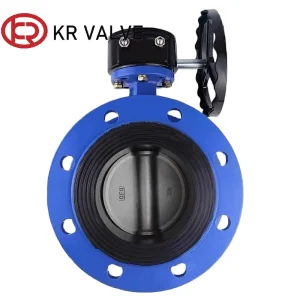
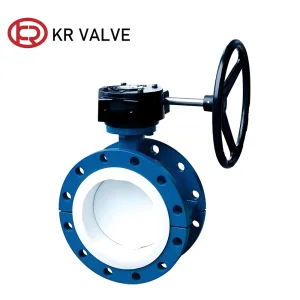
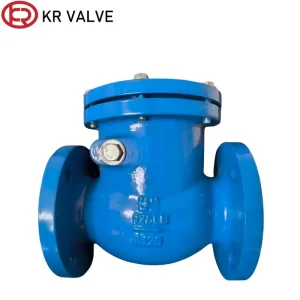
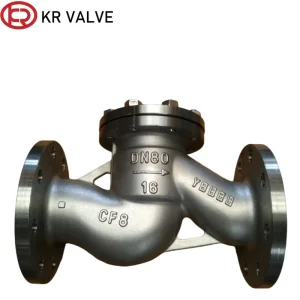
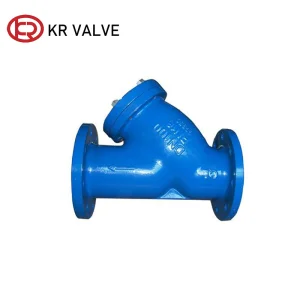
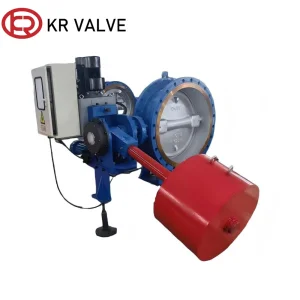
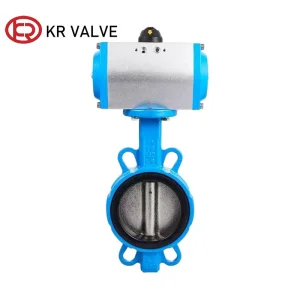
Explore our extended catalog including custom butterfly valves, check valves, hydraulic control valves, and strainers.
Technical FAQ: Custom Rising Gate Valve Manufacturing & Sourcing
Direct answers from our senior engineering team addressing design choices, materials, and international procurement standards.