
High-Performance Industrial Valve Catalog (Part 1)
Explore OEM/ODM custom flow control products compatible with single acting hydraulic actuation interfaces.
Engineering Architecture of Single Acting Hydraulic Actuators
Understanding spring-return mechanics, hydraulic displacement physics, and fail-safe energy storage dynamics.
A custom single acting hydraulic actuator is a precision electro-hydraulic mechanical device designed to deliver linear or rotary force in critical pipeline isolation, throttling, and emergency shutdown valve (ESD) applications. Unlike double-acting hydraulic cylinders that require pressurized fluid for both extension and retraction strokes, a single-acting actuator utilizes hydraulic fluid pressure for movement in one direction while relying on a heavy-duty, factory-calibrated mechanical spring package (or external ballast force) for the reverse stroke.
In modern industrial process automation, selecting the correct actuator architecture directly impacts system reliability, plant safety, and operational lifecycle costs. Custom single-acting actuators engineered by top-tier factories provide an inherent safety mechanism known as fail-safe action. When hydraulic fluid pressure is abruptly released—whether deliberately via a solenoid valve pulse or inadvertently due to power loss or hydraulic line breach—the compressed internal mechanical spring expands instantaneously, returning the valve to its designated safe state: Fail-Open (FO) or Fail-Closed (FC).
Information Gain Note: Torque Curve Dynamic Matching
Unlike double-acting systems with uniform output torque, single-acting hydraulic actuators experience a non-linear output torque curve. The total force output must account for both the opposing spring resistance during the powered hydraulic stroke and the declining spring force during the fail-safe stroke. Custom factory calibration ensures that the Breakaway Torque (BTO), Running Torque (RUN), and End of Stroke Torque (ETC) precisely match the dynamic torque profile of quarter-turn valves (such as triple-offset butterfly or eccentric plug valves).
Kinematic Variations: Scotch Yoke vs. Linear Cylinder Design
Custom factories predominantly manufacture two distinct kinematic profiles for single-acting hydraulic actuation:
- Symmetrical Scotch Yoke Architecture: Engineered primarily for quarter-turn valves (butterfly, ball, plug). Offers maximum torque output at both ends of the stroke (0° breakaway and 90° seating), perfectly aligning with seating torque spikes required for resilient seated gate and high-pressure butterfly valves.
- Canted Scotch Yoke Architecture: Modified mechanical link geometry that shifts peak torque output toward the beginning of the opening stroke or end of the closing stroke. Ideal for custom butterfly valves where dynamic hydrodynamic torque peaks during mid-stroke throttling.
- Linear Piston Cylinder Assemblies: Direct thrust actuators mated with linear control valves (globe valves, knife gate valves). Feature precision-honed barrels, chrome-plated piston rods, and heavy concentric helical springs enclosed in welded steel safety canisters.
OEM/ODM Customization Matrix for Single Acting Actuators
How specialized Chinese actuator factories customize mechanical, hydraulic, and control parameters for international clients.
Hydraulic Cylinder Metallurgy
Custom selection of high-grade carbon steel (ST52, 42CrMo4) or forged stainless steel (316L, Duplex 2205) with internal honing to Ra < 0.2 µm and hard chrome plating up to 50 microns for extreme wear resistance.
- Micro-alloyed forged steel tie-rods
- HVOF tungsten carbide rod coating
- Deep-hole precision roller burnishing
Custom Spring Module & Seals
Factory custom-shot-peened chrome-silicon alloy helical springs designed for 100,000+ fatigue cycles. Multi-stage elastomeric and PTFE seal configurations tailored for temperature ranges from -50°C to +200°C.
- Spring containment safety canisters
- Low-friction spring-energized PTFE seals
- Viton / HNBR / Polyurethane options
Hydraulic Control Integration
Direct OEM mounting of integrated Hydraulic Power Units (HPU), solar-powered electro-hydraulic control skids, fast-acting directional solenoid valve manifolds, and digital smart positioners.
- Quick-exhaust dump valves (< 0.5 sec)
- Manual hydraulic hand-pump override
- HART / Modbus / Profibus DP protocols
Single Acting Hydraulic Actuator Specifications
Comprehensive technical breakdown for plant engineers, EPC buyers, and procurement specialists.
| Performance Specification | Standard OEM Factory Model | High-Pressure Heavy Industrial | Subsea / Extreme Environment |
|---|---|---|---|
| Operating Medium | Mineral hydraulic oil (ISO VG 32/46) | Synthetic / Fire-resistant fluid | Water-glycol / Synthetic ester fluid |
| Supply Operating Pressure | 40 bar to 160 bar (580 - 2,320 PSI) | 160 bar to 210 bar (2,320 - 3,045 PSI) | Up to 345 bar (5,000 PSI) |
| Torque Output Range | 500 Nm to 25,000 Nm | 25,000 Nm to 500,000 Nm | Up to 1,200,000+ Nm (Custom) |
| Operating Temperature | -20°C to +80°C (Standard NBR) | -40°C to +150°C (HNBR / Viton) | -60°C to +200°C (Fluorosilicone/PTFE) |
| Fail-Safe Action Speed | 1.0 s to 3.0 s adjustable | 0.5 s to 1.5 s (Fast ESD valve) | < 0.5 s (Quick dump accumulator) |
| Mounting Interface | ISO 5211 / NAMUR VDI/VDE 3845 | ISO 5211 / Custom Flange Pad | API 6A / API 17D Subsea Interface |
| Corrosion Protection Coating | C3/C4 Epoxy Paint System | C5-M Heavy Industrial Marine Coating | NORSOK M-501 System 1 / 7B Thermal Spray |
| Safety Integrity Level | SIL 2 Capable | SIL 3 Certified (IEC 61508) | SIL 3 Capable with Redundant Solenoids |
China Supply Chain Advantages & Manufacturing Rigor
Why Tier-1 international contractors source custom single acting hydraulic actuators from established Chinese manufacturing hubs.
In the global valve actuation ecosystem, China has evolved from a high-volume component manufacturer into an advanced hub for high-precision, customized hydraulic actuation systems. Modern custom single-acting hydraulic actuator factories in regions like Tianjin, Jiangsu, and Zhejiang combine robust metallurgical supply chains with state-of-the-art CNC machining clusters, deep-hole honing lines, and automated hydrostatic testing benches.
1. Complete Upstream-to-Downstream Industrial Integration
The core strength of a specialized Chinese actuator factory lies in geographical proximity to heavy forging foundries, precision cold-drawn steel tube mills, and specialized sealing technology developers. Raw forgings (such as ASTM A350 LF2 or A105) can be sourced, heat-treated, rough-machined, and ultrasonically tested within a tight 50-kilometer radius. This localized supply chain reduces OEM prototype lead times from 16 weeks to less than 4 weeks.
2. Advanced Quality Assurance & FAT (Factory Acceptance Testing)
Top-tier export-oriented factories adhere strictly to international quality management systems, including ISO 9001:2015, ISO 14001, and ISO 45001. Prior to dispatch, every custom single-acting actuator undergoes exhaustive testing protocols documented under EN 10204 3.1 material traceability certificates:
Hydrostatic Shell & Seat Test
Pressurizing cylinder chambers up to 1.5 times the maximum allowable working pressure (MAWP) for extended hold periods to verify zero body deformation and structural integrity.
Dynamic Torque Bench Test
Real-time measurement of output torque curves across the full 0° to 90° rotation using digital strain-gauge reaction torque sensors to confirm spring-return breakaway and end torque ratings.
ESD Fast-Action & Fatigue Cycle Test
Verification of emergency spring response timing down to milliseconds under full hydraulic counter-pressure, along with accelerated 10,000-cycle continuous endurance testing.
3. TCO (Total Cost of Ownership) Optimization
By leveraging standardized modular designs (modular spring canisters, interchangeable cylinder barrels, and ISO-compliant mounting kits), Chinese factories allow global EPCs to achieve up to a 35% reduction in total capital expenditure (CapEx) without compromising safety or reliability. Furthermore, readily available spare part kits ensure long-term operational expenditure (OpEx) minimization during scheduled plant turnarounds.
Localized Application Scenarios & Regional Compliance
Field-proven deployments of single acting hydraulic actuators across severe service industrial environments.
Offshore Oil & Gas FPSO Risers
Installed on emergency shutdown valves (ESDVs) on offshore production platforms. Requires SIL 3 certification, ATEX Zone 1 / IECEx explosion-proof solenoid enclosures, and C5-M marine anti-corrosion protection capable of withstanding constant salt spray exposure.
Municipal Water Infrastructure & Dams
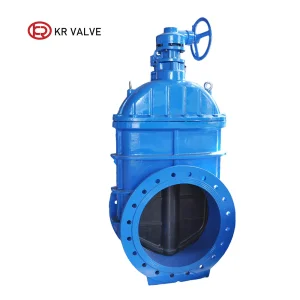
Mated with large-bore resilient seated gate valves (BS5163 standard) and double-offset butterfly valves in penstock lines. Features fast mechanical spring fail-close capability to prevent catastrophic flooding during grid power failures.
Cross-Country Gas Transmission Pipelines
Utilized on mainline isolation valves equipped with direct-gas hydraulic power units (converting pipeline gas pressure into hydraulic force). Operates under extreme ambient temperature variations (-40°C to +60°C) compliant with API 6D specifications.
Emerging Trends in Single Acting Hydraulic Actuation
How Industry 4.0 digitizes hydraulic power units, smart positioners, and predictive maintenance.
The industrial valve actuation market is experiencing a profound transition driven by digital transformation, environmental sustainability, and autonomous safety operations. Leading custom factories are currently pioneering several key technological breakthroughs:
1. IIoT Smart Diagnostics & Partial Stroke Testing (PST)
Traditional emergency shutdown (ESD) valves can remain stationary in one position for months or years, creating a risk of mechanical binding. Modern single-acting hydraulic actuators incorporate micro-processor-driven positioners capable of performing automated Partial Stroke Testing (PST). The actuator moves the valve disc by a negligible 5% to 10% during active plant operations without interrupting line flow, continuously logging pressure-displacement curves to verify spring integrity and valve seat friction coefficients.
2. Eco-Friendly & Biodegradable Hydraulic Fluids
In response to stringent environmental legislation (such as EPA VGP for marine environments and EU REACH directives), custom actuator factories are re-engineering internal sealing systems to ensure 100% compatibility with synthetic ester-based and bio-based hydraulic fluids. Specialized polyurethane and PTFE lip seals prevent degradation and fluid contamination in environmentally sensitive river basins and offshore sanctuaries.
3. Additive Manufacturing of Compact Manifold Blocks
Using 3D metal additive manufacturing (selective laser melting), factories can produce complex, lightweight hydraulic control manifold blocks with internal flow channels optimized for minimal pressure drop. This eliminates traditional external tubing connections, reducing potential leak paths by up to 70% and shrinking the total footprint of the actuator control skid.
Frequently Asked Questions (FAQ)
Direct technical answers from senior OEM valve and actuator design engineers.
High-Performance Industrial Valve Catalog (Part 2)
Explore OEM/ODM custom flow control products compatible with single acting hydraulic actuation interfaces.
-
-
-
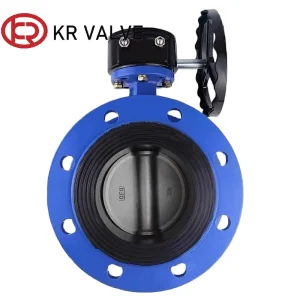
Custom Flange Butterfly Valve Concentric Type Gear Box Operation Supplier, Factories
-
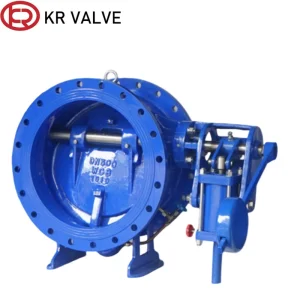
Wholesale WCB slow closing check valve inclined disc type Manufacturer, Factory
-
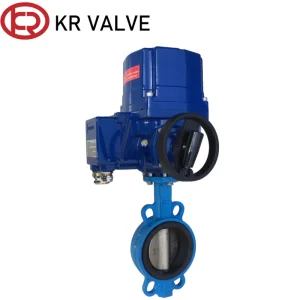
Wholesale Electric Actuated Butterfly Valve Wafer EPDM Seal Type Motorized Suppliers, Factory
-
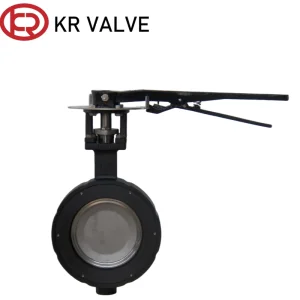
OEM Triple Eccentric Wafer Style Butterfly Valve WCB Material 150LB Manufacturer, Factories
-
-
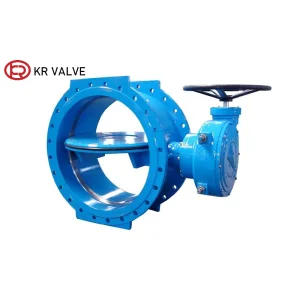
Wholesale Double Eccentric Butterfly Valves Surfacing SS304 Sealing Manufacturers, Factories