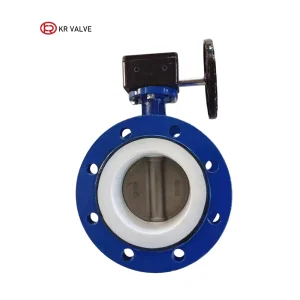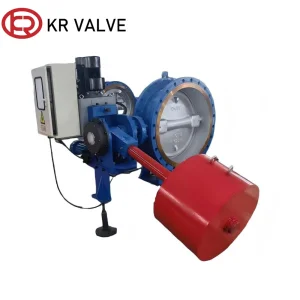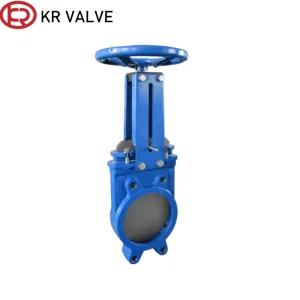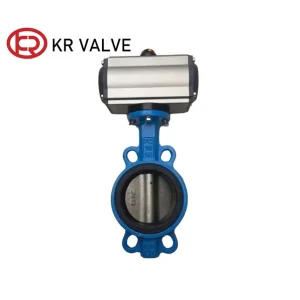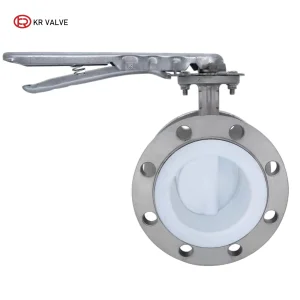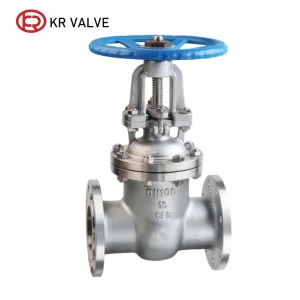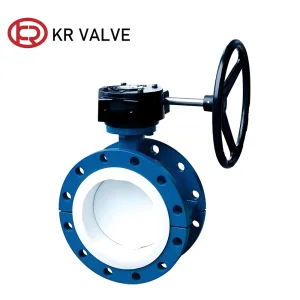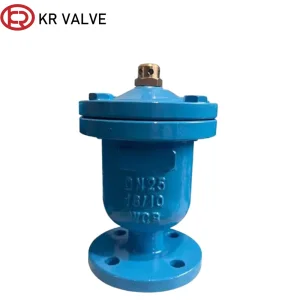
Primary Industrial Valve Portfolio
High-performance gate, butterfly, check, and control valves certified to DIN, BS, and ANSI international engineering standards.
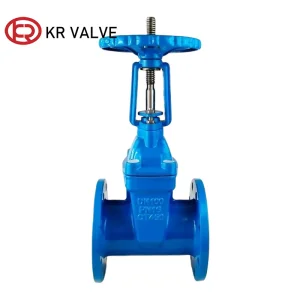
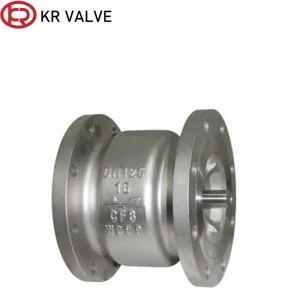
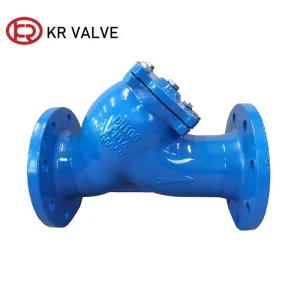
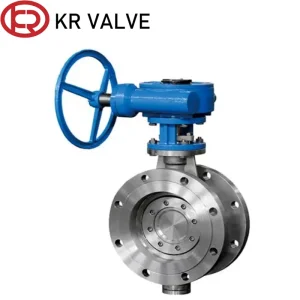
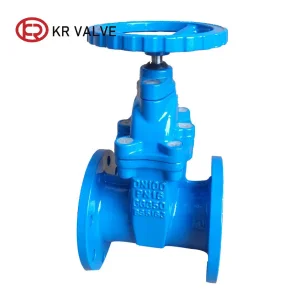
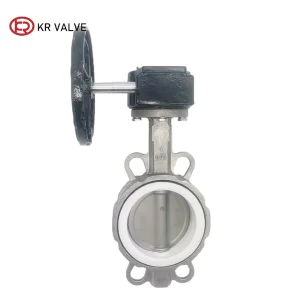
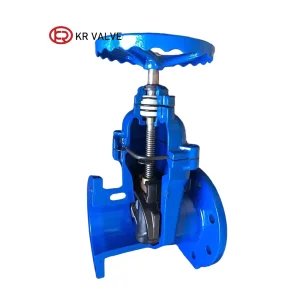
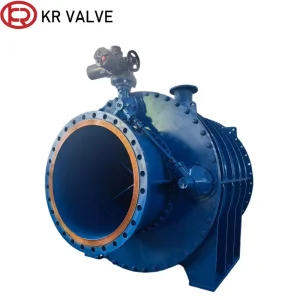
1. Metallurgical Dynamics & Tribology of Bronze Seating Mechanics
In municipal water networks, industrial thermal fluid loops, and marine utility lines, isolation valves are subjected to intense mechanical stress, fluid dynamic turbulence, and electrochemical corrosion. While elastomeric resilient seats (such as EPDM or NBR) offer bubble-tight shut-off at ambient temperatures, they suffer from irreversible compression set, thermal degradation, and mechanical tearing when exposed to suspended solids or elevated thermal cycles. Modern fluid engineering increasingly relies on OEM bronze seat gate valves to deliver multi-decadal reliability under high differential pressures ($P_{\text{diff}} > 16 \text{ bar}$) and temperature regimes exceeding 180°C.
The core advantage of bronze seating stems from its unique tribological pairing with cast iron or ductile iron body substrates. In a standard solid or flexible wedge metal-seated gate valve, the body seat ring and wedge ring interfaces undergo micro-frictional sliding during stroke execution. Bronze alloys—specifically Leaded Red Brass (ASTM B584 C83600 / CC491K Gunmetal) and Aluminum Bronze (ASTM B148 C95800)—possess inherent self-lubricating properties due to microscopic copper-lead or phase-dispersed metallic microstructures. This microscopic compliance allows the seating faces to burnish rather than gall under intense compressive contact forces, maintaining a precision micro-seal across thousands of actuation cycles.
Technical Insight: Information Gain for Engineering Buyers
Unlike soft-seated valves, which rely on polymer deformation, metal-to-metal bronze seating operates on the principle of controlled elastic deformation and surface burnishing. When specified with a 3° to 5° included wedge angle, the mechanical advantage of the stem thrust forces the bronze ring into intimate metal-to-metal contact with the body seat, creating a labyrinth barrier against particulate intrusion and high-velocity fluid erosion.
Comparative Tribological & Material Matrix
| Parameter / Performance Index | Bronze Metal Seating (C83600 / Gunmetal) | Resilient Soft Seating (EPDM / NBR) | Stainless Steel Seating (SS304 / SS316) |
|---|---|---|---|
| Operational Temp Range | -20°C to +220°C (High thermal endurance) | -10°C to +120°C (Strict thermal limit) | -50°C to +425°C (Extreme thermal duty) |
| Particulate & Slurry Resistance | Excellent Self-clearing metal edge | Poor Susceptible to elastomer tearing | Moderate Risk of surface galling |
| Galling & Seizure Index | Ultra-low (Self-lubricating bronze matrix) | N/A (Elastomeric contact) | High (Requires Stellite overlay) |
| Design Life Expectancy | 30+ Years (Renewable/re-lapable rings) | 7 to 12 Years (Elastomer hardening) | 25+ Years (Subject to pitting in chlorides) |
| Bi-Directional Sealing Grade | ISO 5208 Rate B / ANSI B16.104 Class IV | ISO 5208 Rate A (Zero Bubble Leakage) | ISO 5208 Rate B / C |
2. OEM China Factory Advantages & Metallurgical Precision
Analyzing the supply chain integration, foundry technological upgrades, and quality assurance protocols driving China's leading valve export hub in Tianjin.
Precision Shell-Molding Foundries
China's top-tier valve factories utilize resin-bonded sand molding and lost-wax investment casting. This guarantees void-free casting bodies with uniform wall thicknesses compliant with EN 1503-3 (Ductile Iron EN-GJS-400-15 / GGG40) and zero micro-porosity across high-stress valve bonnet junctions.
Automated CNC Seat Threading
Interchangeability and tight tolerance control are maintained via multi-axis CNC turning centers. Bronze seat rings are threaded or hydraulically expanded into the body recesses with micro-inch precision (Ra < 0.8 µm), eliminating potential leak paths behind the ring seat threads.
Rigorous Spectrometric QA Protocols
Every melt batch undergoes Direct Reading Optical Emission Spectrometry (OES) to verify chemical composition against ASTM/EN specifications. Metallurgical test bar certifications (EN 10204 3.1) are supplied standard, guaranteeing exact lead, zinc, and tin proportions for optimal sea water and steam durability.
3. Structural Architecture & International Design Standards
When procuring OEM bronze seat gate valves for infrastructure tenders, engineering departments must evaluate the mechanical configuration of the valve stem, body bonnet joint, and stem sealing gland. The structural topology directly dictates space envelope requirements, maintenance frequency, and operational torque profiles.
Stem Configurations: Non-Rising Stem (NRS) vs. Outside Screw & Yoke (OS&Y / Rising Stem)
Non-Rising Stem (NRS): In NRS gate valve configurations (commonly built to BS 5163 or DIN 3352 F4/F5), the operating stem threads are housed inside the internal fluid chamber, coming into direct contact with the process medium. The gate wedge moves up or down along the stem threads as the stem rotates. NRS valves are ideal for underground buried water mains, compact plant rooms, and marine bilge spaces where vertical headroom is strictly limited. To prevent stem corrosion in NRS bronze seat valves, top OEM manufacturers utilize high-tensile Manganese Bronze or Stainless Steel (AISI 420/316) stems paired with a solid brass/bronze internal stem nut.
Outside Screw & Yoke (OS&Y / Rising Stem): In OS&Y configurations, the stem threads are situated external to the valve body cavity, lubricated by external grease nipples. As the handwheel turns, the stem rises vertically, giving operators an instant visual indicator of valve position (open vs. closed). OS&Y bronze seat gate valves are the industry standard for high-temperature steam lines, chemical processing, and fire protection isolation lines (UL/FM specifications) because the critical operating threads are isolated from corrosive medium erosion and thermal line expansion.
Compliance Standard Matrix:
• Face-to-Face Dimensions: EN 558-1 Series 14 (DIN 3352 F4), Series 15 (DIN 3352 F5), BS 5163, ASME B16.10
• Flange Connection Drilling: EN 1092-2 (PN10/PN16/PN25), ANSI/ASME B16.1 / B16.5 Class 125/150
• Testing & Inspection: ISO 5208, EN 12266-1, API 598 (Shell Test @ 1.5x PN; Seat Test @ 1.1x PN)
4. Macro Industry Solutions & Localized Application Scenarios
Field-proven engineering deployments across critical infrastructure, marine engineering, and energy distribution networks.
Marine & Offshore Ballast Networks
Scenario challenge: Marine ballast and cooling water systems handling raw seawater suffer rapid bio-fouling and severe galvanic corrosion when standard iron-seated valves are used.
Macro solution: OEM Bronze Seat Gate Valves fitted with Nickel Aluminum Bronze (C95800) seating rings provide exceptional resistance to chloride pitting and bio-fouling attachment. The bronze seat acts as a sacrificial-resistant barrier, ensuring dependable shut-off during long-haul voyages.
District Heating & Low-Pressure Steam
Scenario challenge: High-temperature boiler feed lines and urban district heating loops experience thermal expansion spikes up to 200°C, causing resilient EPDM seats to vaporize or harden.
Macro solution: Metal-to-metal bronze seating combined with high-grade graphite stem packing (OS&Y construction) accommodates thermal expansion while maintaining structural seal integrity. The bronze wedge rings burnish under thermal expansion without binding or seizing.
Municipal Raw Water Intake & Dam Lines
Scenario challenge: Water intake conduits carrying high sediment, silt, and sand concentrations destroy soft rubber gate coatings within months of commissioning.
Macro solution: The solid bronze seat ring features a precision-machined scraping edge. During the closing stroke, the bronze wedge cuts through settled silt and sand particles, pushing debris into the bottom body cavity without compromising the metal seating line.
High-Rise Fire Protection Main Isolation
Scenario challenge: Dedicated fire protection lines require valves that remain fully functional after sitting unused in static water for years without sticking.
Macro solution: Bronze-to-bronze seating eliminates iron-oxide rust welding between the wedge and body seats. Even after a decade of static inactivity, stem operating torque remains low, ensuring instant water flow upon hydrant activation.
5. Global Industry Trends: Lead-Free Bronze Compliance & Smart Actuation
The global valve manufacturing industry is undergoing a dual paradigm shift driven by stringent environmental drinking water legislation and the digitalization of municipal water infrastructure (Industry 4.0).
1. Transition to Lead-Free Bronze Alloys (NSF/ANSI 61 & 372)
Historically, bronze seat alloys contained 3% to 7% lead to enhance machinability and hydrostatic sealing compliance. However, modern environmental regulations (such as the US Safe Drinking Water Act and European Drinking Water Directive EU 2020/2184) mandate a weighted average lead content of less than 0.25% for all wetted surface components. Leading OEM factories in China have pioneered Silicon Bronze (C69300 / CuZn21Si3P) and Bismuth Bronze formulations. These lead-free alloys match traditional leaded red brass in tensile strength (tensile strength > 400 MPa) and corrosion resistance while ensuring zero heavy-metal leaching into potable water distribution networks.
2. Smart Valve Actuation & Condition Monitoring Integration
Modern water utility operators are moving away from manual handwheel operation toward smart motorized isolation. Modern OEM bronze seat gate valves are engineered with standardized ISO 5210 top flanges. This design allows for seamless mounting of multi-turn electric actuators equipped with HART, Modbus, or IO-Link communications. Integrated torque sensors detect line blockage or sediment buildup in real time, alerting maintenance managers before a mechanical failure occurs.
6. Global Enterprise Procurement & Factory Audit Checklist
For international EPC contractors, municipal procurement officers, and valve distributors, selecting a reliable OEM bronze seat gate valve supplier in China requires rigorous evaluation beyond initial price-per-unit metrics. Below is an engineering audit framework recommended by senior QA inspectors:
1. Casting & Material Traceability
Verify that the factory owns digital spectrometry equipment and provides EN 10204 3.1 material test certificates for every heat number. Ensure chemical limits for Zinc wall-loss and Lead leaching match project specs.
2. Hydrostatic Testing Protocols
Require 100% factory testing instead of statistical sampling. Test pressures must reach 1.5x nominal pressure for body shell tests and 1.1x nominal pressure for high/low pressure seat closure tests per ISO 5208.
3. Coating & Fusion Bonded Epoxy
Inspect coating thickness gauge reports. Valve bodies should feature non-toxic Fusion Bonded Epoxy (FBE) coating compliant with WRAS/NSF61, with a minimum dry film thickness (DFT) of 250 microns.
7. Frequently Asked Technical & Procurement Questions (FAQ)
Expert answers to critical engineering, manufacturing, and procurement inquiries from global project buyers.
Additional Flow Control & Valve Solutions
Specialized butterfly valves, knife gate valves, hydraulic control valves, and air release valves manufactured to client specifications.