OEM Double Non Return Valve Suppliers & Factory
Next-Generation Backflow Prevention Engineering: Structural Dynamics, Regulatory Frameworks, and Industrial Supply Chain Resilience in Global Fluid Control Systems.
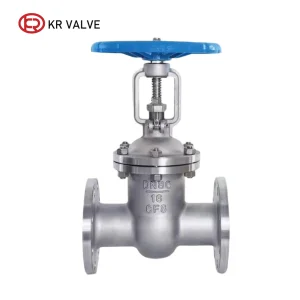
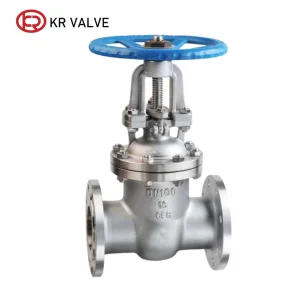
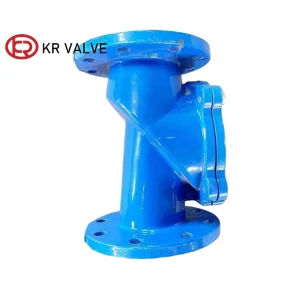
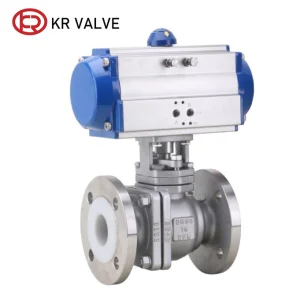
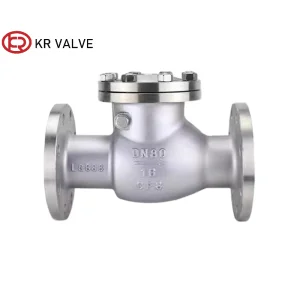
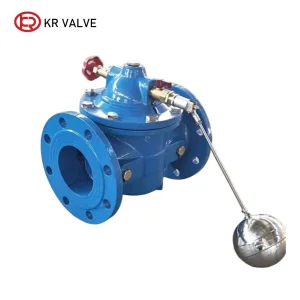
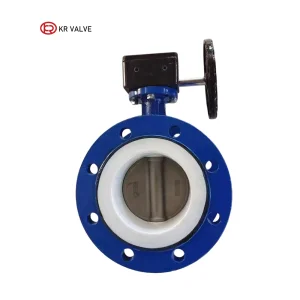
Featured Precision Flow Valves (Top OEM Series)
Direct factory solutions manufactured to international DIN, BS, and ANSI specifications, rigorously bench-tested for hydraulic integrity and backflow prevention.
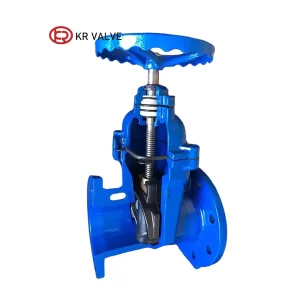
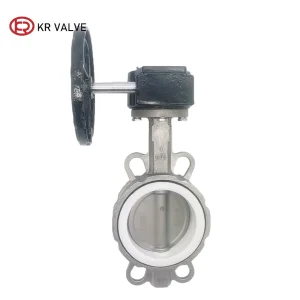
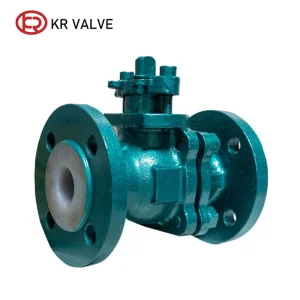
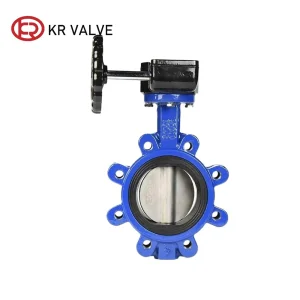
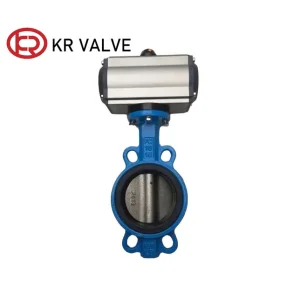
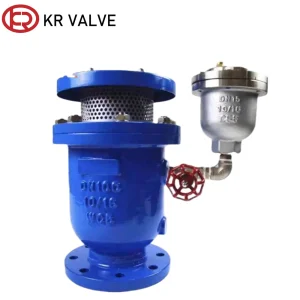
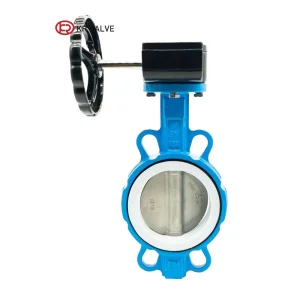
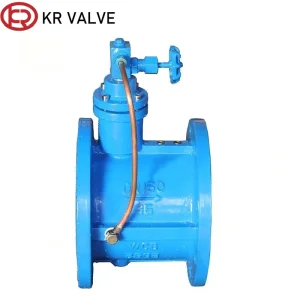
1. Executive Summary & The Technical Architecture of Double Non-Return Valves
In complex hydraulic infrastructure, backflow contamination presents one of the most critical operational risks to potable water safety, chemical process purity, and industrial fluid control. A Double Non-Return Valve (DNRV)—also known as a dual check valve assembly or double check valve (DCV)—is a mechanical backflow prevention device engineered with two independently acting internal check valves arranged in series. This dual-layer redundancy guarantees that even if one valve mechanism experiences mechanical fatigue, particulate jamming, or seat degradation, the secondary valve maintains absolute sealing integrity, effectively isolating back-siphonage and back-pressure events.
Modern industrial plants and municipal networks demand OEM manufacturing that integrates advanced fluid dynamics, precision metallurgy, and zero-leakage elastomeric engineering. As global infrastructure specifications transition toward stringent zero-lead standards (such as NSF/ANSI 61 and NSF/ANSI 372) and low hydraulic friction loss designs, choosing a certified OEM Double Non Return Valve Supplier & Factory becomes a strategic procurement decision.
Dual Spring Cartridge System
Each check cartridge utilizes stainless steel (SS304/SS316) helical springs configured to provide a calibrated differential cracking pressure ($\Delta P \ge 1.0 \text{ psi}$ to $2.0 \text{ psi}$), ensuring immediate non-slam seating during zero-flow conditions.
Zero-Bypass Sealing Matrix
Incorporating precision-molded EPDM or NBR vulcanized rubber seats against polished stainless or bronze faces, providing bubble-tight shut-off (Class VI sealing under ANSI/FCI 70-2) under both micro-head back-pressure and high static loads.
Hydro-Optimized Flow Paths
Utilizing Computational Fluid Dynamics (CFD) modeled internal body contours to minimize head loss, lower the friction factor ($K$-value), and optimize total pumping efficiency across wide Reynolds number spectrums.
2. Macro Industry Trends & Global Market Realities
The global market for industrial valves and backflow preventers is undergoing a profound structural shift driven by urbanization, aging municipal water networks, stricter environmental regulations, and the digital transformation of process industries. Engineering procurement teams no longer view double non-return valves merely as passive mechanical hardware, but as vital risk-mitigation assets within complex water resource networks and industrial process lines.
Evolution of International Standards
Cross-border compliance has elevated regulatory requirements. Products exported to Europe must strictly comply with EN 13959 (Anti-pollution check valves) and EN 1717 standards, while North American utilities mandate compliance with AWWA C510 and ASSE 1015. Simultaneously, Oceania’s AS/NZS 2845.1 demands rigorous endurance cycling test certificates. OEM manufacturers must hold unified cross-certifications (WRAS, DVGW, ACS, NSF) to support multinational EPC project bidding.
Smart & Digitized Valve Integration
Industry 4.0 integration has introduced telemetry-enabled Double Non-Return Valve assemblies. Modern installations in high-rise commercial structures and municipal boundary meters feature integrated differential pressure ($\Delta P$) sensors and acoustic leak detectors. These smart systems wirelessly transmit operational health data to SCADA systems, enabling predictive maintenance before catastrophic backpressure failure occurs.
3. Global Enterprise Procurement Demands & Risk Management
For enterprise buyers, engineering procurement managers, and international valve distributors, evaluating an OEM Double Non Return Valve Factory extends far beyond initial unit price. The total cost of ownership (TCO), failure probability, supply chain stability, and raw material traceability dominate modern sourcing scorecards.
Metallurgical Traceability & MTR 3.1
Industrial buyers demand strict compliance with EN 10204 Type 3.1 material inspection certificates. Shell castings—whether Ductile Iron GGG40/GGG50, Cast Steel WCB, or Stainless Steel CF8/CF8M—must undergo spectroscopic chemical analysis and tensile mechanical testing to prevent structural catastrophic failures under pressure surges.
Non-Destructive Testing (NDT) Protocols
Premium OEM factories implement 100% hydrostatic shell testing at 1.5× PN rating and low-pressure/high-pressure seat sealing tests (ISO 5208 / API 598). Advanced projects require Radiographic (RT), Ultrasonic (UT), and Magnetic Particle Inspection (MT) for critical pressure boundary castings.
Supply Chain Continuity & Lead Times
With global logistics volatility, enterprise buyers require factories with vertically integrated supply chains—from in-house pattern making, automated foundry lines, and precision CNC machining centers to electrostatic epoxy coating chambers and automated test benches.
4. China Industry 4.0: Supply Chain Resilience & Manufacturing Edge
China’s valve manufacturing sector has transformed from labor-intensive foundry operations to high-precision, automated Industry 4.0 ecosystems. Leading Chinese valve hubs, particularly Tianjin and Zhejiang industrial clusters, provide unmatched manufacturing capacity, technical agility, and cost-efficiency advantages for global OEM partners.
Automated Resin-Sand Casting & Smart Metallurgy
Modern Chinese factories deploy automated Disamatic moulding and resin-sand casting lines with automatic molten metal dosing. This eliminates porosity, shrinkage cavities, and dimensional variances in valve bodies, achieving precise wall thickness consistency that strictly conforms to ISO 7005-2 and ASME B16.42 flange standards.
5-Axis CNC Machining & Robotic Assembly Cells
To achieve micro-meter tolerances on internal check seats and sealing faces, OEM facilities use 5-axis horizontal machining centers (HMCs) paired with robotic loading arms. This automated repeatability eliminates human error, ensuring that dual check cartridges fit perfectly with zero internal bypass leakage.
Electrostatic Fusion Bonded Epoxy (FBE) Coating
Environmental endurance is guaranteed via automated fluidized bed coating lines. Valve bodies undergo shot blasting to Sa 2.5 cleanliness, followed by pre-heating and electrostatic application of non-toxic, potable-water approved Fusion Bonded Epoxy powder at a minimum dry film thickness of 300 microns, complying with DIN 30677-2.
Economies of Scale & Custom Engineering (ODM)
Chinese valve suppliers offer complete modular flexibility. Whether clients require specialized face-to-face dimensions (DIN F5, BS 5163, ANSI B16.10), custom bronze/stainless trim combinations, or customized private-label laser etching, Chinese factories deliver short prototyping cycles and rapid mass-production scaling.
5. Field-Proven Application Scenarios & Engineering Practices
The versatile mechanical design of Double Non-Return Valves allows deployment across diverse municipal, commercial, and industrial engineering applications. Selecting the appropriate body material, seat elastomer, and spring force requires matching the valve parameters to the specific hydraulic medium and environment.
Municipal Potable Water Boundary Meters
Duty: Installed directly downstream of municipal water meters at customer service connections.
Mechanism: Prevents back-siphonage of non-potable residential or commercial water into main distribution mains during sudden main line pressure drops.
Selected Spec: Ductile Iron GGG50 body, WRAS-approved EPDM seals, SS316 springs, PN16 rating.
High-Rise HVAC Chilled Water Loops
Duty: Closed-loop hydronic heating and cooling systems in commercial skyscrapers.
Mechanism: Isolates chemical treatment dosing tanks and prevents contaminated glycol solutions from cross-connecting into domestic water supplies.
Selected Spec: Wafer or Flanged double check valve, Bronze or SS304 body, high-temperature EPDM seat.
Industrial Process & Chemical Dosing
Duty: Chemical manufacturing, pharmaceutical wash lines, and food & beverage plants.
Mechanism: Eliminates cross-contamination of aggressive chemicals into utility boiler feed lines under severe back-pressure pulses.
Selected Spec: Stainless Steel CF8M (316) body, full PTFE/FKM seat lining, Hastelloy C springs.
6. Technical Selection Matrix: Valve Types vs Hydraulic Parameters
Use this engineering matrix to evaluate hydraulic performance across different non-return valve configurations for project specification.
| Valve Technology Type | Contamination Hazard Level | Head Loss ($K$-Value) | Water Hammer Mitigation | Maintenance & Inline Service | Primary Standards |
|---|---|---|---|---|---|
| Double Check Valve (DCV / DNRV) | Medium Hazard (Back-siphonage & Backpressure) | Moderate ($K \approx 1.8 - 2.5$) | Excellent (Spring Assisted Fast Closure) | High (Top-entry removable cartridges) | EN 13959, AWWA C510, BS 5153 |
| Reduced Pressure Zone (RPZ) | High Hazard (Toxic / Chemical Health Hazard) | High ($K \approx 3.5 - 5.0$) | Good (Differential Relief Valve feature) | Complex (Requires calibrated differential testing) | AWWA C511, EN 12729, AS 2845.1 |
| Single Swing Check Valve | Low Hazard (Non-potable industrial only) | Low ($K \approx 0.8 - 1.2$) | Poor (Prone to slam & surge pressure) | Moderate (Cover removal required) | BS EN 12334, API 6D, DIN 3202 |
| Dual Plate Wafer Check Valve | Low-Medium Hazard (Compact space lines) | Low-Moderate ($K \approx 1.2 - 1.8$) | Very Good (Torsion spring loaded) | Low (Requires removal from flange line) | API 594, ASME B16.34 |
| Micro-Resistance Slow Closing Check | Medium-High (Pump discharge trunklines) | Ultra-Low ($K \approx 0.3 - 0.6$) | Superior (Hydraulic damper slow-close) | Moderate (External dashpot maintenance) | GB/T 13927, JB/T 8937 |
7. Frequently Asked Questions (Engineering & Sourcing FAQ)
Expert answers to common engineering, technical compliance, and procurement questions regarding double non-return valves.
What is the fundamental difference between a Double Check Valve (DCV) and a Reduced Pressure Zone (RPZ) Valve?
How does a Double Non-Return Valve eliminate water hammer in pumping lines?
What elastomeric materials are recommended for media containing chlorine or chloramines?
Can Chinese OEM factories manufacture Double Non-Return Valves customized to specific face-to-face standards?
What testing documentation accompanies an OEM order of non-return valves?
Why is Fusion Bonded Epoxy (FBE) preferred over standard spray painting for valve bodies?
Complete OEM Industrial Valve Catalog Solutions
Explore our broader industrial flow control line designed to operate alongside Double Non-Return Assemblies in municipal, chemical, and energy systems.