
Industrial Valve Engineering Series (Catalog Part I)
Explore our top-tier engineered valves designed for backflow prevention, pressure control, and hydraulic regulation across municipal and heavy industrial pipelines.
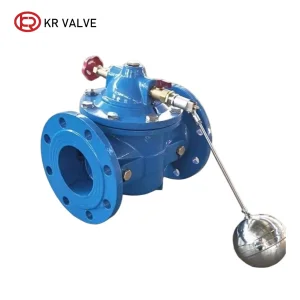
Custom China Suppliers Factory Ductile Iron Hydraulic Ball Remote Float Valve - 100X Series, DN50-DN300, PN16/PN25 Supplier, Manufacturer
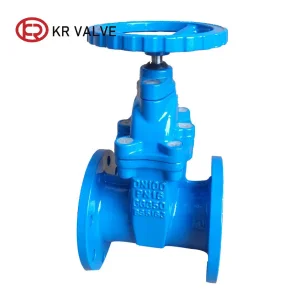
Custom China BS5163 Resilient Seated Gate Valve with Brass Stem Nut - Trusted Suppliers & Factory for OEM/ODM Solutions Suppliers, Manufacturer
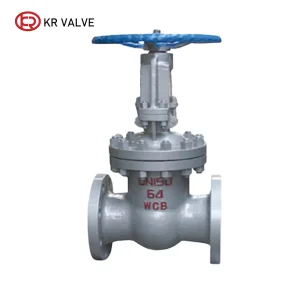
Custom Gate valve WCB material hard seat PN64 Supplier, Suppliers
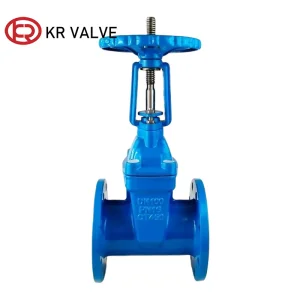
Wholesale Sluice valve DINF5 rising shaft type EPDM seal Supplier, Factory
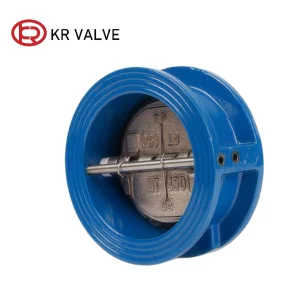
OEM Dual Plate Wafer Lug Check Valve 4 Inch - China Suppliers and Factory for Reliable Backflow Prevention Manufacturer, Factories
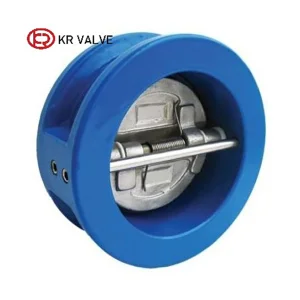
Wholesale China Suppliers Factory One Way Valve, Ductile/Cast Iron Body CF8 Disc, Wafer Type, DN40-DN700, PN6/PN25 Suppliers, Manufacturers
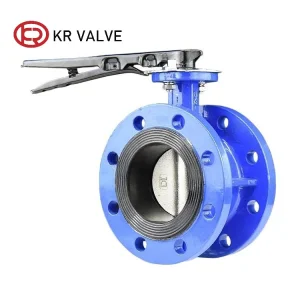
Wholesale China Suppliers Double Flange Butterfly Valve EPDM Seat - OEM/ODM Factory for DN40-DN2000 Sizes Supplier, Factories
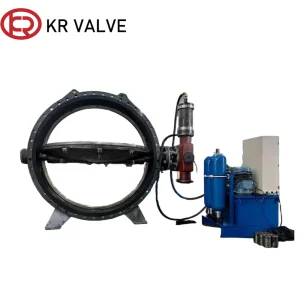
Wholesale Adjustable type hydraulic cylinder operated butterfly valve Manufacturers, Factory
Macro Market Analysis: Global Demand for OEM Double Port Air Release Valves
As mega-scale municipal water distribution projects and high-head industrial pumping networks expand globally, specifying high-performance double port combination air valves has become paramount for pipeline integrity.
Surge & Water Hammer Mitigation
Uncontrolled air pockets inside pressurized pipelines reduce carrying capacity by up to 30% and trigger catastrophic surge pressures. OEM Double Port Air Valves eliminate column separation and dissipate kinetic shockwaves during rapid line filling.
Strategic EPC Sourcing & TCO
Global Engineering, Procurement, and Construction (EPC) firms are transitioning from regional distributors to certified direct OEM manufacturing partners. Custom flange drilling, exact face-to-face dimensions, and direct factory pricing lower Total Cost of Ownership (TCO).
Regional Regulatory Compliance
Procurement teams demand localized compliance certification including AWWA C512 in North America, EN 1074-4 in Europe, and WRAS/NSF-61 for potable water safety across the Middle East and Asia-Pacific infrastructure markets.
Fluid Control Architecture & Orifice Dynamic Principles
Understanding the dual-function mechanism of Double Port Air Valves: Large Orifice venting during pipeline priming/draining and Small Orifice continuous air release under full working pressure.
1. The Dual-Port Dynamic Mechanism
A standard single-orifice air valve lacks the ability to handle both high-volume air displacement and tiny pressurized air bubble release simultaneously. An OEM Double Port Air Valve integrates two distinct operational chambers or a dual-float mechanism within a single compact body:
- Large Orifice Function (Air Release & Vacuum Breaker): When a pipeline is being filled with water, air inside the pipe is driven toward high points where the air valve is installed. The large orifice exhausts air at sonic velocities without premature slamming closed. Conversely, during power outages or sudden pump shutdowns, the large orifice opens instantly to admit atmospheric air, preventing pipe collapse caused by negative sub-atmospheric pressure.
- Small Orifice Function (Automatic Air Release under Pressure): During normal system operation, dissolved air comes out of solution and accumulates at the high points of the pipe under pressure. As air collects in the valve chamber, the liquid level drops, causing the secondary small float to lower. This opens a tiny precision orifice (typically 1.5mm to 3.0mm diameter) to purge air continuous without venting system liquid.
2. Anti-Slam & Kinetic Shock Protection
One of the main challenges in high-head transmission mains is the risk of "valve slamming"—where rising water pushes the float up violently after air exhausts, creating extreme localized pressure spikes. Advanced OEM Double Port Valves utilize an integrated Anti-Slam Surge Mechanism:
- Dual-Stage Exhaust Profile: When high-velocity air exhaust transitions to water arrival, a secondary dynamic disc creates an air buffer zone, slowing down the rising fluid column right before final seating.
- CFD-Optimized Internal Aerodynamics: Advanced Computational Fluid Dynamics (CFD) modeling guarantees that high-speed air streams do not create aerodynamic lift forces that prematurely blow the float shut before all air has escaped.
- Bubble-Tight Low-Pressure Sealing: High-grade resilient seating compounds (EPDM / NBR) ensure zero leakage even at low differential pressures down to 0.2 bar (3 psi).
Air Release & Vacuum Breaker Valve Type Comparison
Compare mechanical characteristics, flow capacities, and surge prevention efficacy across different air control valve configurations.
| Valve Type Category | Large Orifice Venting | Small Orifice Air Release | Surge & Anti-Slam Efficacy | Max Pressure Class | Recommended Application |
|---|---|---|---|---|---|
| Single Small Orifice Air Valve | None | Continuous under pressure | Low (Not designed for surge) | PN10 - PN25 | Pressurized water mains, small distribution loops |
| Single Large Orifice Vacuum Valve | High Capacity (Filling/Draining) | None | Moderate (Prone to premature closure) | PN10 - PN16 | Raw water intake lines, low-pressure drainage |
| OEM Standard Double Port Air Valve | High Capacity (Filling/Draining) | Continuous under pressure | Standard Dynamic Sealing | PN10 - PN40 | Municipal transmission mains, pump stations |
| Kinetic Anti-Slam Double Port Valve | Dual-Stage Controlled Exhaust | Continuous under pressure | Maximum Protection | PN16 - PN64 | High-head pumping lines, power plant cooling loops |
Industrial Application Scenarios & Engineering Solutions
How double port air release valves are customized for severe service environments across global infrastructure sectors.
Municipal Water Transmission
Installed at high elevation peaks along long-distance aqueducts to purge pockets of trapped air that collect at ridgelines. Eliminates localized head loss, reduces pump energy consumption, and protects pipes from vacuum collapse during maintenance shut-offs.
Seawater Desalination Plants
For aggressive saline media, OEM double port air valves are built with specialized metallurgical alloys such as Duplex Stainless Steel (2205/2507) or rubber-lined Ductile Iron bodies paired with Titanium float assemblies to withstand severe pitting and crevice corrosion.
Mining Slurry & Wastewater Systems
Featuring an elongated body structure that isolates solid particulate matter from the upper sealing mechanism. Prevents slurry debris from clogging the small orifice, ensuring continuous automatic air release even in heavy industrial effluents.
Technology Roadmap: Smart Valves & Next-Gen Manufacturing
The integration of IoT diagnostics, advanced polymer coatings, and automated fluid dynamics simulation in OEM double port valve production.
IoT-Enabled Acoustic & Pressure Transients Sensors
The next decade of fluid infrastructure relies on real-time data telemetry. Next-generation OEM double port air valves feature integrated acoustic bubble sensors and dynamic pressure transducers. These smart sensors measure the frequency of air release events, detect localized micro-surges, and transmit air pocket accumulation metrics directly to central SCADA systems via LoRaWAN or NB-IoT networks.
WRAS/NSF-61 Certified Fusion Bonded Epoxy Coating
Corrosion resistance determines lifetime valve reliability. Our factory utilizes fully automated electrostatic powder coating lines to apply Fusion Bonded Epoxy (FBE) with a uniform thickness exceeding 300 microns. Tested for zero pinholes under 1.5kV high-voltage spark testing, this coating complies with WRAS, NSF/ANSI 61, and DIN 30677-2 standards for potable drinking water safety.
Industrial Valve Engineering Series (Catalog Part II)
Discover our comprehensive collection of butterfly, check, gate, and specialized flow control valves produced under strict OEM/ODM standards.
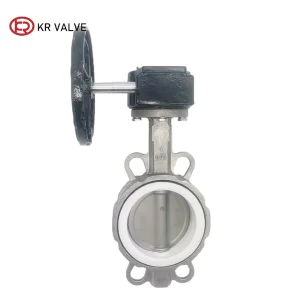
Wholesale China Suppliers D71X Stainless Steel PTFE Seat Wafer Butterfly Valve Factory - Size DN40-DN600, Pressure PN6-PN16 Suppliers, Factories
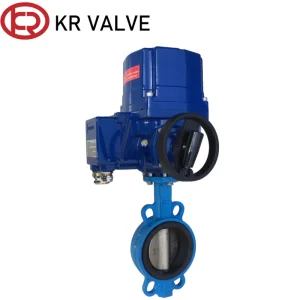
Wholesale Electric Actuated Butterfly Valve Wafer EPDM Seal Type Motorized Suppliers, Factory
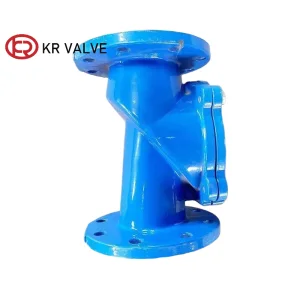
Wholesale Flange Rubber Disc Soft Seal Swing Check Valve Supplier, Suppliers
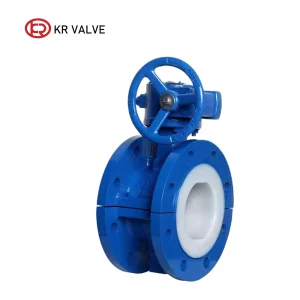
OEM China WCB Split Body Full PTFE Lined Concentric Butterfly Valve Suppliers - High Quality Factory Direct Factories, Factory
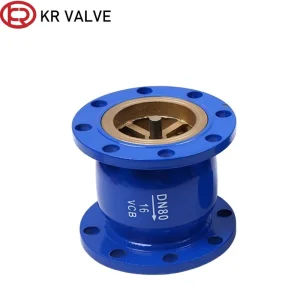
Wholesale WCB Silent One Way Valve PN25 - High Pressure Carbon Steel Check Valve from China Suppliers and Factory Supplier, Manufacturer
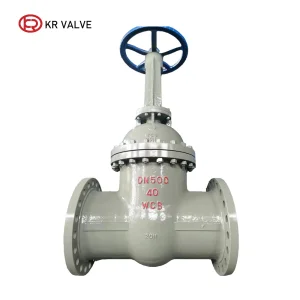
Custom Big size gate sluice valve WCB material PN64 DN500 Manufacturers, Factory
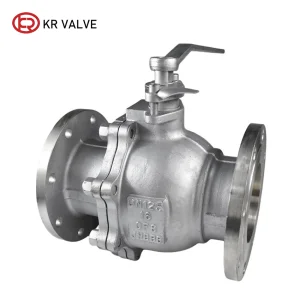
Custom China SS304 Floating Ball Valve Suppliers - Flange Type, Q41F Series, Pressure Rating PN16/PN25/150LB/300LB, Factory Direct Manufacturers, Factories
Wholesale BS5163 Gate Valve Soft Seal With Brass Stem Nut Supplier, Manufacturers
Factory Verification, Quality Assurance & OEM Customization
Rigorous multi-stage quality control protocols ensuring 100% compliance with international pressure testing and structural standards.
100% Hydrostatic & Pneumatic Shell Test
Every double port air valve produced undergoes rigorous shell pressure testing at 1.5 times the nominal working pressure ($1.5 \times PN$) and low-pressure elastomeric seat testing at 0.2 bar according to EN 12266-1 Rate A zero-leakage standard prior to shipment.
Material Traceability EN 10204 3.1
Full spectroscopic melt chemistry analysis and mechanical elongation testing are performed on all Ductile Iron (EN-GJS-500-7) and Stainless Steel (CF8/CF8M) castings. Official Mill Test Certificates (EN 10204 3.1) are supplied with every order consignment.
Custom OEM/ODM Branding & Specifications
We provide global OEM partners with tailored flange drilling (EN 1092-2, ANSI B16.5, BS4504), customized face-to-face dimensions, localized nameplate tagging, custom paint colors (RAL system), and export-grade sea-worthy wooden box packaging.
Frequently Asked Questions: Technical & Procurement
Expert engineering answers to common technical queries regarding double port air release valve sizing, installation, and OEM purchasing.
How do I calculate the required size for a Double Port Air Valve on a main pipeline?
Air valve sizing depends on the maximum line filling rate ($Q_{fill}$) and maximum gravity draining flow rate ($Q_{drain}$). As a general engineering rule of thumb under AWWA C512 guidelines, the nominal diameter of the large orifice air valve should be approximately 1/8th to 1/10th of the main pipeline's internal diameter. Advanced CFD transient analysis should be used for high-head surge protection.
What is the main difference between a combination air valve and a single-port valve?
A single-port valve typically performs only one dedicated function (either releasing small pressurized air bubbles or performing high-capacity air intake/exhaust). A Combination Double Port Air Valve combines both large and small orifice mechanisms into a single valve body, performing initial air exhaust during filling, continuous air purge under pressure, and vacuum breaking during drainage.
Why is an Anti-Slam device necessary on high-pressure water mains?
When high-speed air is discharged during rapid pipeline filling, the arriving water column can violently slam the float shut against its seat, generating extreme localized water hammer pressure spikes. An Anti-Slam mechanism introduces a secondary dynamic throttling disc that buffers air discharge velocity right before water arrives, reducing peak surge pressure by over 80%.
What body materials are recommended for brackish or seawater applications?
For seawater desalination or brackish water transmission, standard Ductile Iron with basic epoxy coating is insufficient. We recommend specifying Duplex Stainless Steel (2205/2507), CF8M (SS316) body castings, or high-build internal rilsan/rubber-lined Ductile Iron bodies combined with Solid Super Duplex internal floats and seats.
What minimum working pressure is required for zero-leakage sealing?
Standard double port air valves require a minimum differential system pressure of 0.2 bar to 0.5 bar (3 to 7 psi) to force the elastomeric seat tight against the float orifice. For low-pressure gravity systems, we engineer specialized ultra-soft EPDM elastomeric seats that seal tight at working pressures down to 0.1 bar.
What typical OEM production lead times and customization options are provided?
Standard catalog sizes (DN50 to DN200) are typically dispatched in 15 to 25 days. Custom OEM orders—including custom flange drilling standards (ANSI/DIN/BS), special epoxy paint shades (RAL system), and private customer brand casting marks—generally require a 30 to 40 day lead time depending on order batch size.