Industrial Flow Isolation & Control Products
Explore our precision-engineered industrial valve portfolio, manufactured to rigorous ISO, DIN, BS, and ANSI international standards for mission-critical operations.
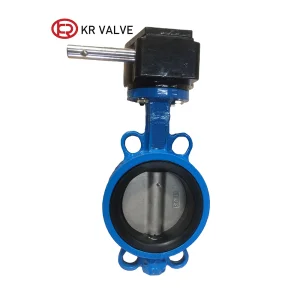
Architectural Engineering of OEM Extension Butterfly Valves
An authoritative technical analysis detailing the mechanics, thermal insulation physics, buried shaft mechanics, and severe service sealing paradigms governing extended stem butterfly valve designs.
Thermal Barrier & Packing Protection
In cryogenic LNG (-196°C) or superheated steam (+550°C) pipelines, direct actuator mounting subjects stem packing seals and positioners to destructive thermal extremes. Extension bonnets create an engineered thermal buffer column, maintaining gland packing within safe operating temperature envelopes to guarantee zero fugitive emissions.
Direct Burial & Vaultless Subterranean Access
Underground municipal water mains and district heating lines often lie several meters below ground level. OEM extended stem butterfly valves with IP68 top works and T-key operating extensions allow operators to actuate subterranean valves directly from ground level, eliminating costly, hazardous concrete chamber construction.
Pipe Insulation Lagging Clearance
Industrial steam, hot oil, and chilled water headers require thick external jacket insulation (up to 150mm). Standard butterfly valve top flanges become buried under lagging. Extended bonnets raise the ISO 5211 mounting pad cleanly above insulation layers, ensuring uninterrupted gear lever or actuator operation.
Extending a butterfly valve shaft introduces mechanical hysteresis and torsional deflection under high hydrodynamic loads. Premier OEM China factories employ Finite Element Analysis (FEA) to calculate the precise stem diameter and wall thickness of extension tubes. By utilizing intermediate self-lubricating PTFE/Bronze guide bushings spaced at critical harmonic lengths, OEM extension stem butterfly valves prevent stem whipping, eliminate shaft backlash, and preserve millisecond-precise seating torque alignment even on 3-meter extended drive shafts.
Why China OEM Factories Dominate Global Extension Valve Production
Unlocking unprecedented economic efficiency, advanced metallurgical customization, and rapid scale-up for global EPC projects through integrated Chinese flow control manufacturing clusters.
Integrated Foundry-to-Testing Supply Chains
China's major valve manufacturing hubs (such as Tianjin, Wenzhou, and Suzhou) combine advanced precision casting foundries, 5-axis CNC machining centers, specialized heat-treatment shops, and non-destructive testing labs within concise industrial corridors. This localized clustering dramatically reduces raw material lead times, enables instant prototype iterations for custom extended stem lengths, and minimizes global procurement costs by 30% to 45% compared to Western European alternatives without compromising quality standards.
Custom Metallurgical & Length Engineering
Off-the-shelf valves rarely meet unique site-specific elevation or thermal requirements. Leading Chinese OEM factories specialize in tailor-made extension stem configurations. Whether your project demands ASTM A216 WCB body with 17-4PH stainless steel extended shafts, ASTM A351 CF8M cryogenic extended bonnets, or GGG40 ductile iron subterranean valves with 4-meter telescopic extensions, Chinese OEM engineers provide custom CAD drawings, FEA stress validation, and bespoke manufacturing tailored to exact project datasheets.
Next-Generation Extension Valve Technological Trends
How digitalization, strict fugitive emission regulations, and extreme-environment energy transition projects are reshaping extension stem butterfly valve design.
Smart IoT Extension Actuation
Modern industrial facilities are integrating wireless smart actuators directly onto ISO 5211 extension top flanges. Equipped with real-time torque sensing, shaft vibration telemetry, and optical position encoders, these smart extension valves communicate via HART, Modbus, or PROFIBUS to predict packing wear and detect valve sticking before system breakdown occurs.
ISO 15848-1 Zero Fugitive Emissions
Global decarbonization goals have accelerated strict compliance with ISO 15848-1 and TA-Luft environmental standards. OEM factories now engineer extended bonnets with live-loaded Belleville spring washers and graphite/PTFE chevron stem packings, guaranteeing Class AH fugitive emission tightness for toxic, flammable, or volatile organic chemicals.
Hydrogen & Deep Cryogenic Adaptation
As global energy shifts toward liquid hydrogen (-253°C) and LNG transport, extension butterfly valves are undergoing rapid material transformation. Special austenitic stainless steel alloys (CF3M/316L) combined with extended vapor-column bonnets prevent seal embrittlement and preserve bubble-tight bi-directional isolation in clean energy infrastructure.
Localized Application Scenarios & System Integration
From freezing arctic gas terminals to buried municipal distribution networks, discover how extension stem butterfly valves deliver targeted fluid isolation across distinct engineering environments.
1. Underground Municipal Water & District Heating
Challenge: Main distribution pipes are laid 1.5 to 3.5 meters below ground to prevent freezing and traffic interference. Standard valves require large, costly concrete manholes that collect groundwater and complicate maintenance.
Solution: Ductile Iron (GGG40) OEM Lug or Flanged Extension Butterfly Valves with direct-burial waterproof shaft tubes. Features an IP68 fully sealed top gearbox and surface street cap for T-key operation, reducing installation capital expenditure by up to 60%.
2. Cryogenic LNG Terminals & Gas Liquefaction Plants
Challenge: Liquid Natural Gas stored at -196°C freezes standard elastomers and stem packing instantly, causing catastrophic gland leakage and valve stem freezing.
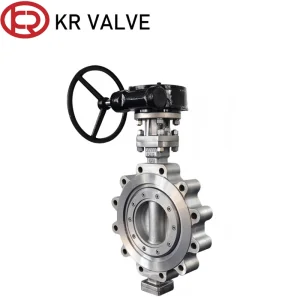
Solution: Triple Offset Stainless Steel (CF8M) Extension Bonnet Butterfly Valves. The extended thin-walled bonnet traps a standing gas column that warms up as it ascends, creating a natural thermal barrier that keeps upper gland packing at ambient temperature.
3. Thermal Power Generation & Waste Heat Recovery
Challenge: Superheated steam lines (+450°C to +550°C) radiate high heat, damaging electric actuator electronics and melting standard stem lubricant grease.
Solution: WCB/Cast Steel Double Eccentric Extension Shaft Butterfly Valves equipped with integral heat-dissipating cooling fins along the extended stem sleeve. Lowers mounting pad temperatures safely below 80°C for reliable electric or pneumatic actuator performance.
4. Chemical Tank Farms & Corrosive Fluid Skids
Challenge: Pipe racks inside chemical refineries are heavily lagged with fireproof insulation jackets, making standard valve handles inaccessible and causing chemical splatter hazards.
Solution: PTFE Lined / CF8M Wafer Extension Butterfly Valves. The extension stem elevates manual handwheels or pneumatic positioners cleanly above the insulation blanket, ensuring operator safety during line switching and fluid sampling.
Macro Engineering Selection & Procurement Parameters
Use this reference matrix to evaluate pressure ratings, material options, connection types, and extended stem sizing for worldwide EPC project compliance.
| Valve Type | Nominal Size | Pressure Class | Body Materials | Extension Height Range | Primary Standards |
|---|---|---|---|---|---|
| Resilient Seated Extension Valve | DN50 - DN1200 (2" - 48") | PN10 / PN16 / Class 150 | Ductile Iron (GGG40), Cast Iron (GG25) | 200 mm to 3000 mm | API 609 Cat. A, EN 593, ISO 5208 |
| Double Offset High Performance | DN80 - DN1600 (3" - 64") | PN16 / PN25 / Class 150/300 | Carbon Steel (WCB), Stainless Steel (CF8/CF8M) | 300 mm to 2500 mm | API 609 Cat. B, ASME B16.34, MSS SP-68 |
| Triple Offset Metal-Seated | DN100 - DN2400 (4" - 96") | PN25 - PN100 / Class 150 - 600 | WCB, LCB, CF8M, Duplex 2205, Hastelloy | 400 mm to 4000 mm | API 609 Cat. B, BS 5155, ISO 15848-1 |
| Cryogenic Extended Bonnet Valve | DN50 - DN1000 (2" - 40") | PN16 - PN63 / Class 150 - 300 | ASTM A351 CF8M, CF3M (316L) | 400 mm to 1500 mm (BS 6364 compliant) | BS 6364, MESC SPE 77/200, API 609 |
| Buried Service Telescopic Stem | DN100 - DN2000 (4" - 80") | PN10 / PN16 / PN25 | Ductile Iron GGG50, Fusion Bonded Epoxy | 500 mm to 5000 mm (Adjustable) | EN 1074, DIN 3352, AWWA C504 |
Global Procurement Vetting & Quality Audit Guide
How international procurement leads and EPC engineers mitigate risk, verify material integrity, and enforce strict factory acceptance testing (FAT) for OEM extension butterfly valves.
1. Material Traceability & EN 10204 3.1
Always demand EN 10204 3.1 Material Test Reports (MTR) covering chemical composition and mechanical tension testing for both the valve body casting and the internal drive extension rod. Verify Positive Material Identification (PMI) testing on high-alloy extended stems to prevent material substitution errors.
2. Extended Stem Concentricity & Torque FAT
During Factory Acceptance Testing (FAT), ensure the factory performs full-stroke torque testing with the extension shaft fully assembled. Measure concentric runout along the extension sleeve (tolerance < 0.05mm/m) to ensure zero binding or un-even seat wear under full differential pressure.
3. Export Protective Packaging & Rigging
Extended stem valves are vulnerable to shaft bending during ocean transit. Ensure your OEM factory utilizes reinforced IP65 crating with rigid steel channel bracing supporting the long extension bonnet, protective end-caps over flange faces, and VCI anti-rust vapor wrap for long-distance maritime freight.
Frequently Asked Technical Questions (FAQ)
In-depth answers provided by senior valve design engineers addressing critical selection, sizing, and installation queries.
What is the primary difference between an extension stem and an extended bonnet butterfly valve?
An extended bonnet is a thermal engineering feature manufactured in compliance with standards like BS 6364. It extends the pressure boundary of the valve body to create a gas/vapor column (in cryogenic service down to -196°C) or a heat dissipation zone (in high-temperature service up to +550°C), protecting the stem packing gland and actuator from destructive thermal degradation.
How does stem extension length affect operating torque calculation and actuator sizing?
To compensate, design engineers calculate the maximum allowable torsional stress ($\tau_{max} = \frac{T \cdot r}{J}$) and increase the stem diameter of long extensions. When sizing electric or pneumatic actuators for extension stem valves longer than 1.5 meters, engineers typically add a 25% to 35% safety torque margin above the standard breakaway seating torque to overcome additional bushing friction and shaft wind-up.
What standards govern cryogenic extension bonnet dimensions for LNG service?
For example, under BS 6364 for temperatures down to -196°C, a DN100 (4") valve typically requires a minimum bonnet extension length of 250mm to 350mm, ensuring that liquid LNG boils off into gas within the extension column, creating an insulating gas barrier that keeps the packing box warm enough to prevent ice formation and packing failure.
Can extended stem butterfly valves be installed horizontally in buried pipelines?
The extension housing tube then extends vertically upright via a 90-degree bevel gearbox or direct vertical extension connection reaching the surface cap.
What anti-corrosion protection is applied to OEM subterranean buried extension stems?
- Fusion Bonded Epoxy (FBE) Coating: Applied electrostatically to the outer extension sleeve tube to a thickness of at least 250 to 300 microns (EN 14901 compliant).
- Stainless Steel Drive Shafts: Internal extension rods constructed from 304, 316, or 17-4PH precipitation-hardened stainless steel.
- IP68 Sealed Top Boxes: Dual NBR/O-ring stem seals at the top operator junction preventing surface water ingress.
How do OEM factories customize ISO 5211 top flanges for direct actuator mounting?
This standardized geometry allows EPC contractors and automation distributors to mount any standard pneumatic actuator, electric motor operator, or manual worm gearbox directly onto the extension head without needing custom adapter brackets or on-site welding.
Complementary Valve & Strainer Solutions
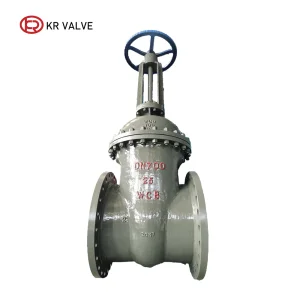
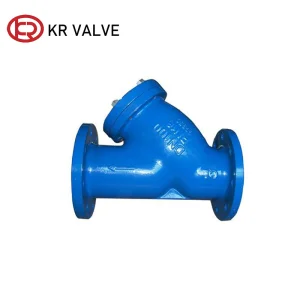
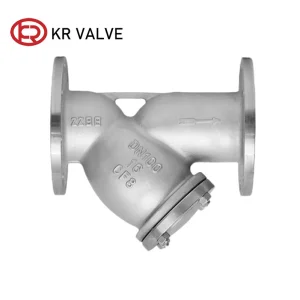
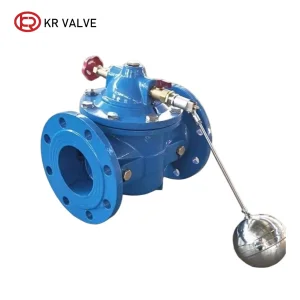
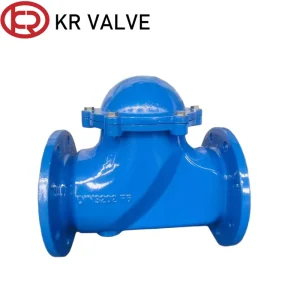
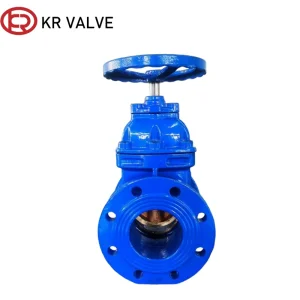
Explore matching gate, check, strainers, and hydraulic control valves to streamline your complete project sourcing under a unified OEM quality system.