Featured Industrial Valves & Accessories
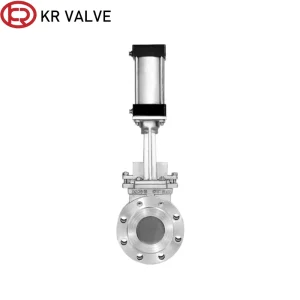
High-Performance OEM Knife Gate Valve Manufacturing: An Industry Analysis
In modern industrial processing—spanning pulp & paper, mineral slurry transport, municipal wastewater management, and chemical refining—fluid isolation challenges are dominated by high solids content, severe abrasion, corrosive media, and extreme line pressures. Standard gate and globe valves frequently fail in these severe services due to particulate entrapment in seat pockets and stem binding.
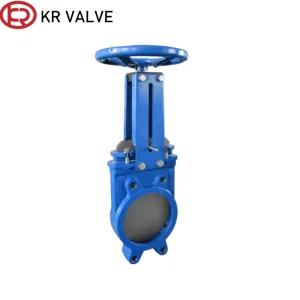
"A genuine knife gate valve design relies on a precision-machined, bevel-edged stainless steel or alloy gate capable of shearing through dense fibrous matrices, solid slurries, and viscous media. OEM manufacturing capabilities in China have evolved from simple dimensional copying to advanced computational fluid dynamics (CFD) simulation, metallurgical optimization, and strict adherence to global engineering standards such as MSS SP-81, ASME B16.34, and ISO 5208."
Shearing Mechanism
The bottom edge of the gate is precision-beveled into a razor-sharp wedge. Upon closing, it physically shears through high-consistency paper stock, mineral slurries, and scale without clogging the valve port.
Bi-Directional Sealing
Advanced elastomeric sleeves (EPDM, NBR, Viton) or reinforced PTFE seats enable zero-leakage isolation in both flow directions, eliminating backflow risks in complex piping networks.
Self-Cleaning Cavity
Designed with a pocketless full-bore body layout. When the gate travels downward, media is pushed downstream rather than compacting in dead zones, maintaining low operating torque.
Why Global Enterprises Partner with China Knife Gate Valve Factories
China’s industrial OEM sector has transformed into a high-precision manufacturing powerhouse. Tier-1 valve factories combine complete metallurgical foundries, 5-axis CNC machining, automated plasma welding, and rigorous non-destructive testing (NDT) to deliver global-grade valves at optimized lifecycle costs.
Integrated Foundry & Metallurgy
Leading Chinese factories operate in-house shell molding and silica-sol investment casting foundries. This permits custom metallurgical formulations ranging from Ductile Iron (GGG40/GGG50) and Carbon Steel (WCB) to Austenitic Stainless Steels (CF8, CF8M, CF3M), Duplex Stainless (2205, 2507), and nickel superalloys (Hastelloy C276, Titanium Gr. 2).
Precision CNC Machining & Surface Hardening
Dimensional tolerances are maintained within micrometers on multi-axis CNC horizontal machining centers. To survive highly abrasive slurries, gate surfaces undergo specialized hard-facing treatments including Stellite cobalt overlay, High-Velocity Oxygen Fuel (HVOF) chrome carbide spraying, Nitriding, and Hard Chrome Plating.
100% Non-Destructive & Pressure Testing
Every custom OEM valve undergoes hydrostatic shell testing (1.5x nominal pressure) and seat leakage testing per ISO 5208 Rate A (Zero Leakage) or MSS SP-81. NDT inspection capabilities include Radiographic Testing (RT), Ultrasonic Testing (UT), Liquid Penetrant Testing (PT), and Positive Material Identification (PMI).
Future Trends Driving Gate Knife Valve Innovation
As process plants automate, digitize, and adopt stringent environmental, social, and governance (ESG) standards, OEM knife gate manufacturers are integrating smart diagnostics, eco-friendly seating, and advanced actuation technologies.
IIoT Smart Actuation & Remote Telemetry
Modern knife gate valves are no longer purely mechanical devices. Integration with smart pneumatic positioners, electric actuators with Modbus/Profibus protocols, and wireless limit switches allows real-time monitoring of stem travel, seating torque, cycle counts, and predictive maintenance diagnostics.
Zero Fugitive Emission Packing Glands
Environmental standards such as ISO 15848-1 and TA-Luft demand near-zero stem emissions. OEM manufacturers utilize live-loaded PTFE or graphite packing systems, self-adjusting Belleville spring washers, and quad-lip scraper seals to prevent environmental contamination during continuous cycling.
High-Solid Polyurethane Sleeves
In ultra-abrasive mining tailings, standard rubbers wear out rapidly. Dual molded polyurethane (PU) sleeves offer superior tear resistance and resilience compared to traditional natural rubber, dramatically expanding mean time between failures (MTBF) in gold, copper, and iron ore extraction lines.
Engineering Selection Matrix: Resilient vs. Metal Seated Knife Gates
| Design Parameter | Resilient Rubber Sleeve / PTFE Seat | Metal-to-Metal Hard Seated (Stellite) |
|---|---|---|
| Sealing Leakage Rate | ISO 5208 Rate A (Bubble Tight / Zero Leakage) | MSS SP-81 / ISO 5208 Rate D (Controlled Drip) |
| Operating Temperature | -29°C to +180°C (Material Dependent) | Up to +600°C (High Temp Steam & Ash) |
| Slurry solids Content | Up to 60% Fine Particulates & Fibers | Coarse, Sharp, Heavy Scale & Rocks |
| Flow Direction | True Bi-Directional | Uni-Directional or Bi-Directional Options |
| Primary Target Application | Pulp Stock, Sewage, Fine Mining Slurry | Fly Ash, Cement, High-Temp Chemical Slags |
Field Application Scenarios & Engineering Integration
Gate knife valves engineered by OEM China factories are deployed across diverse harsh industrial environments worldwide. Custom configurations ensure seamless integration into existing plant piping manifolds.
High-Density Stock Isolation
Scenario: Handling 6% to 15% wood pulp consistency in bleach plants and digesters where standard valves plug instantly.
Solution: Wafer-style stainless steel (CF8M/CF3M) knife gate valves featuring bevel edge gates and self-cleaning pocketless bodies to shear stock fibers cleanly without jammed seat rings.
Tailings Slurry & Hydrocyclones
Scenario: Highly abrasive slurry streams under continuous pressure, causing severe body erosion in conventional piping.
Solution: Heavy-duty push-through rubber sleeve knife gate valves. Dual elastomeric sleeves compress against each other when open, sealing off the metallic body completely from abrasive wear.
Sludge Digestion & Grit Removal
Scenario: Raw sewage lines containing rags, plastic waste, sand, and organic solids.
Solution: Ductile iron body (GGG40) epoxy-coated knife gate valves with non-rising stems, EPDM resilient seats, and pneumatic double-acting actuators for automated plant control.
Coal Ash & FGD Scrubber Systems
Scenario: Bottom fly ash removal systems operating under elevated temperatures and corrosive flue gas desulfurization (FGD) media.
Solution: Hard-faced Stellite metallic seats with heat-resistant graphite packing glands and high-nickel alloy blades designed to survive thermal cycling and severe scale formation.
Viscous Polymer & Catalyst Feeders
Scenario: Corrosive acid slurries, crystallization lines, and polymer batch reactors.
Solution: Full PTFE lined knife gate valves or Duplex 2205 body construction ensuring complete immunity to pitting corrosion, chloride stress cracking, and chemical degradation.
Pneumatic Conveying Silos
Scenario: Dry powder, plastic pellets, cement, and granular food processing silos.
Solution: Bonneted knife gate valves designed to prevent dust leakage to the atmosphere while maintaining smooth gravity or pneumatic drop discharge through the valve throat.
Global Purchasing Framework: Selecting the Right OEM Factory
For international EPC contractors, valve distributors, and plant procurement directors, evaluating an OEM knife gate valve supplier requires a structured technical and quality audit.
1. International Standard Compliance
Ensure the OEM factory designs directly to international standards including MSS SP-81 (Stainless Steel, Bonnetless, Knife Gate Valves), ASME B16.34 (Valves Flanged, Threaded and Welding End), EN 1092-1 / DIN PN10/PN16 flange drilling, and API 598 / ISO 5208 testing protocols.
2. Customized OEM Engineering & CAD/CAM
Top OEM factories provide full engineering support, providing 2D GA drawings, 3D STEP models, finite element analysis (FEA) under pressure stress, and tailored actuation packages (pneumatic cylinders, bevel gearboxes, electric actuators, hydraulic power units).
3. Traceability & EN 10204 3.1 Certification
Every shipment must be accompanied by EN 10204 3.1 Material Test Certificates (MTC) detailing chemical heat analysis and mechanical strength testing, ensuring physical metallurgical authenticity from raw melt to finished assembly.
Frequently Asked Engineering Questions
Expert responses regarding knife gate valve selection, installation, and OEM custom manufacturing.
What is the primary difference between a conventional gate valve and a knife gate valve?
Conventional gate valves utilize a wedge-shaped gate seated inside a recessed pocket designed primarily for clean liquids or gases. Knife gate valves feature a thin, bevel-edged blade that cuts through solid slurries, fibers, and viscous fluids, seating against a pocketless bottom cavity or elastomeric sleeve to prevent particulate clogging.
When should I specify a push-through rubber sleeve design versus a metal-seated knife gate?
Push-through rubber sleeves (EPDM, Natural Rubber, Polyurethane) are ideal for abrasive mining slurries and water mixtures under 120°C, providing true bi-directional zero-leakage isolation. Metal-seated designs (Stellite hard-faced) are specified for high temperatures (up to 600°C), heavy scale, sharp rocks, fly ash, or severe abrasive conditions where elastomeric seals would quickly degrade.
Can Chinese OEM factories manufacture non-standard face-to-face dimensions and custom flange patterns?
Yes. Qualified Chinese OEM factories offer full custom pattern-making and CNC programming. Valves can be produced to match non-standard pipeline dimensions, custom face-to-face standards, or special flange bolt patterns (ASME B16.5 Class 150/300, EN 1092-1 PN10/PN16/PN25, JIS 10K/20K, and AS 2129 Table E).
What materials are recommended for severe corrosive chemical slurry lines?
For corrosive acidic or alkaline slurries, recommended body and blade materials include Austenitic Stainless Steel (CF8M / SS316L), Duplex Stainless Steel (2205 / 2507), or Super Austenitic alloys (254 SMO). Alternatively, full PTFE lined ductile iron bodies provide exceptional chemical resistance at an economical price point.
How does pneumatic actuator sizing differ for slurry knife gate valves compared to clean water valves?
Actuators on slurry knife gate valves require higher thrust safety margins (typically 30% to 50% safety factor above nominal calculation). Extra force is required to overcome gate-to-packing friction, media packing resistance, and the shear force needed to cut through settled solids accumulated at the bottom of the body throat.
What is the typical lead time for custom OEM knife gate valve manufacturing in China?
Standard catalog configurations in ductile iron or stainless steel are typically delivered in 2 to 3 weeks. Custom OEM orders requiring special alloy castings, non-standard dimensions, or automated control packages generally range between 4 to 6 weeks, complete with full hydro testing, painting, and export plywood casing.
Explore Our Full Range of Pipeline Control Valves