
Featured OEM Valve Innovations
Engineered for extreme pressure gradients, zero-leakage isolation, and prolonged service longevity across municipal, chemical, and energy infrastructure.
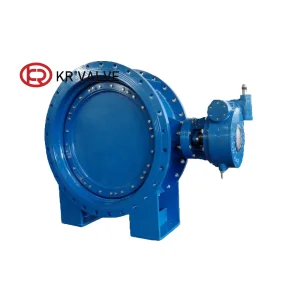
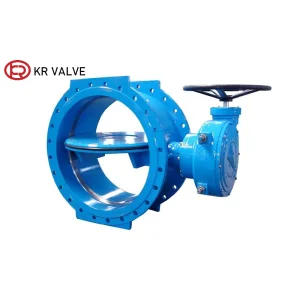
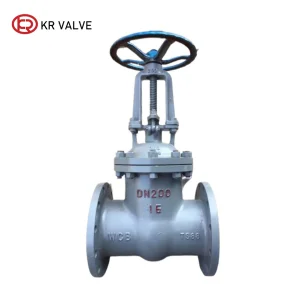
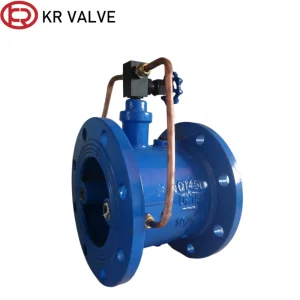
Global Industry Trends: Stainless Steel Butterfly Valves
Analyzing macro-level technological transitions, material science breakthroughs, and zero-emission directives shaping next-generation valve manufacturing.
The global market for industrial valves is experiencing a profound paradigm shift driven by stringent environmental mandates, decarbonization goals, and the imperative for absolute process safety. Among flow control solutions, Stainless Steel (SS) Butterfly Valves have emerged as the preferred architectural choice for modern process engineers. Modern OEM factories must evolve beyond simple casting to deliver high-performance, corrosion-resistant valve assemblies engineered for multi-phase fluids, high thermal cycling, and aggressive chemical environments.
Duplex & Super Austenitic Alloys
Standard CF8 (SS304) and CF8M (SS316) are increasingly augmented by Duplex 2205, Super Duplex 2507, and 6-Moly alloys. These materials offer superior Resistance Equivalent Numbers (PREN > 40), eliminating pitting and crevice corrosion in high-chloride desalination and offshore environments.
Triple-Offset Geometry
Moving from concentric soft-seated designs to triple eccentric (triple offset) metal-to-metal seating geometries. This architecture eliminates friction during rotation, allowing zero-leakage (API 598 bidirectionally) performance across extreme ranges from -196°C cryogenic up to +650°C.
Digital Twin & IIoT Integration
Next-gen OEM manufacturers embed smart sensors within valve body bonnets. Real-time acoustic emissions, stem torque variance, and vibration metrics feed into predictive maintenance algorithms, preventing catastrophic valve seal failures in automated processing plants.
Global Procurement Intent & Enterprise Sourcing
Deconstructing the compliance requirements, total cost of ownership (TCO) matrices, and risk mitigation strategies expected by Fortune 500 EPC contractors.
Procurement directors and chief engineers do not evaluate valve factories solely on upfront unit cost. Sourcing high-integrity SS butterfly valves requires rigorous evaluation of technical credentials, material traceability, and regulatory compliance. International buyers mandate strict adherence to global standards to guarantee long-term operational uptime.
| Evaluation Parameter | Standard / Certification | Technical Baseline Requirement | Impact on Procurement Safety |
|---|---|---|---|
| Material Traceability | EN 10204 3.1 / 3.2 MTR | 100% heat-lot traceability with spectrographic chemical analysis | Prevents material substitution and intergranular corrosion failure. |
| Fugitive Emissions | ISO 15848-1 / TA-Luft | Class AH stem packing seals holding leaks below 10^-5 mbar.l/s | Ensures compliance with global ESG directives and toxic media containment. |
| Fire Safety Design | API 607 / ISO 10497 | Secondary metal-to-metal seating upon burn-out of primary soft seals | Maintains pressure integrity during refinery or chemical plant fires. |
| Pressure & Leak Testing | API 598 / EN 12266-1 | Shell hydro-testing at 1.5x PN; high-pressure air seat testing at 1.1x PN | Guarantees zero shell porosity and zero-bubble seat isolation before delivery. |
| Hygienic / Potable Approval | FDA 21 CFR / NSF 61 / WRAS | Virgin RPTFE/EPDM seat materials with mirror-polished disc surfaces (<0.4μm Ra) | Mandatory for food, beverage, biopharma, and municipal drinking water projects. |
China Industry 4.0: Supply Chain Resilience & Efficiency
How modernized Chinese valve foundries leverage smart manufacturing automation, vertical integration, and cluster logistics to lead the global supply chain.
The global industrial fluid control ecosystem relies heavily on China’s advanced valve manufacturing infrastructure. China's shift into Industry 4.0 Smart Manufacturing has fundamentally transformed how SS butterfly valves are cast, machined, assembled, and tested. Factories in manufacturing clusters like Tianjin, Wenzhou, and Ningbo offer unmatched supply chain resilience, combining high-volume production scalability with customized OEM engineering.
Precision Silica Sol Investment Casting
Modern Chinese OEM foundries utilize automated silica sol investment casting rather than traditional sand casting. This process yields superior surface finishes (RMS 125-200), eliminates internal structural voids, and preserves precise metallurgical ratios for CF8M/CF3M alloys.
5-Axis Flexible CNC Machining
Multi-axis CNC machining centers finish valve body seat contours, shaft bore alignments, and disc sealing edges in a single setup clamping. This guarantees geometric tolerance precision within microns, drastically reducing operating torque and extend seat lifespan.
Vertical Integration & Logistics Hubs
By housing pattern making, casting, heat treatment, machining, vulcanization, assembly, and pressure testing within integrated industrial zones, Chinese factories reduce intermediate transportation delays, providing fast-track deliveries to global ports.
Technical Architecture: Concentric vs. Offset Mechanics
Selecting the optimal mechanical design, offset shaft configuration, and seat seal compound based on fluid media characteristics and system pressure.
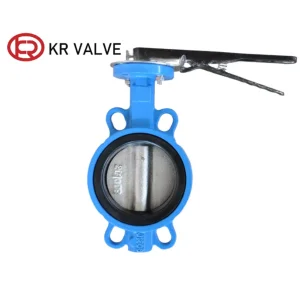
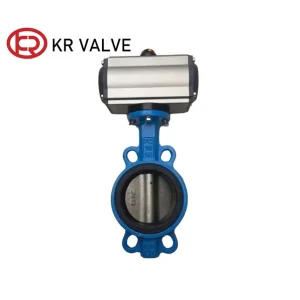
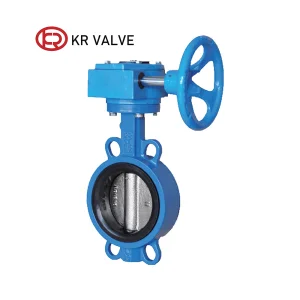
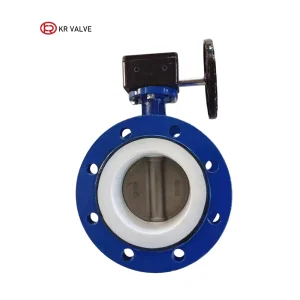
Understanding the kinematic principles of butterfly valve operation is critical for system reliability. OEM factories customize body structures (Wafer, Lug, Flanged, U-Section) and disc displacement geometry based on operating conditions:
1. Concentric (Zero Offset)
Design: The stem axis aligns centered in the middle of the disc seal and body bore.
Sealing: Resilient soft seats (EPDM, NBR, Viton, PTFE).
Best For: Low to medium pressure water distribution, HVAC, food handling, and mild chemicals (up to PN16 / 150LB). Provides tight shut-off with low initial torque.
2. Double Eccentric (Double Offset)
Design: Stem axis offset behind the seat center and to one side of the pipe centerline.
Sealing: High-performance RPTFE or stainless steel metal seats.
Best For: High-frequency cycling, steam lines, municipal water mains (DN200-DN3000). The double offset lifts the disc off the seat during opening, dramatically reducing seat wear.
3. Triple Eccentric (Triple Offset / TOV)
Design: Adds a third offset angle to the seat cone geometry, creating friction-free rotation.
Sealing: Laminated SS316 + Graphite or solid Stellite metal-to-metal seal.
Best For: Severe service, toxic gas isolation, refinery hydrocrackers, and cryogenic LNG applications requiring zero-leakage bidirectionally under high pressures (>PN100 / 600LB).
Global Industrial & Localized Application Landscapes
Deploying specialized stainless steel flow control hardware across high-stress commercial, industrial, and municipal infrastructure worldwide.
Desalination & Marine Fluids
SWRO (Seawater Reverse Osmosis) plants demand CF8M/Duplex 2205 body constructions. Their inherent resistance to chloride pitting ensures uninterrupted performance under continuous high-velocity flow rates exceeding 5 m/s.
Chemical Processing & Acids
Handling aggressive media like sulfuric, nitric, or organic acids requires concentric stainless steel bodies lined with thick RPTFE or PFA liners. This creates a complete corrosion barrier between fluid media and metal housing.
Hygienic Food, Beverage & Pharma
Polished CF8M sanitary butterfly valves utilize FDA-grade EPDM or Silicone seats. Smooth internal contours eliminate media entrapment, allowing standard CIP (Clean-In-Place) and SIP (Steam-In-Place) sterilization cycles.
Extended Commercial & Industrial OEM Product Line
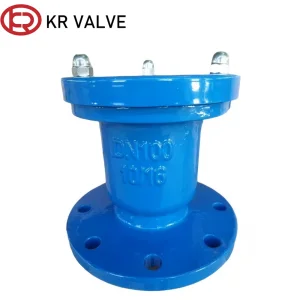
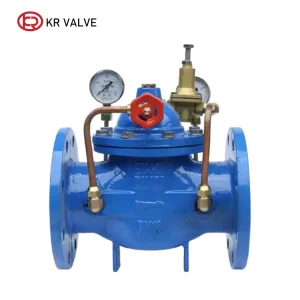
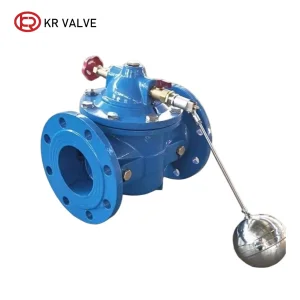
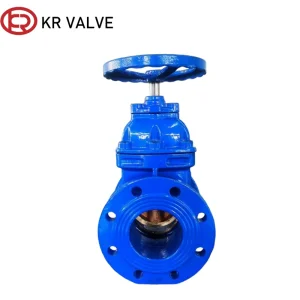
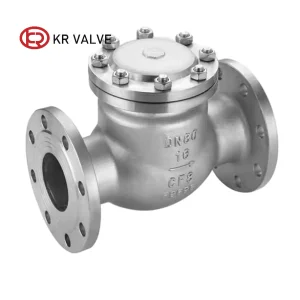
Explore our complete catalog of precision gate, check, air exhaust, and hydraulic control valves engineered for industrial piping networks.
Frequently Asked Questions (Technical Sourcing FAQ)
Expert engineering answers addressing common questions regarding material selection, OEM customization, compliance standards, and lead times.