Precision Flow Control & Valve Series
Direct OEM factory manufacturing covering isolation, air discharge, backflow prevention, and specialized municipal & industrial valve solutions.
Executive Summary & Core Mechanics of Two Port Air Valves
Understanding fluid dynamic transient control, thermodynamic air evacuation, and the dual roles of 2-port directional and air release valve engineering.
Dual Functional Intent
In industrial fluid and pneumatic engineering, an OEM two port air valve refers to both 2-port 2-position (2/2-way) directional pneumatic valves and 2-port automatic air release/compound exhaust valves designed for pipeline surge and pressure management.
Surge & Transient Protection
Trapped pockets of air in liquid transmission mains cause localized pressure spikes, severe pump cavitation, flow resistance up to 30%, and catastrophic water hammer events. Two port air valves manage rapid air expulsion during line filling and automatic air intake during line draining.
Custom OEM Advantage
Off-the-shelf valves frequently fail due to unmatched discharge coefficients ($C_d$), incorrect sealing elastomers, or non-compliant flange standards. Professional OEM suppliers deliver tailor-made body metallurgy, dynamic float kinetics, and pressure ratings tuned to project specs.
Information Gain Insight: Kinetic Discharge vs. Micro-Venting Under Pressure
A primary failure mode in water distribution networks is the misapplication of single-orifice vs. double-orifice two-port air valves. During system initial filling, large volumes of air must be vented rapidly through a wide kinetic orifice. Once pressurized, the large orifice closes, and smaller micro-orifices vent entrained dissolved gases under operating pressures up to 40 bar without causing fluid blow-outs.
Architecture, Orifice Kinetics & Valve Mechanics
Technical blueprint analyzing float mechanics, direct-acting vs pilot-operated 2-port structures, and CARX high-speed compound release dynamics.
1. Kinetic Air Release Mechanism
Utilizes a precision-engineered internal float (304 Stainless Steel or High-Density Polypropylene) suspended in a lightweight ductile iron (GGG40) or stainless steel shell. High-velocity air currents bypass the float during initial pump startup, sealing tightly only when liquid enters the chamber.
2. Compound Exhaust (CARX Series)
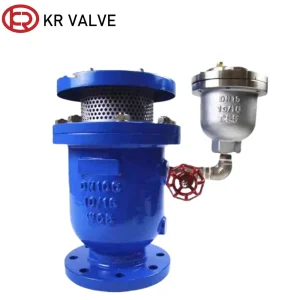
Combines high-speed air intake/exhaust with continuous micro-air discharge. The secondary orifice operates via a lever-weighted mechanism that overcomes system hydraulic pressures, opening under sub-atmospheric conditions to eliminate vacuum collapse.
3. 2/2-Way Directional Control
For industrial automation and compressed air lines, 2-port solenoid or pneumatic valves control linear airflow. Engineered with zero-leakage PTFE/Viton seats, direct-acting plungers, or internal pilot diaphragms for high-frequency cycling.
Comprehensive Technical Engineering Parameter Matrix
| Valve Architecture | Nominal Sizes (DN) | Pressure Class | Body Material Options | Seal / Seat Standard | Primary Industrial Duty |
|---|---|---|---|---|---|
| CARX High-Speed Air Valve | DN25 - DN300 (1" - 12") | PN10 / PN16 / PN25 | Ductile Iron GGG40 / CF8 SS | EPDM / NBR Soft Seal | Municipal Water Mains & Pump Stations |
| 2/2 Direct-Acting Solenoid Valve | DN8 - DN50 (1/4" - 2") | 0 - 40 Bar (ANSI 300) | WCB Cast Steel / SS316 | PTFE / Viton High-Temp | Pneumatic Automation & Chemical Lines |
| Compound Air & Vacuum Valve | DN50 - DN200 (2" - 8") | PN16 / PN40 / Class 150 | Ductile Iron / WCB / CF8M | 304 SS Float / EPDM Seat | Raw Water Transmission & Hydro-Power |
| Rubber Flap Backflow 2-Port Valve | DN50 - DN600 (2" - 24") | PN10 / PN16 | Cast Iron / GGG50 | NBR Encapsulated Disc | Wastewater Lift Stations & Slurry Piping |
Global Commercial Landscape & Macro-Industry Demand
Strategic market analysis: How global infrastructure upgrades, smart city initiatives, and automation drive requirement for verified OEM two port air valve suppliers.
North American & European Municipal Networks
Aging urban water infrastructures require high-durability replacement air valves conforming to AWWA C512 and BS EN 1074-4 standards. Strict requirements for lead-free certifications and WRAS/NSF-61 approved coatings drive procurement toward certified OEM suppliers.
Asia-Pacific Industrial Hub Expansion
Rapid expansion in semiconductor manufacturing, chemical processing, and mega-scale desalination plants across Eastern Asia and the Middle East demands high-frequency 2-port pneumatic control valves capable of handling corrosive media and extreme duty cycles.
OEM Supply Chain Optimization
Global EPC contractors are shifting away from fragmented multi-vendor procurement to unified manufacturing partners (such as KR Valve Tianjin) capable of delivering turnkey packages combining air valves, butterfly valves, gate valves, and strainers.
Custom OEM/ODM Technical Capabilities & Precision Manufacturing
Detailed examination of metallurgical casting, 5-axis CNC machining, electrostatic epoxy coating, and custom private-label branding capabilities.
Advanced Casting Alloys
Ductile Iron (EN-GJS-400-15 / GGG40), WCB Carbon Steel, CF8 (304 SS), CF8M (316 SS), and specialized Bronze alloys engineered for high tensile strength and burst resistance.
Precision CNC Tolerances
Internal seats, valve shafts, and float guide tracks machined to micron-level accuracy, ensuring Zero Seat Leakage under low pressure differential conditions (0.2 bar minimum sealing).
FBE Coating Protection
Electrostatic Fusion Bonded Epoxy (FBE) coating applied inside and out to a minimum thickness of 250 microns (AWWA C550), providing extreme resistance to corrosion and tuberculation.
Custom Flange Standards
OEM customization for global flange standards including ANSI B16.5 Class 150/300, EN 1092-2 PN10/16/25/40, BS4504, JIS 10K/16K, and custom non-standard bolt hole patterns.
Localized Application Scenarios & Industry Solutions
Deploying OEM two port air valves across diverse operational environments: From high-rise booster systems to long-distance raw water aqueducts.
1. Long-Distance Municipal Aqueducts
Installed at high elevation points (peaks) along water pipelines to purge accumulated air pockets continuously, preventing air binding and reducing hydraulic head loss across hundreds of kilometers of transmission mains.
2. High-Rise HVAC & Booster Pumps
In commercial building HVAC hydronic loops, 2-port automatic air valves prevent air locking in cooling towers and high-floor heat exchangers, maintaining maximum thermal transfer efficiency.
3. Wastewater Treatment & Slurry Lines
Specialized non-clogging air valves engineered with extended body housings and isolated float chambers prevent solid debris, grease, and slurry from fouling the internal sealing orifice.
International Compliance, Quality Assurance & Testing Protocols
Ensuring absolute field reliability: 100% factory inspection, rigorous pressure testing, and adherence to global standards.
Compliance Standards
- AWWA C512: Air Release, Air/Vacuum & Combination Air Valves
- BS EN 1074-4: Valves for Water Supply - Air Valves
- ISO 9001:2015: Quality Management System Certification
- CE / PED 2014/68/EU: Pressure Equipment Directive
Empirical Testing Protocols
- Hydrostatic Shell Test: Tested at 1.5x Nominal Pressure (e.g., 24 bar for PN16)
- Low-Pressure Seat Test: Verified tight sealing down to 0.2 bar
- Air Discharge Performance: Benchmarking coefficient of discharge ($C_d$)
- 100% Factory Inspection: Zero non-conforming units shipped
Localization & Logistics
- Customized Export Plywood Packaging per ISPM-15
- Complete Mill Test Certificates (EN 10204 3.1) provided
- Full traceability from raw melt heat number to final valve
- Optimized container loading from Tianjin Maritime Hub
Technology Roadmap: Next-Generation Air Valve Innovation (2026-2035)
Exploring IoT telemetry integration, dynamic anti-slam kinetic closures, and advanced composite materials.
IoT-Enabled Smart Sensing
Integration of wireless pressure transducers and acoustics sensors directly inside the air valve bonnet, transmitting real-time surge warnings and air volume release diagnostics to municipal SCADA systems.
Dynamic Anti-Slam Discs
Third-generation compound air valves feature dual-stage spring-assisted anti-slam mechanisms that prevent catastrophic valve closure shocks when high-velocity water columns reach the valve orifice.
Eco-Friendly Composites & VOC Compliance
Development of ultra-lightweight glass-filled nylon internal floats and zero-VOC water-based epoxy linings to comply with evolving global environmental regulations and reduce carbon footprints.
Frequently Asked Technical Questions
Expert answers addressing high-intent queries from pipeline designers, OEM buyers, and valve distributors.
What is the key functional difference between a 2-port directional air valve and a 2-port air release valve?
A 2-port directional air valve (such as a 2/2-way solenoid valve) is used in pneumatic control circuits to start or stop compressed airflow between two ports (inlet/outlet). In contrast, a 2-port air release valve for piping systems is installed vertically on liquid pipelines to automatically exhaust trapped air pockets or admit atmospheric air to prevent vacuum collapse. Both fall under the broader industry procurement query for two-port air valves depending on whether the application is pneumatic power or hydraulic pipeline protection.
How do I size an OEM two port air valve for a water main?
Air valve sizing depends on three core parameters: maximum pipe filling rate (m³/h or GPM), maximum pipeline drainage flow rate under gravity collapse, and working pressure differential. Typically, a combination air valve orifice diameter is sized to be 1/8th to 1/10th of the nominal pipeline diameter. For precise engineering sizing, consult KR Valve engineers to calculate required air discharge volume ($Q_{air}$) and differential pressure ($\Delta P$).
What seat elastomer should I choose: EPDM, NBR, or PTFE?
EPDM is ideal for potable water and HVAC lines (-20°C to +120°C) with high ozone resistance. NBR (Nitrile) is recommended for oily water, raw sewage, and fuel gas systems (-10°C to +80°C). PTFE (Teflon) is specified for aggressive chemicals, steam, and high-temperature pneumatic applications up to +200°C.
What customization options are available under your OEM manufacturing service?
As a specialized valve factory, we offer complete OEM customization including custom casting logo/branding, body alloy selection (Ductile Iron GGG40/50, WCB, CF8, CF8M), custom flange dimensions (ANSI, DIN, BS, JIS), specialized epoxy coating thickness, custom float weights, dynamic anti-surge additions, and specialized export packaging.
Why is an anti-surge mechanism critical in high-speed CARX exhaust valves?
During rapid air exhaustion during line filling, the water column behind the air pocket travels at high speed. When air evacuation finishes, water slams into the valve seat, creating extreme pressure surges (water hammer). An anti-surge mechanism limits air discharge velocity when pressure spikes, creating an air cushion that decelerates the advancing water column safely.
Complementary OEM Product Offerings
Consolidate your pipeline procurement with our comprehensive range of gate, check, strainers, and hydraulic control valves.