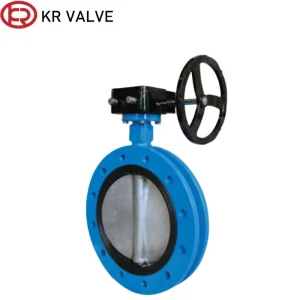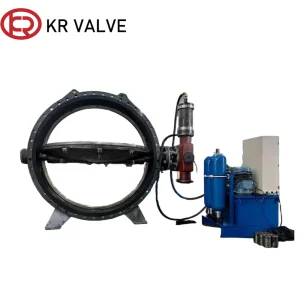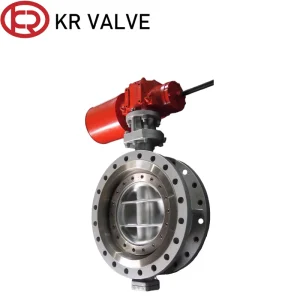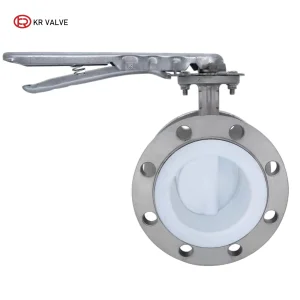
Top-Rated Industrial Flow Control Valve Series
Explore our engineering-certified, factory-direct industrial valves engineered for demanding fluid handling networks.
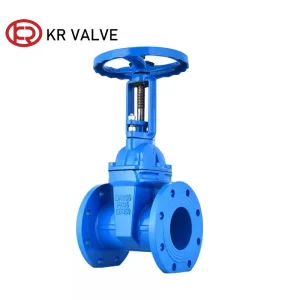
Global Commercial & Industrial Status of Stainless Steel Gate Valves
Analyzing high-pressure, corrosive fluid handling requirements across global EPC projects, chemical infrastructure, and municipal infrastructure expansion.
The global industrial valve market is experiencing a profound paradigm shift driven by the rapid expansion of modern chemical processing, liquefied natural gas (LNG) export terminals, seawater desalination plants, ultra-pure water systems for semiconductor fabrication, and the emerging green hydrogen economy. Within this demanding infrastructure landscape, **stainless steel gate valves** stand as critical baseline assets. Engineered primarily for full-bore isolation duty (on/off service), these valves provide straight-through flow paths with minimal pressure drop ($\Delta P$), high structural integrity, and exceptional resistance to aggressive chemicals and elevated temperatures.
Enterprise procurement officers, piping design engineers, and global EPC contractors increasingly look for reliable **wholesale gate valve stainless suppliers & manufacturers** capable of delivering compliant, precision-cast, and forged flow control components. Unlike carbon steel valves (such as ASTM A216 WCB), stainless steel gate valves utilize advanced chromium-nickel-molybdenum alloys (including CF8/SS304, CF8M/SS316, CF3M/SS316L, and Duplex SS grades) that establish a self-healing chromium oxide ($\text{Cr}_2\text{O}_3$) passive layer. This metallurgical characteristic prevents uniform corrosion, localized pitting, and intergranular attack in fluids ranging from organic acids to high-chloride brackish waters.
Petrochemical & Refining Demand
High-nickel and high-moly alloys engineered to resist sulfide stress cracking, polythionic acid SCC, and aggressive hydrocarbon streams operating up to Class 1500 pressure ratings.
Desalination & Marine Operations
Duplex (2205) and Super Duplex (2507) stainless steel gate valves specified for reverse osmosis (RO) high-pressure pumps, featuring Pitting Resistance Equivalent Numbers (PREN) > 40.
Cryogenic & Clean Energy Integration
Extended bonnet configurations designed for LNG bunkering and liquid hydrogen transport at temperatures as low as -196°C (-320°F) to protect stem packing integrity.
Comprehensive Stainless Steel Valve Material Matrix
Detailed chemical composition, ASTM casting/forging equivalents, and application selection frameworks for procurement managers.
| ASTM Casting Grade | Wrought / Forged Equivalent | UNS Alloy Code | Nominal Composition | PREN Rating | Primary Industrial Applications |
|---|---|---|---|---|---|
| ASTM A351 CF8 | ASTM A182 F304 / SS304 | J92600 / S30400 | 18% Cr - 8% Ni | ~19.0 | Municipal water, nitric acid, HVAC, mild chemical processing, food & beverage flow isolation. |
| ASTM A351 CF8M | ASTM A182 F316 / SS316 | J92900 / S31600 | 18% Cr - 10% Ni - 2.5% Mo | ~25.0 | Seawater handling, acetic acid, bleach production, pulp & paper, industrial chemical isolation. |
| ASTM A351 CF3M | ASTM A182 F316L / SS316L | J92800 / S316L00 | 18% Cr - 12% Ni - 2.5% Mo (Low C) | ~25.5 | Welded piping systems prone to intergranular corrosion, pharmaceutical sanitary loops, high-purity chemicals. |
| ASTM A890 4A (CD3MN) | ASTM A182 F51 / 2205 Duplex | J92205 / S31803 | 22% Cr - 5% Ni - 3% Mo - 0.17% N | ≥34.0 | High-chloride desalination, marine offshore platforms, wet gas scrubbers, high-stress piping. |
| ASTM A890 5A (CE3MN) | ASTM A182 F53 / 2507 Super Duplex | J93404 / S32750 | 25% Cr - 7% Ni - 4% Mo - 0.27% N | ≥42.0 | Subsea manifolds, phosphoric acid plants, aggressive halide environments, extreme erosion-corrosion. |
| ASTM A494 CN7M | Alloy 20 / Carpenter 20 | N08007 / N08020 | 20% Cr - 29% Ni - 2.5% Mo - 3.5% Cu | ~30.0 | Sulfuric acid production, pickling lines, high-concentration organic acid flow regulation. |
Technical Insight: Pitting Resistance Equivalent Number (PREN) Calculation
In high-chloride or marine environments, calculating the PREN value is critical for preventing localized pitting and crevice corrosion: $$\text{PREN} = \% \text{Cr} + 3.3(\% \text{Mo} + 0.5 \% \text{W}) + 16(\% \text{N})$$ For standard seawater applications, a PREN value exceeding 32 is recommended; for high-temperature brine or RO reject streams, Super Duplex stainless steel gate valves with a PREN > 40 are mandatory to ensure long-term operational lifespan.
API 600 vs. API 603 Design Architectures & Stem Packing Mechanics
Understanding structural wall thicknesses, wedge geometry options, and zero-emission packing technologies for zero-leakage compliance.
API 600 Heavy-Duty Bolted Bonnet Gate Valves
API 600 dictates heavy-duty wall thickness specifications for cast steel and stainless steel gate valves used in refinery and heavy chemical duty. Key structural characteristics include:
- Robust Wall Thickness: Provides substantial corrosion allowance and structural resistance against pipe bending moments.
- Stellite 6 Hardfacing: Sealing faces are cladded with Cobalt-base Stellite or SS316 overlay to prevent galling under high differential pressures.
- OS&Y Construction: Outside Screw and Yoke design keeps stem threads external to the process fluid, preventing thread corrosion and fluid contamination.
API 603 Light-Wall Stainless Steel Gate Valves
API 603 covers corrosion-resistant cast gate valves where stainless steel's high inherent corrosion resistance allows for optimized wall thicknesses per ASME B16.34 standards:
- Cost & Weight Efficiency: Reduces material weight by 15-30% compared to API 600, significantly lowering logistics costs for wholesale procurement.
- Integral Stainless Steel Seats: Body seats are frequently cast integrally or precision welded with CF8M/CF3M alloys for smooth fluid passage.
- Flexible Wedge Options: Flexible split-wedge design accommodates thermal binding and seat distortion under fluctuating line temperatures.
Fugitive Emission Control & Stem Packing Mechanics (ISO 15848-1 / API 622)
Fugitive emissions of volatile organic compounds (VOCs) and hazardous air pollutants account for over 60% of total plant leaks, with valve stem packing being the primary leakage vector. Professional **wholesale stainless steel gate valve manufacturers** utilize state-of-the-art packing sealing technology:
Die-Formed Flexible Graphite
Braided graphite end rings with zinc corrosion inhibitors prevent stem pitting while delivering thermal stability up to 650°C (1200°F).
Live-Loaded Belleville Springs
Maintain constant compressive force on the gland packing, compensating for thermal cycling, mechanical wear, and relaxation without manual retightening.
Chevron PTFE V-Ring Sets
Engineered for aggressive acid handling and sanitary pharmaceutical duty up to 200°C, providing ultra-low coefficient of friction (<0.05).
Localized Industry Application Scenarios & Deployment Frameworks
Custom engineering configurations tailored to specific operational environments across world-class industrial hubs.
Offshore Oil & Gas Platforms
Environment: Persian Gulf, North Sea, Gulf of Mexico high-salinity maritime atmospheres.
Key Spec: NACE MR0175/ISO 15156 compliant SS316L or 2205 Duplex body, duplex stem, marine epoxy outer coating, and API 6FA fire-safe certification. Prevents external pitting corrosion and sour gas hydrogen-induced cracking (HIC).
Bio-Pharm & Ultrapure Water Loops
Environment: Pharmaceutical plants across Western Europe & North America.
Key Spec: Low-carbon CF3M / SS316L body, electro-polished internal surfaces ($R_a < 0.38\,\mu\text{m}$), PTFE cavity fillers, and sanitary tri-clamp or flanged connections. Eliminates bio-film buildup and corrosion product contamination.
High-Pressure Chemical Processing
Environment: Nitric, acetic, and fertilizer synthesis facilities.
Key Spec: ASTM A351 CN7M (Alloy 20) or Hastelloy C276 trim, solid wedge, bolted bonnet, live-loaded stem packing. Guarantees long-term isolation integrity against hot oxidizing and reducing mineral acids.
Technology Roadmap: Next-Generation Stainless Steel Gate Valves (2025–2035)
Strategic technology developments transforming fluid containment through advanced metallurgy, digital intelligence, and additive manufacturing.
1. AI-Driven Smart Actuation & Digital Twins
Integration of wireless torque sensors, stem displacement transducers, and vibration monitors. Continuous diagnostic algorithms calculate real-time seat wear, stem packing friction, and predict preventative maintenance intervals before failure occurs.
2. Additive Manufacturing of Internal Trims
Utilizing Selective Laser Melting (SLM) 3D printing to fabricate complex internal cooling passages and lightweight, high-strength hollow wedges. Enables custom flow profiles and reduces material consumption while maintaining ASME B16.34 pressure ratings.
3. Diamond-Like Carbon (DLC) & Nano-Coatings
Application of plasma-assisted chemical vapor deposition (PACVD) hard coatings on stainless steel valve stems and wedge sealing surfaces. Reduces sliding friction coefficients down to 0.02 and completely eliminates metal-to-metal galling risks in dry gas loops.
Macro Engineering Sourcing & Quality Assurance Protocol
A standardized evaluation framework for procurement managers to verify supplier authority and product reliability.
Rigorous Quality Assurance & Non-Destructive Testing (NDT)
When sourcing stainless steel gate valves at wholesale quantities, ensuring casting integrity is paramount. Reliable manufacturers implement strict NDT protocols:
- Positive Material Identification (PMI): 100% X-ray fluorescence (XRF) spectrometer testing on all pressure-retaining bodies, bonnets, and stems to guarantee alloy composition.
- Radiographic Testing (RT) / Ultrasonic Testing (UT): Performed on high-pressure critical castings per ASME B16.34 Appendix I to detect internal voids, shrinkage, or porosity.
- Liquid Penetrant Inspection (PT): Performed on sealing faces and hardfaced welds to verify 100% freedom from surface micro-cracks per ASTM E165.
- Hydrostatic & Pneumatic Seat Testing: 100% factory pressure testing per API 598 (Shell test at 1.5x PN; High-pressure closure test at 1.1x PN; Low-pressure gas test at 80 PSI).
Total Cost of Ownership (TCO) Sourcing Calculator
Procurement decisions based solely on initial purchase price frequently result in elevated plant lifecycle costs. Evaluating wholesale suppliers requires a complete TCO analysis:
Partnering with a tier-1 OEM factory that integrates ISO 15848-1 certified live-loaded stem seals and precision CNC machined seating surfaces reduces unscheduled shutdown risks, extending mean time between failures (MTBF) from 24 months to over 84 months.
Frequently Asked Questions (FAQ) for Enterprise Valve Procurement
Expert engineering answers to common technical queries regarding stainless steel gate valve design, sourcing, and operation.
Additional Industrial Valve Series & OEM Components
Discover our complementary range of gate, check, strainers, and specialized hydraulic control valves.