
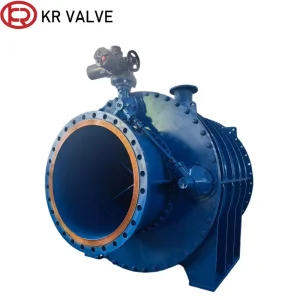
Primary Engineering Selection
Featured Conical & Heavy-Duty Control Valves
Precision-manufactured flow regulating and energy dissipation valve systems designed to ANSI, DIN, and BS standards for demanding hydraulic applications.
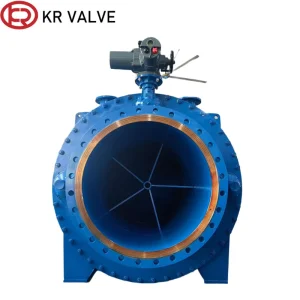
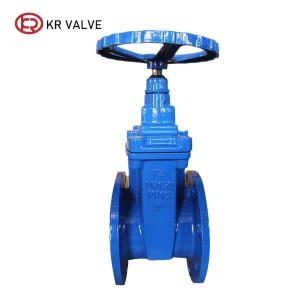
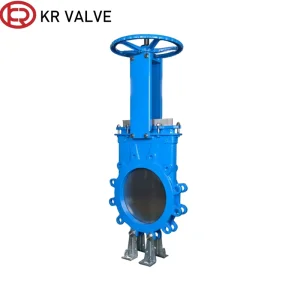
Technical Whitepaper Depth
The Mechanics of Conical Valves (Howell-Bunger Systems)
An engineering breakdown of energy dissipation, discharge coefficient optimization, and hydrodynamic stability under high dynamic pressure heads.
Radial Energy Dispersion
Conical valves (often termed Howell-Bunger or fixed-cone valves) dissipate kinetic energy by transforming a concentrated pipeline flow into an expanding, hollow radial jet spray. This geometric expansion dramatically increases the surface contact area with the atmosphere, maximizing kinetic energy reduction prior to basin impact.
Cavitation Index Mitigation
By venting water directly into ambient air or utilizing slotted hoods inside submerged stilling basins, conical valves shift the local fluid pressure well above the vapor pressure threshold ($P_v$). This prevents localized vapor bubble collapse, eliminating cavitation damage on the downstream body and conduit walls.
High Discharge Coefficient ($C_d$)
With optimized internal body ribs and hydrodynamic cone geometry, modern fixed-cone valves achieve discharge coefficients ($C_d$) ranging from 0.85 to 0.92 when fully open. This ensures maximum volumetric discharge capacity per nominal diameter ($DN$), reducing civil construction footprint.
Hydrodynamic Equation for Conical Valve Flow Capacity
The total discharge capacity ($Q$) for a fixed conical valve is precisely modeled by hydro-engineers using the localized head loss and opening percentage parameters:
Q = C_d \cdot A_0 \cdot \sqrt{2g \cdot H_{net}}
Where $C_d$ represents the stroke-dependent discharge coefficient, $A_0$ is the nominal port area ($\pi D^2 / 4$), $g$ is gravitational acceleration ($9.81 \, m/s^2$), and $H_{net}$ represents the net effective dynamic head upstream of the valve flange.
Infrastructure Deployments
Macro-Industry Solutions & Civil Applications
Providing engineered reliability across severe service environments, high-head reservoirs, and municipal distribution networks worldwide.
1. Hydropower & Reservoir Bottom Outlets
Deployed at dam bases and reservoir bypass tunnels, conical valves regulate environmental release flows, bottom sluicing, and flood control. Their ability to operate continuously at partial openings without mechanical chatter or structural fatigue makes them the primary defense against over-pressurization.
2. Turbine Bypass & Penstock Surge Protection
During sudden electrical grid load rejections, hydroelectric turbines must trip instantaneously. Conical valves act as fast-opening synchronous bypass gates, shedding massive hydraulic momentum within seconds while preventing destructive water hammer across the penstock pipeline.
3. Desalination Brine Outfalls & Marine Diffusers
Equipped with specialized Super Duplex (2507) or nickel-aluminum bronze internal cones, conical diffusers disperse high-salinity discharge into ocean waters evenly. The radial dispersion geometry accelerates dilution rates, preserving marine eco-systems.
4. Municipal Pressure Management Zones
Integrated with high-torque electric actuators and smart SCADA telemetry, large-bore conical valves regulate cross-basin municipal water transfer trunks, maintaining steady downstream hydraulic heads regardless of fluctuating reservoir levels.
Verified Manufacturing & Field Performance
DN4000
Max Bore Capacity
PN100
Max Pressure Rating
50,000+
Lifecycle Test Cycles
99.8%
Operational Reliability
Manufacturing Precision
China Factory 4.0: Supply Chain Resilience & Metallurgical Rigor
Leveraging Tianjin's heavy industrial manufacturing ecosystem to deliver high-tonnage casting, precision CNC machining, and rigorous NDT quality assurance.
Advanced Metallurgical Formulations
Our foundries utilize electric induction melting combined with spectro-chemical analysis to produce high-density Ductile Iron (QT500-7 / GGG50), WCB Cast Steel, and Austenitic Stainless Steels (CF8M, CF3M). Body integrity is verified via Radiographic (RT) and Ultrasonic Testing (UT).
5-Axis CNC & Large-Bore Boring
Critical seating surfaces and sliding sleeve gates are machined on multi-axis floor-type boring machines. This guarantees concentricity down to $\pm 0.02 \, mm$, ensuring zero binding forces during sleeve extension and bubble-tight resilient sealing.
Integrated Supply Chain Logistics
By controlling the complete manufacturing lifecycle—from patterns, raw casting, and heat treatment to final hydrostatic shell testing (1.5x PN)—we reduce production lead times by up to 35% compared to conventional European procurement channels.
Future-Proofing Technology
Technology Roadmap & Global Compliance
Pioneering smart digital twins, advanced surface coatings, and stringent international certification standards.
R&D Roadmap: Smart IoT-Enabled Conical Valves
- Integrated Acoustic Leak Detection: Piezo-electric sensors built directly into the fixed cone body to detect cavitation inception in real time.
- CFD Digital Twin Synchronization: Live pressure dynamic feeds mapped against Computational Fluid Dynamics models for real-time stroke position optimization.
- HVOF Tungsten Carbide Armor: High-Velocity Oxygen Fuel thermal spraying on cone seating edges to withstand sand-bearing river abrasion.
International Quality & Local Compliance
- AWWA C520 & DIN EN 1092-1: Flange dimensions, pressure ratings, and face-to-face standards engineered for direct cross-compatibility.
- CE PED 2014/68/EU & ISO 9001:2015: Full pressure equipment certification with complete EN 10204 3.1 material traceability certificates.
- WRAS & NSF-61 Certification: Non-toxic EPDM seals and fusion-bonded epoxy coatings (FBE) certified for municipal potable water infrastructure.
Buyer Procurement Intelligence
Frequently Asked Questions (FAQ)
Engineering clarity on technical selection, actuation sizing, and international delivery for project managers.
What is the primary difference between a fixed conical valve (Howell-Bunger) and a needle valve?
While both valves are used for high-head flow regulation, a fixed conical valve features a stationary central cone with an external sleeve gate that moves axially to open or close the discharge port. This layout vents flow outward radially into atmospheric air, making it far superior for high-volume free discharge and energy dissipation. Needle valves, conversely, utilize an internal needle plunger moving within a closed body, making them better suited for inline pressure regulation within continuous closed piping networks.
How does a conical valve prevent cavitation during continuous high-head throttling?
Conical valves eliminate cavitation by discharging fluid into an open atmospheric environment or an aerated energy dissipation hood. Because the high-velocity jet is completely surrounded by air, ambient atmospheric pressure prevents the local static head from dropping below the fluid's vapor pressure ($P_v$). In submerged applications, customized aeration tubes inject micro-air bubbles into the shear layer to cushion bubble collapse.
What actuation systems are available for remote dam outlet installations?
We supply three primary actuation options: (1) Twin Electro-Hydraulic Cylinders with hydraulic power units (HPU) for fast fail-safe emergency shutdown via accumulator tanks; (2) Multi-turn Electric Actuators (AUMA/SIPOS compliant) with dual synchronized screw jacks; and (3) Manual Bevel Gearboxes for smaller emergency bypass systems.
Can conical valves be customized for abrasive silt or sand-laden water conditions?
Yes. For silt-heavy river basins, we engineer the cone structure using solid Stainless Steel CF8M or overlay high-wear zones with Stellite 6 hard-facing. Sliding guides are fitted with self-lubricating bronze-graphite wear strips, and the sleeve lip is reinforced with replaceable stainless steel cutting rings.
What quality verification documentation accompanies international shipments?
Every shipment includes a comprehensive Quality Dossier containing EN 10204 3.1 Material Test Reports (MTR), Hydrostatic Shell & Seat Inspection Certificates, NDT (UT/PT) Examination Reports, Epoxy Coating Thickness Calibration Records, and Operating & Maintenance (O&M) manuals.
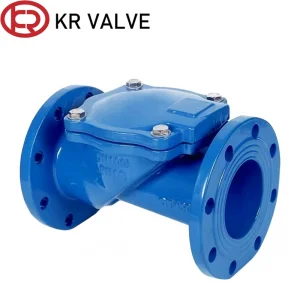
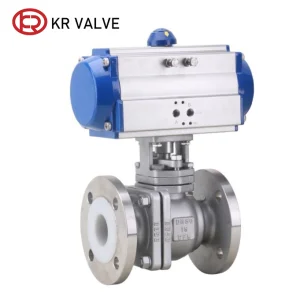
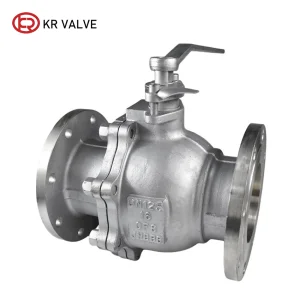
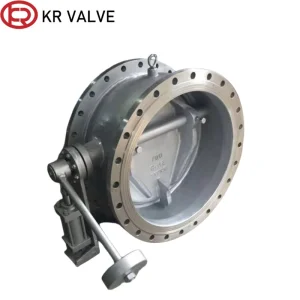
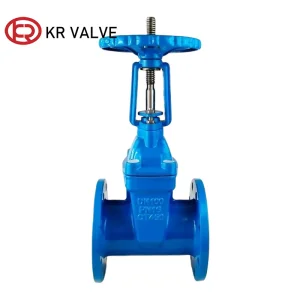
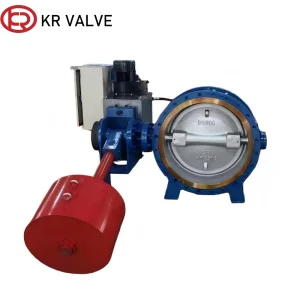
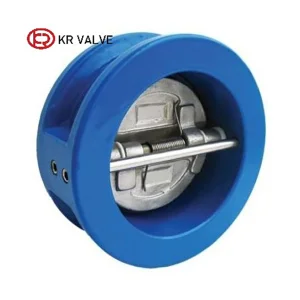
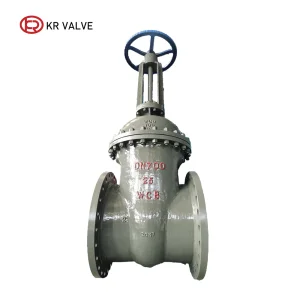
Complementary Pipeline System Valves
Industrial Isolation & System Protection Matrix
Complete pipeline control packages manufactured to pair seamlessly with primary energy dissipation systems.
Need Engineered Conical Valve Specifications for Your Project?
Consult directly with our senior hydraulic valve engineering team. We provide complete 2D/3D CAD drawings, hydro-dynamic flow sizing, and customized technical quotations within 24 hours.