
Primary Conical & High-Pressure Flow Control Valves
Precision-engineered pressure relief, silent check, and discharge cone valves for severe Mexican hydraulic applications.
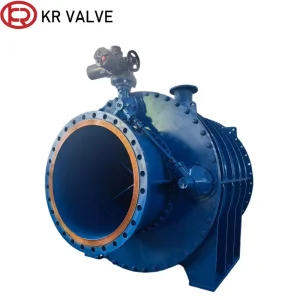
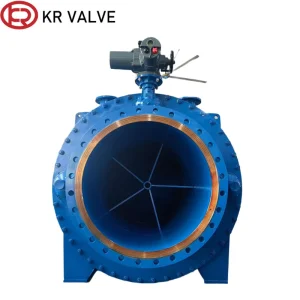
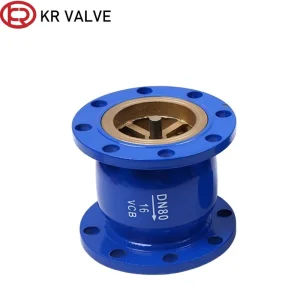
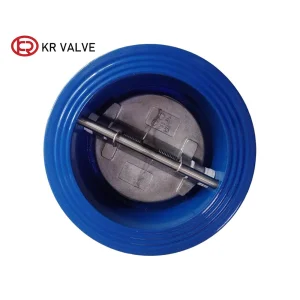
Commercial & Industrial Landscape for Conical Valves in Mexico
Analyzing the hydraulic, energy, and industrial forces driving demand for customized flow control solutions across Mexico's key economic hubs.
The Nearshoring (T-MEC) Manufacturing Expansion
Mexico's rapid industrialization—fueled by USMCA nearshoring investments in states like Nuevo León (Monterrey), Coahuila (Saltillo), and Guanajuato (Querétaro / Bajío)—has accelerated the construction of large-scale water treatment plants, industrial cooling loops, and high-pressure fluid lines. Modern manufacturing facilities require heavy-duty custom conical valves (Howell-Bunger type) to safely manage huge differential pressures during discharge cycles, eliminating destructive water hammer and structural resonance in piping networks.
National Water Infrastructure Modernization (CONAGUA & SACMEX)
Faced with growing urban water stress, federal authorities such as CONAGUA (Comisión Nacional del Agua) and municipal entities like SACMEX (Sistema de Aguas de la Ciudad de México) are executing major upgrades on critical water transport arteries, including the Cutzamala System and El Cuchillo II Aqueduct. Conical energy dissipation valves play a vital role at reservoir discharge outlets and break-pressure tanks, protecting downstream concrete conduits from high-velocity hydraulic scouring.
Extractive Industries & Energy Generation Infrastructure
Mexico's vast mining belt—spanning Sonora, Chihuahua, and Zacatecas—houses some of the world's largest open-pit copper and silver operations (e.g., Grupo México facilities). These sites require custom-engineered conical sleeve valves capable of handling abrasive tailings discharge and slurry flow without valve seat erosion. Concurrently, the Comisión Federal de Electricidad (CFE) relies on large-bore fixed-cone valves for crest spillways, bottom outlet bypasses, and turbine bypass control in major hydroelectric complexes such as the Grijalva River cascade (Chicoasén, Malpaso, Peñitas).
Macro-Industrial Engineering Solutions: The Physics of Conical Valves
How specialized conical energy dissipation designs resolve extreme pressure differentials, cavitation erosion, and hydraulic vibration.
Controlled Kinetic Energy Dissipation
When high-head water is discharged from dams or high-pressure pipelines, it carries massive kinetic energy capable of destroying downstream structures. A conical valve dissipates this energy by splitting the fluid into an expanding hollow cone spray, allowing atmospheric drag to absorb the kinetic force over a wide surface area before hitting the plunge pool.
Cavitation Index ($\sigma$) Optimization
In high-velocity fluid flow, local pressure can drop below the vapor pressure of water, forming micro-bubbles that implode violently against valve walls. Our engineering team utilizes Computational Fluid Dynamics (CFD) modeling to optimize body geometry and aeration ports, maintaining the cavitation index safely above critical levels ($\sigma > \sigma_{crit}$).
Linear Flow Characteristic Curve
Unlike standard butterfly or gate valves which exhibit highly non-linear flow control near closure, custom conical sleeve valves provide near-linear discharge coefficients ($C_d \approx 0.75-0.85$) throughout 90% of their stroke. This linear response permits ultra-precise automated flow throttling via SCADA controllers.
Engineering Parameter Specifications for Custom Conical Valves
| Design Parameter | Standard Specification Range | Custom Engineering Capability | Relevant Mexican/Int'l Standard |
|---|---|---|---|
| Nominal Diameter (DN) | DN200 – DN2200 (8" to 88") | Up to DN3200 (128") custom cast/welded | AWWA C520 / DIN 3202 |
| Pressure Rating (PN) | PN10, PN16, PN25, PN40 | PN63, PN100 (Class 600) | NOM-001-CNA / ASME B16.34 |
| Body Materials | Ductile Iron GGG40/50, WCB Steel | Super Duplex SS, CF8M, Monel alloy | ASTM A536 / ASTM A216 |
| Sealing System | EPDM / NBR resilient face seal | Stellite Hard-facing / Bronze Metal Seat | ISO 5208 Zero Leakage Class A |
| Discharge Hood Types | Open Cone Spray / Fixed Hood | Submerged Discharge Hood / Jet Concentrator | USBR Design Standards |
Global Manufacturing Excellence Meets Mexico's Site Realities
Why standard off-the-shelf valves fail in Mexican terrain, and how our custom metallurgy and design modifications bridge the gap.
1. High Altitude Atmospheric Calibration
Mexico City and the central plateau (Mesa Central) sit at elevations exceeding 2,200 meters above sea level, where ambient atmospheric pressure drops to approximately 77 kPa (compared to 101.3 kPa at sea level). This barometric shift significantly increases the potential for cavitation in bottom-outlet conical valves. We customize internal orifice geometries and air-injection manifolds specifically calibrated for reduced barometric head in high-altitude Mexican installations.
2. Volcanic Silt & Mineral Slurry Resistance
Water sourced from volcanic basins (such as the Trans-Mexican Volcanic Belt) contains fine, highly abrasive pumice and silica particles. Standard soft-seated valves suffer rapid tear and degradation. Our specialized supply options for Mexico feature hard-faced internal conical stainless steel cones treated with High-Velocity Oxygen Fuel (HVOF) tungsten carbide coatings to withstand severe silt erosion.
Localized Technical Support & Mexican Regulatory Assurance
Ensuring full compliance with Mexican official standards, seamlessly integrated into your procurement workflow.
NOM & CONAGUA Regulatory Alignment
All our custom conical valves exported to Mexico strictly adhere to NOM-001-CNA (water system integrity) and NOM-012-SCFI specifications. Potable water valves utilize NSF/ANSI 61 and FDA-approved fusion-bonded epoxy linings (minimum 300 microns dry film thickness).
USMCA / T-MEC Efficient Logistics Pathways
We provide comprehensive export documentation, dual-language (English/Spanish) test certificates according to EN 10204 3.1, and optimized freight routing through key Mexican entry ports including Veracruz, Manzanillo, and overland cross-border transport via Laredo/Nuevo Laredo corridors.
On-Site Commissioning & Technical Backing
Our global engineering network provides complete installation drawings (3D STEP/CAD models), finite element analysis (FEA) reports, and digital commissioning support to ensure smooth integration with local Mexican civil contractors and plant operators.
Local Engineering Scenarios Across Mexico's Strategic Sectors
Proven performance in severe real-world operational environments throughout North, Central, and South Mexico.
CFE Dam Outlet & Crest Bypass (Chiapas / Guerrero)
In high-head hydroelectric reservoirs, releasing excess water during tropical storm season demands total reliability. Our custom fixed-cone valves with stainless steel jet disperser hoods allow controlled discharge directly into plunge basins without eroding the riverbed or damaging neighboring turbine outlets.
Break-Pressure Tanks in SACMEX Distribution Lines
Transporting water down steep volcanic valleys into Mexico City creates static pressures up to 30 bar. Installing custom electric-actuated conical sleeve valves at break-pressure facilities ensures precise downstream flow regulation while shedding excess hydraulic head safely.
Sonora Copper Belt Tailings Decant Control
Managing water recovery from copper tailing ponds requires valves capable of handling corrosive and particle-laden fluids. Our heavy-wall ductile iron conical valves equipped with polyurethane-lined body interior walls prevent scaling and abrasion jamming.
Desalination Brine Outfall in Baja California
High-salinity brine discharge from seawater reverse osmosis (SWRO) plants in coastal Mexico requires rapid mixing with seawater to prevent marine ecological damage. Submerged conical energy dissipators promote high-velocity diffusion and instant dilution.
Technology Roadmap: Next-Generation Smart Conical Valves
Innovations engineered to advance operational efficiency, predictive maintenance, and autonomous flow control.
IoT Telemetry & Vibration Diagnostics
Integrating Piezoelectric vibration sensors and pressure transducers directly into the valve sleeve housing allows real-time monitoring of fluid harmonics. Operators receive early warning alerts for cavitation onset or seal wear via Modbus/PROFINET protocols.
Self-Lubricating Composite Bushings
Elimination of external grease points using maintenance-free PTFE-lined bronze composite drive sleeve bushings. This prevents environmental contamination in pristine drinking water catchment reservoirs across Mexico.
Solar Powered Fail-Safe Actuation
For remote Mexican mountain dams lacking grid access, our custom conical valves integrate low-power electro-hydraulic actuators backed by solar-charged battery banks and mechanical counterweight auto-closure systems.
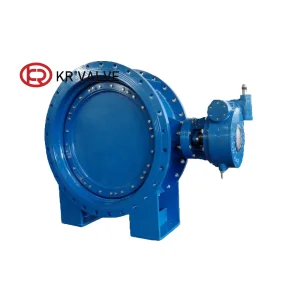
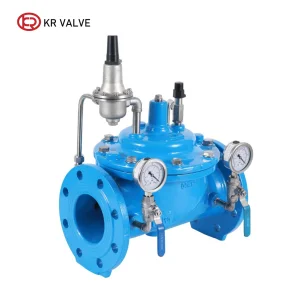
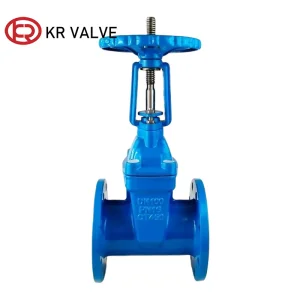
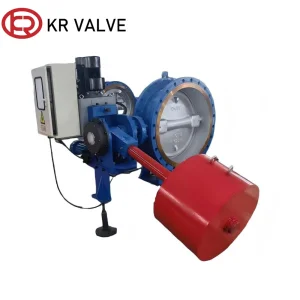
Extended Flow Control & Pipeline Valve Series for Mexico
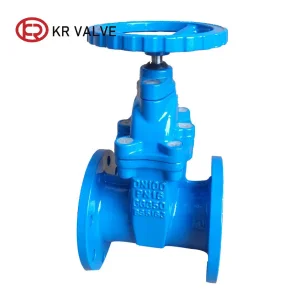
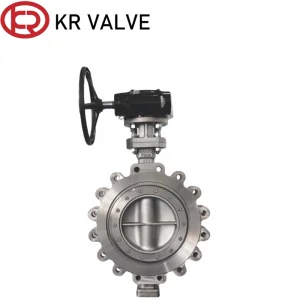
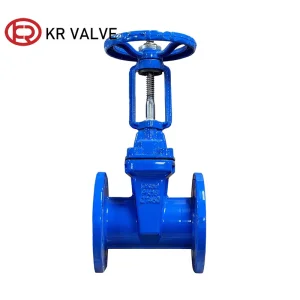
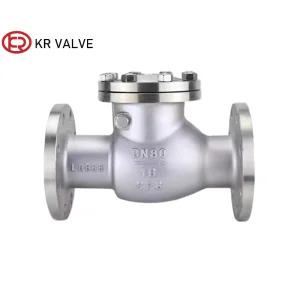
Explore our full line of gate, butterfly, pressure control, and check valves manufactured to international ISO/ANSI standards.
Frequently Asked Questions for Mexican Engineering Teams
Detailed answers regarding custom conical valve selection, operation, maintenance, and international compliance.
What is the key difference between a Howell-Bunger valve and a standard sleeve valve?
While both designs utilize a sliding outer sleeve to regulate flow over a stationary internal cone, a Howell-Bunger valve typically discharges directly into the atmosphere, allowing the fluid to dissipate energy via an expanding hollow cone spray. A submerged sleeve valve or inline conical valve directs the discharge into an internal hood or submerged chamber where energy is dissipated through fluid-on-fluid collision inside a constrained space. We supply both designs customized to your facility's downstream plunge pool geometry.
How do you ensure zero-leakage performance under high differential pressure?
Our custom conical valves incorporate dual-stage sealing technology. The primary seal consists of a resilient, age-resistant EPDM/NBR ring backed by a secondary metal-to-metal (Bronze or Stainless Steel) seat. When the sleeve closes, mechanical leverage forces the resilient seal against the stainless steel cone edge, achieving ISO 5208 Rate A (Zero Leakage) performance even under PN40 to PN100 working pressures.
Can these valves handle raw river water with heavy sediment, like in the Grijalva Basin?
Yes. For sediment-rich water applications in southern Mexico, we furnish conical valves with hardened SS316/Stellite 6 overlay seating faces, stainless steel guide ribs, and continuous flushing ports around the drive sleeve. This construction prevents grit accumulation in drive threads and eliminates galling during high-velocity discharge.
What actuation options are available for remote installations in Mexico?
We provide complete actuation packages adapted to site power conditions: electric actuators (AUMA, Rotork, or custom explosion-proof units with 4-20mA positioning), hydraulic cylinder systems powered by compact oil hydraulic power units (HPU), and manual handwheel gear operators with mechanical position indicators. Solar-assisted DC hydraulic packages are also available for unpowered dam sites.
What documentation is provided for CONAGUA or CFE project audits?
Every shipment is accompanied by a full technical documentation dossier, including EN 10204 3.1 Material Test Reports (MTRs) for pressure-retaining castings, hydrostatic shell test certs (1.5x PN), seat tightness test certs (1.1x PN), paint thickness verification logs, 3D GA drawings, and bilingual (Spanish/English) Installation, Operation & Maintenance (IOM) manuals.
How do I request a custom conical valve quotation for a Mexican tender?
You can click the "Send Inquiry Now" button below or contact our technical sales team directly. Please provide basic operating conditions: nominal pipe size (DN), upstream head / pressure (m or bar), maximum flow rate ($m^3/s$ or GPM), medium characteristics, altitude of installation site, and preferred actuation mode. Our engineers will provide a complete sizing calculation and quotation within 24 hours.