
Featured Concentric Flange Butterfly Valves for Toronto Infrastructure
Direct OEM industrial valves engineered to withstand Ontario's rigorous municipal water standards, deep thermal cycles, and demanding industrial fluid control requirements.
1. Executive Summary & Flow Control Kinematics in Concentric Flange Butterfly Valves
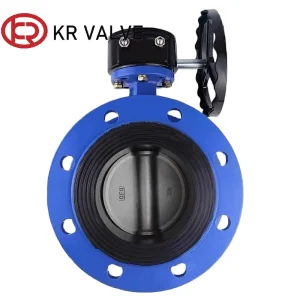
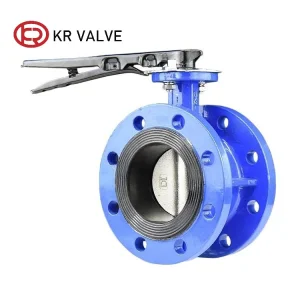
In modern industrial and municipal piping architecture, selecting the optimal isolation and throttling valve is paramount for ensuring long-term operational integrity, minimizing total cost of ownership (TCO), and avoiding catastrophic downtime. Concentric flange butterfly valves—also designated as zero-offset flanged butterfly valves—represent a cornerstone technology for medium-to-large diameter liquid and gas transmission lines.
The defining structural characteristics of a concentric flange butterfly valve lie in its symmetrical geometric design: the valve stem center axis, disc centerline, and internal body bore center coincide at a single focal point. When rotated via a manual gear operator, electric actuator, or pneumatic system, the disc travels precisely 90 degrees inside an elastomeric or fluoropolymer liner bonded to the body cavity. This concentric configuration creates a continuous, 360-degree bubble-tight seal (Class VI zero-leakage closure under ISO 5208 Rate A and API 598 standards) while delivering superior flow coefficients ($C_v$ and $K_v$) compared to traditional globe or gate valves.
For engineering teams, procurement directors, and mechanical contractors across the Greater Toronto Area (GTA) and Ontario, double-flange body styles provide crucial mechanical advantages over wafer or lug configurations. Double-flange designs feature integrated integral flanges matching ASME B16.5 Class 150 / ASME B16.47 Series A/B, AWWA C207, or PN10/PN16 drilling patterns. This structural rigidity allows face-to-face compliance with ISO 5752 / EN 558 series specifications, absorbs high line stresses, facilitates easy inline installation, and prevents pipeline deflection during extreme seasonal temperature shifts common to the Canadian environment.
2. The Toronto & GTA Commercial, Municipal, and Industrial Flow Control Landscape
Toronto stands as North America’s fourth-largest municipal economy, characterized by complex civil infrastructure, continuous urban expansion, and heavy industrial processing hubs spanning Mississauga, Brampton, Vaughan, Markham, and Scarborough. Flow control equipment operating within the region must address unique environmental and operational parameters:
A. Municipal Drinking Water & Wastewater Treatment Networks
Toronto’s municipal water delivery infrastructure relies on massive drinking water treatment plants such as the R.C. Harris, F.J. Horgan, R.L. Clark, and Island Water Treatment Facilities, alongside major wastewater assets like Ashbridges Bay Treatment Plant. These infrastructure facilities demand concentric flanged butterfly valves with NSF/ANSI 61 and NSF/ANSI 372 certified drinking water linings (vulcanized EPDM), fusion-bonded epoxy (FBE) interior/exterior coatings complying with AWWA C550, and bi-directional tightness to isolate raw water intakes, elevated reservoirs, and high-pressure pumping stations.
B. Deep Lake Water Cooling (DLWC) & District Energy Systems
Enwave’s Deep Lake Water Cooling system in downtown Toronto represents the world’s largest lake-source cooling network, drawing 4°C water from Lake Ontario to air-condition over 100 commercial office towers, financial complexes, and hospitals. Flow control valves deployed in district cooling networks require low operating torque, exceptional resistance to cavitation erosion, sub-zero cold water tolerance, and micro-meter precision stem sealing to eliminate ambient condensate ingress and media loss.
C. Food, Beverage, and Bio-Chemical Manufacturing in Ontario
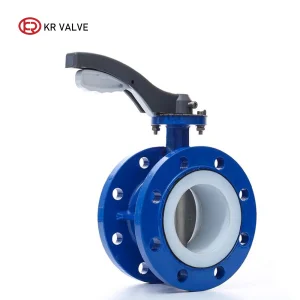
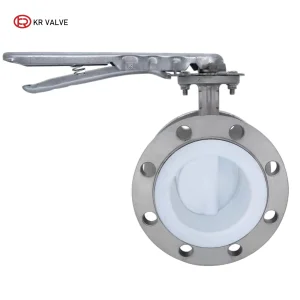
Ontario hosts one of North America’s dense food and beverage manufacturing corridors (dairy, brewing, soft drinks, and pharmaceutical packaging). These process lines operate under strict Canadian Food Inspection Agency (CFIA) and health guidelines, calling for split-body concentric butterfly valves lined with pure PTFE, RPTFE, or virgin PFA. Full fluoropolymer encapsulation prevents batch contamination, withstands CIP (Clean-In-Place) chemical flushes, and resists organic acids and alcohols.
D. Severe Canadian Winter Operation & Road-Salt Corrosion Protection
Ambient temperatures in the GTA range from winter lows of -30°C (-22°F) to summer highs exceeding +35°C (95°F). Valve bodies installed in semi-exposed chambers, vaults, or unheated utility buildings experience cyclic freeze-thaw stresses. Furthermore, heavy road-salt application across Southern Ontario highway corridors introduces atmospheric salt spray into utility vaults. OEM valves must feature high-tensile Ductile Iron (ASTM A536 65-45-12 / GGG40) or Carbon Steel (WCB) body metallurgy paired with 300+ micron thick polyurethane or epoxy coatings to suppress galvanic and atmospheric corrosion.
Vulcanized Elastomer Technology
Direct vulcanization of EPDM or NBR rubber directly to the iron body shell prevents seat slip, liner collapse under high vacuum, and torque distortion during continuous operation.
Split-Body Full PTFE Lining
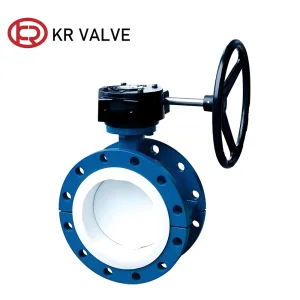
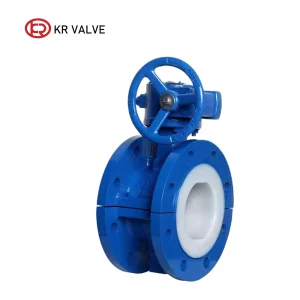
Split-body ductile iron or cast steel body designs housing 3mm-5mm thick PTFE/RPTFE liners isolate all metallic components from aggressive chemicals and acids.
Heavy-Duty Gearbox & Smart Actuation
Enclosed IP67/IP68 self-locking worm gearboxes and ISO 5211 top mounting pads enable effortless automation via electric, pneumatic, or hydraulic actuators.
3. Engineering Specification Matrix: Concentric vs. Offset Designs
To assist Ontario design engineers and municipal procurement officers in selecting the appropriate valve configuration, the following engineering reference table outlines performance parameters across valve designs:
| Design Configuration | Seat & Seal Matrix | Pressure Rating | Temperature Range | Ideal Application in Toronto |
|---|---|---|---|---|
| Concentric Double Flange (Resilient) | EPDM / NBR (Vulcanized or Dovetail) | PN10 / PN16 / Class 150 (16 Bar / 232 PSI) | -20°C to +120°C (-4°F to +248°F) | Municipal Potable Water Mains, Stormwater Intake, Building HVAC Chillers |
| Concentric Split-Body (PTFE Lined) | PTFE / RPTFE / PFA Lined over EPDM backer | PN10 / PN16 / Class 150 (10-16 Bar) | -30°C to +180°C (-22°F to +356°F) | Food & Beverage Processing, Chemical Batching Plants, Industrial Effluent |
| Double Eccentric (High Performance) | RPTFE / SS304 Surfacing Seat | PN16 / PN25 / Class 300 (25-40 Bar) | -40°C to +260°C (-40°F to +500°F) | High-Pressure Water Transmission, Hydroelectric Outlets, Steam Condensate |
| Triple Eccentric Metal-Seated | Stellite / Laminated Stainless + Graphite | Class 150 / 300 / 600 (up to 100 Bar) | -50°C to +450°C (-58°F to +842°F) | Refining, Thermal Energy Networks, Severe Service High-Temp Isolation |
4. Regulatory Compliance, Standards & Ontario Infrastructure Alignment
Purchasing flow control assets for installation in Ontario requires strict compliance with Canadian provincial laws, technical authority guidelines, and municipal specifications:
- CSA B51 & TSSA Registration: Pressure-retaining piping components supplied to Ontario industrial and energy facilities must comply with the Canadian Standards Association CSA B51 code. Valves operating above standard pressure thresholds require valid Canadian Registration Numbers (CRN) issued by the Technical Standards and Safety Authority (TSSA). Our direct OEM manufacturing facility provides full design registration documentation, mill test reports (MTRs to EN 10204 3.1), and finite element analysis (FEA) calculations for rapid CRN approval.
- AWWA Standards (C504 & C516): Municipal water distribution specifications throughout Toronto, Peel Region, and York Region mandate compliance with AWWA C504 (Rubber-Seated Butterfly Valves 3 in. through 72 in.) and AWWA C516 (Large-Diameter Rubber-Seated Butterfly Valves). Key requirements include non-corrosive shaft bearings (Teflon-lined bronze or stainless steel), blow-out proof stem retaining structures, and bi-directional seal tightness testing.
- NSF/ANSI 61 & NSF/ANSI 372 Health Certification: For all potable water applications under the Ontario Safe Drinking Water Act (O. Reg. 169/03 & O. Reg. 170/03), all internal non-metallic components (EPDM liners, O-rings, lubricants) must be strictly lead-free and non-contaminating, certified under NSF/ANSI 61/372.
- ASME B16.5 / B16.47 & EN 1092-2 Flange Compatibility: Valve face-to-face dimensions strictly adhere to ISO 5752 Series 13 / EN 558 Series 13 (Double Flange Short) or Series 14 (Double Flange Long), allowing effortless drop-in replacement during retrofits across GTA commercial towers and pumping stations.
5. China OEM Manufacturing Synergies: Tianjin Valve Ecosystem Advantage
As a leading Chinese OEM valve manufacturer headquartered in the Tianjin valve manufacturing hub, we bridge high-capacity production efficiencies with Canadian engineering precision. The competitive advantages delivered to Toronto EPCs, stocking distributors, and project owners include:
A. Vertical Integration from Foundry to CNC Machining
Our Tianjin production base integrates state-of-the-art lost-foam and resin-sand casting foundries, automated multi-axis CNC machining centers, electrostatic FBE coating lines, and computerized hydrostatic testing bays. Direct control over raw material melt chemistries (ensuring carbon content $\le 0.25\%$ for WCB and exact nickel-chromium balance for CF8/CF8M) guarantees high mechanical toughness and defect-free body castings.
B. Comprehensive OEM Customization Capabilities
We provide full-scope OEM manufacturing tailored to customer brand guidelines or tender specs:
• Custom Body Metallurgies: Ductile Iron (GGG40/GGG50), WCB, CF8, CF8M, Duplex Stainless Steel (2205/2507), Hastelloy.
• Customized Liners: EPDM, High-Temp EPDM, NBR, Viton (FKM), Virgin PTFE, Conductive RPTFE.
• Actuation Packaging: ISO 5208 top flanges fitted with customized worm gearboxes, electric actuators (AUMA, Rotork, SIPOS compatible), or pneumatic spring-return actuators with limit switch boxes and solenoid valves.
C. Rigorous Quality Control Architecture & Testing Assurance
Every single valve undergoes 100% pressure inspection prior to export packing:
1. Shell Test: Hydrostatic test at 1.5 times nominal cold working pressure (PN16 tested at 24 Bar / 348 PSI).
2. High-Pressure Seat Test: Hydrostatic test at 1.1 times nominal working pressure (PN16 tested at 17.6 Bar).
3. Low-Pressure Air Seat Test: Pneumatic air test at 6 Bar (87 PSI) to verify zero air bubble leakage across elastomeric or PTFE seats.
4. Non-Destructive Examination (NDE): Ultrasonic thickness measurement, Radiographic Testing (RT) on pressure castings, and Positive Material Identification (PMI) spectro-analysis on alloy shafts and discs.
Complete OEM Concentric & Speciality Valve Line for Toronto Procurement
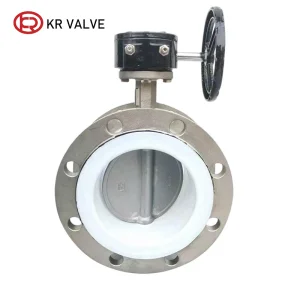
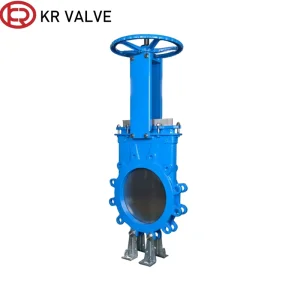
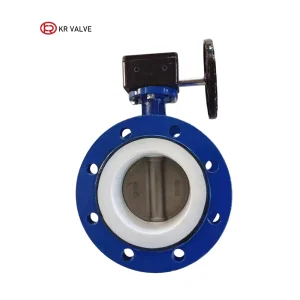
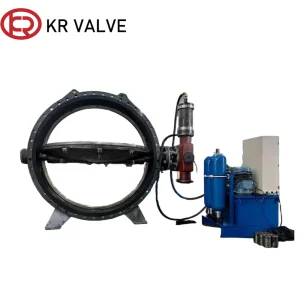
Browse our complete engineered range featuring split-body PTFE lined concentric valves, stainless steel bodies, knife gate isolation valves, and hydraulic control systems.
6. Localized Application Scenarios Across Greater Toronto Infrastructure
Scenario A: Main Pressure Isolation in High-Rise HVAC & Chilled Water Loops
In downtown Toronto’s rapid high-rise residential and commercial tower construction, mechanical contractors frequently install concentric double flanged butterfly valves with IP67 worm gearboxes on secondary chilled water loops and cooling tower riser networks. Operating at static line pressures up to 16 Bar (232 PSI), these valves utilize vulcanized EPDM seats that absorb hydraulic line surges, eliminate micro-vibrations from high-capacity centrifugal pumps, and provide reliable isolation during maintenance turnarounds.
Scenario B: Acid Dosing & Effluent Neutralization in Industrial Plants
Manufacturing and chemical processing facilities across Mississauga, Brampton, and Vaughan require resilient isolation valves for treating aggressive process wastewater before discharge into regional sewer grids. Installing split-body full PTFE-lined concentric flanged butterfly valves featuring CF8 (SS304) or CF8M (SS316) discs ensures absolute chemical immunity against sulfuric acid, sodium hydroxide, and chlorine bleaches. The full fluoropolymer liner isolates the ductile iron body casting from chemical contact, eliminating severe body wall thinning and extend service life past 15 years.
Scenario C: Raw Water Intake & Filtration Header Systems
Municipal water treatment facilities drawing surface water from Lake Ontario or regional rivers utilize large-bore (DN300 to DN1200) gearbox-operated concentric flanged butterfly valves on raw water filtration headers. FBE-coated ductile iron bodies (compliant with AWWA C550) combined with 316 Stainless Steel disc edge surfacing ensure long-term resistance against bio-fouling, zebra mussel adhesion, and silt abrasion.
Frequently Asked Questions for Toronto Engineers & Buyers
In-depth technical and commercial answers addressing standard approvals, material selection, torque factors, and logistics to Ontario.
How do concentric double flanged butterfly valves compare to wafer and lug styles in Toronto projects?
Are your OEM concentric flanged butterfly valves compliant with TSSA & CRN requirements in Ontario?
Which seat material (EPDM vs PTFE) is ideal for my application in Southern Ontario?
What protection is provided against road salt and atmospheric corrosion in GTA vaults?
What actuation options are available for remote automation in Toronto plants?
What is the typical shipping lead time from your factory to the Port of Montreal or Toronto ICD?
Request Direct OEM Factory Quotation & Technical Engineering Support for Toronto
Partner directly with a certified Chinese OEM valve manufacturer. Submit your project bill of materials, pressure-temperature specs, flange standards, and actuation requirements to receive custom technical drawings, CRN documentation support, and factory-direct pricing within 24 hours.
Send Inquiry Now