
High-Performance Tilting Disc & Slow-Closing Check Valves
Direct factory supply manufactured to DIN/EN and ANSI standards, engineered for rapid closure and low head-loss applications across Istanbul's industrial corridors.
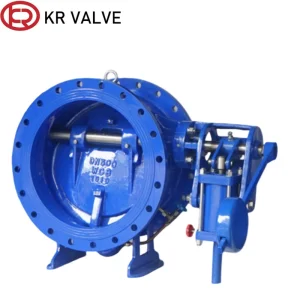
Istanbul Heavy-Duty WCB Inclined Disc Slow-Closing Check Valve (DN300-DN1400)
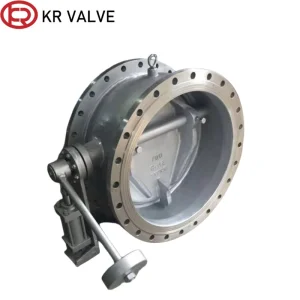
Stainless Steel CF8/CF8M Micro-Resistance Check Valve for Marmara Marine & Chemical Duty
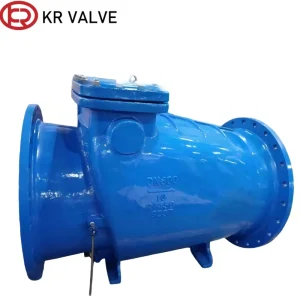
High-Flow Micro-Resistance Swing & Tilting Disc Non-Return Valve for Municipal Water
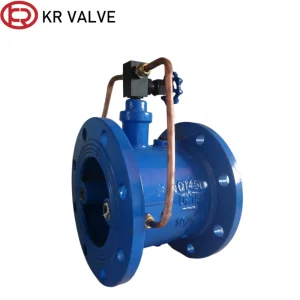
Custom Butterfly-Type Micro-Resistance Hydraulic Slow-Closing Valve for District Cooling
Hydrodynamic Mechanics & Hydraulic Performance of Tilting Disc Check Valves
An engineering analysis of rapid-closing dynamics, low head-loss geometry, and water hammer mitigation in high-capacity fluid handling networks.
In high-pressure municipal water mains, raw water pumping stations, and industrial process lines across Istanbul and the Marmara basin, fluid isolation and backflow prevention present complex hydraulic challenges. Conventional swing check valves often suffer from violent slam during sudden pump trips, triggering devastating water hammer shockwaves (represented by the Joukowsky equation \(\Delta P = \rho c \Delta v\)). The Tilting Disc Check Valve addresses this vulnerability through an off-center double eccentric pivot geometry, significantly advancing pipeline protection technology.
Key Engineering Advantage: The tilting disc design positions the pivot axis slightly above the pipe centerline and offset from the seat plane. This arrangement reduces disc travel distance by over 50% compared to conventional swing check valves, enabling the valve to begin closing immediately as forward flow decelerates, sealing tightly before backflow velocity can build up.
Fluid Dynamic Mechanics: Drag Coefficient & Head Loss Reduction
Energy efficiency is a key design metric for major water utilities such as İSKİ (Istanbul Water and Sewerage Administration). Standard swing check valves force the flowing medium to hold a heavy disc at a full 90° angle, producing substantial turbulent eddies and elevated drag coefficients (\(\zeta \approx 2.5 - 3.5\)). In contrast, an inclined seat tilting disc valve features an angled seat (typically 15° to 55° relative to vertical), allowing the disc to open fully with minimal fluid lift.
The hydrodynamic profile of our tilting disc valves yields an exceptionally low pressure drop coefficient (\(\zeta \approx 0.8 - 1.2\)). Over a 24-month operating cycle in a continuously running DN1000 booster pumping station, this reduction in head loss yields quantifiable electrical energy savings, directly decreasing operational expenditure (OPEX) for regional plant operators.
Comparative Performance Matrix: Check Valve Technologies
| Valve Type | Head Loss Coefficient (\(\zeta\)) | Closing Speed & Response | Water Hammer Susceptibility | Recommended Application Scenarios |
|---|---|---|---|---|
| Tilting Disc Check Valve | Low (0.8 - 1.2) | Ultra-Fast (Deceleration-matched) | Negligible / Anti-Slam | High-head pumping mains, power plants, raw water mains |
| Conventional Swing Check | High (2.5 - 3.8) | Slow (Requires flow reversal) | High Shockwave Risk | Low-velocity municipal gravity lines, small bores |
| Dual Plate Wafer Check | Medium (1.5 - 2.2) | Fast (Spring-assisted) | Moderate | Space-constrained indoor HVAC, marine ballast systems |
| Hydraulic Slow-Closing Butterfly | Low-Medium (1.0 - 1.4) | Controlled Two-Stage Closing | Zero Shockwave (Dashpot damped) | Large pump discharge stations, surge-sensitive lines |
Istanbul & Marmara Basin Industrial Valve Landscape
Connecting Asia and Europe, Istanbul is a vital industrial node requiring specialized, high-reliability valve infrastructure for maritime, municipal, and energy systems.
Municipal Water Infrastructure (İSKİ)
Projects like the Melen Water Supply System and mega-scale wastewater treatment facilities (Ambarlı, Tuzla, Kadıköy) demand large-bore check valves (DN500–DN2000) capable of withstanding continuous hydraulic stress, variable raw water salinity, and intense pressure transients.
Tuzla & Yalova Shipbuilding Hubs
As one of Southern Europe’s major shipbuilding clusters, the Tuzla Bay yards require high-alloy stainless steel (CF8M, Duplex 2205) tilting disc check valves resistant to Marmara seawater corrosion for ship ballast, engine cooling loops, and offshore supply vessels.
Gebze & Dilovası Petrochemical Belt
Situated near the TÜPRAŞ İzmit Refinery and the Gebze Organised Industrial Zone (GOSB), high-pressure WCB and forged carbon steel tilting disc non-return valves are widely deployed in thermal fluid networks, power plants, and chemical processing facilities.
Why Istanbul Engineering Buyers Source Valves from Tianjin Valve Hub
Combining precise foundry techniques with streamlined supply chains, Tianjin’s valve manufacturing sector provides a strong alternative to European valve OEMs.
Turkish engineering contractors, EPCs, and municipal procurement directors balancing tight budgets against stringent quality standards rely heavily on specialized Chinese industrial valve manufacturing hubs. Tianjin, home to KR Valve, stands out as one of Asia's primary valve manufacturing clusters, offering distinct structural advantages to buyers across the Marmara region:
Integrated Casting & Metallurgical Precision
Our Tianjin foundries utilize automated lost-foam and resin-sand casting processes, ensuring precise wall thickness, minimal porosity, and smooth fluid contact surfaces. Raw metallurgy—from Ductile Iron EN-GJS-500-7 (GGG50) to Cast Steel WCB and SS316—is verified via optical emission spectrometers prior to pouring, guaranteeing compliance with EN 10204 3.1 material traceability specifications.
5-Axis CNC Machining & Zero-Leakage Seat Lapping
The eccentric pivot seats of tilting disc valves require micro-precise geometric tolerances to achieve bubble-tight shutoff (ISO 5208 Rate A). Our factory utilizes 5-axis horizontal machining centers to finish stainless steel disc seating rings and body seat overlays, ensuring long-term wear resistance without seat binding.
Engineered Solutions for Istanbul's Critical Infrastructure
Specific field configurations designed to resolve severe operational challenges in regional fluid transport systems.
Scenario A: High-Head Raw Water Pump Discharge (İSKİ Melen Mains)
Operational Threat: Pumping raw water over steep topographic elevations from the Black Sea region to Istanbul’s Asian side creates rapid backflow acceleration during power outages, threatening pump impellers with violent reverse rotation.
Engineering Solution: Installation of DN1200 PN25 WCB Tilting Disc Check Valves equipped with hydraulic dashpot cylinders and adjustable counterweights. The dual-stage closing action rapidly seals the initial 80% of travel to limit backflow, followed by a controlled 20% cushioned stroke to safely dissipate kinetic surge energy.
Scenario B: Coastal Seawater Cooling Loops (Tuzla Naval Shipyards)
Operational Threat: Seawater drawn from the Marmara Sea contains high chloride levels and marine bio-fouling organisms, accelerating pitting corrosion on standard iron seats and causing disc sticking.
Engineering Solution: Deployment of SS316 (CF8M) or Duplex SS 2205 Tilting Disc Check Valves featuring Stellite 6 hard-faced seating surfaces and PTFE shaft bushings. This alloy selection prevents crevice corrosion and bi-metallic galvanic attack, ensuring long service life in marine cooling environments.
International Standards & Technical Procurement Checklist
Our manufacturing and testing protocols align strictly with European (EN/DIN) and International (ISO/API) norms for cross-border engineering projects.
Procurement teams sourcing non-return valves for Turkish state tenders (such as DSİ or İSKİ) or international EPC contracts must ensure rigorous standard compliance. Below is our verified manufacturing compliance reference:
| Compliance Domain | Standard Reference | Engineering Parameters & Verification Method |
|---|---|---|
| Design & Manufacturing | EN 12334 / BS EN 16767 / API 594 | Face-to-face dimensions according to EN 558 Series 14 (DIN 3202 F6) or ASME B16.10 |
| Flange Drilling Standards | EN 1092-2 (PN10/16/25/40) / ASME B16.5 | Compatible with Turkish standard piping flanges and DIN standard valve installations |
| Pressure & Leakage Testing | ISO 5208 / EN 12266-1 | 100% shell hydrostatic test at 1.5x PN; seat test at 1.1x PN (Zero-leakage Rate A) |
| Material Traceability | EN 10204 Type 3.1 Certification | Chemical composition and mechanical strength test reports provided for body, disc, and stem |
| Safety & Health Approvals | CE-PED 2014/68/EU / WRAS Approved | Certified for Pressure Equipment Directive compliance and safe use in potable water lines |
Extended Valve Solutions Serving Istanbul & Global Projects
Explore our comprehensive product portfolio including non-return valves, resilient gate valves, wafer butterfly units, and hydraulic control valves.
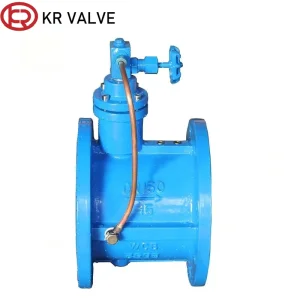
Industrial WCB Backflow Preventer & Micro-Resistance Valve for Gebze Zone
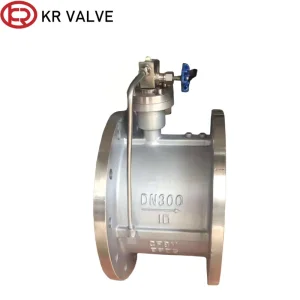
OEM SS Hydraulic Pressure Butterfly Slow-Closing Check Valve for Tuzla Navy
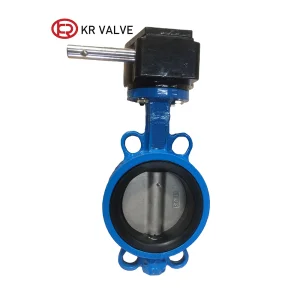
Ductile Iron GGG40 Wafer Butterfly Valve with Gearbox (DN40-DN600)
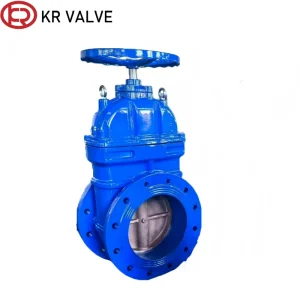
Ductile Iron Resilient Gate Valve with Brass Sealing for Water Networks
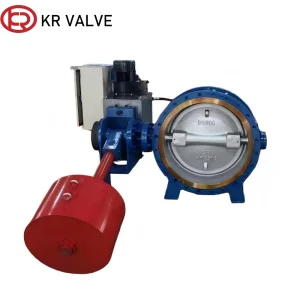
PN16 Eccentric Hydraulic Control Butterfly Valve with EPDM Sealing
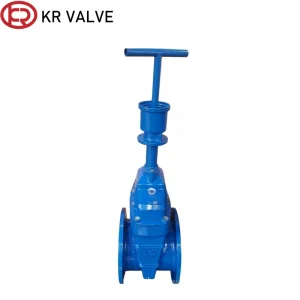
Extended Stem Underground Gate Valve with T-Key Operation for District Grids
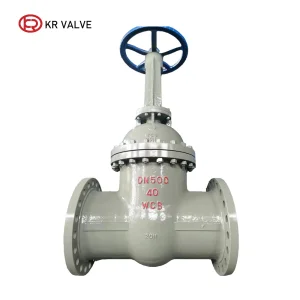
High-Pressure PN64 DN500 WCB Sluice Gate Valve for TÜPRAŞ Refinery
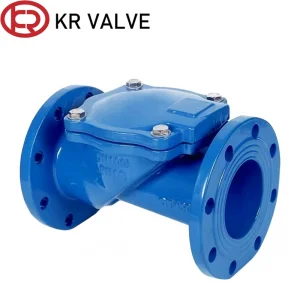
DIN Standard Ductile Iron Ball Type Non-Return Valve for Sewage Plants
Frequently Asked Questions: Tilting Disc Valves in Istanbul Projects
Direct responses to key procurement and engineering inquiries regarding specification, installation, and shipping logistics.
1. Why specify a tilting disc check valve over a conventional swing check valve for Istanbul municipal pumping stations?
2. What is the typical lead time and ocean freight route from your China factory to Istanbul ports?
3. How does KR Valve verify compliance with CE-PED and EN 10204 3.1 certification requirements?
4. Which body and seat materials are recommended for brackish Marmara seawater applications in Tuzla shipyards?
5. Can tilting disc check valves be installed in vertical pipeline orientations?
6. What damping options are available for severe water hammer control in long-distance water transmission lines?
Require High-Performance Valves for Your Istanbul Project?
Consult directly with our engineering team to request CAD drawings, datasheets, EN 10204 3.1 material certificates, or a competitive factory-direct quote.