
Fluid Dynamics & Kinetic Mechanics of Air Evacuation Valves
Air accumulation within pressurized liquid pipelines remains one of the most critical causes of head loss, pressure surges, pump cavitation, and catastrophic pipe bursts in modern fluid transport networks.
The Mechanics of Transient Air Binding
When pipelines are filled or operated under varying thermodynamic conditions, dissolved gases separate from the fluid medium, forming pocketed air locks at high elevations. Unreleased air pockets reduce the effective cross-sectional flow area, exponentially increasing friction head loss. Furthermore, sudden shifts in fluid movement compress these trapped air bubbles, leading to violent pressure spikes (water hammer) exceeding 300% of nominal operating pressure.
Triple-Action Kinetic Air Management
High-performance custom air evacuation valves integrate three distinct functional modes: 1) Large Orifice Exhaust: Rapidly expels massive air volumes during initial pipe filling. 2) Large Orifice Intake: Automatically draws in air during sudden pump shutdowns or drainage to prevent negative vacuum conditions and structural pipe collapse. 3) Small Orifice Release: Continuously purges micro-bubbles under full working pressure.
Standard air release valves risk early premature closure when air discharge approaches sonic velocities ($Ma \ge 1.0$). Premier OEM/ODM factories engineer aerodynamic float structures and anti-slam internal surge discs that balance differential aerodynamic drag against buoyancy forces, preventing premature valve seating and controlling liquid column re-adjunction speed.
Heavy-Duty Isolation & Flow Control Systems
Precision-manufactured valve solutions engineered to DIN, BS, and ANSI standards for water supply, industrial effluent, and power projects.
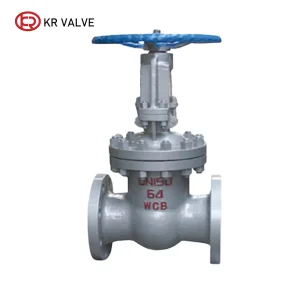
Custom Gate valve WCB material hard seat PN64 Supplier
View Product Specs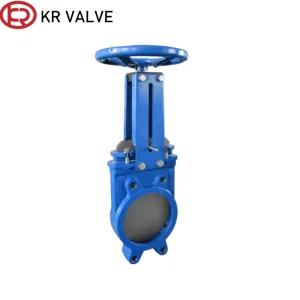
Custom Ductile Iron Wafer Knife Gate Valve PN16
View Product Specs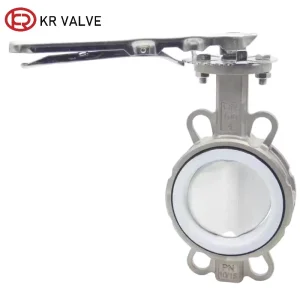
OEM Wafer butterfly valve PTFE lined seat and SS body
View Product Specs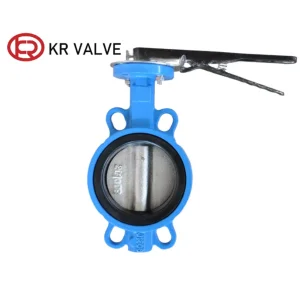
Custom Ductile Iron EPDM Seal Wafer Butterfly Valve
View Product Specs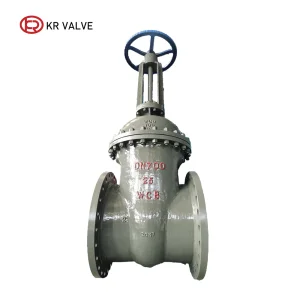
Custom DN700 WCB Cast Steel Flange Gate Valve
View Product Specs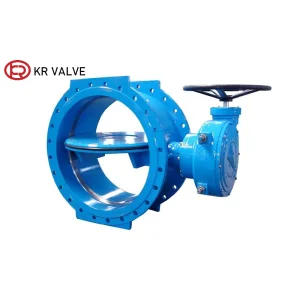
Custom Double Eccentric Butterfly Valves SS304 Sealing
View Product Specs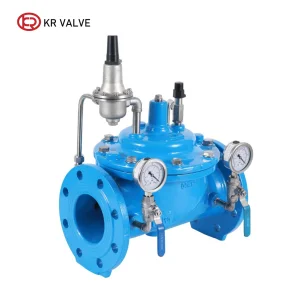
OEM 200X reducing pressure valve manual adjustable
View Product Specs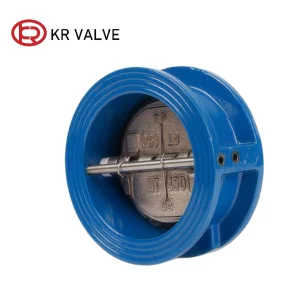
Wholesale Dual Plate Wafer Lug Check Valve 4 Inch
View Product SpecsGlobal Commercial & Industrial Landscape for Air Valves
Rapid urban growth, aging municipal water networks, and massive investments in green industrial processes have transformed the strategic role of specialized air management valves globally.
MENA & Arid Zone Desalination
In the Middle East and North Africa, mega-scale SWRO (Sea Water Reverse Osmosis) plants demand high-alloy air release valves engineered in Duplex 2205 or Super Duplex 2507 stainless steel. Highly corrosive saline environments require internal parts resistant to pitting (PREN > 40) and extreme cyclic pressure swings.
European Urban Infrastructure
European municipalities mandate compliance with stringent EN 1074-4 and WRAS standards. Emphasis is placed on zero non-revenue water (NRW) loss, low operational noise, compact footprint, and strict non-toxic elastomer approvals (NSF/ANSI 61 and KTW) for potable drinking water mains.
North American Industrial Expansion
Driven by AWWA C512 specifications, North American buyers demand robust cast steel (WCB) and heavy ductile iron (GGG50) air evacuation valves capable of enduring sub-zero winter temperatures, seismic ground motion, and high hydraulic surges in mining and energy transport.
Localized Application Scenarios & Engineering Benchmarks
Tailored air evacuation solutions optimized for specific environmental, thermal, and chemical operating conditions.
1. Municipal Raw & Potable Water Mains
Installed at high ridge points along long-distance cross-country pipelines, custom combination air valves ensure uninterrupted fluid flow during initial pipe filling. By expelling pocketed air, pumping energy efficiency is optimized by up to 20-30%, reducing total lifecycle carbon footprint.
2. Wastewater & Slurry Transmission
Sewage air release valves feature elongated conical bodies with float mechanisms positioned far below the upper seal. This physical separation prevents grease, solids, and fibrous debris from fouling the precision sealing orifice, eliminating clogging and toxic gas leakage.
3. Agricultural Micro-Irrigation Networks
In large-scale drip and center-pivot irrigation systems, rapid vacuum breaking is vital during system shutdown. Custom lightweight composite and ductile iron air valves prevent dirt suction into delicate emitters, safeguarding micro-tubing integrity.
4. Industrial HVAC & Chilled Water Loops
High-rise HVAC hydronic loops generate micro-bubbles during heating and cooling cycles. High-precision brass and stainless steel automatic air release valves prevent air binding in heat exchangers, maintaining optimal heat transfer efficiency.
Engineering Parameter Matrix by Application
| Application Sector | Recommended Body Material | Orifice Mechanism | Pressure Rating | Standard Certification |
|---|---|---|---|---|
| Potable Water Transmission | Ductile Iron GGG50 / FBE Coated | Triple Action / Kinetic | PN10 / PN16 / PN25 | WRAS, EN 1074-4, NSF 61 |
| Raw Sewage & Effluent | Ductile Iron conical / SS316 Internals | Extended Body Air/Vacuum | PN10 / PN16 | CE PED, ISO 9001 |
| Desalination & Seawater | Duplex SS 2205 / Super Duplex | Anti-Slam Combination | PN16 to PN64 | API 598, NACE MR0175 |
| High-Rise Building HVAC | Forged Brass / CF8 Stainless Steel | Continuous Small Orifice | PN16 / PN25 | ASME B16.34 |
Technology Roadmap & Smart Air Valve Horizons
From numerical Computational Fluid Dynamics (CFD) modeling to IoT-enabled acoustic sensing, the next generation of custom air release valve manufacturing is shifting toward digitalized fluid intelligence.
Evolution of Air Evacuation Valve Design
Phase 1: Legacy Mechanical Floats
Basic metallic cylindrical floats vulnerable to premature closure under high velocity air discharge and frequent seal degradation.
Phase 2: CFD-Optimized Kinetic Aerodynamics
Aerodynamically shaped solid polypropylene floats combined with anti-slam dynamic discs, proven by finite element analysis (FEA).
Phase 3: Material Metallurgy & Advanced Coatings
Fusion Bonded Epoxy (FBE) interior/exterior coatings (>300 microns) paired with micro-polished SS316 floating elements for zero-leakage longevity.
Phase 4: Smart IoT Telemetry & Diagnostic Integration
Integration of real-time pressure transducers, acoustic leak sensors, and NB-IoT modules allowing remote asset health management.
Real-Time Acoustic Telemetry
Modern smart municipal networks leverage custom air release valves embedded with internal acoustic frequency sensors. By analyzing sonic signatures generated by escaping air versus leaking water, telemetry nodes transmit real-time early alerts to SCADA systems, detecting line pinhole leaks before catastrophic pipe ruptures occur.
China Factory Supply Chain Resilience & Efficiency Advantages
How Chinese valve manufacturing clusters deliver unprecedented cost-to-performance efficiency, rapid custom prototyping, and robust raw material security for global EPC contractors.
Vertical Industrial Clusters
Concentrated manufacturing ecosystems in Tianjin and surrounding industrial zones aggregate sand casting foundries, resin pattern shops, precision multi-axis CNC machining, FBE coating lines, and hydrostatic test facilities within a 30-kilometer radius. This geographic concentration reduces logistical lead times by up to 40%.
Advanced Metallurgical Integrity
Equipped with spectral direct-reading analyzers, factories verify chemical composition (C, Si, Mn, P, S, Cr, Ni) of cast ductile iron (GGG40/50) and stainless steel batches prior to pouring. Vacuum-assisted molding prevents internal pinholes, sand inclusions, and casting porosity.
OEM/ODM Agile Customization
Custom engineering teams transform customer 2D/3D CAD drawings into production-ready physical molds within 7 to 14 days. From non-standard flange drillings (BS, ANSI, DIN, JIS) to customized pressure ratings (PN64/Class 300), OEM production scales smoothly from sample prototypes to container loads.
Localization Support & Rigorous Quality Assurance
Ensuring full compliance with international standards, backed by 100% factory inspection, non-destructive testing, and complete export documentation.
Hydrostatic Shell & Seat Testing Standards
Every custom air release valve manufactured undergoes rigorous hydrostatic shell testing at 1.5 times the nominal working pressure ($1.5 \times PN$) and seat seal testing at 1.1 times nominal pressure ($1.1 \times PN$) in according with ISO 5208 and API 598. Zero-leakage performance under ultra-low pressure differentials (as low as 0.2 bar) is fully verified before packaging.
International Certification Matrix
Factories maintain comprehensive global accreditations required for major international tenders, including ISO 9001:2015 Quality Systems, ISO 14001 Environmental Management, CE PED (2014/68/EU) for pressure equipment, WRAS (UK) for potable water safety, and NSF/ANSI 61 toxicological compliance for drinking water safety.
Advanced Control, Ball & Specialty Valves
Explore our full line of specialized flow components manufactured for demanding industrial applications worldwide.
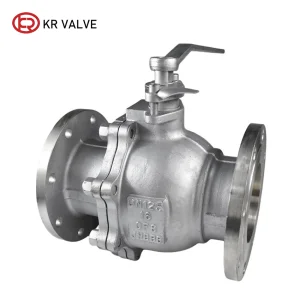
OEM China SS304 Floating Ball Valve Manufacturers DN50-DN300
View Product Specs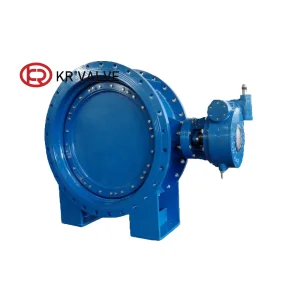
Custom China Suppliers Factory Double Eccentric Butterfly Valve PN16 Soft Sealing
View Product Specs
OEM China PTFE Lined Wafer Butterfly Valve with SS Body
View Product Specs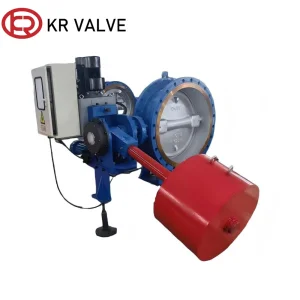
Wholesale Hydraulic cylinder control butterfly valve quick closing adjusting type
View Product Specs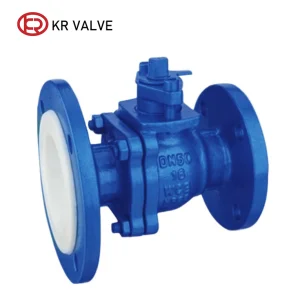
Wholesale PTFE lined WCB material ball valve Supplier
View Product Specs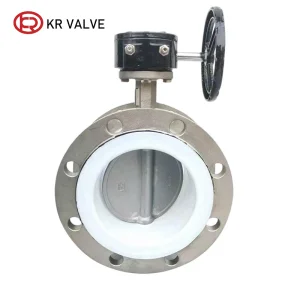
Custom Stainless steel body PTFE seat flange butterfly valve Supplier
View Product Specs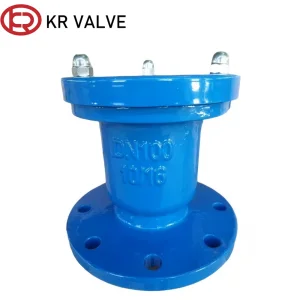
Custom Single port air exhaust valve ductile iron PN16 Supplier
View Product Specs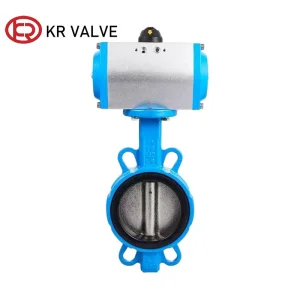
OEM Pneumatic Wafer Butterfly Valve Double Acting DN40-DN600
View Product SpecsFrequently Asked Questions (Q&A)
Detailed technical and commercial answers compiled by senior valve design engineers for project specifiers and procurement managers.
How do I correctly size an air evacuation valve for a long-distance water pipeline?
Air evacuation valve sizing is determined by calculating the maximum pipeline filling rate (discharge of air) and the maximum gravity drainage rate (intake of air to prevent vacuum). The large orifice diameter must be sized so that pressure drop across the valve during maximum air intake does not exceed 0.35 bar (5 psi), preventing vacuum collapse of thin-walled steel or HDPE pipes. Engineering software utilizes sonic orifice flow equations to establish precise millimeter orifice dimensions.
What is the difference between a single-port and a combination double-port air valve?
A single-port air valve typically performs one primary function: either small-orifice air release under pressure or single large-orifice air discharge. In contrast, a combination (double-port or single-chamber dual-orifice) valve integrates both functions into a single body—expelling large air volumes during pipe filling, admitting air during drainage, and continuously purging micro-bubbles during steady operational pressures.
Why is an "Anti-Slam" mechanism recommended for high-head pumping lines?
During rapid filling or following a pump power failure, air expels through the valve at extremely high speeds. When the water column reaches the valve, it slams the float shut instantaneously, generating severe secondary water hammer pressure spikes. An anti-slam mechanism throttles air discharge once air velocity reaches a critical threshold, slowing down water column arrival speed and cushioning valve closure safely.
What casting materials are best suited for aggressive or corrosive media?
For standard municipal water, Ductile Iron (GGG50 / ASTM A536) coated with 300-micron Fusion Bonded Epoxy (FBE) provides excellent structural strength and economy. For seawater desalination or industrial chemical applications, CF8M (SS316), Duplex Stainless Steel (2205), or Super Duplex (2507) with Viton or PTFE seats is mandatory to resist chloride pitting corrosion.
What lead times can overseas buyers expect for custom-engineered factory orders?
Standard catalogue valves (DN50 to DN300, PN10-PN25) are routinely shipped within 15 to 20 days. Fully customized OEM orders—involving non-standard flange standards, special alloy castings, or custom face-to-face dimensions—typically take 30 to 45 days from engineering drawing approval to final export packaging.