Core Valve & Filtration Equipment Spectrum
Explore our engineering-grade industrial valves and high-pressure Y-strainers customized for global refinery, municipal, and power plant infrastructure.
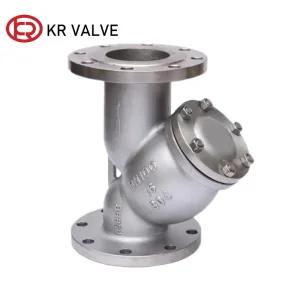
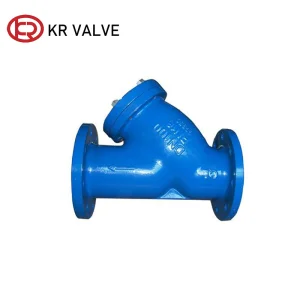
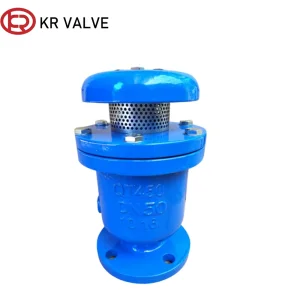
The Engineering Spectrum of Custom Carbon Steel Y-Type Strainers
In modern industrial fluid processing, mechanical protection of downstream capital assets—such as control valves, high-pressure pumps, turbine meters, and steam traps—is non-negotiable. Carbon Steel Y Type Strainers represent the critical line of defense against particulate contamination, scale, weld slag, and entrained solids in high-energy piping systems.
Unlike standard cast iron strainers designed for low-pressure municipal water, cast carbon steel (ASTM A216 Grade WCB, LCC, and WC6/WC9 alloy variants) offers exceptional tensile strength, elevated impact resistance, and superior thermal fatigue endurance. Sourcing engineered-to-spec strainers from an established Chinese manufacturer provides EPC contractors and plant operators with custom metallurgical compositions, tailored screen perforation ratios, and precise dimensional compliance to ASME B16.34 and EN 12516 standards.
Metallurgical Selection Matrix: Matching Material to Fluid Dynamics
Selecting the precise carbon steel alloy is fundamental to preventing catastrophic body rupture, stress corrosion cracking, or erosion-corrosion. China’s premier valve foundries utilize advanced spectral analysis during pouring to guarantee chemical compliance across three core material grades:
ASTM A216 Grade WCB
The industry baseline for general industrial service, oil & gas refining, and saturated steam piping. Suitable for operating temperatures from -29°C to 425°C. Features high yield strength (≥ 250 MPa) and excellent weldability for custom drain blow-off boss modifications.
ASTM A352 Grade LCC / LCB
Engineered specifically for low-temperature applications, cryogenic gas treatment, and cold-climate installation (down to -46°C). Charpy V-notch impact testing at sub-zero temperatures guarantees structural integrity without brittle fracture risk under mechanical shock.
ASTM A217 Grade WC6 / WC9
Chromium-Molybdenum alloy steel formulated for high-temperature superheated steam, power generation boilers, and hydrocracking units operating up to 593°C. Resists creep deformation and graphitizers under continuous high thermal loads.
Hydraulic Efficiency: Screen Design & Pressure Drop Optimization
A Y-type strainer’s primary functional metric is its ability to extract foreign media while maintaining a minimal pressure differential ($\Delta P$). China custom factories leverage Computational Fluid Dynamics (CFD) simulation to optimize the internal flow paths of carbon steel strainer bodies, ensuring that the Net Free Strainer Area (NFSA) is at least 1.5 to 2.5 times the nominal pipe area.
Information Gain: Calculation of Strainer Open Area Ratio (OAR)
$$\text{OAR} = \frac{\text{Screen Mesh Open Area } (cm^2) \times \text{Total Screen Surface Area } (cm^2)}{\text{Internal Nominal Pipe Cross-Sectional Area } (cm^2)}$$
Maintaining an OAR above 200% extends maintenance intervals by 300% and prevents pump cavitation in high-viscosity hydrocarbon lines.
Standard Carbon Steel Y-Strainer Engineering Specifications
| Nominal Size (DN / NPS) | Pressure Class (ASME / PN) | Body Material Options | Standard Mesh / Perforation | End Connections | Face-to-Face Standard |
|---|---|---|---|---|---|
| DN15 - DN50 (1/2" - 2") | Class 150 - 2500 / PN16 - PN400 | A105 Forged / A216 WCB | 40 - 100 Mesh (SS316) | SW, NPT, Flanged RF | ASME B16.34 / Manufacturer Std |
| DN65 - DN200 (2-1/2" - 8") | Class 150 - 600 / PN16 - PN100 | A216 WCB / A352 LCC | 1/16" (1.6mm) Perf + SS304 Screen | Flanged RF, RTJ, BW | ASME B16.10 / EN 558 Ser.1 |
| DN250 - DN600 (10" - 24") | Class 150 - 300 / PN16 - PN40 | A216 WCB / WC6 / Fabricated | 1/8" (3.2mm) Perf + Custom Mesh | Flanged RF / Butt-Weld (BW) | ASME B16.10 / DIN 3202-F1 |
| DN650+ (26"+ Custom) | Class 150 - 300 / PN10 - PN25 | Fabricated Carbon Steel Plate | Heavy-Duty Wedge Wire Basket | Flanged / Butt-Weld | Custom Engineering Drawing |
Strategic Advantages of Sourcing Custom Y Strainers from China
China has evolved into the world's premier hub for heavy industrial valve and strainer production. Modern Chinese foundries and machining plants—such as those based in Tianjin, Zhejiang, and Jiangsu clusters—combine vertical supply chain integration with advanced quality management systems certified to ISO 9001, API 6D, and CE-PED.
Precision Investment & Sand Casting
Utilizing automated resin sand casting and silica sol investment casting processes, Chinese foundries deliver carbon steel strainer bodies with superior surface smoothness, zero internal gas porosity, and wall thickness uniformity exceeding ASME B16.34 requirements.
Full OEM / ODM Customization Depth
Factory-direct engineering capabilities allow complete customization of strainer parameters: magnetic inserts for metallic sludge removal, differential pressure tap locations, quick-opening cover mechanisms (davit arm / hinged bonnet), and anti-corrosive epoxy coatings.
Total Cost of Ownership (TCO) Compression
By leveraging localized raw material sourcing, automated CNC machining centers, and optimized labor productivity, China suppliers offer 30% to 45% cost savings compared to North American or European OEMs without compromising material certification or QA testing.
Macro Industry Solutions & Heavy-Duty Application Scenarios
Custom Carbon Steel Y Strainers are deployed across harsh industrial environments where operating failure is not an option. Specialized modifications adapt these strainers to distinct thermodynamic and chemical challenges:
1. Downstream Petrochemical & Refining Units
In hydrotreating, fluid catalytic cracking (FCC), and crude distillation units, thermal hydrocarbon fluids carry coke particles and catalyst fines. Carbon Steel WCB Y strainers with NACE MR0175 / ISO 15156 compliance prevent sulfide stress cracking in sour gas services. High-mesh SS316 screens backed by perforated support baskets ensure long-term filtration under high flow velocities.
2. High-Pressure Superheated Steam Networks
Power plant steam main headers operate under extreme temperatures and pressures. Using ASTM A217 WC6 alloy bodies equipped with graphite-reinforced spiral wound gaskets, these Y strainers catch pipe scale and rust before steam enters high-velocity control valves and steam turbines, eliminating expensive trim erosion.
3. Liquefied Natural Gas (LNG) & Cryogenics
For LNG regasification terminals and cold-box piping, low-temperature carbon steel (ASTM A352 LCC) strainers undergo 100% radiography on casting sections. Extended bonnets and special low-temperature seals ensure ice-free operation and zero external leakage during continuous deep thermal cycling.
4. District Energy & Municipal Thermal Heating
Large-bore carbon steel strainers (DN300 to DN600) installed at boiler plant outlets filter boiler scale and debris. Hinged quick-opening covers equipped with davit structures enable single-technician screen removal, reducing plant maintenance downtime from hours to minutes.
Global Enterprise Procurement Framework & QA/QC Directives
International EPC buyers and enterprise procurement teams must navigate complex technical compliance requirements when sourcing custom strainers. Leading Chinese suppliers provide full QA/QC documentation matching tier-1 international standards:
Material Traceability (EN 10204 3.1 / 3.2)
Every carbon steel casting heat is tracked from electric arc furnace melt to final machining. Mill Test Reports (MTRs) verify chemical composition (C, Mn, Si, P, S, Cr, Ni) and mechanical properties (tensile, yield, elongation, hardness).
Non-Destructive Examination (NDE / NDT)
High-pressure strainers undergo Radiographic Testing (RT) per ASME B16.34 Appendix-I on critical flange-to-body wall transitions, Magnetic Particle Testing (MT) for surface linear defects, and Dye Penetrant Testing (PT) on weld overlay areas.
Pressure Testing per API 598 / EN 12266
100% of finished strainers are hydrostatic body tested at 1.5 times the nominal cold working pressure rating, and seat blow-off valve seals are tested to ensure zero bubble leakage prior to export packing.
Emerging Trends in Industrial Y Strainer Technology
The industrial valve sector is undergoing rapid technological evolution. China’s forward-thinking manufacturers are leading the integration of smart technologies and advanced environmental controls into traditional mechanical Y strainers:
1. Smart Differential Pressure (DP) IoT Integration
Modern carbon steel Y strainers are increasingly specified with pre-machined DP ports fitted with wireless smart pressure transmitters. These IoT sensors continuously monitor $\Delta P$ across the screen element, transmitting real-time clogging data to SCADA systems for predictive maintenance scheduling.
2. Low-Fugitive Emission Bonnet Seals
To align with global Net-Zero carbon targets and stringent environmental regulations (such as API 641 and ISO 15848-1), custom strainers feature self-energizing graphite gaskets with inner/outer stainless steel retaining rings, eliminating volatile organic compound (VOC) leaks.
3. Hydrogen-Ready Metallurgy & Surface Coatings
As global infrastructure transitions toward clean energy, carbon steel strainers are modified with specialized internal electroless nickel plating (ENP) or HVOF tungsten carbide coatings to prevent hydrogen embrittlement in high-pressure hydrogen blending networks.
Frequently Asked Questions by Industrial Buyers
Detailed technical answers provided by our senior metallurgical engineers to assist procurement managers and system designers.
Complementary Valve & Flow Control Equipment
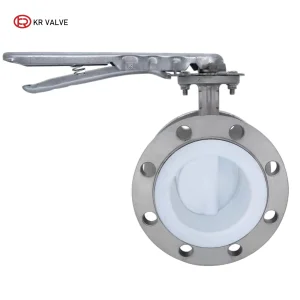
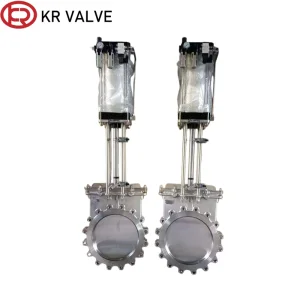
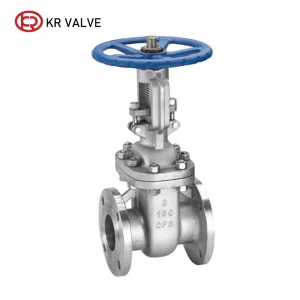
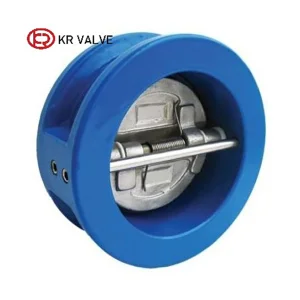
Complete your plant piping packages with direct factory supply of butterfly, knife gate, check, and backflow prevention valves manufactured under certified QA standards.