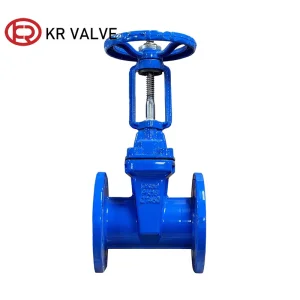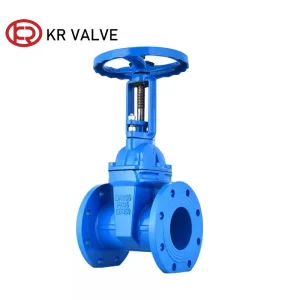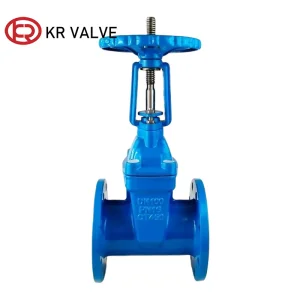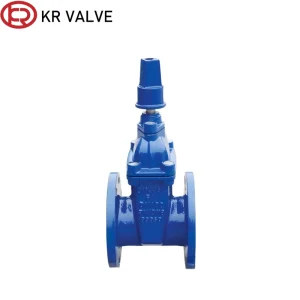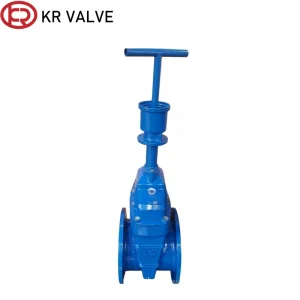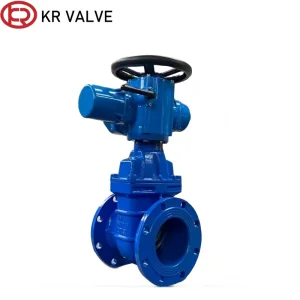
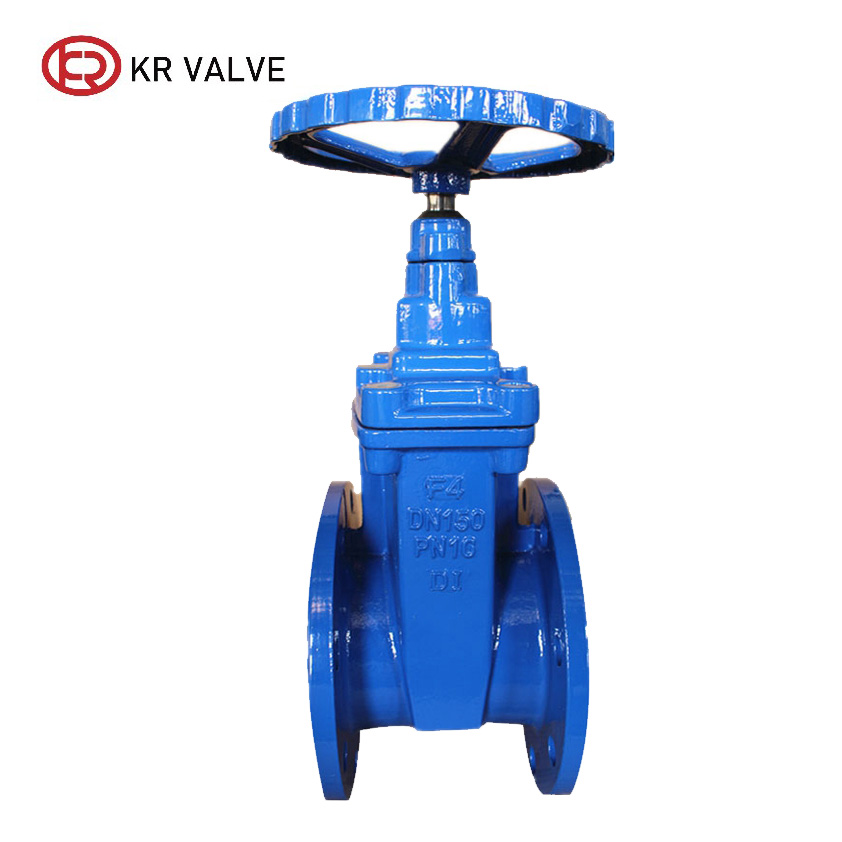
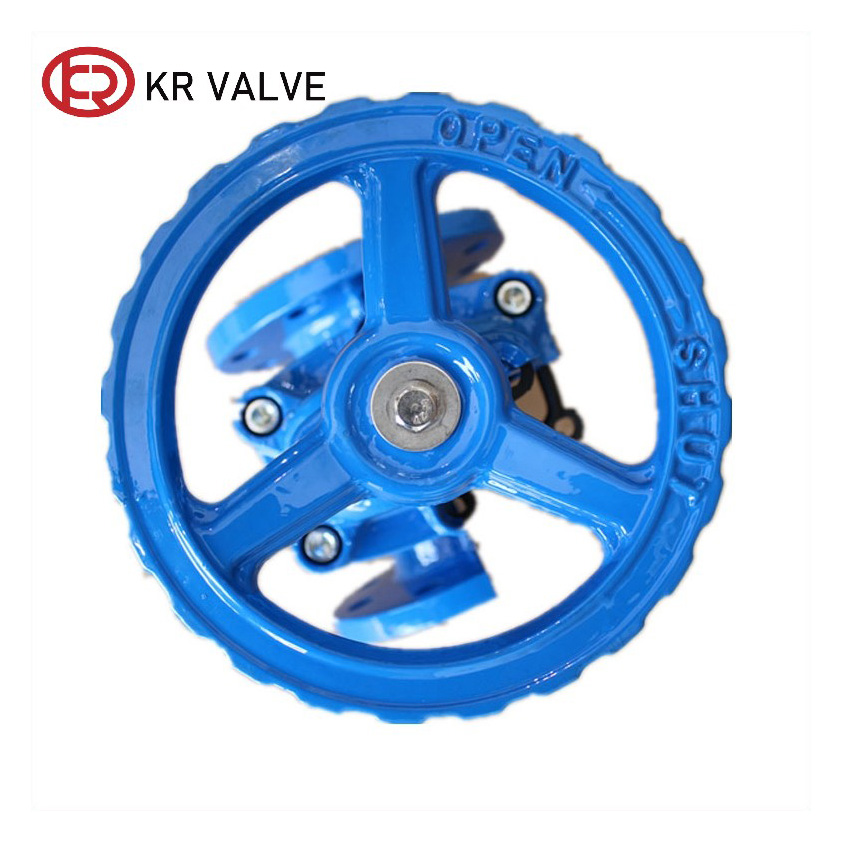
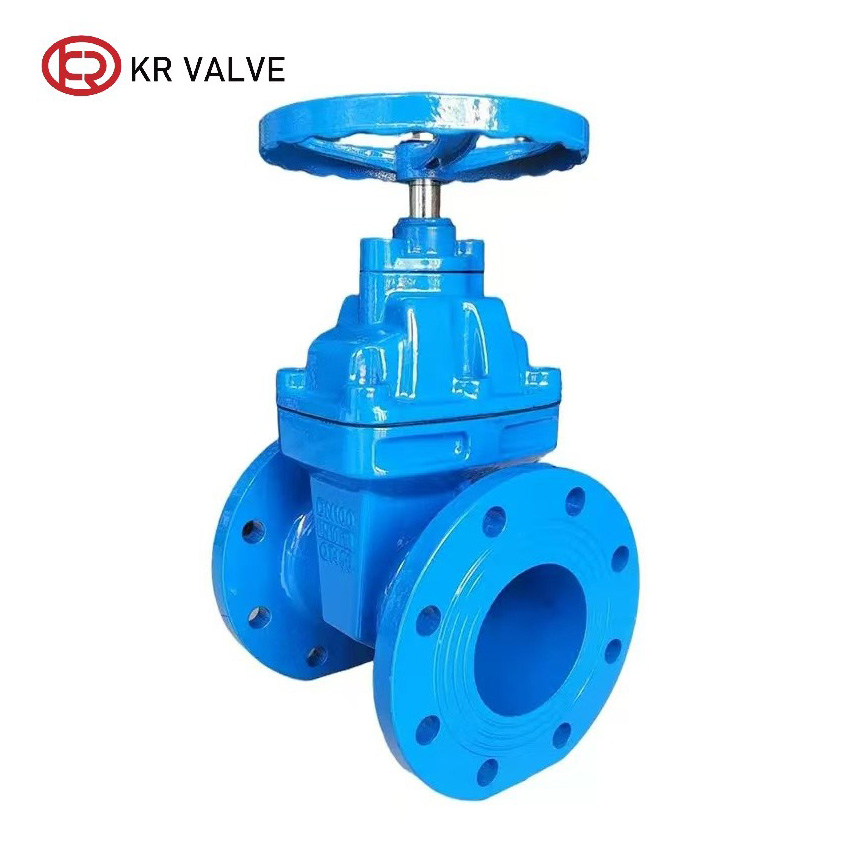
Wholesale DIN F4 Standard Gate Valve Handwheel Operation Supplier, Manufacturer
Product Description
Product Specifications
| Valve Type: | Resilient seat gate valve | Structure: | Non-rising type |
| Standard: | DIN F4 | Workmanship: | Investment casting |
| Sealing Direction: | Bidirectional | Sealing Grade: | Zero leakage |
| Temperature: | -20°C < T < 120°C | Operation: | Handwheel |
Characteristics
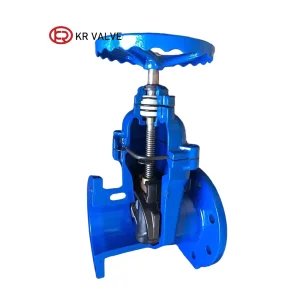
The core operating component of the gate valve is the gate plate, which performs linear reciprocating movements perpendicular to the fluid flow direction. A distinctive operational trait of this valve type is that it is engineered solely for full-open and full-close operations—a design that ensures unimpeded fluid flow when fully open, alongside dependable shut-off capability when fully closed.
Superior sealing performance of the valve is achieved via a fully rubber-encapsulated gate plate.
Key Advantages
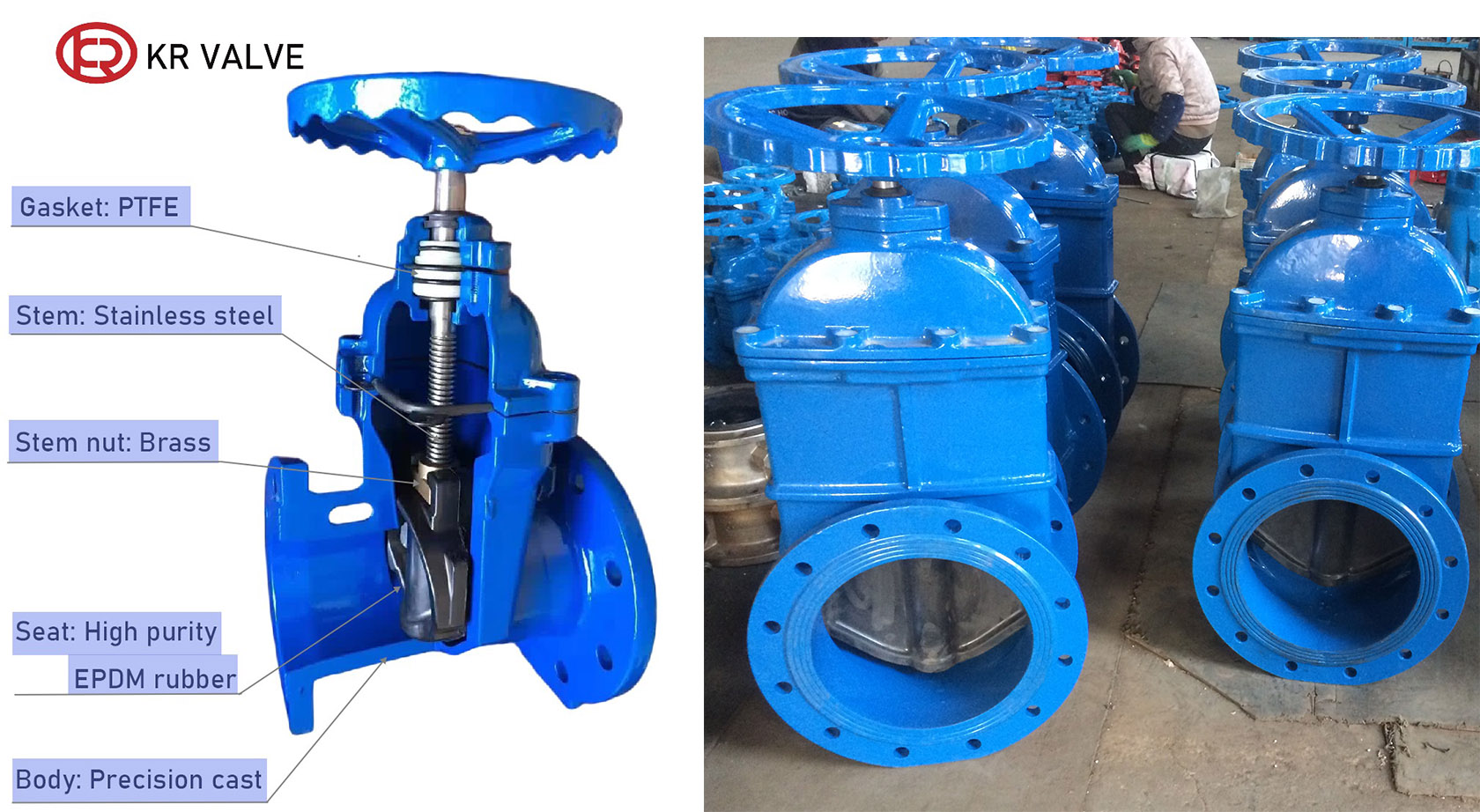
Our gate plate features a robust rubber-to-iron bonding structure with a thickness that outperforms national standards. Crafted via cutting-edge injection molding, it delivers a smooth, defect-free finish, uniform rubber coverage, and superior elasticity. What’s more, the valve body, bonnet, and gate frame are precision-cast from high-density ductile iron—engineered to withstand high pressure without cracking, ensuring an extended service life that reduces replacement costs.
The flat-bottomed valve seat design aligns perfectly with pipeline walls, eliminating hidden spots where debris can collect. This ensures unimpeded flow even for impurity-laden fluids, minimizing maintenance downtime.
Constructed from lightweight ductile iron castings, this valve is 20%–30% lighter than traditional models. Its reduced weight simplifies lifting and installation, cutting down on labor costs and making routine maintenance a breeze.
Packaging & Shipping
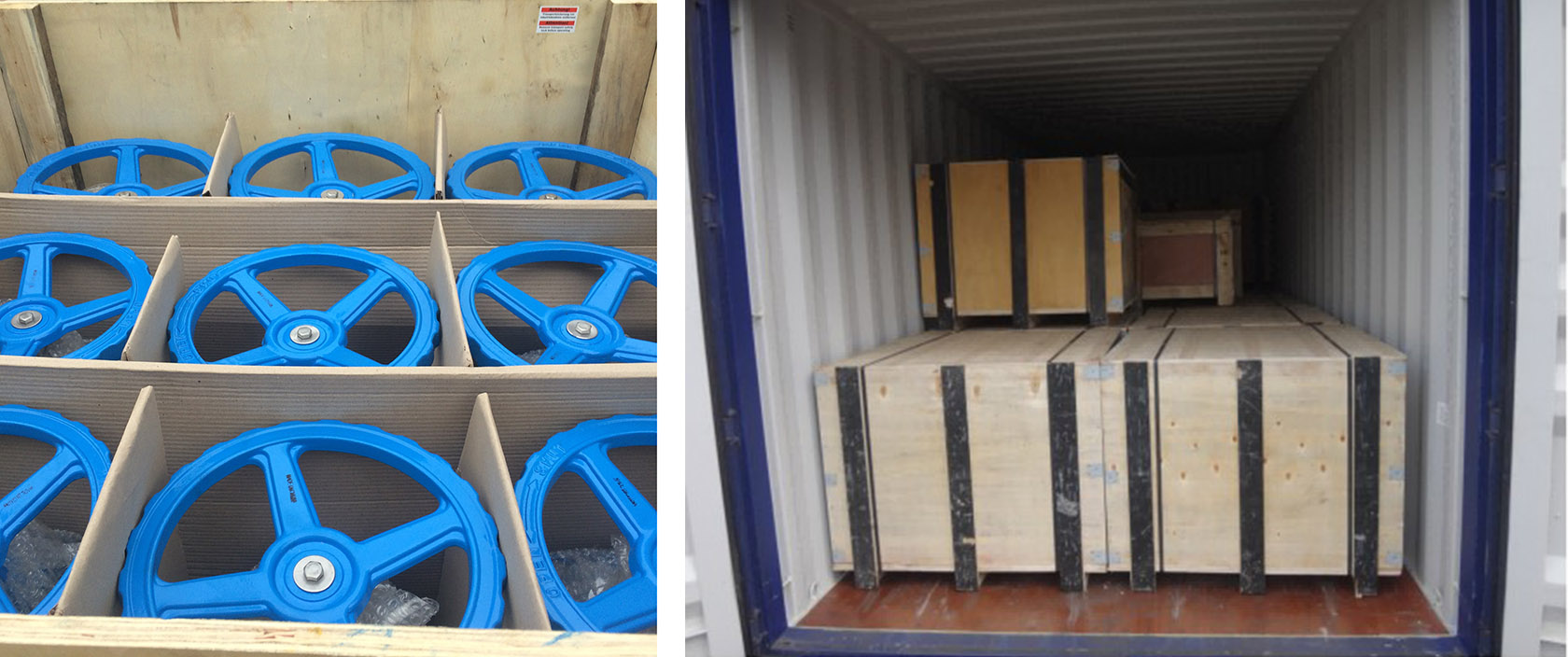
Standard export wooden case packaging
Application Scenarios
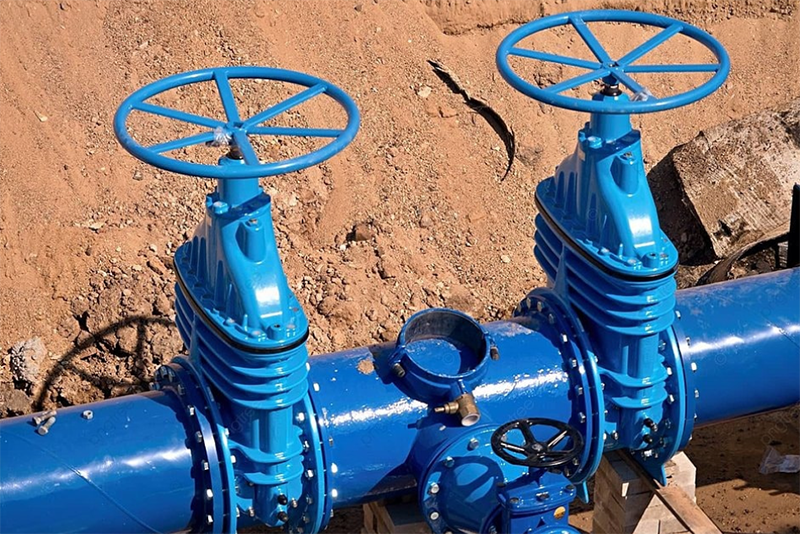
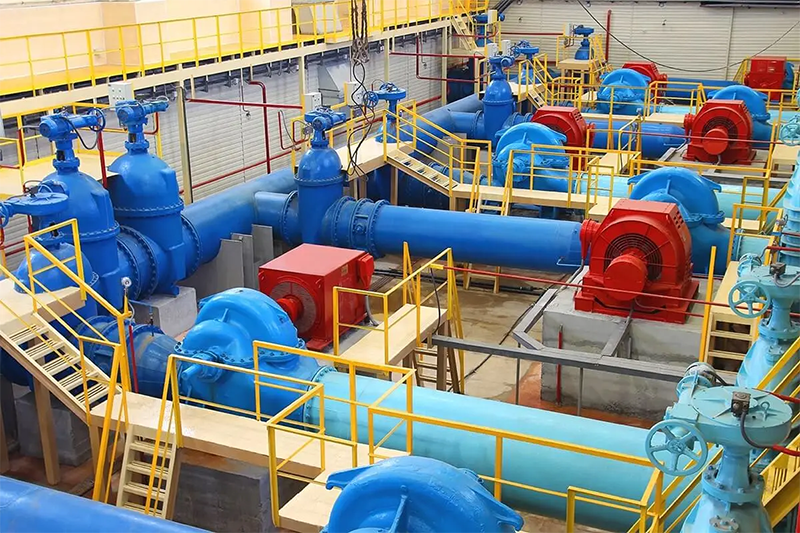
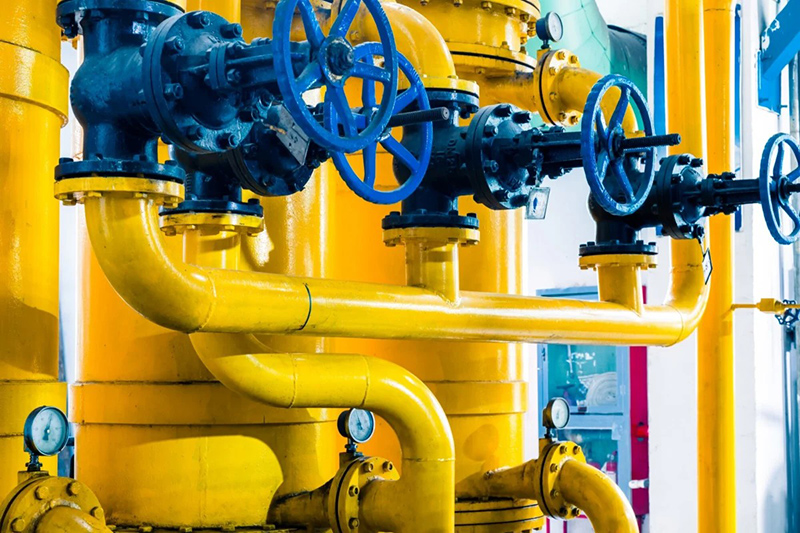
The resilient-seated gate valve is a widely deployed shut-off and isolation component that finds extensive application in fluid handling pipelines across municipal infrastructure, industrial facilities, and building services systems.
Material Specifications
| Body | Plate | Stem | Stem Nut | Seat | Operating Temperature (°C) |
|---|---|---|---|---|---|
| HT200/HT250 Cast iron |
Ductile Iron | 20CR13 | Brass | EPDM Rubber | -20 ~ 120 (short-term up to 150) |
| GGG40/GGG50 Ductile iron |
Ductile Iron | SS304 | SS304 | NBR Rubber | -30 ~ 100 |
| WCB Carbon steel |
WCB | SS304/SS316 | SS304/SS316 | FKM/VITON Rubber | -20 ~ 200 |
| CF8/SS304 Stainless Steel |
CF8 | - | - | PTFE Rubber | -200 ~ 260 |
| CF8M Stainless Steel |
CF8M | - | - | Brass | -30 ~ 350 |
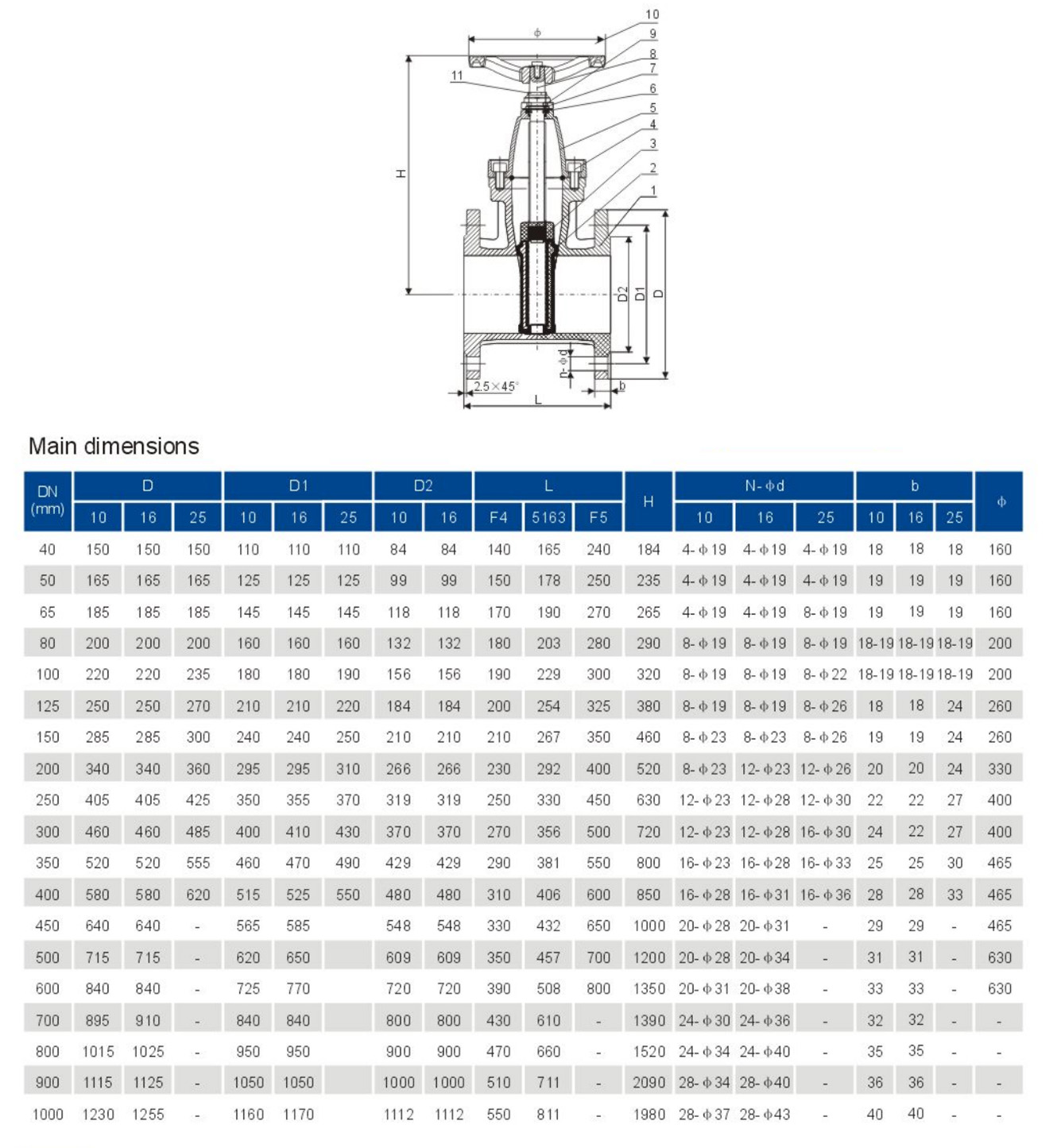
Dimension
Frequently Asked Questions (FAQ)
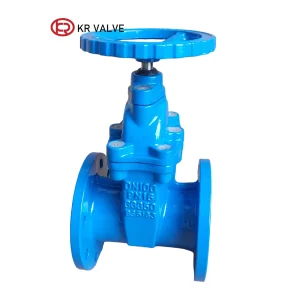
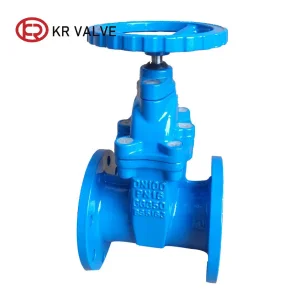
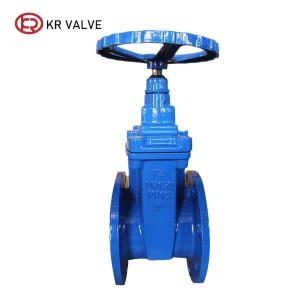
This valve is engineered strictly according to the DIN F4 standard, featuring a non-rising stem structure and high-precision investment casting workmanship.
Zero-leakage sealing is achieved via a gate plate fully encapsulated in high-grade rubber, providing excellent bidirectional sealing performance in both full-open and full-close operations.
The flat-bottomed valve seat aligns flush with the pipeline wall, preventing debris and sediment from accumulating in hidden crevices. This guarantees smooth flow for media containing impurities and reduces maintenance downtime.
The standard operating temperature ranges between -20°C and 120°C. Depending on your material choice (such as EPDM, NBR, Viton, or PTFE seat options), temperatures from -200°C up to 350°C can be accommodated.
Constructed from high-density ductile iron, the valve is 20% to 30% lighter than conventional cast iron valves, making transportation, lifting, and piping installation easier while cutting down on labor costs.
It is widely used as a shut-off and fluid isolation component in municipal infrastructure, industrial fluid processing facilities, and commercial building service systems.