Featured Industrial Valve Lineup
Explore our engineering-grade valve catalog, fully customized for global industrial, chemical, and municipal projects.
Technical Whitepaper: Kinematics & Design Superiority
Understanding the mechanical advantages, seat engagement geometry, and lifecycle enhancements of double offset eccentric butterfly valves.
Dual Eccentric Kinematics
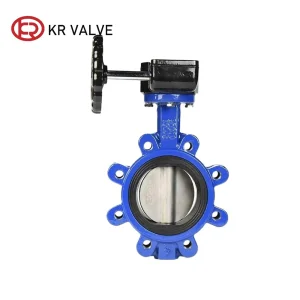
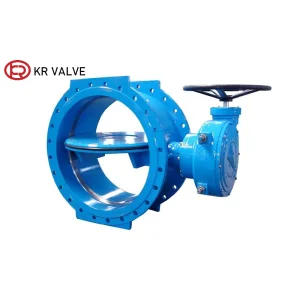
By offsetting the stem shaft from both the centerline of the valve seat (Offset 1) and the centerline of the pipe bore (Offset 2), the disc lifts cleanly off the seat within degrees of rotation, virtually eliminating sliding friction and seat distortion during opening and closing.
Zero-Leakage Sealing Options
Custom engineered with resilient elastomer seats (EPDM, NBR), high-performance fluoropolymers (PTFE, R-PTFE), or stainless steel/metal-to-metal seating, providing bi-directional tight shut-off under severe thermal cycling and pressures up to Class 300 / PN40.
Extended Operating Lifecycle
The minimized cam-action seat contact dramatically reduces operating torque requirements, allowing downsized pneumatic or electric actuators. Friction reduction extends seal longevity up to 500% compared to conventional concentric rubber-lined butterfly valves.
Comparative Technical Matrix: Valve Architectures
Evaluating the mechanical performance parameters across primary butterfly valve classifications to guide enterprise procurement decisions.
| Performance Metrics | Concentric Butterfly Valve | Double Offset (Double Eccentric) | Triple Offset (Triple Eccentric) |
|---|---|---|---|
| Operating Pressure Limits | Low to Medium (PN6 - PN16) | Medium to High (PN10 - PN40 / Class 300) | Extreme High (Class 150 - Class 900+) |
| Temperature Capability | -20°C to +120°C (Elastomeric restricted) | -50°C to +260°C (PTFE / Metal Hybrid) | -196°C to +600°C (All-Metal torque seal) |
| Seat Wear Mechanism | Continuous full-rotational rubbing | Cam-action lift; minimal contact angle | Non-rubbing, interference-free conical seat |
| Primary Application Spectrum | Water supply, low-pressure HVAC, agriculture | Desalination, chemical, municipal mains, steam | Refineries, power stations, high-temp gas |
| Procurement & Lifecycle TCO | Lowest initial cost, higher maintenance frequency | Optimal ROI: High durability at moderate CAPEX | Highest initial CAPEX, specialized maintenance |
Global Commercial Landscape & Sourcing Ecosystem
Analyzing global market demands, strategic manufacturing clusters, and supply chain efficiencies for high-performance fluid control.
Global Market Demands & Sourcing Shifts
The global industrial valve market is undergoing a rapid transition toward energy-efficient, compact, and low-maintenance solutions. As global infrastructure upgrades municipal water transmission lines, seawater desalination facilities, and district energy networks, the demand for Custom Double Offset Butterfly Valves has expanded significantly.
International EPC contractors and plant operators are increasingly shifting away from bulky gate valves and high-torque ball valves in large-diameter applications (DN200 and above). The double eccentric design offers an unmatched strength-to-weight ratio, smaller installation footprint, and significantly reduced actuator sizing costs, making it the preferred choice for modern piping engineering.
China Factory Efficiency & OEM Advantage
China’s valve manufacturing hubs—particularly concentrated in major industrial clusters such as Tianjin, Zhejiang, and Jiangsu—offer an integrated supply chain advantage that remains unmatched globally. By leveraging fully integrated foundries, advanced multi-axis CNC machining centers, and automated hydrostatic testing rigs, top-tier Chinese valve factories deliver exceptional quality control at competitive lead times.
Customization is the core engine of this ecosystem. Direct-factory sourcing allows global engineering teams to specify custom alloy body castings (WCB, CF8, CF8M, Duplex SS), tailored seat materials (R-PTFE, EPDM, Viton, Metal seats), precise face-to-face dimensions (ISO 5752, EN 558, API 609), and customized flange drilling (ANSI B16.5, DIN PN10/PN16/PN25, JIS 10K/20K).
Localized Applications & Emerging Technological Trends
Deploying double offset butterfly technology across specialized industrial environments while driving smart fluid innovations.
Desalination & Marine Systems
Seawater reverse osmosis (SWRO) plants require exceptional resistance to chloride pitting and crevice corrosion. Custom double offset valves featuring Duplex SS (2205/2507) discs and vulcanized R-PTFE seats provide leak-tight performance against aggressive high-salinity brines.
Municipal Water Distribution
Large-diameter city water mains rely on double eccentric flanged butterfly valves with drinking water certified WRAS/NSF EPDM seats. Their non-rubbing closure guarantees decades of maintenance-free operation under underground buried services.
District Energy & HVAC Networks
High-temperature hot water and low-pressure steam transmission utilize carbon steel (WCB) double offset valves with stainless steel seats. They easily handle thermal expansion shock without binding, keeping district heating grids operating efficiently.
Smart Actuation & IoT Monitoring
Next-generation factory configurations integrate smart positioners, wireless torque diagnostics, and seat wear sensors into the valve top flange (ISO 5211 standard), enabling predictive maintenance via industrial SCADA platforms.
Fugitive Emission Control
To meet strict ISO 15848-1 environmental guidelines, double offset valve stems are upgraded with spring-loaded live-loaded PTFE or flexible graphite packing, preventing hazardous gas escape at critical shaft seals.
Advanced Polymer Coating Systems
Electrostatic fusion-bonded epoxy (FBE) coatings (minimum 250 microns) provide maximum external protection against soil acidity, atmospheric corrosion, and marine salt spray exposure.
Enterprise Procurement Framework & Quality Assurance
Key standards and testing protocols global B2B buyers must specify when sourcing custom double offset butterfly valves.
1. Design Standards
Ensure the factory manufactures strictly according to API 609 (Category B), EN 593, or AWWA C504. Verify face-to-face dimensions strictly adhere to ISO 5752 series 20, 16, or EN 558 series 14.
2. Pressure & Leakage Testing
Demand 100% factory hydrostatic shell testing (1.5x PN rating) and bi-directional seat leakage testing (1.1x PN rating) compliant with API 598 or EN 12266-1 Rate A (Zero Leakage) prior to dispatch.
3. Material Traceability
Insist on complete EN 10204 3.1 Material Test Certificates (MTC) covering chemical composition and mechanical properties for pressure-retaining castings (body, disc) and stem shafts.
Technical & Sourcing FAQ
Answers to common engineering and procurement questions regarding double offset butterfly valves.
Complete Flow Control Product Solutions
Browse additional high-reliability valve series engineered for industrial fluids, gas, water treatment, and slurry systems.
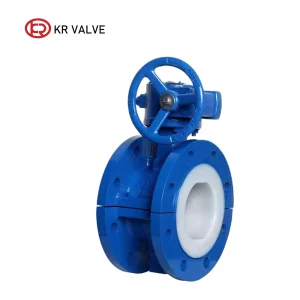
Wholesale WCB split body full PTFE lined concentric butterfly valve Manufacturers, Factories
View Specifications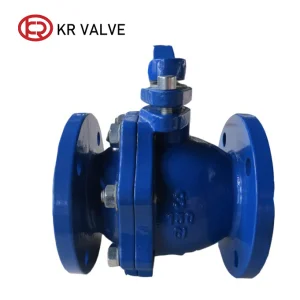
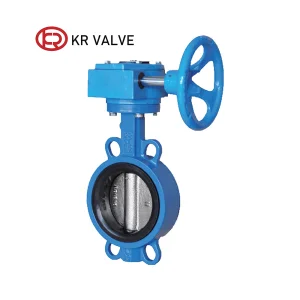
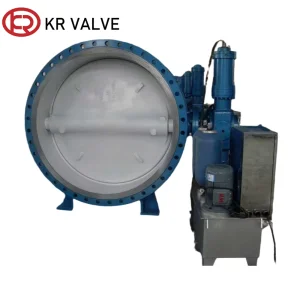
Custom Heavy hammer hydraulic butterfly valve triple eccentric type Manufacturers, Factory
View Specifications