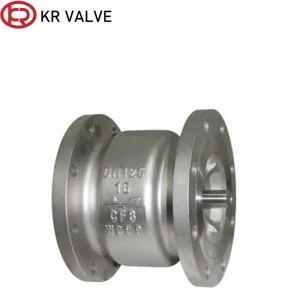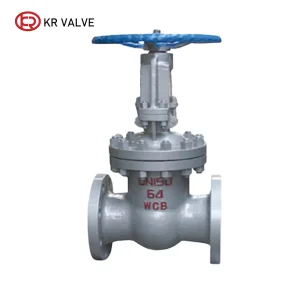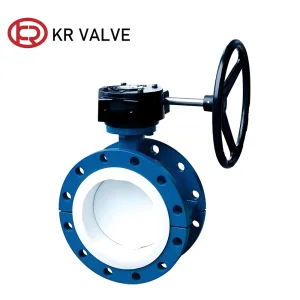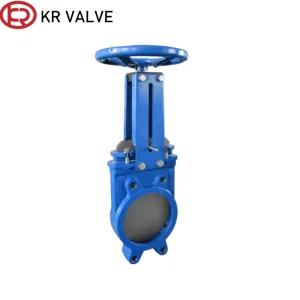
Precision Engineering Portfolio: Top-Tier Check & Control Valves
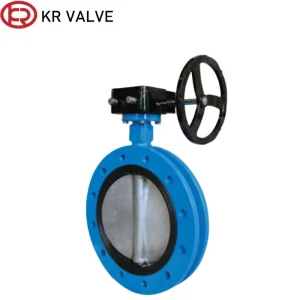
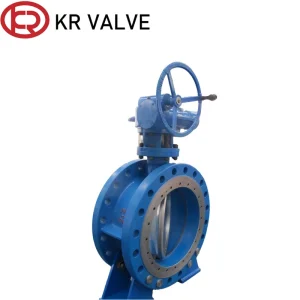
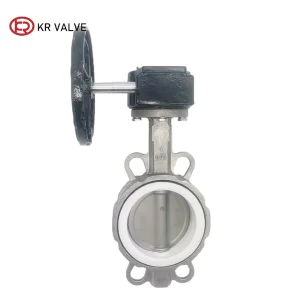
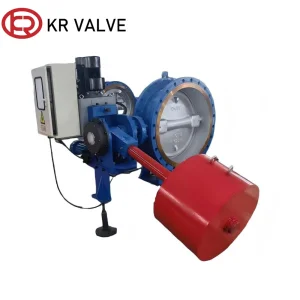
Explore our foundational range of customized check valves, high-performance butterfly valves, and intelligent fluid regulation units designed for extreme pressure and aggressive media.
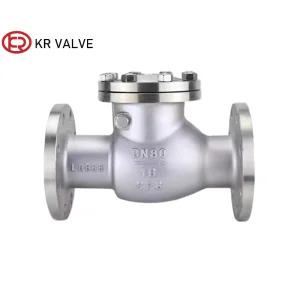
Hydrodynamic Physics & Architecture of Single Direction Valves
Understanding the fundamental engineering dynamics that govern unilateral flow control, cracking pressure thresholding, surge attenuation, and back-pressure sealing integrity.
Cracking Pressure Kinetics
The minimal differential upstream pressure required to overcome spring preload or disc mass. Engineered options range from ultra-sensitive 0.01 bar (0.15 psi) micro-check valves to heavy-duty 2.5 bar high-viscosity backflow preventers.
Water Hammer & Transient Surge Attenuation
Preventing catastrophic pressure spikes caused by sudden pump stoppage. Utilizing spring-assisted silent check closures or dashpot hydraulic slow-closing cylinders to neutralize hydraulic kinetic energy before acoustic shockwaves build.
Zero-Leakage Sealing Mechanics
Hybrid elastomeric-to-metal seating interface configuration. Engineered with vulcanized EPDM/FKM profiles or precision-lapped Stellite metal-to-metal seats conforming strictly to ISO 5208 Rate A and API 598 zero-bubble standards.
Macro Industrial Solutions & Global Commercial Landscape
Across modern process engineering, power generation, and municipal water management, single direction valves (also known as check valves or non-return valves) form the critical line of defense for rotating equipment, pumps, and pressurized vessels.
Desalination & Marine Skids
High-salinity sea water reverse osmosis (SWRO) systems demand extraordinary alloy integrity. Custom Super Duplex (2507) and CF3M single direction valves mitigate backpressure reversals while resisting pitting corrosion (PREN > 40).
Thermal & Nuclear Power Plants
Feedwater isolation lines operate under extreme thermal cycling and steam conditions. Forged steel (A105/F316) check valves engineered with pressure-seal bonnets guarantee non-return flow at temperatures up to 550°C (1022°F).
Municipal Wastewater & Slurry Lines
Heavy solids concentration causes conventional check discs to jam. Non-clogging ball check valves and flexible rubber sleeve check valves ensure full-port passing without media accumulation or reverse contamination.
Engineering Metallurgy & Material Selection Matrix
Custom valve performance is fundamentally tied to material science. Our foundry utilizes spectral analysis to guarantee exact alloy chemistry and mechanical properties.
| Component Group | Material Options | Operational Temperature | Corrosion / Wear Resistance | Primary Industrial Application |
|---|---|---|---|---|
| Valve Body & Bonnet | Ductile Iron GGG40 / GGG50 (ASTM A536) | -10°C to +120°C | Medium (Epoxy Coated) | Potable Water, Municipal Drainage, HVAC |
| Carbon Steel Castings | WCB / WCC (ASTM A216) | -29°C to +425°C | Standard Industrial | Oil & Gas Transmission, High-Pressure Steam |
| Stainless Steel Alloys | CF8 (SS304), CF8M (SS316), CF3M (316L) | -196°C to +550°C | High Corrosion & Acid Resistance | Chemical Processing, Food & Beverage, Cryogenics |
| Super Alloys | Duplex 2205 / Super Duplex 2507 / Hastelloy C276 | -40°C to +300°C | Extreme Pitting & Chloride Stress Cracking | Desalination Plants, Offshore Drilling, Acid Lines |
| Resilient Seating | EPDM, NBR, FKM (Viton), PTFE / RPTFE | -35°C to +200°C | Chemical Inertness / Resilient Sealing | Zero-Leakage Potable Water, Fuel, Hydrocarbons |
| Hard Seating Surface | Stellite No. 6 Overlay / SS316 Nitrided | Up to +650°C | Extreme Erosion & High-Velocity Abrasion | Power Plant Boiler Feedwater, Abrasive Slurries |
Bespoke OEM/ODM Customization & Engineering Workflows
As a direct manufacturer and specialized valve factory, we turn complex project requirements into field-ready flow control hardware through tailored CAD/CAM design and rapid prototyping.
Custom Face-to-Face & Flange Standards
Modifying envelope dimensions to fit existing pipe retrofits without structural line adjustments. Fully compliant with DIN F1/F4/F5, BS5163, ANSI B16.10, ISO 5752, and JIS B2002 standards.
Spring Preload & Cracking Adjustment
Calibrating spring constants via finite element analysis (FEA). Engineered spring rates prevent valve chatter in low-flow regimes while guaranteeing ultra-fast non-slam back-sealing when reverse flow initiates.
Hydraulic Dampers & Counterweights
Integrating adjustable oil hydraulic dashpots and counter-balance weight arms on large-diameter tilting disc and swing check valves for dynamic two-stage slow closing protection.
Rigorous Quality Assurance & International Regulatory Compliance
In accordance with Google E-E-A-T principles and global industrial safety directives, every valve manufactured at our facility undergoes multi-stage non-destructive testing (NDT) and pressure verification.
Hydrostatic Shell Testing
Shell pressure testing executed at 1.5x PN rating using demineralized water. Verifies casting density, wall thickness uniformity, and absolute structural integrity under over-pressure conditions.
High & Low-Pressure Seat Sealing
Seat tightness inspected at 1.1x PN rating and low-pressure pneumatic air test at 0.6 MPa in strict accordance with API 598, ISO 5208 Rate A, and EN 12266-1 standards.
Advanced NDT & Material Verification
100% Positive Material Identification (PMI) via XRF analyzers, ultrasonic wall thickness measuring, magnetic particle inspection for surface defects, and dye penetrant testing for critical weld overlays.
Localized Application Scenarios & Engineering Field Analysis
Real-world field performance data across global municipal projects, industrial plants, and energy infrastructure.
High-Head Water Transmission (Middle East)
Challenge: Heavy water hammer causing flange joint ruptures upon high-head pump shutoff.
Solution: Custom DN1200 Ductile Iron Slow-Closing Hydraulic Check Valves with hydraulic dashpot closure cylinders.
Result: Pressure shockwave amplitude reduced by 88%, completely eliminating pipe vibration and line downtime.
Hydrocarbon Flow Backfire Prevention (North Sea)
Challenge: Aggressive chloride exposure causing micro-pitting in standard 316SS swing check seats.
Solution: Custom Super Duplex 2507 Dual-Plate Wafer Check Valves with NACE MR0175 compliant spring mechanisms.
Result: Zero maintenance interventions over 48 months of continuous operational uptime.
High-Temperature Hot Water Loop (Northern Europe)
Challenge: Thermal expansion reversals causing rapid seal degradation in standard check valves.
Solution: Custom WCB Body Spring-Loaded Silent Check Valves with Metal-to-Metal Stellite seating overlay.
Result: Silent operation achieved under rapid 180°C thermal cycles without steam thermal shock.
Technical Roadmap & Future Outlook (2026 - 2035)
Pioneering smart flow monitoring and eco-friendly metallurgy to power the future of autonomous, sustainable fluid infrastructure.
Phase 1: Smart IoT Sensor Integration (2026 - 2027)
Embedding wireless acoustic emission micro-sensors and magnetic hall-effect disc position transmitters directly into the valve bonnet to provide real-time non-intrusive monitoring of seat wear, dynamic disc positioning, and internal leakage.
Phase 2: Additive Manufacturing & Advanced Biomimetic Hydrodynamics (2028 - 2030)
Utilizing 3D metal laser powder bed fusion (LPBF) additive manufacturing to produce complex internal guide vanes and biomimetic disc geometries that lower flow resistance (Kv values enhanced by up to 22%), cutting pump energy consumption globally.
Phase 3: Zero-Carbon Manufacturing & Next-Gen Elastomers (2031 - 2035)
Transitioning manufacturing processes to 100% green hydrogen-melted foundries, introducing fully recyclable PFAS-free fluoro-elastomers, and deploying self-healing hard ceramic coatings for zero-erosion life expansion.
Frequently Asked Technical Questions (FAQ)
Direct responses to critical engineering, procurement, and selection queries submitted by industrial project managers.
What is the primary technical difference between a single direction valve, a check valve, and a non-return valve?
Technically, "single direction valve", "check valve", and "non-return valve (NRV)" refer to the same functional class of flow control devices designed to allow fluid to pass in only one direction while automatically blocking reverse flow. "Single direction valve" is often used in generalized OEM hydraulic specifications, "check valve" is standard ANSI/API mechanical terminology, while "non-return valve" is widely utilized across European DIN/BS standards.
How do I select between a Dual-Plate Wafer Check Valve and a Spring-Loaded Silent Check Valve?
Selection depends on installation footprint, flow velocity, and water hammer severity. Dual-Plate Wafer Check Valves are compact, lightweight, cost-effective for medium-to-large pipelines (DN50-DN1200), and fit between standard flanges. However, for high-head pumping systems where water hammer is a critical threat, Spring-Loaded Silent Check Valves are preferred because their axial disc spring closes the valve before fluid column reversal occurs, completely eliminating closing slam.
Can custom single direction valves be installed in vertical piping orientation?
Yes, provided the proper check mechanism is chosen. Spring-loaded axial silent check valves, vertical lift check valves, and rubber ball check valves can operate seamlessly in vertical upward flow lines. Conventional swing check valves without counter-weights should generally be restricted to horizontal lines, as gravity can delay closing or cause chattering in vertical downward flow configurations.
What custom documentation and certificates do you supply for international projects?
Every factory shipment includes EN 10204 3.1 Material Test Reports (MTRs) detailing chemical melt analysis and mechanical tensile testing, Hydrostatic Shell & Seat Leakage Inspection Reports, Certificate of Origin (CO), ISO 9001 quality compliance, CE-PED conformity certificates, and optional third-party inspection sign-offs (SGS, TUV, Bureau Veritas, DNV).
How does low flow velocity affect single direction valve performance?
If fluid velocity is below the minimal required fully-open velocity, the valve disc may flutter or hang in a partially open position. This leads to accelerated seat wear, vibration, and increased pressure drop. As a specialized manufacturer, we engineer custom reduced-stiffness springs or weighted discs matched to your specific system flow range to ensure full disc stability.
Complete Heavy-Duty Industrial Line: Valves & Filtration Accessories
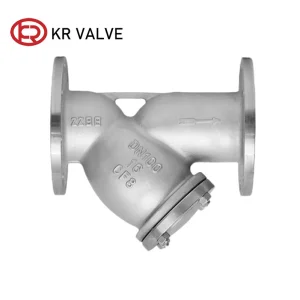
Examine our extended product matrix including stainless steel non-return valves, knife gate valves, metal-seated gate valves, and high-flow Y-strainers.