
Precision-Engineered Stainless Steel Flow Valves
Explore our top-tier export configuration gate valves, knife gates, and automatic fluid control hardware tested strictly under ISO 5208 / API 598 zero-leakage standards.
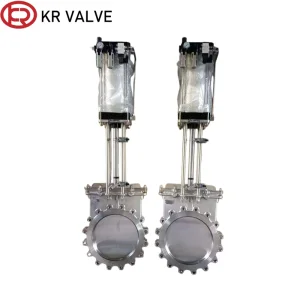
OEM Lug Type Pneumatic Knife Gate Valve Stainless Steel Material
View Product Specs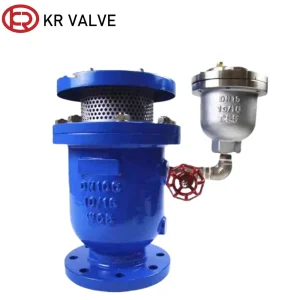
Wholesale China CARX High Speed Release Compound Exhaust Valve
View Product Specs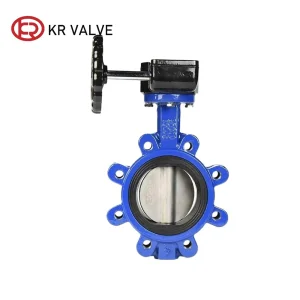
Custom Gear Box Operation Lug Butterfly Valve EPDM Seal
View Product Specs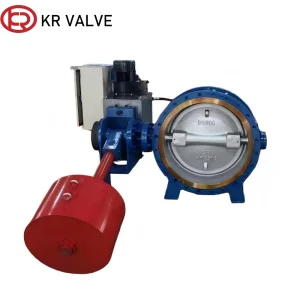
Wholesale Eccentric Type Hydraulic Control Butterfly Valve PN16
View Product Specs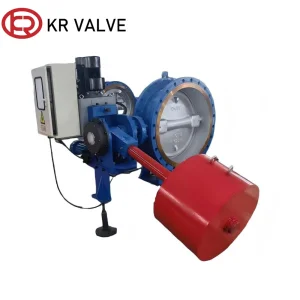
Wholesale Hydraulic Cylinder Control Butterfly Valve Quick Closing
View Product Specs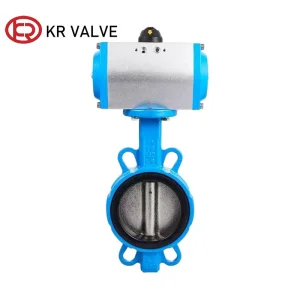
Custom Pneumatic Operation Wafer Butterfly Valve Double Acting
View Product Specs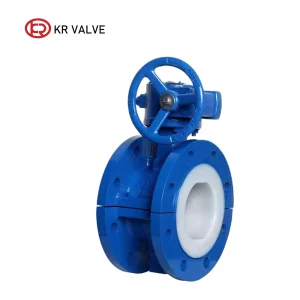
WCB Split Body Full PTFE Lined Concentric Butterfly Valve D341F
View Product Specs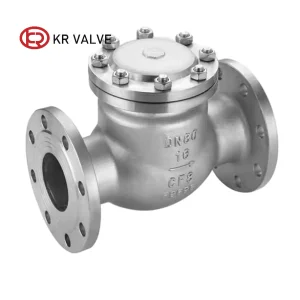
Wholesale Flanged Swing Type Check Valve Stainless CF8 Material
View Product Specs1. Executive Engineering Summary: Stainless Steel Gate Metallurgy & Mechanics
In modern fluid dynamics and heavy industrial infrastructure, selecting a certified Custom SS Steel Gate Valve Manufacturer is a mission-critical decision. Stainless steel gate valves serve as primary isolation mechanisms across municipal, chemical, power, and desalination pipelines.
1.1 Austenitic & Duplex Stainless Steel Alloy Taxonomy
Unlike standard carbon steel (WCB) or ductile iron (GGG40) valves that rely heavily on epoxy coatings to prevent oxidation, stainless steel gate valves provide intrinsic alloy corrosion resistance throughout the entire body matrix. Understanding the exact chemical composition of specified stainless grades is essential to avoiding premature localized pitting, crevice corrosion, and stress corrosion cracking (SCC):
- ASTM A351 Grade CF8 (SS304 equivalent): The baseline workhorse alloy for municipal water distribution, HVAC, food processing, and mild nitric acid applications. Contains ~18% Chromium and ~8% Nickel, offering robust atmospheric and fluid oxidation resistance up to 425°C.
- ASTM A351 Grade CF8M (SS316 equivalent): Engineered with 2-3% Molybdenum addition. CF8M is the mandatory industrial benchmark for marine environments, brackish water handling, chloride-rich wastewater, and industrial chemical processing where pitting resistance is mandatory.
- ASTM A351 Grade CF3M (SS316L low-carbon variant): Formulated with carbon content strictly below 0.03% to eliminate intergranular carbide precipitation during welding. CF3M gate valves excel in heavy-wall welded pipeline installations and highly reactive acid service.
- Duplex (UNS S31803 / 2205) & Super Duplex (UNS S32750 / 2507): Featuring a balanced 50/50 austenitic-ferritic microstructure. These advanced alloys offer yield strengths double that of standard 300-series stainless steel alongside exceptional Pitting Resistance Equivalent Numbers (PREN > 40), tailored specifically for High-Pressure Seawater Reverse Osmosis (SWRO) desalination plants and offshore oil platforms.
OS&Y Stem Architecture
Outside Screw & Yoke (OS&Y) design places stem threads outside the fluid passage. This prevents process media from corroding actuation threads, enabling reliable high-temperature thermal cycle performance.
Zero Fugitive Emissions
Utilizing live-loaded PTFE or flexible graphite packing rings with ISO 15848-1 Class AH certification ensures zero environmental leakage of VOCs, aggressive chemical fumes, and industrial gases.
Stellite 6 Hard-Facing
To eliminate galling under high-pressure differential shut-off, our OEM SS gate valve seats are optionally welded with Cobalt-base Stellite 6 overlay, extending cycle life over 50,000 operations.
2. Global Market Dynamics & Industry Trends (2025–2030)
Enterprise buyers are shifting procurement strategies toward long-life, zero-maintenance flow control assets. Below are the key technological macro trends shaping stainless steel gate valve manufacturing.
01 / Transition from Cast Iron to SS Municipal Mains
Global municipal water utilities in North America and Western Europe are enforcing strict potable water purity regulations (such as NSF/ANSI/CAN 61 and 372). Traditional cast iron valves suffer from internal tuberculation and rust scale build-up over 15-20 years. Stainless steel (CF8/CF8M) resilient-seat and metal-seat gate valves eliminate internal corrosion, maintaining smooth internal hydraulic bore profiles and preventing water contamination for over 50 years.
02 / Heavy Duty Knife Gate Surge in Wastewater & Mining
Industrial wastewater, mining tailings, and paper pulp processing lines require specialized stainless steel knife gate valves. The sharp, bevel-edged stainless blade shears cleanly through dense fibrous slurries, solids, and semi-solid media that standard wedge gate valves cannot close against. The demand for wafer and lug pneumatic SS knife gates is accelerating at an estimated 7.4% CAGR globally.
03 / Smart Actuation & Remote Supervisory Control
Industrial Internet of Things (IIoT) architecture is reshaping fluid network operations. OEM Stainless Steel Gate Factories now integrate smart electric and hydraulic cylinder actuators equipped with HART, Modbus, or PROFIBUS protocols. These actuators provide real-time diagnostic telemetry, monitoring seat torque thresholds, stem travel speed, and predictive seal degradation directly to SCADA centers.
3. Global Enterprise Procurement & Engineering Specification Matrix
When submitting RFQs to custom stainless steel gate valve suppliers, technical accuracy is required regarding pressure temperature ratings, flange drilling specs, and shell pressure integrity.
| Valve Material Grade | Equivalent Standards | Nominal Pressure Range | Applicable Temperature | Target Media Compatibility | Key Sealing Options |
|---|---|---|---|---|---|
| Cast SS CF8 (SS304) | ASTM A351 CF8 / EN 1.4308 | Class 150 - 600 / PN10 - PN40 | -29°C to 425°C | Fresh Water, Air, Food/Beverage, Nitric Acid | EPDM, PTFE, Metal-to-Metal |
| Cast SS CF8M (SS316) | ASTM A351 CF8M / EN 1.4408 | Class 150 - 900 / PN16 - PN63 | -29°C to 538°C | Seawater, Phosphoric Acid, Solvents, Sewage | R-PTFE, Stellite 6, Viton |
| Low Carbon CF3M (SS316L) | ASTM A351 CF3M / EN 1.4404 | Class 150 - 300 / PN10 - PN25 | -46°C to 400°C | Corrosive Chemicals, Welded Lines, Marine | PTFE, Reinforced Graphite |
| Duplex SS 2205 (S31803) | ASTM A890 4A / EN 1.4462 | Class 150 - 1500 / PN16 - PN100 | -40°C to 300°C | Brackish Water, High-Chloride RO, Offshore Crude | Stellite 6 Hard Surfacing |
| Super Duplex 2507 (S32750) | ASTM A890 5A / EN 1.4410 | Class 300 - 2500 / PN40 - PN250 | -50°C to 280°C | Concentrated Brine, Severe Acid Mine Slurry | Integral Hard Alloy Seat |
Engineering Selection Tip for Buyers:
Always verify that pressure testing follows API 598 or ISO 5208 Rate A standards. Rate A designation certifies zero visible leakage during high-pressure liquid shell hydro-testing and low-pressure pneumatic seat testing.
4. Macro Industry Infrastructure Flow Solutions
Custom stainless steel gate valves are engineered into diverse macro-infrastructure networks, operating under harsh environmental and mechanical conditions.
Chemical & Petrochemical Refineries
Handling aggressive media such as organic acids, hydrocarbons, and volatile solvents require CF8M/CF3M gate valves designed strictly to ASME B16.34 wall thickness specs. Fire-safe tested designs (API 607) guarantee structural pressure containment even under refinery fire emergencies.
Desalination & Reverse Osmosis Plants
Seawater intake and high-pressure brine reject lines introduce extreme pitting risks. Utilizing Duplex Stainless Steel 2205 wedge gate valves prevents crevice attack under continuous chloride exposure, significantly outperforming standard epoxy-coated ductile iron alternatives.
Mining Slurry & Power Plant Ash Lines
Abrasive mineral slurries destroyed standard globe or ball valves within months. Heavy-duty stainless steel knife gate valves with replaceable EPDM or polyurethane sleeve liners cut through settled slurry particulates, ensuring clean bi-directional sealing.
5. Manufacturing Precision & Quality Safeguards
Our manufacturing facility implements end-to-end quality validation protocols, guaranteeing that every custom stainless steel gate leaving our factory meets stringent international codes.
Non-Destructive Testing (NDT)
Every heavy-wall valve casting undergoes internal Radiographic Testing (RT) and Dye Penetrant Inspection (PT) to ensure total freedom from internal shrinkage cavities, micro-porosity, or inclusions.
Positive Material Identification (PMI)
To eliminate material mix-ups, hand-held XRF spectrometers verify Nickel, Chromium, and Molybdenum weight percentages on body castings, bonnet forgings, and stems prior to machining.
Full Traceability Documentation
Shipments are fully accompanied by EN 10204 3.1 Mill Test Certificates (MTC), hydrostatic test logs, heat treatment charts, and certificate of origin (CO) compliance docs.
6. Technical Engineering Roadmap & Future Outlook
As flow control systems evolve toward lower carbon footprints and higher automated operational efficiency, our engineering teams are developing key innovations:
Additive Manufactured SS Trim Components
Integrating 3D laser powder bed fusion (LPBF) to manufacture complex internal flow guide channels within stainless steel gate wedges. This reduces turbulence, cavitation noise, and pressure drops across high-velocity control points.
Advanced DLC Nano-Coatings
Applying Diamond-Like Carbon (DLC) low-friction coatings on rising stem threads. DLC minimizes stem operating torque by up to 40%, allowing plant operators to downsize electric actuator motor requirements.
Self-Healing Elastomeric Seats
Developing micro-encapsulated self-healing polymer liners for resilient seat gate valves. Minor surface scratches caused by debris during closure automatically seal under ambient line pressure.
Explore Additional Industrial Valve Solutions
From single-acting eccentric butterfly gates to high-pressure Y strainers and float control equipment, browse our full OEM product series.
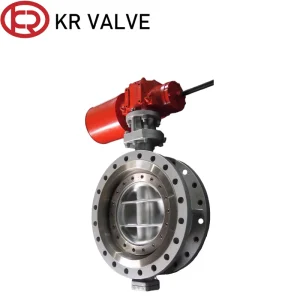
Single Acting Pneumatic Three Eccentric Butterfly Valve Hard Seal 150LB
View Product Specs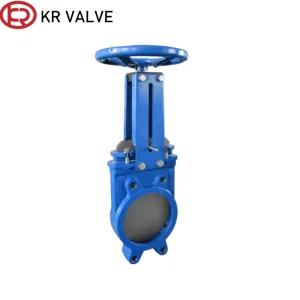
Custom Ductile Iron Wafer Knife Gate Valve PN16 for Slurry
View Product Specs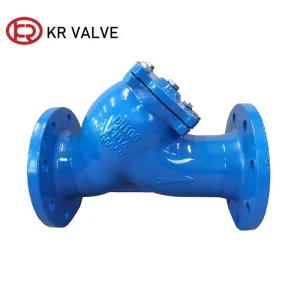
Custom China GG25 Cast Iron Y Strainer Flanged Connection
View Product Specs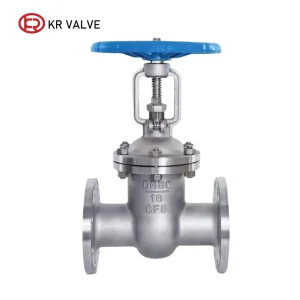
Wholesale Stainless Steel SS Flange Gate Valve Rising Stem Type
View Product Specs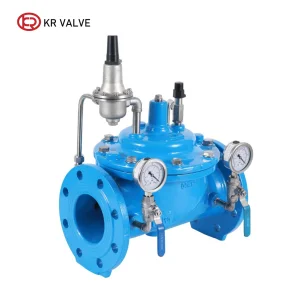
OEM 200X Reducing Pressure Valve Manual Adjustable Control
View Product Specs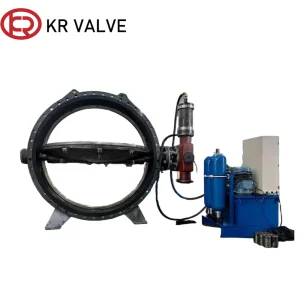
Adjustable Hydraulic Cylinder Operated Butterfly Valve
View Product Specs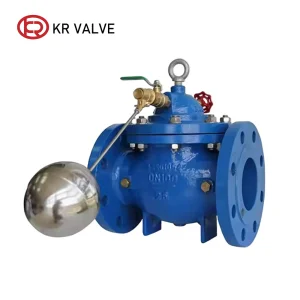
OEM Water Control Valve 100X Remote Control Float Ball Valve
View Product Specs
Double Eccentric Hydraulic Cylinder Control Butterfly Valve
View Product Specs7. Frequently Asked Engineering Questions (Procurement FAQ)
Detailed technical answers to common questions asked by EPC contractors, project engineers, and global procurement officers regarding custom stainless steel gate valves.
Q1: What is the main structural difference between SS304 (CF8) and SS316 (CF8M) Gate Valves?
The fundamental distinction lies in the alloy chemistry. Stainless steel CF8 (SS304 equivalent) contains 18% Chromium and 8% Nickel, offering excellent resistance against general oxidation and atmospheric corrosion. CF8M (SS316 equivalent) includes an additional 2.0% to 3.0% Molybdenum. This added Molybdenum significantly enhances resistance to pitting corrosion caused by chloride ions, brackish water, marine air, and organic acids. For coastal or chemical processing plants, CF8M is strongly recommended over CF8.
Q2: When should I specify a Stainless Steel Knife Gate Valve instead of a Wedge Gate Valve?
Standard solid or flexible wedge gate valves are designed for clean liquids, gases, or steam lines. If installed in slurries, paper pulp, or wastewater containing suspended solids, particulate matter can settle into the bottom seating groove of a wedge gate, preventing full shut-off. A Stainless Steel Knife Gate Valve features a thin, precision-ground sharp blade that cuts directly through viscous media and solids, closing flush against a resilient or metallic perimeter seal.
Q3: Why are OS&Y (Outside Screw & Yoke) Gate Valves safer for high-temperature chemical piping?
In OS&Y gate valves, the trapezoidal stem drive threads are positioned externally outside the bonnet body. This isolates the operating threads from direct contact with corrosive process fluids, high temperatures, and abrasive line debris. Furthermore, the rising stem provides immediate visual verification to operators regarding whether the gate valve is fully open, partially throttled, or completely closed.
Q4: Can custom face-to-face dimensions and flange standard drillings be manufactured?
Yes. As a custom OEM stainless steel gate valve supplier, we manufacture to custom specifications. We produce face-to-face dimensions conforming to ASME B16.10, DIN 3202 F4/F5, BS 5163, and EN 558-1 standards. Flange connections can be drilled according to ANSI Class 150/300, EN 1092-1 PN10/16/25/40, or JIS 10K/20K standard bolt patterns.
Q5: What zero-leakage standards are guaranteed for high-pressure orders?
Every manufactured stainless gate valve undergoes strict shell and seat hydrostatic testing in accordance with API 598 or ISO 5208 standards. For critical gas or chemical applications, we provide soft-seated (PTFE/Viton) or hard-faced Stellite valves certified to ISO 5208 Rate A (Zero visible bubble leakage during pneumatic testing).