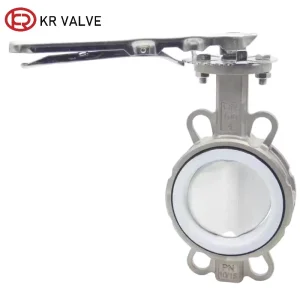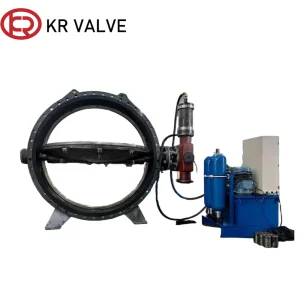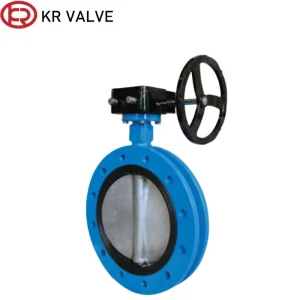
Featured OEM Exhaust & Industrial Valve Products
Direct from our certified China valve manufacturing facilities. Engineered for high performance, compliance, and custom B2B configurations.
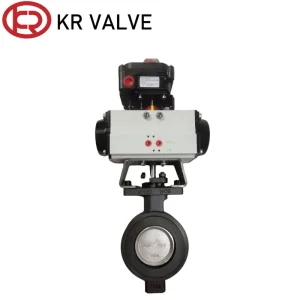
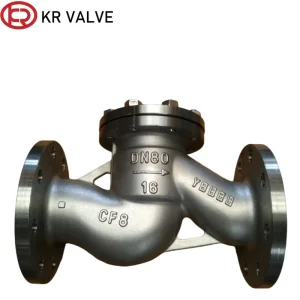
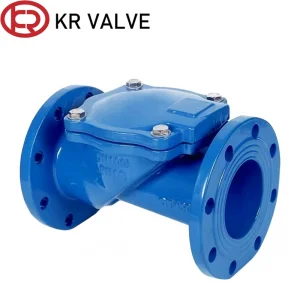
1. Executive Technical Summary: The Modern Exhaust Butterfly Valve Paradigm
Navigating Thermal Expansion, Gas Dynamics, and Zero-Emission Mandates in Industrial OEM Manufacturing
In modern industrial engineering, heavy-duty engine testing, marine propulsion, power generation, and waste heat recovery systems, controlling high-temperature exhaust gas flows represents one of the most severe challenges for fluid control infrastructure. The term OEM Butterfly Valve Exhaust Factories & Factory describes not merely standard component production, but advanced metallurgical design, thermal dynamics control, and high-integrity sealing technology tailored for extreme operating environments.
Exhaust gas streams present a combination of harsh stress factors: extreme temperature fluctuations (cycling rapidly from ambient to exceeding 800°C), particulate-laden gas composition (soot, unburnt hydrocarbons, ash), corrosive condensation (nitric and sulfuric acid fractions during shutdown cycles), and high-velocity turbulence. Standard off-the-shelf industrial valves fail rapidly under these conditions due to thermal jamming, stem packing blowout, seat erosion, and actuator torque degradation.
Leading OEM butterfly valve exhaust factories in China have invested heavily in digital foundry tech, 5-axis CNC machining, and automated hard-facing overlay processes (Stellite, Inconel). By integrating computational fluid dynamics (CFD) with real-world finite element analysis (FEA), modern factories supply international EPC contractors and engine manufacturers with exhaust butterfly valves that maintain structural integrity, minimize backpressure loss, and deliver precise flow modulation across tens of thousands of thermal cycles.
2. Engineering & Metallurgy of High-Performance Exhaust Valves
Material Selection, Thermal Expansion Calculations, and Sealing Mechanisms
Body & Disc Metallurgical Alloys
Exhaust butterfly valves utilize distinct alloys depending on temperature zones. For exhaust gas streams up to 450°C, high-grade Ductile Iron (GGG40/GGG50) or Cast Steel (ASTM A216 WCB) is standard. For temperatures reaching 650°C - 800°C, OEM factories switch to Stainless Steel alloys like ASTM A351 CF8M (316) or heat-resistant Austenitic Stainless Steel (CF8C / 347) with high Niobium stabilization to prevent intergranular corrosion.
Thermal Expansion Clearances
As exhaust temperatures rise, body housings and internal valve discs expand at different rates. OEM engineers apply thermal expansion expansion coefficients ($\alpha$) to design internal radial clearances. In metal-seated exhaust dampers, disc clearance offsets prevent galling or thermal seizing when subject to rapid thermal shock during emergency engine shutdowns.
Advanced Sealing Architectures
While standard soft seats (EPDM, NBR, PTFE) disintegrate above 200°C, exhaust butterfly valves employ Flexible Metal Seals, Laminated Stainless Steel + Flexible Graphite seals, or Solid Stellite Hardfaced Metal Seats. Triple-offset designs eliminate friction between disc and seat during movement, delivering bubble-tight isolation even at elevated working pressures.
3. Technical Specification & Engineering Selection Matrix
Comparative Analysis of Exhaust Butterfly Valve Configurations for OEM Systems
| Valve Configuration | Temp Range (°C) | Sealing Type | Leakage Rate (ANSI/FCI 70-2) | Primary Industrial Application |
|---|---|---|---|---|
| Wafer Lightweight Exhaust Damper | -20°C to +400°C | Metal-to-Metal Swing Clearance | Class II / Class III (Low Backpressure) | HVAC Exhaust, Low-Pressure Boiler Flue Gas |
| Lugged Single-Offset Exhaust Valve | -30°C to +550°C | Flexible Stainless Steel Ring | Class IV (99.99% Tightness) | Diesel Engine Test Cells, Industrial Kilns |
| Double Flanged Double Eccentric Valve | -40°C to +650°C | SS316 + Flexible Graphite Laminate | Class V (High Sealing Performance) | Gas Turbine Waste Heat Recovery (HRSG) |
| Triple Offset Heavy Duty Exhaust Valve | -50°C to +800°C | Stellite Hardfaced Body & Ring | Class VI (Zero-Leakage Metal-Seated) | Marine EGR Scrubbers, Petrochemical Flare Gas |
4. China Factory Supply Chain Superiority & OEM Capability
End-to-End Vertical Integration: From Precision Shell Casting to High-Temperature Testing
Over the past two decades, China's valve manufacturing ecosystem has evolved from high-volume standardized output to state-of-the-art precision engineering. For global OEMs seeking high-performance exhaust butterfly valves, Chinese manufacturing hubs provide unparalleled structural advantages in supply chain resilience, cost efficiency, and technical customization capabilities.
Integrated Foundry & Metallurgy Control
Direct ownership or tight integration with advanced shell-casting foundries allows top OEM factories to control chemistry at the melt stage. Spectrographic chemical analysis ensures strict adherence to ASTM specifications, eliminating inclusion defects and internal porosity that cause fatigue cracking under high exhaust pulsations.
5-Axis CNC Precision Machining
Machining complex triple-offset geometries requires precise multi-axis CNC milling. China's digitalized machining shops utilize high-precision tooling to achieve tight tolerances on seal seat profiles, ensuring smooth quarter-turn rotation without binding even under extreme localized thermal expansion.
Rigorous Quality Assurance & Testing
Every OEM exhaust butterfly valve undergoes stringent testing protocols: Positive Material Identification (PMI), Nondestructive Dye-Penetrant Testing (NDT), High-Pressure Pneumatic Testing, and thermal cycle torque validation prior to export clearance.
5. Localization Support & Global Compliance Frameworks
Ensuring Full Regulatory Alignment across International Markets
For international buyers, procuring OEM exhaust valves requires strict compliance with region-specific standards, marine classification rules, and environmental regulations. Leading Chinese OEM suppliers maintain full international accreditation to ensure seamless project integration:
- API 609 & ASME B16.34 Standard design specification governing face-to-face dimensions, pressure-temperature ratings, and wall thickness for quarter-turn butterfly valves.
- CE PED (2014/68/EU) & ATEX Mandatory Pressure Equipment Directive certification for European deployment, paired with ATEX explosion-proof clearance for hazardous gas environments.
- SIL 3 Functional Safety (IEC 61508) Certification for automated emergency shut-off valves (ESD) deployed in critical process safety instrumented systems.
- Fugitive Emission ISO 15848-1 Stem packing validation ensuring near-zero external emissions of volatile compounds or hazardous combustion gases under dynamic cycling.
6. Global Enterprise Procurement Needs & Intent Analysis
Addressing Total Cost of Ownership (TCO), Risk Mitigation, and Supply Chain Flexibility
Total Cost of Ownership Optimization
For large-scale industrial buyers, initial purchasing price represents only a fraction of lifetime valve expense. Premature failure results in costly unplanned plant shutdowns. OEM China factories mitigate TCO by incorporating hardened trim components, double-eccentric anti-wear kinematics, and field-replaceable seat inserts.
Custom Design Flexibility & White-Labeling
Global equipment manufacturers often require specific face-to-face dimensions, non-standard actuation mounting pads (ISO 5211), custom paint specifications (epoxy/polyurethane for marine grade), and private-label branding. Leading OEM suppliers provide comprehensive engineering co-development.
Supply Chain Lead Time Certainty
Delays in pipeline component deliveries derail multi-million dollar EPC projects. Modern Chinese valve manufacturing factories offer integrated ERP scheduling, raw material safety buffers, and established express logistics routes for on-time site delivery worldwide.
7. Industrial Application Scenarios & Real-World Use Cases
Deployment Profiles in Power Generation, Engine Testing, Marine, and Thermal Utilities
A. Marine Exhaust Gas Cleaning Systems (SOx/NOx Scrubbers)
International Maritime Organization (IMO) Tier III regulations mandate strict limits on nitrogen oxides and sulfur emissions. Exhaust butterfly valves are installed in marine main engine exhaust bypass manifolds. Operated by fast-acting pneumatic actuators, these valves divert high-temperature corrosive exhaust gases into wet scrubbers or Selective Catalytic Reduction (SCR) units. High-molybdenum alloys (such as 254 SMO or Duplex Stainless Steel) prevent pitting corrosion from sulfurous condensate.
B. Heavy-Duty Diesel & Gas Engine Test Dyno Facilities
Engine OEMs utilize automated exhaust butterfly valves to simulate dynamic exhaust backpressure during endurance testing. Valves operate continuously under rapid throttle changes, enduring high frequency acoustic vibrations and thermal shock up to 750°C. High-cycle pneumatic actuators with smart digital positioners enable millisecond response times and precise loop feedback control.
C. Combined Heat and Power (CHP) & Waste Heat Recovery (HRSG)
In power plants, exhaust bypass stack dampers direct turbine exhaust gases into Heat Recovery Steam Generators (HRSG). Large-diameter double-flanged eccentric exhaust butterfly valves (ranging from DN800 to DN3000) regulate continuous high-volume thermal flow, significantly boosting overall energy efficiency.
8. Future Trends & Technological Innovations in Exhaust Control
Smart Actuation, Ceramic Matrix Materials, and Green Hydrogen Exhaust Ecosystems
Smart IoT Positioners & Predictive Maintenance
Integration of HART, Modbus, and Profibus digital positioners enables continuous monitoring of stem friction, stroke speed, ambient temperature, and seal degradation—allowing predictive maintenance prior to failure.
Advanced Ceramic & Thermal Barrier Coatings
Plasma-sprayed Ceramic Matrix Coatings (CMC) applied to internal valve discs and bodies withstand extreme thermal surges exceeding 1000°C while preventing erosive wear from carbon particles.
Hydrogen & Clean Fuel Exhaust Adaptation
As industrial burners transition to Green Hydrogen and Synthetic Fuels, exhaust water vapor content increases significantly. OEM factories are optimizing seal geometries to manage high dew-point steam condensation without rust or stem seizure.
9. Frequently Asked Questions (FAQ) - Engineering Guidance
Expert Answers to Critical OEM Exhaust Butterfly Valve Procurement & Technical Inquiries
Q1: What is the main difference between a standard butterfly valve and an exhaust butterfly valve?
Standard butterfly valves typically utilize soft seats (such as EPDM, NBR, or PTFE) for tight shut-off in water or low-temperature gas piping below 200°C. Exhaust butterfly valves are specially engineered for high temperatures (up to 800°C), incorporating metal-to-metal seating, high thermal clearance shafts, anti-galling Stellite hardfacing, and extended bonnets to isolate actuators from intense heat zones.
Q2: How do OEM factories prevent thermal seizing of the disc at high operating temperatures?
Thermal seizing is prevented through calculated radial expansion clearances, double or triple offset shaft kinematics, and the use of materials with matched thermal expansion coefficients. Furthermore, ceramic-graphite stem bearings and anti-seize high-temp stem coatings ensure low-friction rotation during rapid thermal transients.
Q3: Can OEM factories produce custom face-to-face dimensions for drop-in replacements?
Yes. Chinese OEM factories routinely design and manufacture non-standard face-to-face pattern lengths, custom bolt flange drillings (ANSI, DIN, JIS, BS), and tailor-made actuator mounting plates according to precise client drawings or existing plant dimensions.
Q4: Which actuation types are recommended for high-temperature exhaust control?
Pneumatic rack-and-pinion or scotch-yoke actuators are widely favored for rapid fail-safe operation in exhaust systems. Electric multi-turn or quarter-turn actuators with smart positioners are preferred for continuous, precise modulating flow control. In all high-temperature setups, thermal brackets or extended stems are mandatory to protect actuator seals and electronics.
Q5: How do OEM suppliers ensure compliance with fugitive emission standards?
Fugitive emission compliance (ISO 15848-1 Class AH/BH) is achieved by utilizing live-loaded graphite stem packing systems, polished stainless steel shafts, and secondary O-ring seals where temperature permits. This prevents toxic exhaust gases (CO, NOx, SOx) from escaping into surrounding environments.
Complete Pipeline & Industrial Valve Series
Explore Our Full Range of OEM/ODM Certified Industrial Valve Portfolio