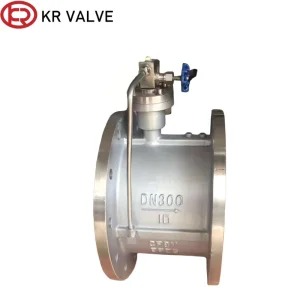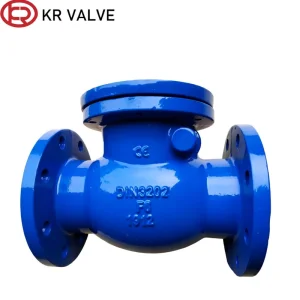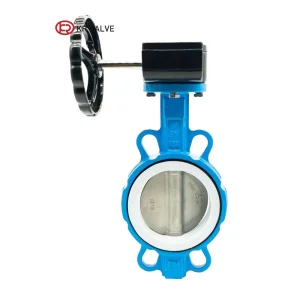
Industrial Flow Control & Specialized Check Valve Portfolio
Direct-from-factory API, DIN, and BS standard isolation and non-return valves, precision manufactured with 100% factory hydrostatic verification and customized metallurgy.
Kinematic Mechanics and Transient Pressure Mitigation in Double Disc Systems
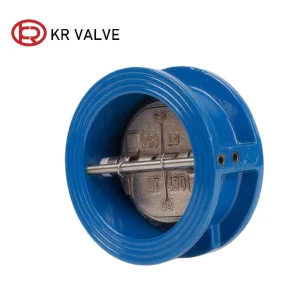
In modern high-capacity municipal water distribution, petrochemical processing, and marine power plants, the OEM Double Disc Check Valve (conventionally classified as the dual plate wafer non-return valve) functions as the principal safeguard against catastrophic reverse flow transients. Unlike legacy heavy swing check mechanisms governed by single-hinge pendular momentum, the double disc architecture halves the travel distance of the closing elements. Two D-shaped discs pivot centrally on an engineered cylindrical hinge pin, driven toward rapid closure by paired high-fatigue torsion springs before downstream kinetic energy reverses across the boundary layer.
Dynamic computational fluid dynamics (CFD) modeling confirms that conventional swing check valves exhibit severe lag during abrupt pump shutdowns. This decelerating flow generates severe localized hydraulic shockwaves known as water hammer, capable of rupturing pipeline headers, shearing mechanical joints, and devastating pump impellers. The dual disc architecture fundamentally decouples closure speed from fluid backflow velocity. Because the center of gravity of each semi-circular plate is located significantly closer to its pivot axis, rotational inertia is drastically curtailed. The counter-balanced torsion springs supply proactive closing torque, achieving complete seat contact at the precise moment forward fluid velocity reaches nominal zero (dv/dt stabilization).
| Performance Characteristic | Dual Plate (Double Disc) Check | Conventional Swing Check | Tilting Disc Check Valve | Piston Lift Check Valve |
|---|---|---|---|---|
| Face-to-Face Footprint | Ultra-Compact (API 594) | Extended Length (ASME B16.10) | Moderate Length | Heavy Body Envelope |
| Closure Dynamic Speed | < 0.15 to 0.25 seconds | 0.80 to 2.20 seconds | 0.30 to 0.50 seconds | 0.40 to 0.70 seconds |
| Structural Weight Savings | Up to 75% - 82% Lighter | Baseline 100% Weight | Approx. 60% of Swing Check | Heaviest System Mass |
| Water Hammer Resistance | Superior Non-Slam Profile | Severe Slam Propensity | Moderate Damping | High Pressure Drop Required |
| Installation Flexibility | Horizontal, Vertical Upwards | Strictly Horizontal / Restrictive | Horizontal Preferred | Vertical Only with Spring Assist |
Independent Shaft Hinge & Stop Pin
Our dual disc designs incorporate a separated hinge shaft and parallel stop pin assembly. The stop pin limits the travel arc to 85 degrees, preventing disc impingement at wide-open velocity while ensuring instantaneous spring recovery without mechanical binding under turbulent turbulence.
Torsion Spring Elastic Resilience
Springs are wound from ultra-resilient Inconel X-750 or ASTM A313 Type 316 wire. By distributing torsion evenly along dual overlapping coils, mechanical stress concentration is minimized, guaranteeing over 100,000 rapid cycles without permanent plastic deflection or torque degradation.
Elastomeric & Metal Seating Options
Engineered for absolute zero-leakage isolation. We offer vulcanized molded EPDM, NBR, and Viton soft seating for drinking water and petrochemical lines, as well as Stellite Grade 6 or SS316 welded surfacing seats for high-temperature steam and abrasive oil sands applications.
Global Commercial Dynamics Across Energy and Infrastructure
Surging capital expenditure across municipal desalination, green hydrogen facilities, and mega-scale district cooling plants has established the Double Disc Check Valve as the international engineering standard.
Across North America, the European Union, and the GCC region, engineering procurement contractors (EPCs) are aggressively refitting aging infrastructure with dual plate non-return assemblies. The driving force behind this commercial transition is direct lifecycle economics. Traditional flanged swing check valves demand massive pipe rack structural bracing and continuous mechanical lubrication of external counterweights. In contrast, the wafer-pattern double disc valve mounts directly between companion flanges compliant with ASME B16.5, DIN EN 1092-1, or JIS B2220, diminishing installed pipe footprint by upwards of 75%.
In high-tonnage seawater reverse osmosis (SWRO) facilities across Saudi Arabia, UAE, and Chile, pipeline systems operate under intense hydraulic pressures (64 to 100 bar). Here, double disc check valves cast in Super Duplex Stainless Steel (UNS S32750 / 2507) or Nickel-Aluminum Bronze (ASTM B148 C95800) mitigate both destructive chloride pitting corrosion and emergency pump trip pressure spikes. Engineering specifications have transitioned almost universally toward API 594 retainerless body architectures, eliminating threaded body plugs that represent potential environmental leakage paths.
Seawater Desalination (SWRO)
High recovery energy recovery device (ERD) pump discharge lines operating up to PN100 require duplex alloy dual plate check valves to withstand severe localized velocity and aggressive sodium chloride brine.
District Cooling & HVAC
Massive chilled water loops in urban developments require zero-slam closing characteristics to eliminate noise resonance throughout commercial superstructures while maximizing pumping system COP efficiency.
Municipal Wastewater Transmission
Ductile iron GGG40/GGG50 bodies with vulcanized Buna-N seals prevent raw sewage slip back into multi-stage lift pumps, with polished disc topography preventing ragging and fibrous media build-up.
Downstream Petrochemical Skids
WCB and CF8M dual plate valves built to API 594 retainerless execution ensure compliance with stringent fugitive emissions standards, eliminating external boundary leakage points entirely.
China Factory Supply Chain Agility: The Tianjin Industrial Advantage
Supply chain reliability in heavy industrial fluid handling is governed by manufacturing vertical integration. As a leading manufacturer based in Tianjin, China, KR Valve harnesses the world's most comprehensive metallurgical and precision machining cluster. Operating with over 30 specialized production partners, raw pig iron sourcing, automated resin-sand foundry molding, automated multi-axis CNC machining, electrostatic epoxy coating lines, and computerized hydrostatic testing are completely integrated within a 50-kilometer industrial radius.
This localized supply chain architecture allows KR Valve to overcome the prolonged lead times (often 24 to 40 weeks) characteristic of North American and European valve foundries. By executing casting pattern modifications, precision tooling, and non-destructive examination (NDE) in-house, our standard dual plate production cycles are compacted to 3 to 6 weeks for standard materials, and 6 to 8 weeks for exotic alloys such as Monel, Inconel, and Hastelloy. With direct proximity to Tianjin Port—one of the largest deep-water automated container shipping hubs globally—custom packaging and export logistical clearance operate on streamlined just-in-time timelines.
Direct In-House Spectrometry & NDT
Every casting heat is verified via optical emission spectrometers to guarantee strict compliance with ASTM A216, A351, and A536 chemical compositions. In-house ultrasonic, magnetic particle, and dye penetrant testing ensure sub-surface integrity before machining commences.
Custom OEM / ODM Engineering
We provide complete private label branding, tailored casting logos, specialized face-to-face dimensions, customized drilling patterns, and application-specific spring tension curves matched to unique pumping hydraulic profiles.
Rapid Prototyping & Pattern Shop
Equipped with 3D resin sand printing and five-axis CNC wood/aluminum pattern centers, prototype castings for unique project parameters can be poured, machined, and hydro-tested in under 15 working days.
Technological Roadmap: Digitalization, Smart Valves & Advanced Tribology
Translating advanced materials science, hydrodynamic simulation, and IoT telemetry into next-generation non-return performance.
Acoustic & Piezoelectric IoT Monitoring
KR Valve is pioneering smart double disc assemblies equipped with non-intrusive piezoelectric dynamic vibration sensors and wireless acoustic emissions transmitters. These modules detect micro-cavitation onset, hinge pin bearing wear, and spring fatigue degradation in real-time, feeding actionable predictive analytics directly to plant SCADA architecture.
CFD-Optimized Hydrodynamic Blade Profiles
Through multi-phase Eulerian fluid dynamic modeling, KR Valve engineers have reshaped the profile of our dual discs. By incorporating parabolic leading edges and hydrofoil wake relief, our latest generation valves deliver an 18.4% reduction in head loss coefficient (Kv/Cv rating enhancement), drastically reducing lifetime parasitic pump energy expenditure.
Diamond-Like Carbon (DLC) & Stellite Tribology
To combat galvanic binding and abrasive particulate galling on internal hinge journals, we apply advanced vapor-deposited Diamond-Like Carbon (DLC) coatings onto shaft surfaces. This creates a surface hardness exceeding 2500 HV with a friction coefficient under 0.08, completely eliminating shaft seizure in high-particulate wastewater systems.
Engineered Double Disc Check Valves in Demanding Local Environments
Because pipeline parameters, water chemistry, ambient temperatures, and seismic risks vary significantly across continental regions, standard off-the-shelf valve selections frequently lead to premature site failures. KR Valve provides specialized engineering customization adapted to distinct municipal and industrial pipeline operating environments:
High-Salinity Marine Intakes
The Challenge: Intensive marine biofouling and micro-galvanic crevice corrosion in Middle Eastern desalination plants destroying standard cast iron bodies in under 18 months.
KR Engineering Solution: Heavy-wall ASTM B148 C95800 Nickel Aluminum Bronze body construction with Super Duplex 2507 hinge assemblies and vulcanized fluorosilicone seals, delivering 25-year operational lifespans under continuous 45°C warm hypersaline brine service.
High-Head Mining Tailings Slurry
The Challenge: Extreme erosion from silica quartz tailings in South American copper mines shearing conventional swing check valve flappers and eroding cast seats.
KR Engineering Solution: Retainerless dual disc check valves featuring heavy polyurethane-lined ductile iron bodies, tungsten carbide coated SS316 discs, and protected enclosed torsion springs, maintaining reliable backflow sealing across high slurry density lines.
High-Rise District Water Boosters
The Challenge: Water hammer hydraulic transients shattering piping elbow welds during emergency pump power interruptions across 60-story residential towers.
KR Engineering Solution: High-speed dual plate check valves equipped with custom calibrated dual-spring torque profiles. Discs close in under 0.12 seconds prior to flow stagnation, reducing peak pressure transient spikes by up to 88%.
International Certifications, Standards Compliance & Engineering Support
Rigorous compliance with worldwide engineering specifications ensures seamless project approval from front-end engineering design (FEED) to site commissioning.
Design & Pressure Standards
- API 594: Wafer, Lug, and Double Flanged Dual Plate Check Valves
- ASME B16.34: Valves Flanged, Threaded, and Welding End
- EN 12334 / BS 5153: Cast iron & steel non-return valves
- AWWA C518: Dual-Disc Swing-Check Valves for Waterworks
Pressure Testing & Inspection
- API 598 & ISO 5208: Shell test at 1.5x design pressure
- High & Low Pressure Gas Seat Testing: Zero bubbles (Rate A)
- EN 10204 Type 3.1: Complete raw material and mechanical mill test reports
- Positive Material Identification (PMI): 100% alloy verification
Potable Water & Environmental
- WRAS & NSF/ANSI 61: Drinking water safe certified coatings
- Fusion Bonded Epoxy (FBE): RAL 5005 / 5015 min 250μm thickness
- ISO 9001:2015 & ISO 14001: Certified environmental management
- API 607 / ISO 10497: Fire safe engineering available on request
Frequently Asked Questions by Piping Engineers & Sourcing Directors
Comprehensive engineering answers addressing fluid dynamics, mechanical tolerances, installation best practices, and OEM procurement.
Why does a double disc check valve provide significantly better anti-water-hammer protection than a conventional swing check valve?
+
What are the key criteria for choosing between Wafer, Lug, and Double Flanged body patterns?
+
Lug Type: Features individual threaded or through-hole lugs around the perimeter. Lug designs allow for dead-end service and downstream pipe dismantling for maintenance without draining the upstream pipeline.
Double Flanged Type: Recommended for large-diameter pipelines (DN600 and larger), buried service, or critical installations where rigorous bolt tensioning protocols and zero cross-flange bending moments are mandatory, complying with API 594 double-flange face-to-face dimensions.
What is a "retainerless" double disc check valve and when should it be specified?
+
Can double disc check valves be installed in vertical piping systems with downward flow?
+
How does KR Valve manage OEM private labeling, foundry testing, and custom metallurgy?
+
How do you avoid spring fatigue failure in high-cycle pumping applications?
+
Heavy-Duty Project Procurement & Supporting Pipeline Components
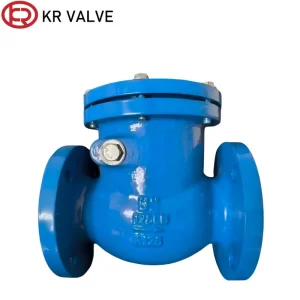
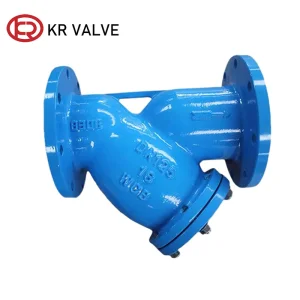
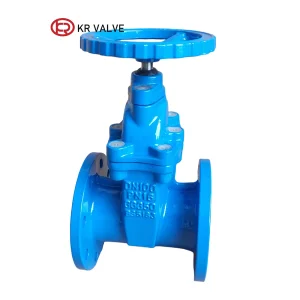
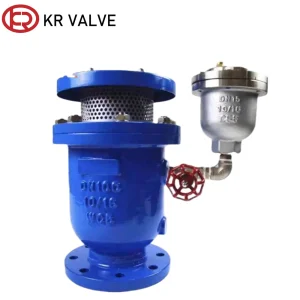
Consolidate your international pipeline project procurement directly through Tianjin KR Valve with matching strainers, gate valves, and multi-functional non-return units.