Product Showcase · Series I
Precision Flow Control & Heavy-Duty Industrial Valves
Engineered to DIN, BS, ANSI, and ISO standards for municipal water distribution, HVAC networks, chemical processing, and severe-duty pipeline isolation.
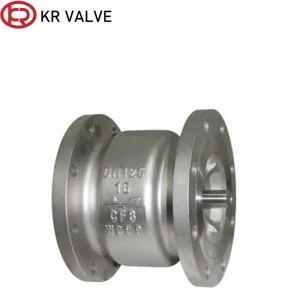
Wholesale Spring Loaded Check Valve Stainless Steel Silent Valve
View Product Specs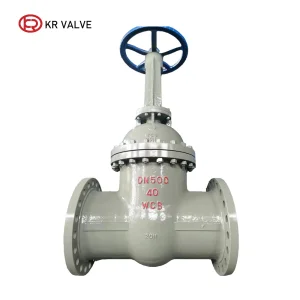
PN64 DN500 Big Size Gate Sluice Valve Metal to Metal Seated Z41H-64C
View Product Specs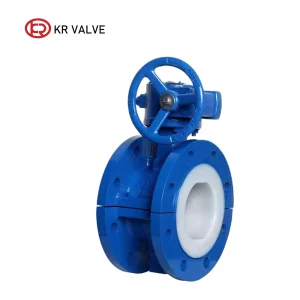
Wholesale WCB Split Body Full PTFE Lined Concentric Butterfly Valve
View Product Specs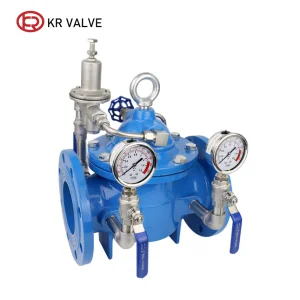
Custom 200X Pressure Relief Valve Piloted Check Type (DN50-DN300)
View Product Specs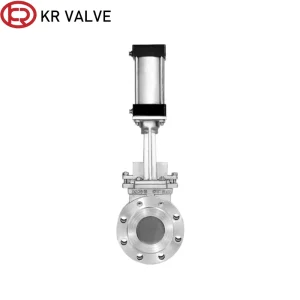
Wholesale SS Knife Gate Valve Pneumatic Operation Flange Type
View Product Specs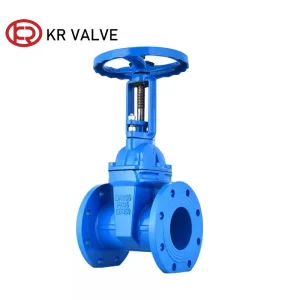
OEM DIN F5 Rising Stem Resilient Sealing Gate Valve (Z41X DN40-DN600)
View Product Specs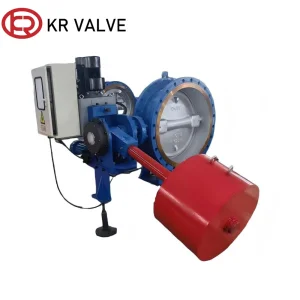
Wholesale Hydraulic Cylinder Control Butterfly Valve Quick-Closing Type
View Product SpecsTechnical Foundations
Double Flanged Butterfly Valves: Structural Mechanics & Engineering Superiority
Understanding the kinematic advantages, hydrodynamic coefficient optimisations, and mechanical shaft sealing configurations that make double flanged butterfly valves the preferred choice for modern infrastructure.
Kinematic Offset Design: Concentric vs. Double Offset
Unlike conventional concentric (zero-offset) valves where the rubber liner maintains continuous friction against the disc edge throughout the 90-degree rotational arc, a Double Flanged Double Eccentric (Offset) Butterfly Valve incorporates two distinct geometric offsets:
- Offset 1 (Shaft/Body Offset): The stem axis is offset behind the seating plane of the valve disc seal.
- Offset 2 (Shaft/Pipe Centerline Offset): The shaft center is offset laterally from the centerline of the body/pipe bore.
This dual-eccentricity produces a cam-like action during operation. Upon opening, the disc immediately lifts off the resilient body seat within the first 3 to 5 degrees of rotation, completely eliminating friction across 90% of the travel stroke. This dramatically reduces seating torque requirement, prolongs elastomer seal life beyond 50,000 duty cycles, and ensures zero-leakage performance under high differential pressure (PN10/PN16/PN25/PN40).
Double Flange Body vs. Wafer & Lugged Connections
In large-diameter piping systems (DN200 up to DN3000), pipeline structural integrity is paramount. While wafer and lugged valves rely heavily on long studs clamped through pipe flanges, Double Flanged Butterfly Valves feature integral cast flanges at both ends compliant with EN 1092-2, BS4504, ANSI B16.1, or AWWA C207 standards.
Key Engineering Advantage: Dead-End & Bending Resistance
Integral double flanges transmit line bending moments directly through the valve housing rather than compressing the valve disc seat. This allows secure installation at pipe terminals for dead-end service without needing downstream retaining flanges, and enables safe line maintenance under full rated pressure.
Bi-Directional Bubble-Tight Sealing
Engineered with continuous retainers and field-adjustable SS304/SS316 sealing rings mating against micro-polished stainless steel body seats, achieving zero-leakage shutoff under both forward and reverse pressure flows.
Low Hydrodynamic Head Loss
CFD-optimized arch-type disc profile minimizes dynamic flow resistance and cavitation index, maximizing Flow Coefficient (Cv) while reducing energy consumption in continuous pumping operations.
Blow-Out Proof Shaft Construction
Internal stub shafts or full-length stainless shafts fitted with redundant O-ring packing glands and external retaining keys compliant with API 609 and AWWA C504 safety directives.
Market Intelligence & Strategy
Global Demand Drivers & Procurement Analysis (2026–2030)
Macroeconomic shifts, mega-infrastructure investments, and environmental compliance standards shaping the global industrial valve landscape.
1. Desalination & Coastal Water Infrastructure Expansion
The exponential growth of Seawater Reverse Osmosis (SWRO) plants across the Middle East (GCC), North Africa, and South America has elevated demand for double flanged butterfly valves with specialized metallurgy. Traditional cast iron bodies are rapidly being replaced by:
- Ductile Iron (EN-GJS-400-15 / GGG40) coated with 300µm heavy-duty Fusion-Bonded Epoxy (FBE) certified to WRAS/NSF-61.
- Nickel-Aluminum Bronze (NAB - C95800) disc trims for extreme pitting resistance in high-salinity intake lines.
- Duplex Stainless Steel (2205 / 2507) shafts designed to withstand high torque under continuous exposure to marine chloride ions.
2. Decarbonization & Smart District Heating / Cooling
European and North American urban center modernizations demand low-friction, smart-actuator-ready valve assemblies. Procurement teams now prioritize:
- ISO 5211 Direct Mounting Pads: Enabling seamless field integration with electric, pneumatic, or electro-hydraulic quarter-turn actuators.
- Low Power Consumption Actuation: Achieved through optimized double offset eccentric shaft geometry that cuts required seating torque by up to 35%.
- Extended Operational Lifespan: Minimum 25-year service life requirement in municipal underground networks with zero scheduled stem packing adjustments.
DN3000
Max Manufacturing Capacity
PN40
High Pressure Testing Grade
100%
Hydrostatic Leak Inspection
50+
Global Export Markets
Manufacturing Excellence
China Factory 4.0: OEM Supply Chain Resilience & Cost Optimization
How KR Valve Tianjin leverages automated casting foundry operations, precision 5-axis CNC machining, and digital twin testing to deliver uncompromised quality to global partners.
Automated Foundry & Metallurgical Precision
Our smart foundry lines utilize resin sand casting and automated shell molding. Spectrometric chemical analysis is performed on every melt batch to guarantee accurate iron/steel grades (GGG40, GGG50, WCB, CF8M).
4-Axis & 5-Axis CNC Machining
Flange face finish, shaft bore concentricity, and disc seating profiles are machined on high-precision horizontal CNC centers, ensuring dimensional tolerances within ±0.02mm for flawless field interchangeability.
Traceable Digital Hydrostatic Testing
100% of manufactured valves undergo dual-stage pressure testing (Shell test at 1.5x PN, Seat test at 1.1x PN) with digital pressure sensor logging, producing fully traceable mill test certificates (EN 10204 3.1).
OEM & Customization Flexibility
KR Valve Tianjin supports full white-label manufacturing for overseas valve brands, EPC contractors, and stocking distributors. Customized options include private-label nameplate etching, custom paint RAL colors (RAL 5005, 5015, 5017), custom face-to-face dimensions (ISO 5752 Series 13 / 14 / BS EN 558), gear operator ratios, and pre-installed smart positioners.
Technical Comparison
Industrial Valve Engineering Comparison Matrix
Selecting the optimal valve geometry for municipal waterworks, HVAC loop isolation, and heavy chemical fluid handling.
| Parameter / Design Feature | Double Flanged Butterfly Valve | Wafer Butterfly Valve | Resilient Seated Gate Valve | Knife Gate Valve |
|---|---|---|---|---|
| Nominal Size Range | DN150 – DN3000 (6" – 120") | DN40 – DN600 (1.5" – 24") | DN50 – DN1200 (2" – 48") | DN50 – DN1000 (2" – 40") |
| Pressure Rating Class | PN10, PN16, PN25, PN40 | PN6, PN10, PN16 | PN10, PN16, PN25 | PN6, PN10, PN16 |
| Dead-End Service Capability | Full Rated Pressure | Not Recommended | Full Rated Pressure | Limited Unidirectional |
| Flow Coefficient (Cv / Kv) | High (CFD Arch Disc) | Medium to High | Maximum (Full Unobstructed Bore) | Maximum (Straight Bore) |
| Installation Weight & Footprint | Compact Face-to-Face vs Gate | Ultra-Compact & Lightweight | Heavy Body & Tall Stem Overhead | Compact Face-to-Face |
| Sealing Mechanism | Double Offset / Soft or Metal Seat | Concentric Rubber Liner | EPDM Vulcanized Wedge Gate | Transverse Blade Shearing Edge |
| Primary Application Media | Potable Water, Raw Water, Cooling Water | HVAC Water, General Service | Clean Water, Municipal Mains | Slurry, Sewage, Pulp & Paper |
Application Scenarios
Global Application Landscapes & Localized Deployment
Field-proven installations across critical infrastructure sectors worldwide.
Municipal Water Treatment Plants
Installed in raw water intake pumps, sand filter isolation banks, and clearwater reservoir effluent lines. The double eccentric design prevents seat erosion from fine suspended solids while ensuring zero leakage under static head pressure.
Thermal & Hydroelectric Power Plants
Serving as turbine inlet shut-off valves and condenser cooling water isolation controls. Equipped with fast-closing hydraulic actuator cylinders to safeguard hydro-turbines against overspeed emergencies.
Cross-Country Water Transmission Lines
Positioned along main trunklines at 5km intervals for sectional isolation during maintenance. Underground direct-buried configurations feature extended shafts and IP68 gearboxes for reliable subterranean operation.
Procurement & Engineering FAQ
Frequently Asked Questions
Addressing key technical inquiries from international project engineers, valve distributors, and procurement managers.
What is the structural difference between ISO 5752 Series 13 and Series 14 flanged butterfly valves?
ISO 5752 defines face-to-face dimensions for double flanged butterfly valves. Series 13 (Short Pattern) provides a shorter overall face-to-face length, offering lightweight installation and lower material cost for space-constrained pump stations. Series 14 (Long Pattern / EN 558 Series 14) shares identical face-to-face dimensions with traditional cast iron flanged gate valves (DIN 3202 F4), allowing direct retrofit replacement of heavy gate valves without modifying existing pipeline spool pieces.
Why choose a Double Offset Double Flanged Butterfly Valve over a Concentric Wafer Type?
Concentric wafer valves feature a rubber liner pressed continuously against the disc, causing high wear and increased operating torque, particularly above DN300. Double offset flanged valves utilize a camming motion that detaches the seal ring immediately upon opening, eliminating friction across 95% of stroke. Furthermore, double flanged ends provide independent bolting for upstream and downstream flanges, permitting full dead-end pressure isolation and pipe disassembly without draining the entire system.
Which seat material options are available for severe duty applications?
KR Valve Tianjin manufactures three primary seating configurations:
1. Resilient EPDM Seat: Ideal for potable water, raw water, and mild HVAC systems up to 120°C.
2. PTFE / RTFE Lined Seat: Recommended for highly corrosive chemical acids, solvents, and ultrapure water up to 180°C.
3. Metal-to-Metal / Stellite Surfaced Hard Seal: Stainless steel 316 or Stellite overlay disc seal mating against a stainless body ring, designed for high-temperature steam, abrasive slurries, and severe thermal shock applications up to 450°C.
1. Resilient EPDM Seat: Ideal for potable water, raw water, and mild HVAC systems up to 120°C.
2. PTFE / RTFE Lined Seat: Recommended for highly corrosive chemical acids, solvents, and ultrapure water up to 180°C.
3. Metal-to-Metal / Stellite Surfaced Hard Seal: Stainless steel 316 or Stellite overlay disc seal mating against a stainless body ring, designed for high-temperature steam, abrasive slurries, and severe thermal shock applications up to 450°C.
How does KR Valve ensure zero-leakage performance under bi-directional flow?
Our double flanged butterfly valves incorporate an asymmetrical retaining ring profile with internal energized O-rings behind the main seal ring. Under reverse flow pressure, the media dynamic forces push the resilient seal tighter against the stainless steel body seat face, enhancing sealing tightness rather than forcing it open. Every valve undergoes bi-directional pressure testing per EN 12266-1 Rate A standards prior to shipment.
What OEM customization services are available for overseas brands?
We offer end-to-end OEM and white-label manufacturing services: custom body casting logos, serialized stainless steel nameplates, custom epoxy coating thickness (up to 500 microns for direct burial), specialized flange drilling (ANSI 150/300, PN10/16/25, JIS 10K/16K), and pre-mounted third-party actuation packages (Rotork, AUMA, SIPOS, Festo).
Product Showcase · Series II
Check Valves, Non-Return Units & Specialized Pipeline Components
Complete line of water control valves, knife gate units, and dual-disc check valves engineered for maximum reliability.
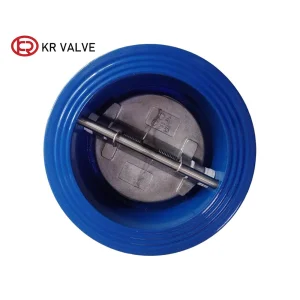
Wholesale H71X Wafer Dual Disc Check Valve BS5153 (DN40-DN700)
View Product Specs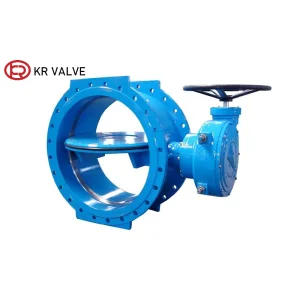
Wholesale Double Eccentric Butterfly Valve SS304 Sealing D342X (DN200-DN3000)
View Product Specs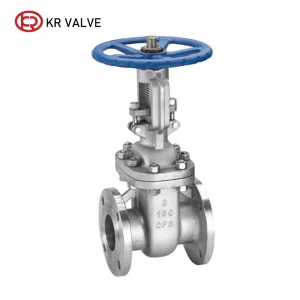
Wholesale CF8 Stainless Steel ANSI Solid Wedge Gate Valve
View Product Specs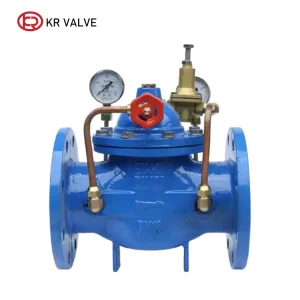
OEM 200X PRV Pressure Reducing Valve PN16 Ductile Iron
View Product Specs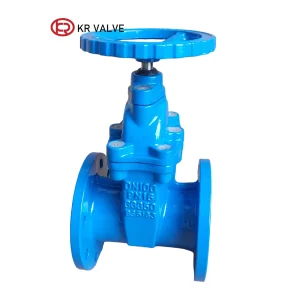
OEM Non-Rising Stem EPDM Soft Seal Gate Valve DIN F5 Standard
View Product Specs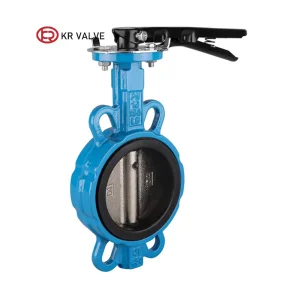
OEM Wafer Butterfly Valve DN100 Concentric Resilient Seated PN6/10/16
View Product Specs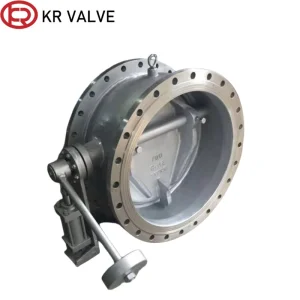
Wholesale SS CF8/CF8M Micro-Resistance Slow Closing Check Valve
View Product Specs