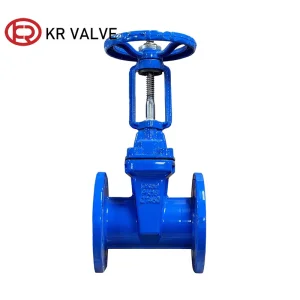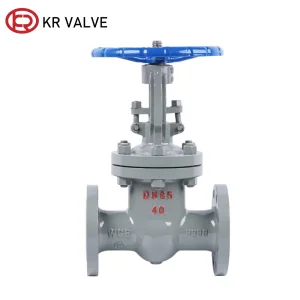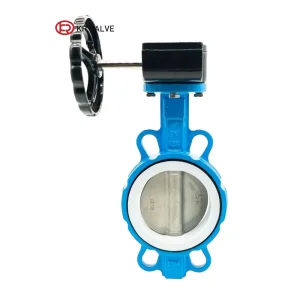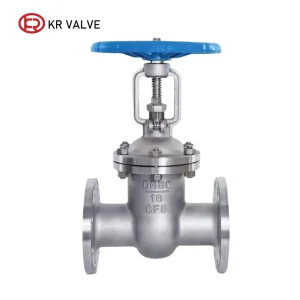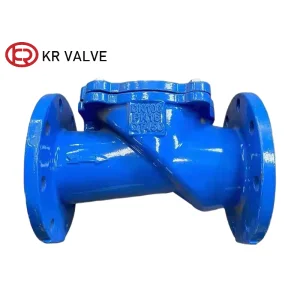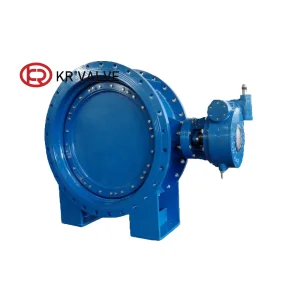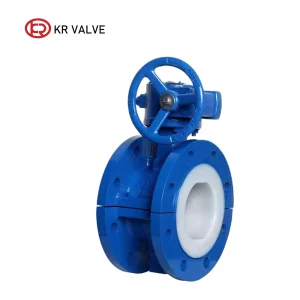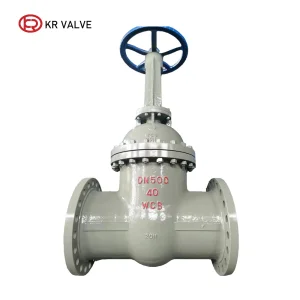
Featured High-Performance Industrial Valves (Batch A)
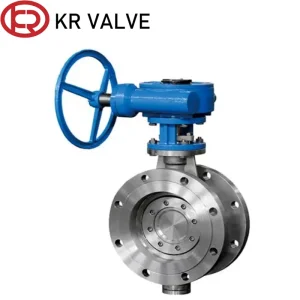
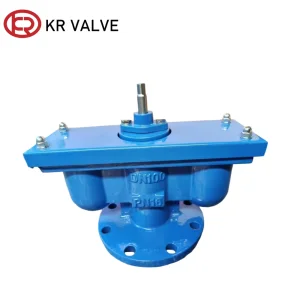
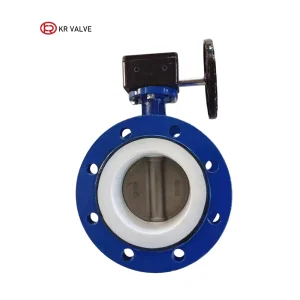
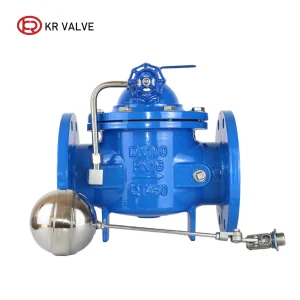
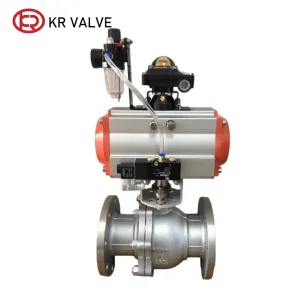
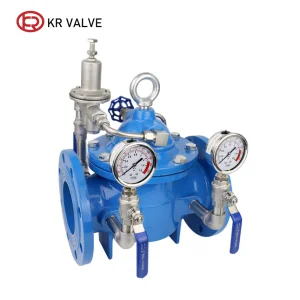
Explore our premium factory-engineered ductile iron and high-pressure alloy valve assemblies designed for maximum mechanical resilience and zero-leakage isolation.
Engineering Operational Benchmarks & Manufacturing Capacity
Providing global engineering clients with verifiable metallurgical control, rigorous pressure boundary testing, and scalable OEM manufacturing solutions.
Global Industrial Landscape: Ductile Iron vs. Legacy Metallurgy
In modern industrial fluid networks, infrastructure reliability hinges on material selection. For decades, traditional grey cast iron (GG25 / EN-GJL-250) dominated municipal water works. However, the modern global market has overwhelmingly pivoted toward Ductile Iron (DI)—specifically grades GGG40 (EN-GJS-400-15 / ASTM A536 65-45-12) and GGG50 (EN-GJS-500-7). As premier OEM Ductile Iron Butterfly Valve Manufacturers & Factory, our facility leverages the unique metallurgical properties of nodular graphite to engineer quarter-turn valves capable of withstanding dynamic pressure surges, seismic vibrations, and severe water hammer events.
Unlike standard flake graphite found in grey iron, ductile iron undergoes a magnesium-inoculation process during casting. This causes the graphite to precipitate into discrete spherical nodules. The resulting microstructure dramatically halts crack propagation, delivering mechanical characteristics that approach structural carbon steel while retaining the superior vibration-damping and corrosion-resisting capabilities of cast iron.
Information Gain Note: Ductile Iron Mechanical Superiority
Ductile iron GGG40 exhibits a minimum tensile strength of 400 MPa and an elongation percentage of 15%. Compared to grey cast iron (which offers under 250 MPa tensile strength and virtually 0% elongation), ductile iron provides a 160% increase in yield resistance and immense impact resilience, rendering it immune to catastrophic brittle fracture under hydraulic shock loads.
Economic and Physical Advantages in Macro-Piping Projects
From large-scale desalination projects in the Middle East to district heating grids across Northern Europe, specified engineering standards (such as AWWA C504, EN 593, and BS EN 1074) overwhelmingly mandate ductile iron bodies for butterfly valve construction. Key advantages include:
- Weight Reduction & Structural Integrity: Due to high mechanical strength, ductile iron valve bodies can be cast with thinner wall profiles while maintaining PN10, PN16, PN25, or Class 150 pressure ratings. This reduces total valve weight by up to 30%, simplifying overhead pipe suspension and field rigging.
- Superior Cavitation & Hydrodynamic Resilience: Ductile iron disc geometries can be optimized using Computational Fluid Dynamics (CFD) to achieve maximum flow coefficients ($C_v$ and $K_v$), minimizing head loss and pumping energy costs over a 50-year system lifecycle.
- Coating Adhesion & Lifetime Protection: The low micro-porosity of high-purity GGG40/50 castings allows electrostatically applied Fusion Bonded Epoxy (FBE) to form an impermeable dielectric layer (>250 microns thick), eliminating galvanic corrosion in underground or subsea installations.
OEM Manufacturing & Engineering Selection Matrix
Comprehensive design parameters across valve structural types, seating polymers, and international flange standards for global procurement teams.
| Structural Type | Body Material | Seat & Seal Material | Pressure Class | Nominal Size Range | Primary Industrial Application |
|---|---|---|---|---|---|
| Concentric Wafer / Lug | Ductile Iron GGG40 / GGG50 | EPDM / NBR / Viton (FKM) | PN10 / PN16 / Class 150 | DN40 – DN1200 (1.5" – 48") | HVAC, Municipal Potable Water, Irrigation |
| PTFE-Lined Concentric | Ductile Iron + WCB Split Body | PTFE / PFA Lined Elastomer | PN10 / PN16 | DN50 – DN600 (2" – 24") | Corrosive Chemicals, Fine Acids, Pure Water |
| Double Eccentric (High Perf.) | Ductile Iron GGG50 / WCB | Stainless Steel 304/316 + EPDM | PN10 / PN16 / PN25 | DN200 – DN3000 (8" – 120") | Water Treatment Mains, Dam Outlets, Power Plants |
| Triple Eccentric Metal Seated | Ductile Iron / WCB / CF8M | SS316 + Flexible Graphite / Stellite | PN16 / PN25 / PN40 / Cl 300 | DN80 – DN2000 (3" – 80") | Steam Lines, High-Temp Oil, Hydrocarbon Distillation |
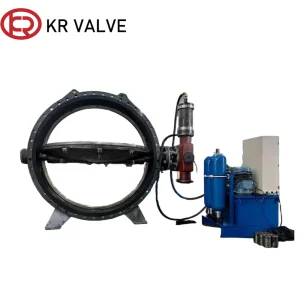
| Hydraulic Control Butterfly | Ductile Iron GGG40 | Resilient Rubber / Bronze Seat | PN16 / PN25 | DN200 – DN2400 (8" – 96") | Pump Discharge Isolation, Surge Suppression |
OEM Foundry Processing & Engineering Quality Control (E-E-A-T Guarantee)
Our OEM/ODM manufacturing capability rests upon rigorous metallurgy, precision CNC machining, and automated non-destructive testing (NDT).
1. Resin Sand Casting & Spectro-Analysis
We utilize automated resin-sand molding lines to ensure dimensionally stable valve body casting with minimal surface roughness. Every melt heat undergoes real-time optical emission spectrometry (OES) to certify magnesium level composition for 100% spheroidal graphite conversion.
- Metallurgical nodularity verified >90% (Grade 4 or higher).
- Zero internal voids, cold shuts, or inclusions.
- Traceable heat number stamped on each body casting.
2. Precision Machining & Vulcanization
Valve body flanging, stem bores, and disc sealing surfaces are processed using multi-axis CNC machining centers. Elastomeric seats (EPDM/NBR) are either injection-molded or directly vulcanized onto the ductile iron body to eliminate liner detachment during vacuum service.
- Stem concentricity held within ±0.02 mm tolerances.
- Direct vulcanized rubber liners prevent fluid migration behind seats.
- ISO 5211 top flange dimensions for universal actuator mounting.
3. Hydrostatic & Shell Pressure Testing
Before dispatch, 100% of our manufactured valves undergo hydrostatic shell and seat pressure testing in accordance with ISO 5208, API 598, and EN 12266-1 standards. Zero-bubble-tight isolation is mandatory prior to paint application.
- Shell Test: 1.5× Nominal Pressure (e.g., 24 Bar for PN16).
- Seat Test: 1.1× Nominal Pressure (e.g., 17.6 Bar for PN16).
- Low-pressure air seat test (6 Bar) for pneumatic seal verification.
Architectural Typologies: Concentric vs. Eccentric Offsets
Choosing the correct kinematic design of a ductile iron butterfly valve depends heavily on operating pressure, frequency of operation, and suspended solids content in the flow medium. OEM buyers can select from three primary mechanical offsets:
1. Concentric (Zero Offset) Resilient Seated Valves
In concentric designs, the valve shaft and disc are centered directly in the middle of the body bore. Sealing is accomplished by radial interference between the polished disc edge (typically Ductile Iron Nickel Plated, SS304, or SS316) and an elastomeric liner (EPDM, NBR, Viton). This design offers exceptional cost-efficiency for water utilities, HVAC, and general industrial applications up to PN16 operating pressure.
2. Double Offset (Double Eccentric) High-Performance Valves
To overcome seat wear in large-diameter pipelines or high-cycle installations, the double offset configuration shifts the stem axis away from the center of the pipe and behind the seating plane. As the disc begins to open, it immediately lifts off the seat ring, eliminating friction over 85 degrees of rotation. This dramatically lowers operating torque requirements, extends seat lifespan, and enables reliable operation in high-velocity raw water networks up to PN25.
3. Triple Offset Metal-Seated Valves (TOV)
By introducing a third angular offset to the sealing cone, triple eccentric valves achieve frictionless camming action during final closure. Combined with metal-to-metal seating (Stellite overlays or laminated SS316/graphite seal rings), triple offset ductile iron/cast steel valves handle elevated temperatures, thermal shock, vacuum conditions, and aggressive hydrocarbons where soft elastomeric liners would fail.
Wafer Type Connection
Clamped between companion pipe flanges using long stud bolts. Extremely lightweight, compact face-to-face dimensions (ISO 5752 Series 20), ideal for tight plant room footprints.
Lug Type Connection
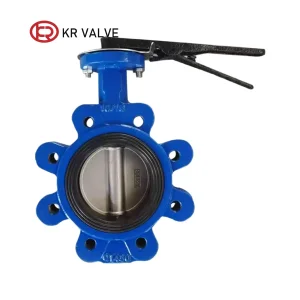
Features threaded bolt lugs along the body perimeter matching ANSI 150, PN10, or PN16 flange patterns. Enables dead-end service and downstream pipe removal during system maintenance.
Double Flanged Type
Constructed with integral structural flanges on both ends (EN 1092-2 / AWWA C207). Provides superior mechanical stability in large bores (DN300-DN3000) and direct burial pipelines.
Industry-Specific Solutions & Field Deployment Blueprints
Custom OEM engineering tailored to complex fluid characteristics, ambient environmental conditions, and international regulatory frameworks.
1. Municipal Drinking Water Supply & Desalination
Potable water transmission requires strict material hygiene to prevent chemical leaching and microbial growth. Our factory supplies OEM ductile iron butterfly valves certified to NSF/ANSI 61, WRAS, and DVGW standards. Valves feature food-grade EPDM seats and WRAS-approved electrostatic epoxy coatings, guaranteeing clean water transport across municipal networks.
2. Wastewater Treatment & Sewage Slurry Networks
Raw sewage and industrial sludge contain abrasive particles, hydrogen sulfide gas, and organic acids. We furnish ductile iron valves equipped with oil-resistant NBR or Neoprene liners, along with duplex stainless steel (UNS S31803) or Hastelloy discs to resist pitting and crevice corrosion in harsh aeration tanks and pump isolation loops.
3. HVAC, Chilled Water & District Energy Grids
High-rise building HVAC units demand compact wafer butterfly valves capable of handling high cycle counts with minimal torque. Our concentric ductile iron butterfly valves with extended neck designs accommodate up to 50 mm of thermal insulation without interfering with manual lever or motorized actuator operation.
4. Industrial Chemical & Acid Transportation
For highly aggressive chemical media, standard elastomeric liners degrade rapidly. Our factory manufactures split-body ductile iron valves fully lined with virgin PTFE or PFA (min. 3 mm thickness). The encapsulated disc and body isolate metal components entirely from corrosive fluids.
Technology Roadmap & Next-Generation Valve Innovation
As industrial automation advances toward Industry 4.0, fluid control valves are transforming from passive mechanical isolation components into intelligent, data-generating smart devices. Our factory R&D center actively drives technology integration across three primary domains:
1. Smart Sensor-Integrated Cyber-Physical Valves
By embedding micro-MEMS pressure transmitters, thermal sensors, and piezo-electric vibration pickups directly within the ductile iron body casting, our smart butterfly valves stream real-time operational telemetry to centralized SCADA systems. Maintenance teams can predict stem packing degradation, detect seat cavitation, and perform predictive maintenance long before structural line failure occurs.
2. Anti-Cavitation & Low-Noise Disc Geometries
In high-pressure drop conditions, standard disc edges generate intense localized turbulence, leading to vapor bubble collapse (cavitation) that erodes downstream piping. Our advanced OEM designs incorporate slotted perimeter trims and anti-cavitation baffle plates directly integrated into the ductile iron disc casting. This breaks up macro-vortices, reducing acoustic noise by up to 18 dBA and dampening fluid vibration.
3. Green Foundry Operations & Carbon Reduction
Sustainability is central to our manufacturing philosophy. By transitioning to medium-frequency electric induction melting, closed-loop sand reclamation systems, and zero-VOC water-borne epoxy coatings, our factory has reduced energy consumption per cast ton by 22%, empowering EPC contractors to meet strict ESG metrics on international infrastructure developments.
Frequently Asked Questions (Technical Procurement Q&A)
Direct technical answers to common queries raised by mechanical engineers, valve distributors, and project specifiers.
What is the main difference between GGG40 and GGG50 ductile iron in butterfly valve manufacturing?
Can lug-type ductile iron butterfly valves be used for dead-end isolation service?
How does your factory prevent rubber seat detachment in high-velocity or vacuum lines?
What standard coatings are applied to OEM ductile iron valve bodies for corrosion protection?
What third-party inspection and certification documentation do you provide with OEM orders?
Which actuator mounting dimensions are standard on your ductile iron butterfly valves?
Featured High-Performance Industrial Valves (Batch B)
Complete your flow control system with our factory-engineered gate valves, non-return check valves, and specialty fluid isolation units.