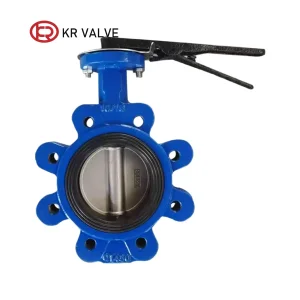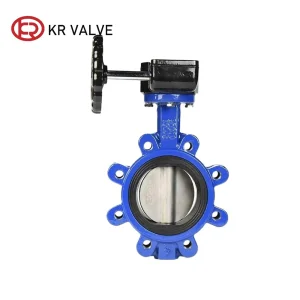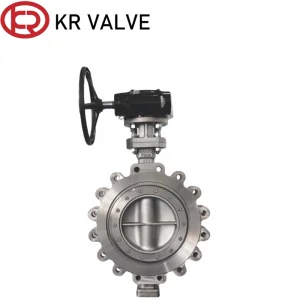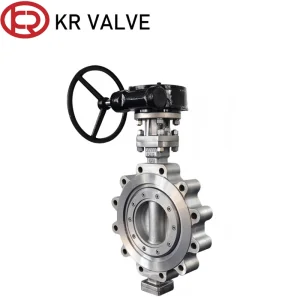
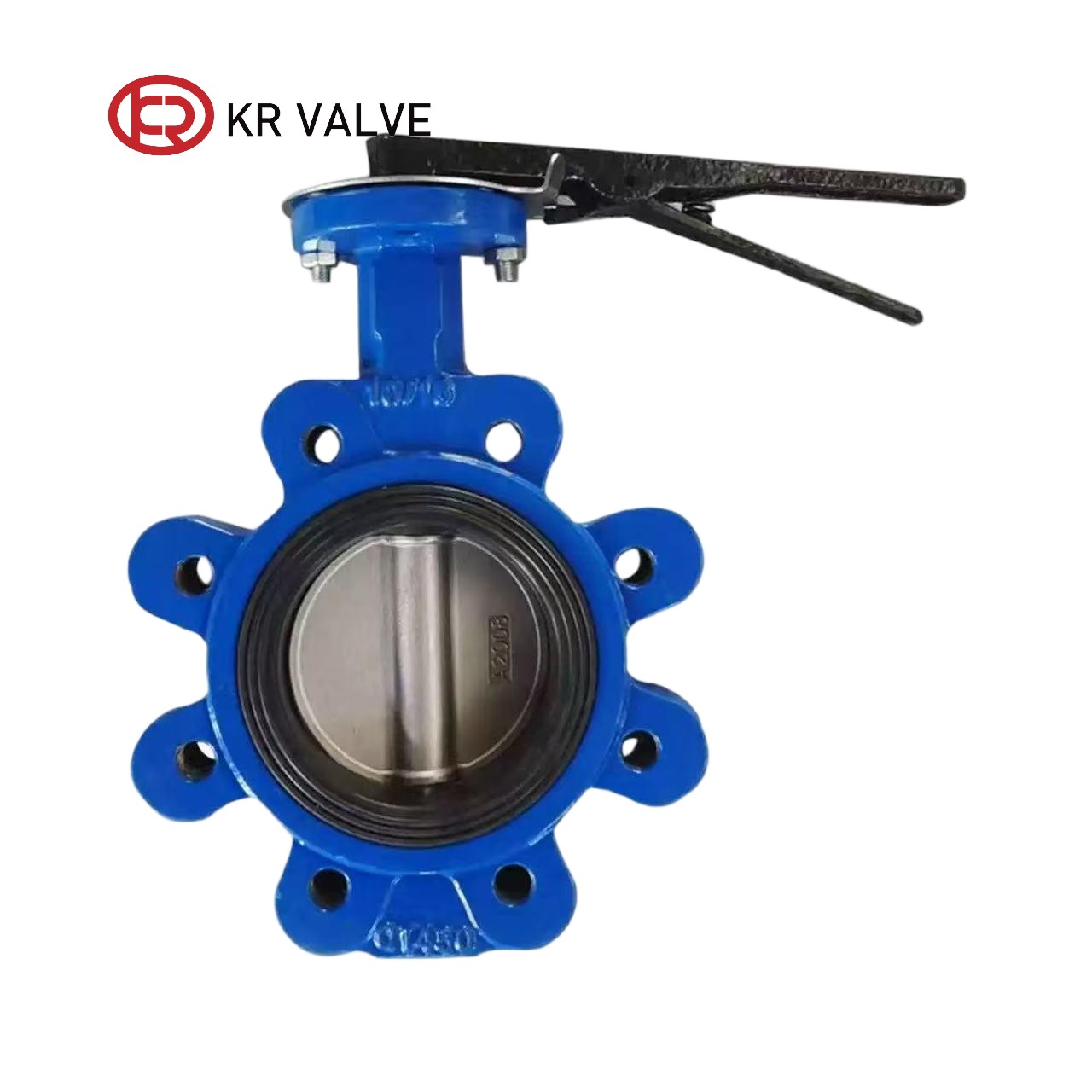
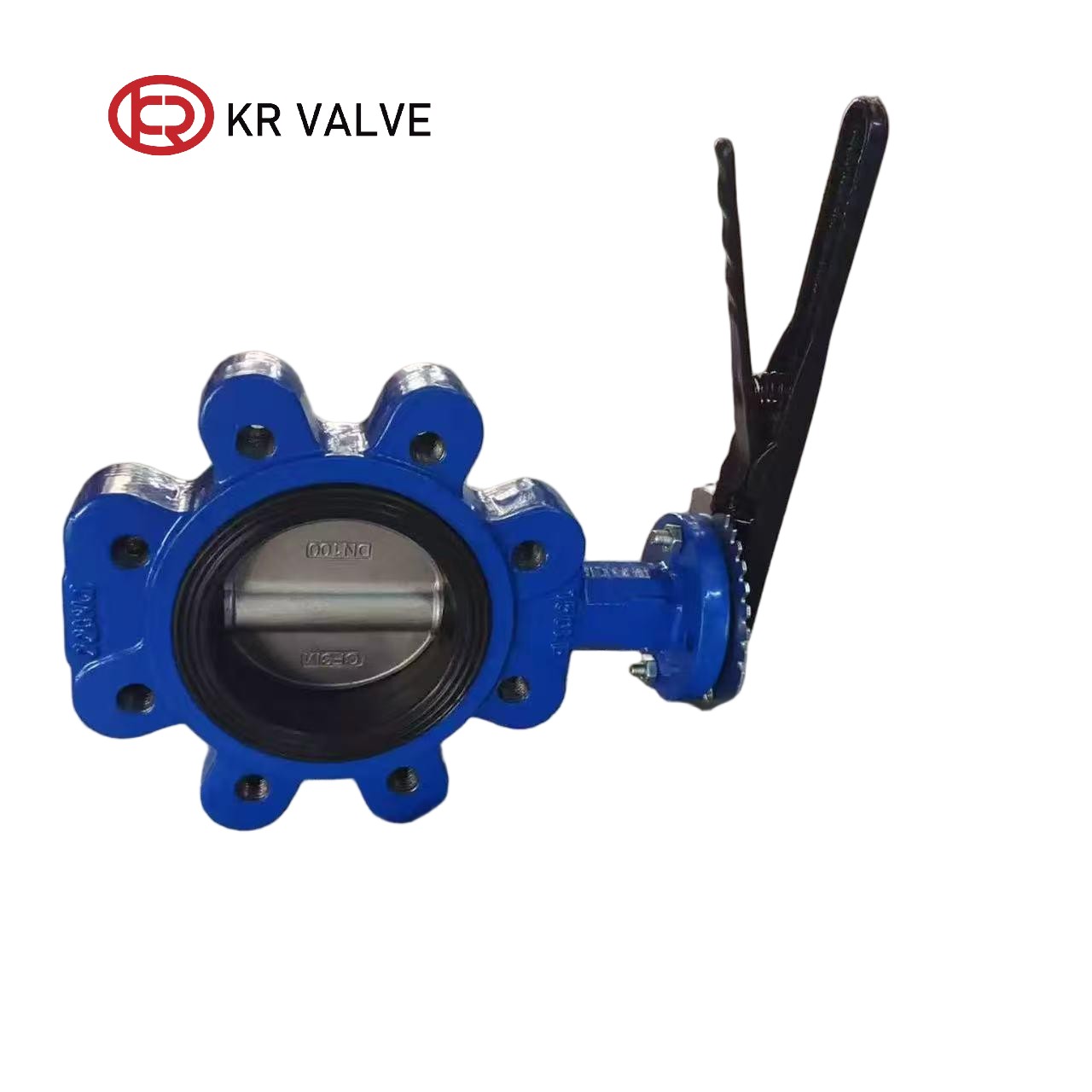
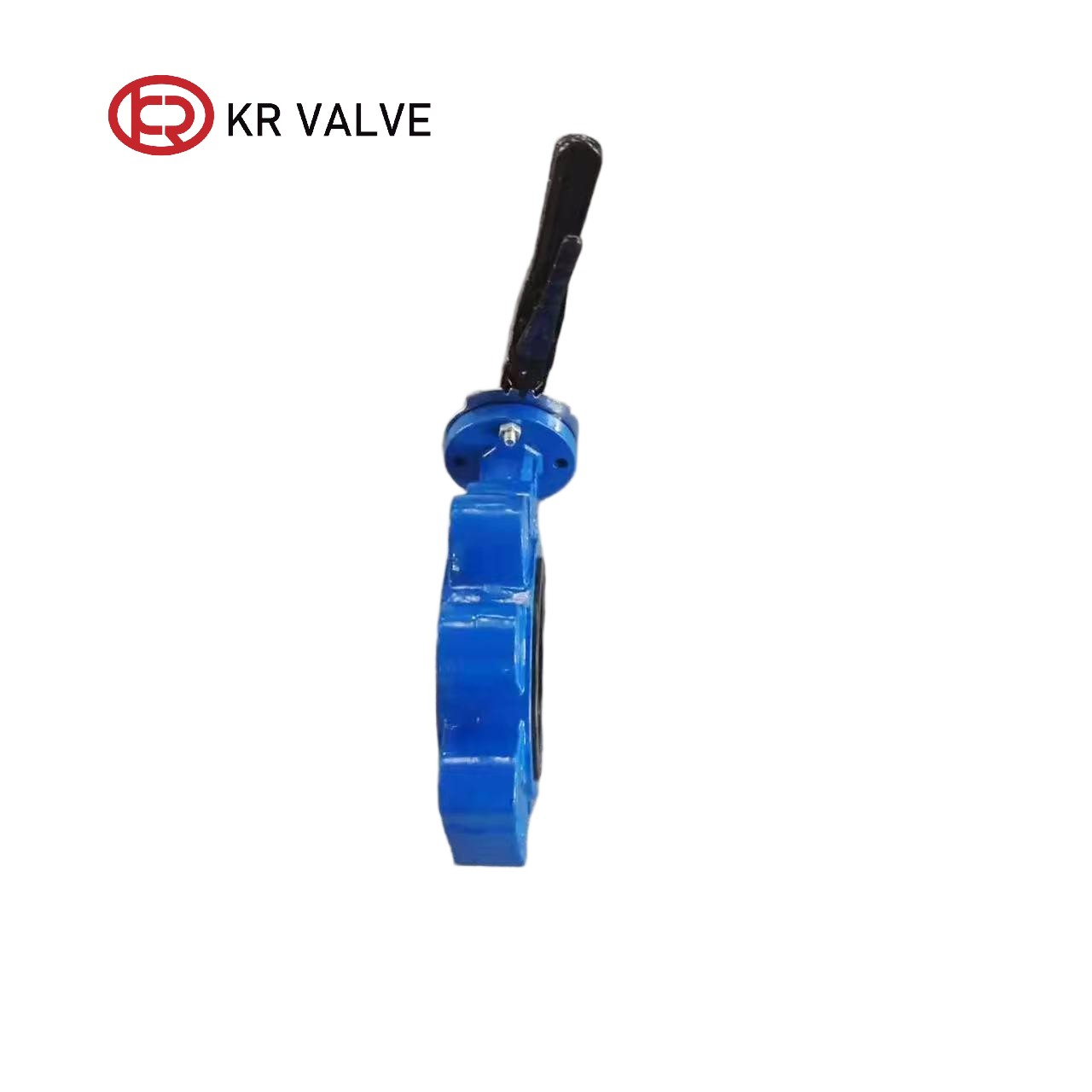
OEM Soft Seal Lug Butterfly Valve GGG40 Handle Operation Supplier, Manufacturers
Product Description
📋Specifications
| Valve Type: | Lug butterfly valve | Structure: | Concentric |
| Standard: | EN593 | Workmanship: | Investment casting |
| Sealing direction: | Bidirectional | Sealing grade: | Zero leakage |
| Temperature: | -20°C<T<120°C | Operation: | Handle/Lever |
⚙️Key Components
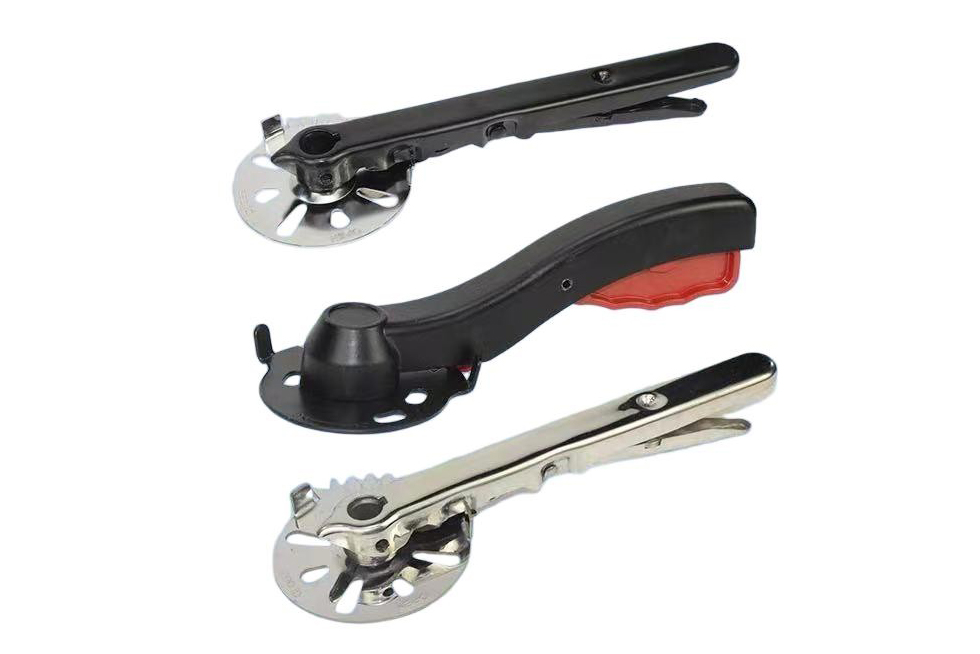
Handle
Various materials
Quick and precise opening and closing switches
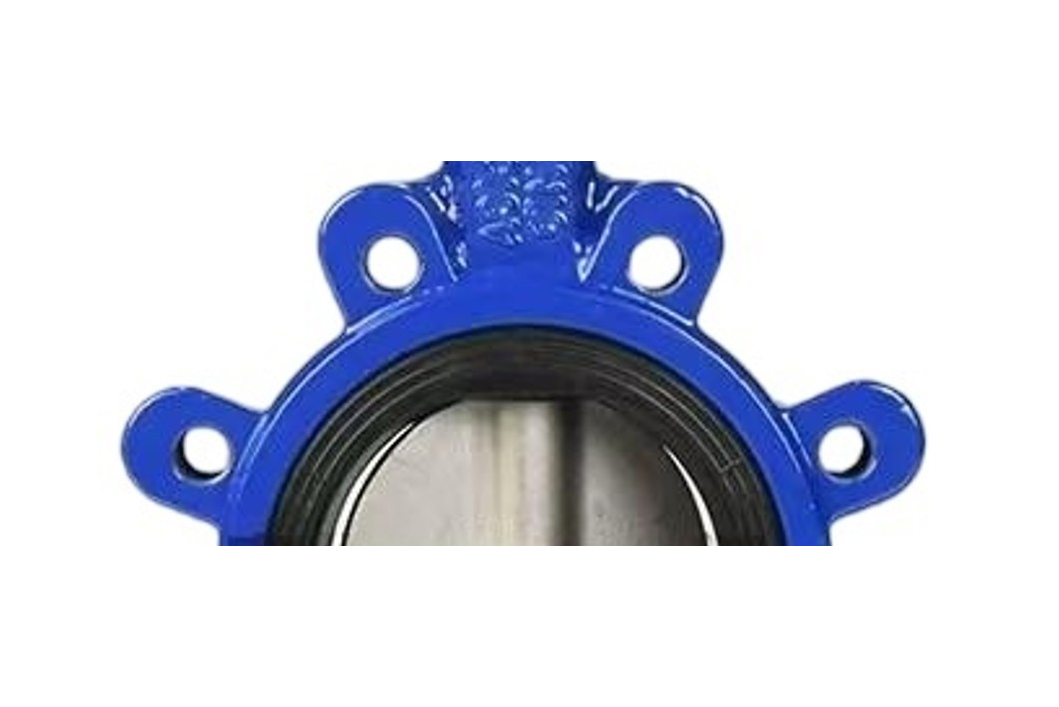
Seal
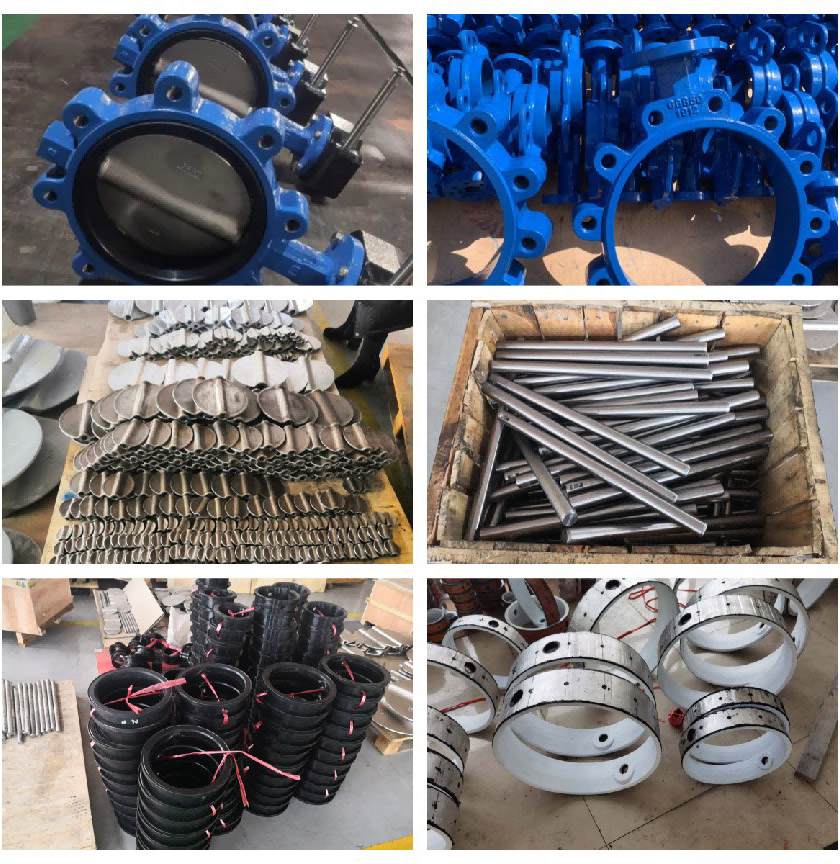
EPDM seal, corrosion resistance, good sealing performance, good resilience, and aging resistance
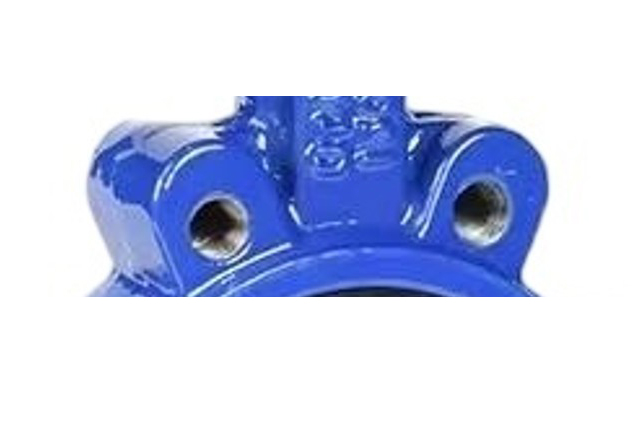
Shell
Thickened valve body, enhanced impact resistance, and extended service life
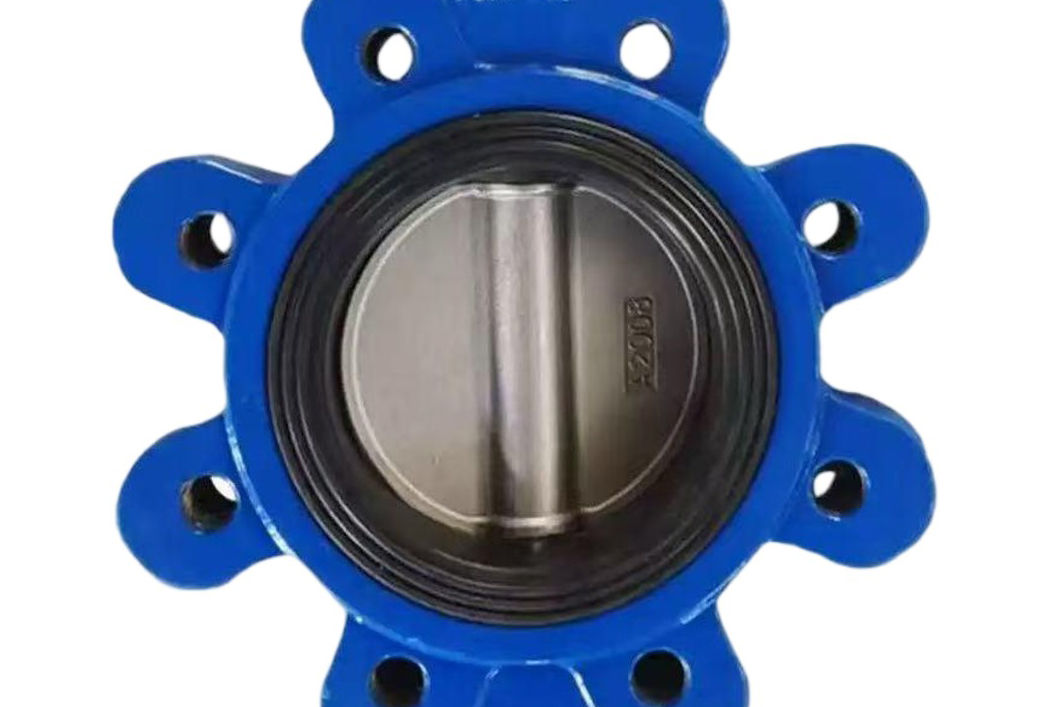
Disc
Pinless disc, eliminate leakage and ensure durability
🔹Characteristics
Compared to wafer butterfly valves, lug butterfly valves have stronger connection stability, are less affected by pipeline flange parallelism and uneven bolt tension, and have higher sealing reliability; Compared to flange butterfly valves, the axial length is shortened by 30%~50%, the volume is more compact, the weight is reduced by 20%~40%, and installation space and transportation costs are saved.
⭐Advantages
📦Packing
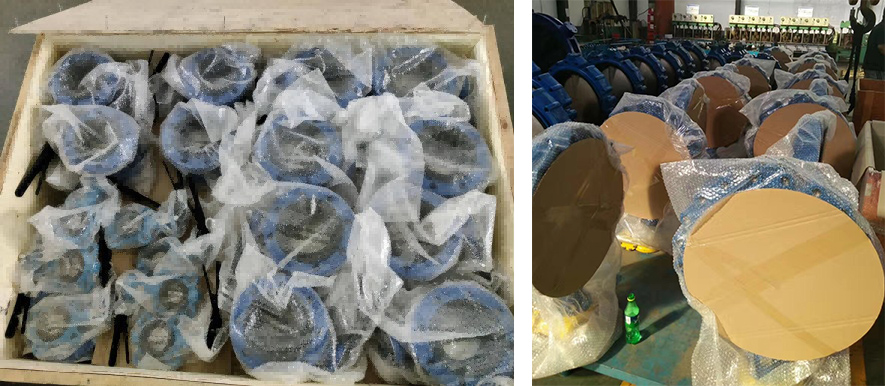
Standard export wooden case packaging
🏭Application Scenarios
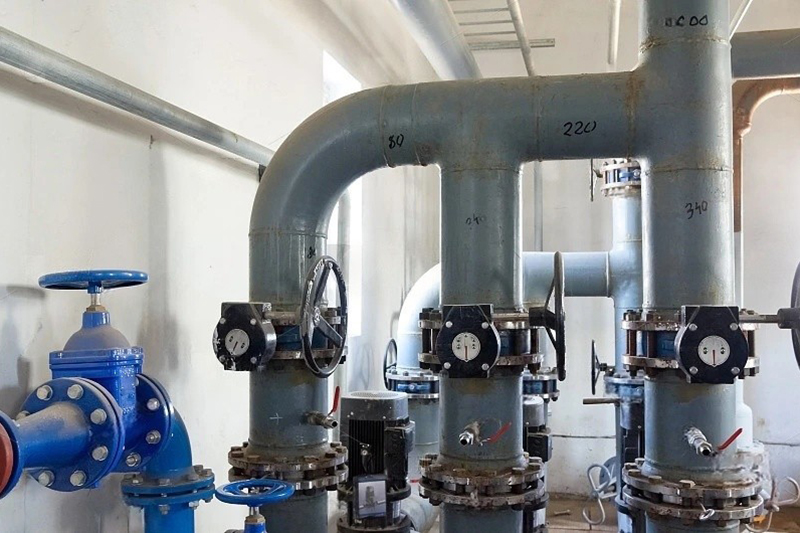
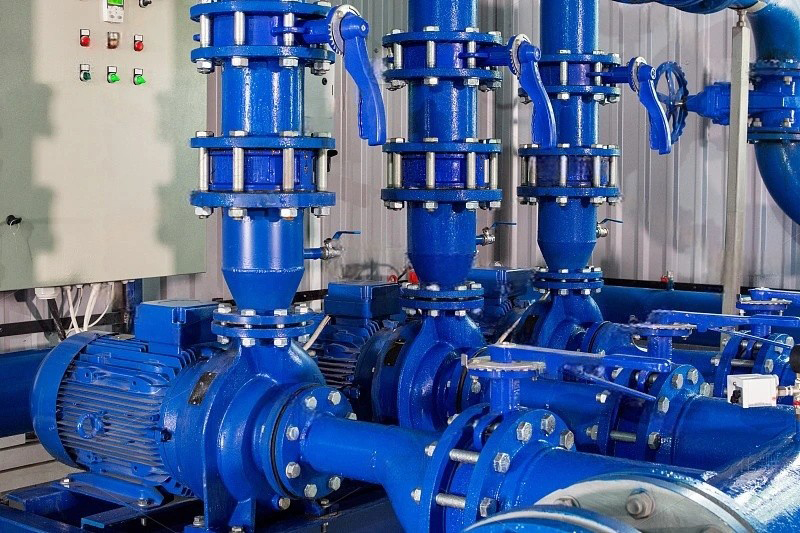
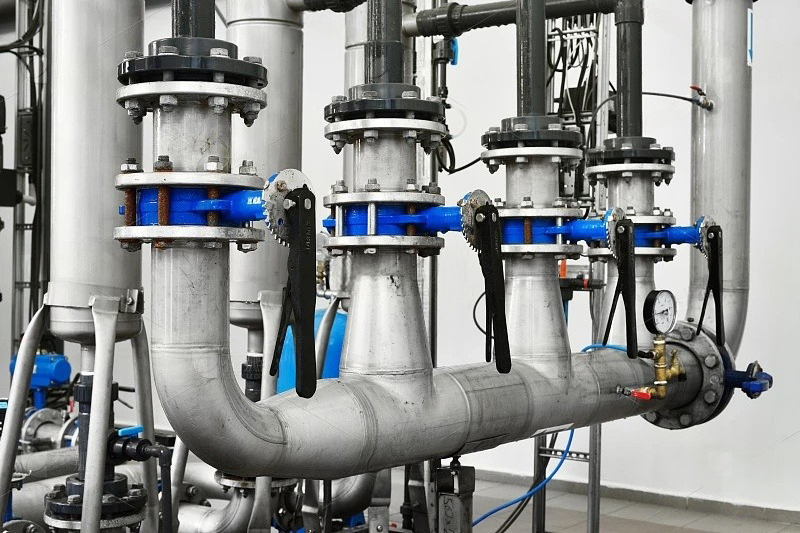
The lug butterfly valve is suitable for pipelines in petroleum, chemical, food, pharmaceutical, papermaking, hydropower, ships, water supply and drainage, smelting, energy and other systems. It can be used as a regulating and shut-off device on various corrosive, non corrosive gases, liquids, semi fluids, and solid powder pipes and containers.
🛡️Material Specifications
| Body | Plate | Rotating Shaft | Bushing | Seat | Operating Temperature (℃) |
|---|---|---|---|---|---|
| Material Name | Electroplated Nodular Cast Iron | Material Name | Material Name | Material Name | |
| Ductile Iron | Ductile Iron | Stainless Steel | PTFE | EPDM Rubber | -45~+135 Short-time -50~+150 |
| Ductile Iron | Stainless Steel | Carbon Steel | PTFE | Hypalon | -18~+135 Short-time -18~+149 |
| Aluminum Bronze | Titanium Steel | EPDM Rubber | -45~+135 Short-time -50~+150 | ||
| Stainless Steel | CF8M Stainless Steel | Neoprene Rubber | -7~+93 Short-time -7~+107 | ||
| CF8M Stainless Steel | Carbon Steel | NBR Rubber | -12~82 Short-time -12~+93 | ||
| Carbon Steel | CF8M Stainless Steel | Abrasion-Resistant Rubber | -10~+50 | ||
| Fluororubber | -23~+150 | ||||
| Heat-Resistant EPDM Rubber | -20~+150 | ||||
| PTFE | +10~+150 |
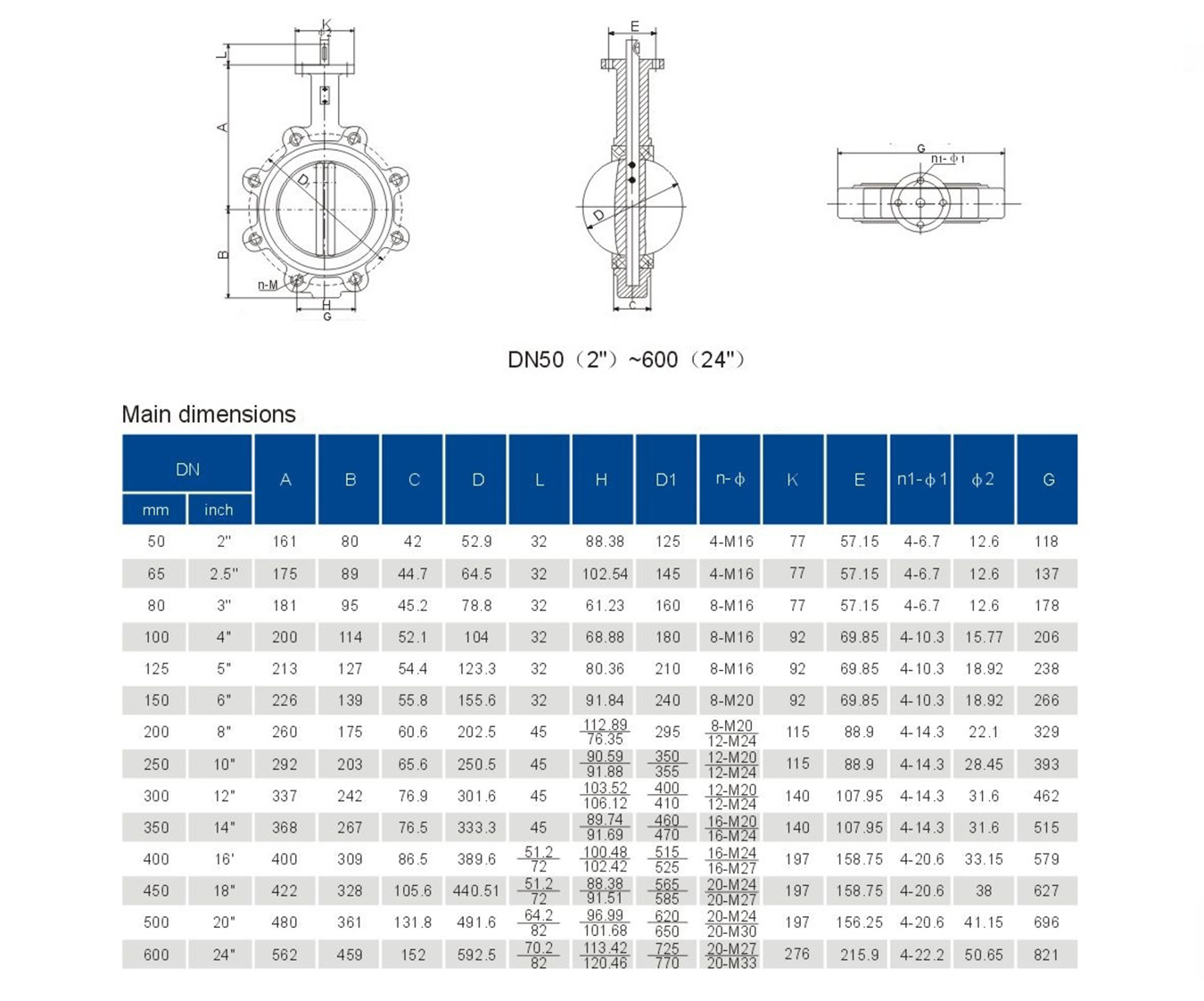
📐Dimension
❓Frequently Asked Questions (FAQ)
A lug butterfly valve features threaded lug inserts on both sides of the valve body allowing direct bolting to pipeline flanges. It uses a rotating disc structure to regulate or shut off fluid flow cleanly and efficiently.
Lug butterfly valves provide stronger connection stability and higher sealing reliability. Unlike wafer valves, they allow independent disassembly without dismantling upstream or downstream piping during maintenance.
Yes, it features a bidirectional sealing design with zero leakage grade, making it suitable for pipeline systems with bidirectional media flow without import or export directional limits.
Depending on the seat material chosen (such as EPDM, Hypalon, NBR, Fluororubber, or PTFE), operating temperatures range from -45°C up to +150°C (with short-time resistance up to +150°C).
The valve can be matched with manual handles/levers, gear turbines, pneumatic actuators for automated quick switching, or electric actuators for precise remote control.
They are widely applied in petroleum, chemical, food, pharmaceutical, papermaking, hydropower, marine, water supply and drainage, smelting, and energy system pipelines.