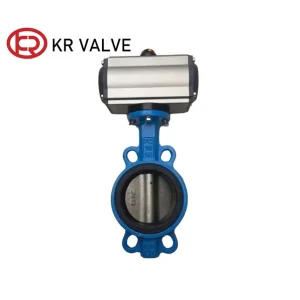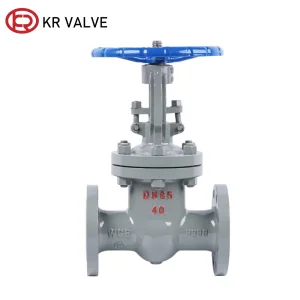
Featured Industrial Valves & Solutions (Catalog Selection)
1. Global Commercial & Industrial Landscape for Rising Stem Gate Valves
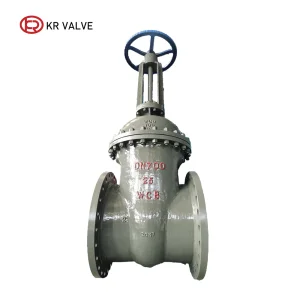
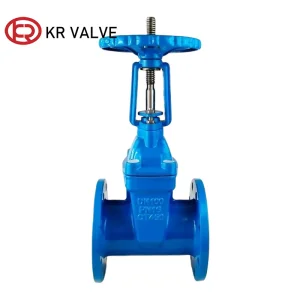
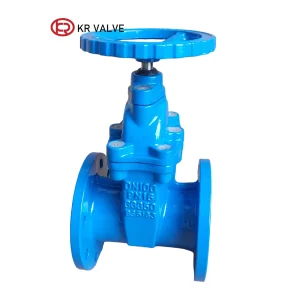
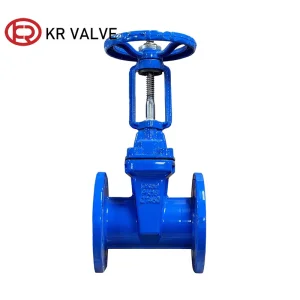
In modern industrial fluid dynamics and municipal water engineering, the selection of isolation valves dictates system longevity, operational safety, and overall Total Cost of Ownership (TCO). Among the various valve designs available to mechanical contractors and plant engineers, the OEM gate valve with rising stem—frequently categorized under Outside Screw and Yoke (OS&Y) configurations—remains an irreplaceable cornerstone. Unlike Non-Rising Stem (NRS) valves, rising stem mechanisms provide an instantaneous, unambiguous visual indicator of valve position (fully open, fully closed, or throttled), making them mandatory in high-risk industrial environments such as fire protection mainlines, power generation, petrochemical refining, and heavy municipal water transport.
The global demand for high-integrity rising stem gate valves is accelerating rapidly. Macroeconomic drivers include the modernization of aging municipal water supply grids in North America and Western Europe, the massive expansion of seawater desalination plants across the Middle East, and the rapid industrialization of Southeast Asia and Latin America. Industrial buyers are transitioning away from standardized commodity hardware toward custom-engineered OEM solutions that offer specialized metallurgies, advanced elastomeric seats (such as vulcanized EPDM or NBR), and certified anti-corrosive coatings like Fusion-Bonded Epoxy (FBE).
2. Technical Architecture & Engineering Precision of OS&Y Gate Valves
Understanding the mechanical physics of rising stem gate valves is vital for engineering procurement teams. In an OS&Y (Outside Screw and Yoke) valve, the stem nut is held within the external yoke, and the stem itself translates linearly up and down through the handwheel or actuator hub without rotating inside the fluid channel.
Resilient Seating vs. Metal-to-Metal
Modern OEM production offers both resilient seat gate valves (encapsulated ductile iron wedges with EPDM/NBR for zero-leakage drop-tight sealing up to 16 bar) and metal-seated valves (bronze, SS304, or Stellite facing for high-temperature, steam, or abrasive hydrocarbon duties).
Fluid Dynamics & Low Head Loss
When fully elevated, the gate wedge retracts completely out of the flow path. This full-bore straight-through design ensures a flow coefficient ($Cv$) virtually equal to an equivalent length of smooth pipe, dramatically cutting pumping energy requirements over extended operating lifespans.
Stuffing Box & Gland Integrity
The external stuffing box allows for straightforward, in-line repacking of stem seals (using graphite or PTFE rings) under system pressure without dismantling the valve actuator or removing the valve body from the pipeline grid.
3. China Manufacturing Efficiency & OEM Factory Superiority
Why do leading global engineering firms, distributors, and EPC (Engineering, Procurement, and Construction) contractors partner with Chinese OEM manufacturers for rising stem gate valves? The competitive advantage stems from an unmatched integration of supply chain ecosystems, automated foundry technology, and stringent quality verification systems.
Automated Precision Foundry & Casting
Chinese valve manufacturing hubs utilize modern resin-sand moulding, loss-foam casting, and automatic spectral analyzers to ensure alloy compositions (e.g., QT450-10 Ductile Iron, WCB Carbon Steel, CF8/CF8M Stainless Steel) strictly adhere to EN 1563 and ASTM A536 standards. Zero internal porosity and structural uniformity guarantee high pressure retention under surge shocks.
100% Hydrostatic & Shell Pressure Testing
Leading OEM factories implement total quality management (TQM) where 100% of finished valves undergo body shell tests at 1.5x nominal pressure and seat leak tests at 1.1x nominal pressure in strict accordance with ISO 5208, EN 12266-1, and API 598 prior to seaworthy packaging.
Full OEM Customization Flexibility
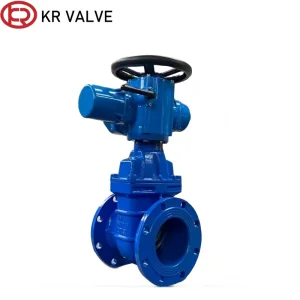
Customization options extend far beyond simple logo branding. OEM manufacturers configure specific face-to-face dimensions (DIN 3352 F4/F5, BS 5163, ANSI B16.10), custom stem extensions, position indicator switches, ISO 5210 top flanges for electric/hydraulic actuation, and special anti-corrosive coatings for aggressive soils or marine installations.
4. Technical Specifications & International Standard Compliance
Cross-border procurement requires strict verification of dimensional standards and material pressure ratings. Below is an engineering reference matrix detailing typical OEM manufacturing parameters for rising stem gate valves.
| Parameter / Parameter Category | DIN Standard (Europe / LatAm) | BS Standard (UK / Commonwealth) | ANSI / API Standard (USA / Global Oil) |
|---|---|---|---|
| Design Standards | DIN 3352 / EN 1171 | BS 5163 / BS 5150 | API 600 / API 6D / ASME B16.34 |
| Face-to-Face Dimensions | EN 558-1 Series 14 (F4) / Series 15 (F5) | BS 5163 Basic Series | ASME B16.10 Standard Lengths |
| Flange Drilling Standards | EN 1092-2 PN10 / PN16 / PN25 | BS 4504 / BS EN 1092-2 | ASME B16.1 / B16.5 Class 150 / 300 |
| Body & Bonnet Materials | Ductile Iron GGG40 / GGG50 | Ductile Iron BS 2789 Grade 500/7 | Cast Steel ASTM A216 WCB, CF8, CF8M |
| Stem Material | Stainless Steel X20Cr13 (SS420) / SS316 | Stainless Steel BS 970 420S37 / 316 | ASTM A276 Type 410 / SS304 / SS316 |
| Wedge Sealing | Resilient EPDM/NBR or Bronze DIN 1705 | Resilient EPDM or Gunmetal BS 1400 | Metal-to-Metal API Trim 1, Trim 5, Trim 8 |
| Testing Inspection | EN 12266-1 Rate A (Zero Leakage) | BS 6755 Part 1 | API 598 / ISO 5208 Leakage Class Rate A |
5. Localized Application Scenarios & Engineering Field Cases
Rising stem gate valves perform vital duties across diverse physical environments. The mechanical choice of materials and external protection depends heavily on localized operating conditions:
Municipal Water Infrastructure & WWTP
In municipal drinking water transmission mains and Wastewater Treatment Plants (WWTP), rising stem resilient seat gate valves are installed in valve vaults and pump houses. The rising stem provides plant operators with instantaneous visual confirmation of line isolation during maintenance routines. Non-toxic, WRAS/DVGW-approved fusion-bonded epoxy coating (min. 250 µm thickness) protects against tuberculation and internal corrosion.
Fire Protection & Suppression Systems
Fire main isolation valves must comply strictly with UL/FM regulations, which enforce the use of OS&Y rising stem valves or indicator posts. The extended stem allows immediate verification by safety inspectors that the fire protection water supply line remains locked in the fully open position.
Thermal Power & District Heating Grids
For high-temperature boiler feedwater and regional hot water heating networks, carbon steel (WCB) or stainless steel metal-seated rising stem gate valves handle elevated fluid temperatures up to 425°C. High-torque gearboxes or electric actuators are easily mounted to the top flange.
6. Industry Trends: Smart Valves, IoT Integration & Environmental Sustainability
The valve manufacturing industry is undergoing a digital transformation driven by the Industrial Internet of Things (IIoT), smart city initiatives, and increasingly strict ESG (Environmental, Social, and Governance) mandates.
Digital Position Monitoring & Smart Sensors: Modern OEM rising stem gate valves are increasingly equipped with digital stem-position transmitters, wireless limit switches, and pressure/vibration sensors integrated directly into the yoke structure. This telemetry feed connects directly to centralized SCADA systems, enabling predictive maintenance algorithms that detect stem packing wear, bonnet gasket degradation, or seating torque anomalies long before catastrophic leakage occurs.
Fugitive Emissions Control: Environmental directives such as ISO 15848-1 and TA-Luft demand near-zero volatile organic compound (VOC) emissions from valve stems in chemical and hydrocarbon service. Leading OEM factories are redesigning stuffing box profiles, employing live-loaded PTFE packing systems with Belleville spring washers to maintain constant packing pressure despite thermal cycling.
7. Frequently Asked Questions (Procurement & Engineering FAQ)
Complete OEM Product Portfolio (High-Performance Industrial Series)